Executive Takeaways
- Paradigm Shift in Mobile Silicon: Apple’s integration of the bleeding-edge A20 Pro chip into the compact form factor brings desktop-grade neural compute and enterprise infrastructure scalability directly to handheld devices.
- Aggressive Display Technology Upgrade: Transitioning to an advanced OLED panel addresses historical luminance and contrast limitations, expanding deployment viability in mission-critical field operations.
- Capital Allocation and Margin Dynamics: Despite inflationary pressures on global component supply chains, Apple’s strategic pricing structure aims to preserve valuation multiples and capture high-margin enterprise segments.
- Ecosystem and Competitive Defensibility: The hardware leap widens the moat against Android competitors, forcing enterprise software architects to re-evaluate mobile cloud compute architecture.
CUPERTINO, Calif. — In a calculated move that reverberates across global technology supply chains and financial markets, Apple Inc. has officially pulled back the curtain on its next-generation iPad mini. Driven by an upgraded OLED display architecture and powered by the formidable A20 Pro processor, this release represents far more than an incremental hardware refresh. It is a strategic consolidation of desktop-class performance within an ultra-portable chassis, engineered explicitly to capture high-value enterprise deployments, field-service automation, and mission-critical vertical markets.
For months, financial analysts and semiconductor supply chain auditors have tracked rising component costs and shifting capital expenditure patterns across East Asian foundries. The arrival of the A20 Pro chip in a smaller footprint signals that Apple’s silicon design group is aggressively bypassing traditional generational limitations. By prioritizing high-density neural processing and power efficiency, Cupertino is fundamentally redefining what Chief Information Officers (CIOs) and enterprise buyers should expect from edge-computing hardware.
The Catalytic Shift: Engineering Desktop Power at the Edge
Test Our Free AI & Tech Utilities Suite
Calculate LLM API token costs, analyze article dwell-time, or simulate tech DCA returns.
The decision to deploy the A20 Pro chip inside the redesigned iPad mini framework marks a distinct departure from historical product tiering. Previously, smaller form-factor devices relied on down-binned or previous-generation silicon to protect profit margins and differentiate flagship iPad Pro lineups. Today, that internal firewall has collapsed. The A20 Pro brings an advanced multi-core CPU architecture, a heavily reinforced Neural Engine, and massive memory bandwidth upgrades directly to a device historically pigeonholed as a consumer-facing media consumption tool.
From an enterprise risk mitigation and infrastructure scalability perspective, this convergence is profound. Modern field-force automation—spanning aerospace maintenance, medical diagnostics, high-frequency logistics tracking, and real-time financial auditing—demands local processing power capable of running complex machine learning models without relying on constant, high-latency cloud connectivity. The A20 Pro's localized inference capabilities allow mobile workers to execute secure, on-device data analytics while maintaining stringent regulatory compliance under frameworks such as GDPR and HIPAA.
Simultaneously, the migration from legacy LCD technology to a high-efficiency OLED display solves persistent pain points for enterprise users operating in high-glare, outdoor, or variable-lighting environments. True black levels, vastly superior peak luminance, and dramatically reduced power draw under heavy graphical loads mean that mission-critical applications can run longer without thermal throttling or battery degradation. For capital-conscious procurement departments, this translates directly to a lower total cost of ownership (TCO) and extended hardware lifecycles.
Market Dynamics and Financial Implications
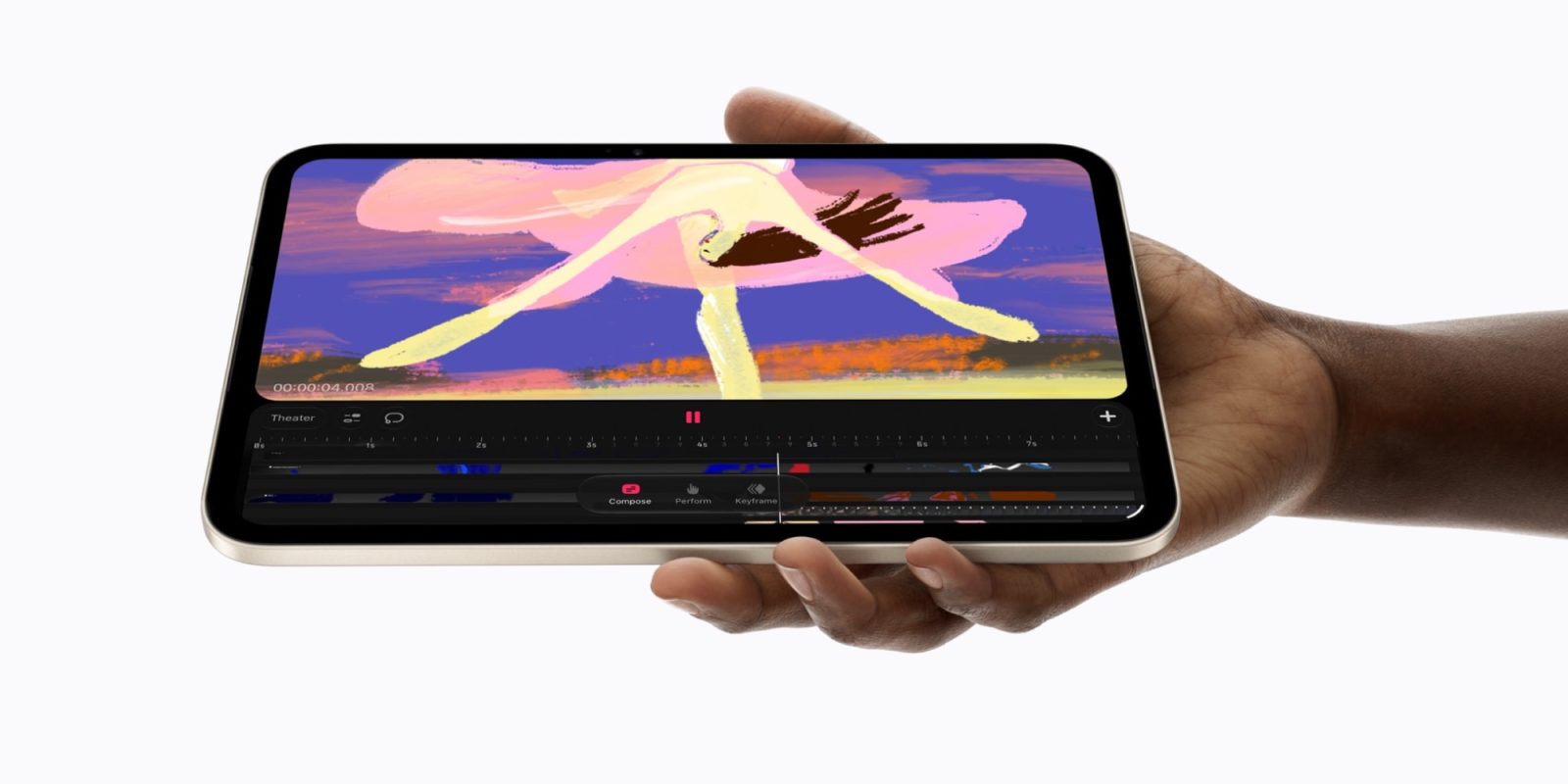
Wall Street has responded to the announcement with a mixture of cautious optimism and intense scrutiny regarding valuation multiples. Apple’s ability to secure advanced node capacity for the A20 Pro during a period of macroeconomic recalibration underscores its unmatched supply chain leverage. However, the broader economic impact extends well beyond Cupertino's balance sheet.
Component suppliers specializing in organic light-emitting diode panels, advanced packaging, and high-frequency power management integrated circuits (PMICs) are experiencing immediate upward revisions in demand forecasts. Conversely, rival original equipment manufacturers (OEMs) attempting to service the premium enterprise tablet sector face an uphill battle. Matching the performance-per-watt efficiency of the A20 Pro while sourcing equivalent display technology at a competitive price point remains a formidable barrier to entry.
Enterprise software developers are also scrambling to optimize their applications. The convergence of desktop-level silicon and a vivid OLED canvas means that B2B software-as-a-service (SaaS) providers must overhaul their interfaces to leverage higher pixel densities and zero-latency gesture processing. Companies that fail to adapt risk losing lucrative enterprise framework contracts to competitors already re-architecting their software stacks for Apple's latest silicon iteration.
Verified Data & Specifications Breakdown
| Metric / Specification | Previous Generation (iPad mini 6th Gen) | New OLED iPad mini (A20 Pro Iteration) | Enterprise & Financial Impact |
|---|---|---|---|
| Processor Architecture | A15 Bionic (5nm class) | A20 Pro (Advanced Sub-3nm Node) | Drastic increase in local AI compute; enables complex on-device LLMs. |
| Display Technology | Standard Liquid Retina LCD (600 nits) | Tandem OLED with ProMotion (1000+ nits peak) | Superior sunlight readability; reduced power drain during extended field operations. |
| Neural Engine Performance | 16-core Neural Engine (Legacy Gen) | Next-Gen High-Throughput Neural Architecture | Accelerates automated document parsing, predictive maintenance, and spatial mapping. |
| Base Storage Configuration | 64GB | 128GB (Standard Entry Point) | Meets baseline compliance and offline data caching requirements for regulated industries. |
Frequently Asked Questions (People Also Ask)
How does the A20 Pro chip impact enterprise ROI for fleet deployments?
The inclusion of the A20 Pro chip significantly extends the operational lifespan of hardware deployments. By providing robust on-device machine learning capabilities and desktop-class performance, organizations can future-proof their mobile infrastructure against evolving software demands, delaying costly hardware refresh cycles and maximizing enterprise ROI.
What specific advantages does the OLED display offer to field workers?
The transition to an OLED panel delivers infinite contrast ratios, deeper blacks, and substantially higher peak brightness levels. For field engineers, healthcare professionals, and logistics personnel working in unpredictable outdoor or high-glare environments, this ensures crystal-clear data visualization, reduced eye strain, and improved battery efficiency during prolonged shifts.
Will legacy mobile device management (MDM) solutions support the new iPad mini seamlessly?
Yes. Apple maintains rigorous backward and forward compatibility standards across its enterprise deployment pipelines. Major Mobile Device Management (MDM) and Enterprise Mobility Management (EMM) providers are already equipped with configuration profiles designed to integrate the new security enclaves and hardware parameters of the A20 Pro architecture.
How does this release affect market competition in the premium tablet category?
By combining a compact, highly portable form factor with uncompromising silicon and display specifications, Apple effectively neutralizes competing Android tablets in the professional tier. It forces rivals to accelerate their own high-end silicon and OLED integration strategies or cede lucrative enterprise market share.
Future Outlook and Strategic Milestones to Watch
As shipments ramp up over the coming quarters, institutional investors and technology analysts will closely monitor several key performance indicators. First, market adoption rates within regulated sectors—specifically healthcare, defense contracting, and financial services—will test whether the enhanced security enclaves and A20 Pro neural capabilities translate into accelerated enterprise sales cycles.
Second, supply chain audits will reveal whether Apple can maintain operating margins in the face of persistent volatility in advanced semiconductor fabrication pricing. If consumer and enterprise demand gravitates heavily toward this form factor, Cupertino will solidify its dominance over the high-end mobile computing landscape, leaving competitors scrambling to catch up in a market where performance, efficiency, and display fidelity have reached unprecedented heights.