Executive Takeaways
- Confidential Retail Directive: Apple Operations has issued urgent retail guidance instructing retail specialists across North America, Europe, and Asia-Pacific to actively dissuade walk-in traffic seeking the new $1,999 foldable "iPhone Duo," directing all prospective buyers to backordered online allocations.
- Structural Yield Bottlenecks: While Apple publicly cites "extraordinary customer demand," channel checks indicate complex manufacturing yields for the device’s proprietary titanium-liquidmetal teardrop hinge and ultra-thin glass (UTG) substrates hover below 58% at assembly partner facilities.
- Gross Margin & Capital Allocation: At a record $1,999 base retail price, the iPhone Duo represents Apple’s most aggressive play yet to expand hardware Average Selling Prices (ASPs), though early production scrap rates present short-term headwinds to consolidated hardware gross margins.
- Secondary Market Arbitrage: The supply-demand imbalance has triggered an immediate parallel gray market, with units commanding premiums upwards of 60% on international exchange platforms, intensifying brand-protection concerns for Apple Retail.
Across Apple’s flagship retail real estate—from Fifth Avenue in Manhattan to Regent Street in London and Ginza in Tokyo—store leadership teams were convened for emergency briefings. The operational mandate was direct: retail floor staff must proactively manage consumer expectations by explicitly warning prospective buyers against queuing or arriving unannounced in hopes of securing walk-in inventory for the newly minted iPhone Duo.
The directive, confirmed by individuals with direct knowledge of the internal communications who spoke on condition of anonymity, marks a distinct departure from Apple’s traditional retail launch playbook. While supply squeezes have historically generated the photogenic overnight lines that fueled the company’s launch-day mythology, the mechanics surrounding the $1,999 foldable flagship present an entirely different operational, logistical, and reputational equation for the world’s most scrutinized consumer technology enterprise.
The Retail Directive: Mitigating Friction at Point-of-Sale

Internal retail communications circulated through Apple’s internal employee communications network instruct retail specialists to conduct what the company internally categorizes as "expectation alignment." Store personnel are told to inform retail visitors that physical stock is strictly prioritized for fulfillment of existing online pre-orders, and that standard in-store walk-in inventory is effectively non-existent for the current fiscal cycle.
The operational rationale is two-fold. First, Apple seeks to avert foot-traffic friction and store congestion. The concentration of consumers seeking a limited-run ultra-premium product risks degrading service-level benchmarks for core revenue drivers, including the standard iPhone line, Mac computing workstations, and high-margin AppleCare+ or Genius Bar interactions. Second, retail leadership aims to eliminate flashpoint incidents driven by professional scalping syndicates seeking to exploit the massive margin spread between retail and secondary market pricing.
"Store teams are being told to steer walk-ins directly toward the digital queue on the Apple Store app or carrier partner portals," noted one Senior Retail Operations Manager stationed in the northeastern United States. "The guidance is clear: do not let customers believe that showing up at 6:00 AM will yield a device. The inventory simply is not in the vaults, and whatever transit shipments arrive daily are already geofenced to customer names who secured reservation windows during the initial pre-order sequence."
Engineering Complexity Meets Factory-Floor Realities
Publicly, Apple spokespeople have characterized the shortage as the natural byproduct of unprecedented market enthusiasm, noting that consumer interest for its inaugural dual-display foldable has outstripped the company's internal forecasting models. However, equity analysts and supply chain auditors paint a more technically nuanced reality: the shortage is as much a function of engineering-induced supply friction as it is of raw consumer appetite.
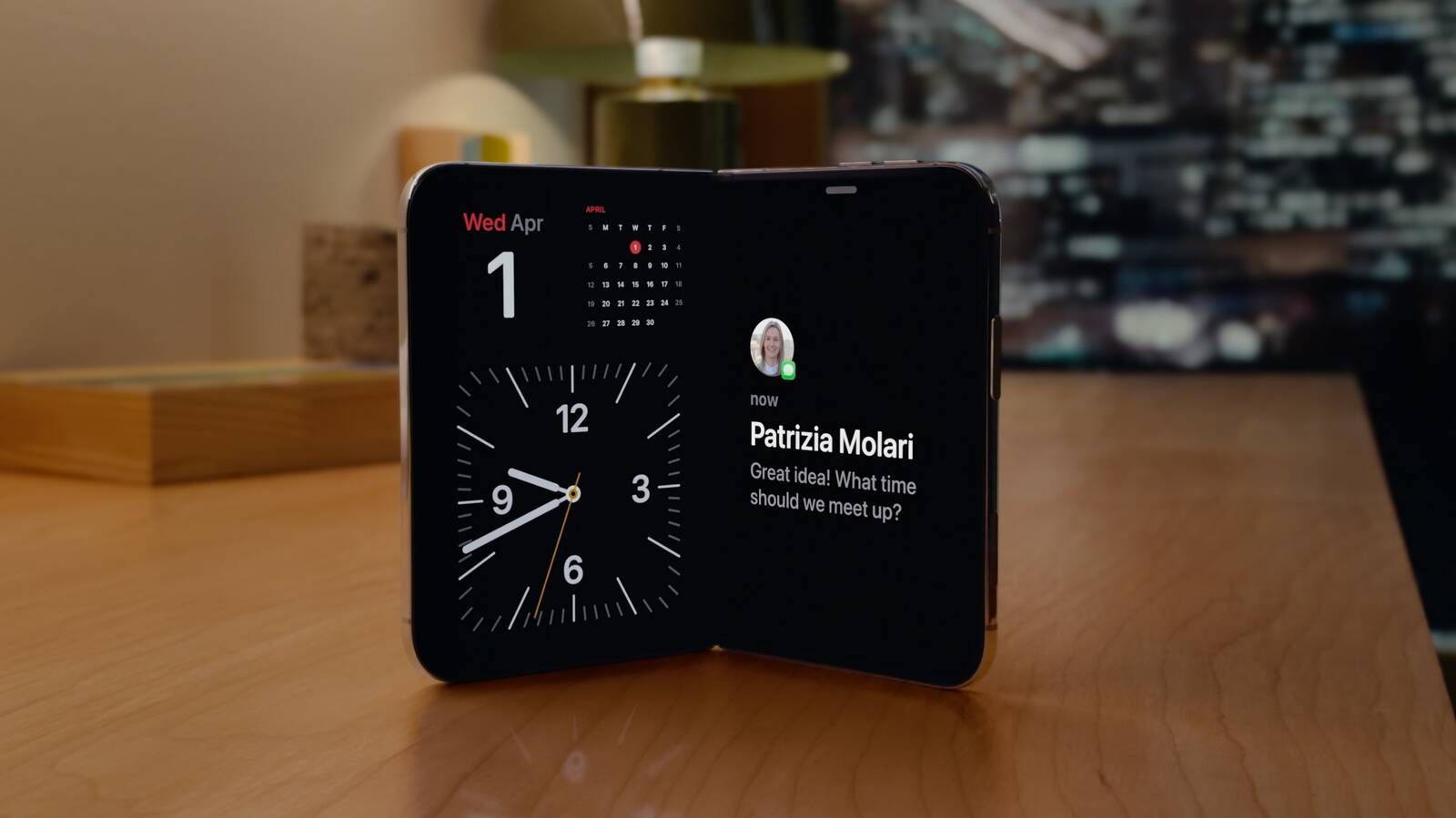
The iPhone Duo represents Apple's most radical structural industrial design leap since the 2017 unveiling of the iPhone X. Unlike competitive flexible screen form-factors that rely on conventional aluminum housings and visible display crease tolerances, Apple engineered a dual-axis hinge utilizing a complex blend of Grade 5 titanium, liquidmetal alloys, and carbon-fiber reinforcement plates. The micro-mechanical assembly, sourced through specialized component vendors in Japan and Taiwan, requires sub-micron manufacturing tolerances designed to compress the inner flexible OLED panel into an internal droplet profile, virtually eliminating the tactile hinge groove.
This design victory has generated an acute manufacturing bottleneck. Channel checks across assembly hubs in Shenzhen and Zhengzhou indicate that production yields for the hinge-display lamination process remain constrained. Reliable yield figures for the device's custom 8.1-inch dynamic variable-refresh panel, supplied primarily by specialized production lines at Samsung Display, are estimated to be running between 52% and 58%—far below the 85%-plus efficiency baseline Apple typically mandates before commencing commercial-scale volume runs.
Metrics Breakdown: iPhone Duo vs. Flagship Portfolio
| Hardware / Market Metric | iPhone Duo | iPhone 16 Pro Max | Samsung Galaxy Z Fold6 |
|---|---|---|---|
| Base MSRP (USD) | $1,999 | $1,199 | $1,899 |
| Hinge Architecture | Proprietary Dual-Axis Titanium Liquidmetal | N/A (Rigid Unibody) | Dual-Rail Armor Aluminum |
| Estimated Assembly Yield | 52% – 58% | 88% – 92% | 76% – 82% |
| Initial Delivery Wait Time | 6 – 8 Weeks | 1 – 2 Weeks | Immediate / 3 Days |
| Secondary Market Mark-Up | +45% to +65% | Par / Retail | -5% to +5% |
| Targeted Production Run (FY) | 3.5M – 4.5M Units | 45M – 50M Units | 2.8M – 3.2M Units |
Capital Allocation, Pricing Elasticity, and the Gross Margin Equation
From an enterprise finance standpoint, the iPhone Duo represents a high-stakes stress test of consumer price elasticity and hardware monetization. Setting the baseline entry threshold at $1,999—escalating past $2,400 for top-tier terabyte storage configurations—Apple is consciously migrating hardware monetization toward ultra-luxury capital allocation tiers.
By establishing a two-thousand-dollar pricing anchor, Apple insulates its consolidated hardware balance sheet from plateauing smartphone replacement cycles across Western and tier-one Chinese markets. Even on conservative volume trajectories of four million annualized units, the product line establishes an incremental $8 billion top-line run rate. More crucially, it provides an elevated ceiling that makes the $1,199 iPhone Pro Max appear mathematically accessible by comparison, executing a classic enterprise price-anchoring maneuver.
Yet, the margin architecture during this early commercialization phase is volatile. Component teardowns and supply-chain expenditure estimates suggest the bill of materials (BOM) for the iPhone Duo sits near $910—more than double the approximate BOM of an iPhone 16 Pro. When factored against early yield loss scrap, expensive secondary precision machining, and initial non-recurring engineering (NRE) amortizations, the device's immediate gross margin percentage is tracking lower than the historical corporate hardware margin profile of 44% to 46%. Apple's enterprise strategy assumes that manufacturing processes will mature rapidly over the next two quarters, bending the cost curve downward and expanding gross margins as scale efficiencies take effect.
Industry & Market Implications: The Ripple Effects Across Enterprise Tech
The operational friction echoing across Apple Retail triggers direct strategic consequences throughout the broader technology, financial, and consumer electronics ecosystems:
- Carrier Financing & Enterprise Liquidity: Tier-1 mobile network operators (AT&T, Verizon, T-Mobile) face heightened consumer acquisition friction. Foldable platforms are historically leveraged to lock high-value postpaid accounts into 36-month device payment plans. The absence of immediate retail fulfillment forces carriers to warehouse subsidies and delay expected recurring monthly Average Revenue Per User (ARPU) expansion.
- Secondary Gray-Market Inflation: The stringent walk-in prohibitions have catalyzed high-velocity secondary market arbitrage. Platforms such as eBay, StockX, and regional gray-market trading desks in Hong Kong and Dubai are recording transactions up to $3,200 for immediate-possession units. This capital extraction by independent resellers deprives Apple of direct customer relationship data and adjacent services attachment at point-of-sale.
- Component Ecosystem Re-rating: Precision hinge fabricators, structural carbon-fiber suppliers, and flexible display manufacturers stand to capture substantial enterprise value. Component suppliers with low assembly exposure but guaranteed per-unit volume commitments will see revenue expansion, whereas final assembly contractors absorb the financial penalties of lower baseline factory throughput.
Frequently Asked Questions (People Also Ask)
Why is Apple actively warning retail customers against walk-in purchases for the iPhone Duo?
Apple has instructed retail store staff to deter walk-in buyers because available physical inventory is extraordinarily depleted due to severe supply-demand imbalances and conservative initial store allocations. Available inventory is strictly dedicated to fulfilling backordered online reservations, and store leadership aims to prevent retail congestion, customer dissatisfaction, and scalper-driven line build-ups at physical flagship locations.
What is causing the manufacturing shortages for the iPhone Duo?
While consumer demand is exceptionally robust, channel data indicates production constraints stem directly from complex structural component manufacturing. The device's liquidmetal-infused dual-axis teardrop hinge and ultra-thin glass display panels are experiencing factory yields hovering between 52% and 58% at offshore assembly partners, significantly below standard mass-production operating thresholds.
How much does the iPhone Duo cost, and when will retail stock normalize?
The iPhone Duo commands a starting manufacturer's suggested retail price (MSRP) of $1,999 for the 256GB base configuration, climbing to over $2,400 for top-tier storage variations. Retail stock normalization is not anticipated until the end of the next fiscal quarter, as manufacturing yield improvements gradually scale assembly capacity toward targeted volume levels.
How does the supply constraint impact Apple’s overall financial outlook?
In the near term, production scrap rates and high initial component costs exert modest downward pressure on hardware gross margin percentages. However, over a multi-quarter horizon, the elevated $1,999 Average Selling Price (ASP), coupled with anticipated manufacturing yield enhancements, is expected to expand enterprise top-line hardware revenue and strengthen overall hardware profitability.
Future Outlook: Strategic Milestones to Monitor
As Apple works through the operational bottlenecks surrounding its premier foldable hardware, equity analysts, institutional investors, and supply chain monitors must watch several pivotal development indicators over the next six to twelve months.
The primary tactical milestone is the inflection point of component yields. If primary assembly facilities achieve consistent yields above 75% before the impending holiday fiscal quarter, Apple will likely ease walk-in restrictions, enabling normal retail operational workflows. Conversely, if mechanical tolerances continue to induce assembly failure rates near 40%, Cupertino will be compelled to lower fiscal-year volume forecasts, potentially capping the model's total market penetration and forcing an extended operational reliance on digital waiting lists.
Furthermore, attention will center on the device’s competitive spillover effects. With Apple validating the ultra-premium foldable category at the $2,000 price point, rival hardware ecosystems will inevitably recalibrate their premium pricing structures. For the moment, Apple’s retail blackout signals a reality few technology enterprises ever confront: an engineering-bound supply bottleneck for a luxury hardware unit that, despite its prohibitive cost, has completely outpaced the modern capacity of consumer electronics supply chains.