Executive Takeaways
- The Permitting Bottleneck: Local political resistance, zoning board pushback, and environmental scrutiny are severely impeding the physical build-out of multi-gigawatt artificial intelligence data centers.
- Capital Allocation Friction: Meta Platforms and other hyperscalers face escalating enterprise capital expenditures (CapEx) as community opposition forces costly re-routing, subterranean cabling, and localized energy generation workarounds.
- Grid Capacity Deficits: The convergence of surging generative AI compute architectures and stagnant municipal energy grids creates an immediate structural threat to long-term valuation multiples and infrastructure scalability.
- Regulatory Compliance Pivots: Tech giants are recalibrating their risk mitigation strategies, shifting from aggressive land grabs to prolonged community engagement and localized carbon-neutral investments.
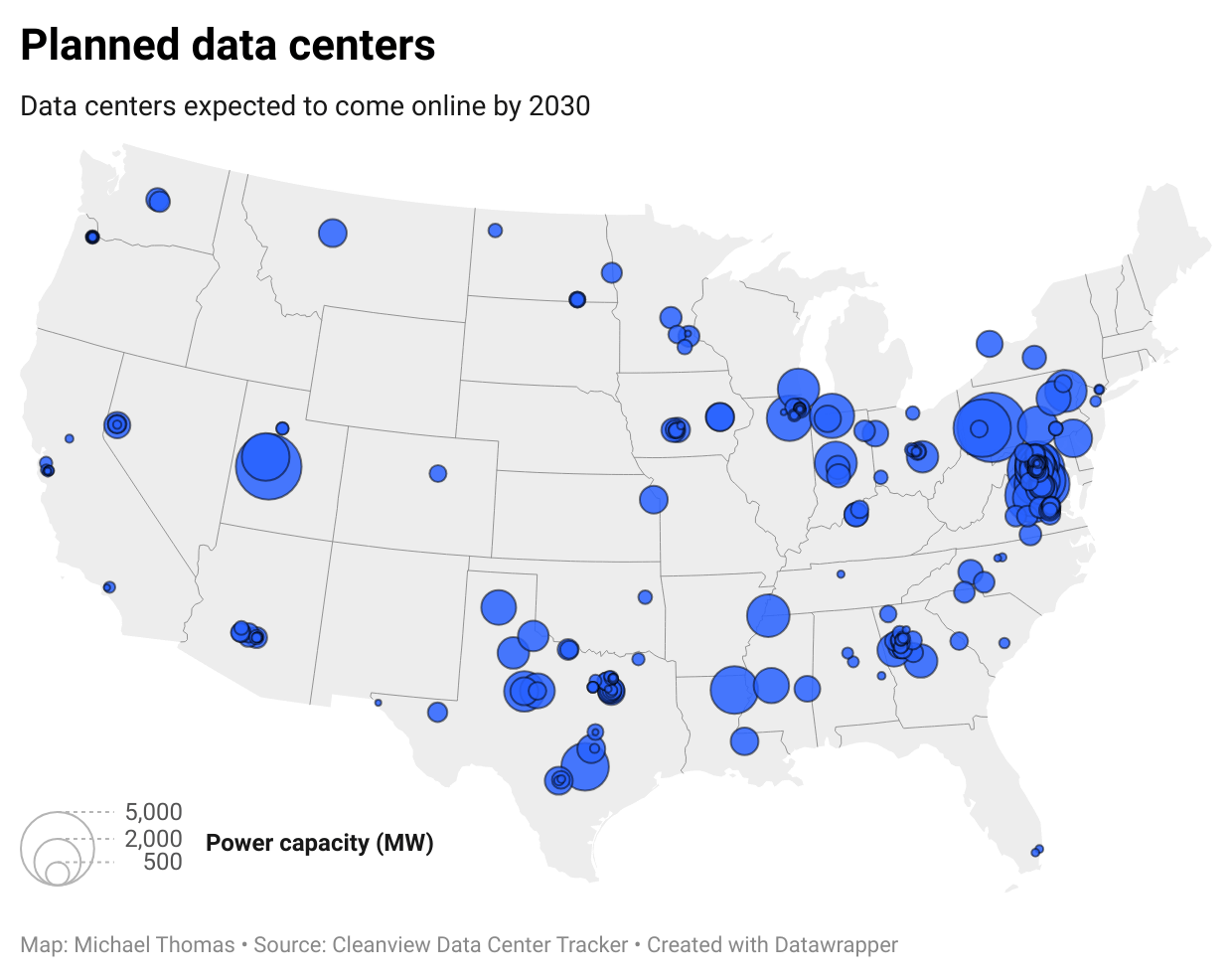
For more than a decade, the hyper-growth narrative of Silicon Valley was written in abstract terms: software eating the world, infinite cloud compute, and seamless enterprise scalability. But in the boardrooms of Meta Platforms, Amazon, Microsoft, and Google, reality has taken on a heavy, concrete form. As the race to dominate artificial intelligence accelerates, the primary constraint on technological supremacy is no longer algorithmic sophistication or semiconductor availability—it is real estate, local politics, and the hum of industrial cooling fans.
In confidential briefings and public regulatory filings, Meta executives have sounded a stark alarm: the intense political polarization and populist backlash surrounding massive data center developments could fundamentally paralyze AI expansion. As municipal elections across the United States pivot on issues of local grid stability, water consumption, and industrial sprawl, the tech sector's most aggressive capital allocation strategy is running headfirst into a wall of localized electoral resistance.
The Catalytic Collision: AI Compute Meets Local Populism
Test Our Free AI & Tech Utilities Suite
Calculate LLM API token costs, analyze article dwell-time, or simulate tech DCA returns.
To understand the gravity of Meta’s warning, one must examine the staggering resource footprint required to train and run frontier large language models. Modern AI clusters demand continuous power measured in hundreds of megawatts—approaching the energy consumption of mid-sized cities. For rural and suburban communities targeted by hyperscalers for data center campuses, the promised economic windfall of high-tech employment is frequently overshadowed by immediate, tangible anxieties: soaring residential electricity rates, strained municipal water supplies, and the visual blight of sprawling, windowless server farms.
This friction has transformed routine zoning board meetings into high-stakes political battlegrounds. During recent election cycles across swing states and key technology corridors in the American Midwest and Sunbelt, local candidates have increasingly weaponized opposition to big tech infrastructure. Platforms built on promises of protecting local resources and halting unchecked corporate expansion have struck a powerful chord with voters weary of inflation and infrastructure strain.
Consequently, regulatory compliance and land-use approvals that once proceeded via rubber-stamped municipal consent are now mired in multi-year litigation, environmental impact studies, and hostile voter referendums. For Meta, which has committed tens of billions of dollars to restructuring its cloud compute architecture around generative AI, these delays represent an insidious threat to enterprise ROI and market liquidity.
Capital Allocation at a Crossroads: Valuation Multiples Under Pressure

Wall Street has historically rewarded hyperscalers for aggressive infrastructure investments, viewing expansive data center pipelines as definitive proof of competitive dominance. However, as the friction between local communities and tech operators intensifies, financial analysts are recalibrating how they view capital expenditure efficiency.
When zoning boards deny permits or mandate costly design overhauls—such as transitioning from evaporative cooling to closed-loop water systems or burying high-voltage transmission lines—the total cost of ownership per megawatt skyrockets. This dynamic directly impacts corporate valuation multiples. Investors are beginning to price in "execution risk," recognizing that billions in committed CapEx can sit idle or face severe deployment delays due to localized political blockades.
| Metric / Parameter | Traditional Data Center Buildout | Next-Gen AI Campus (Current Era) |
|---|---|---|
| Average Power Requirement | 15 – 30 Megawatts (MW) | 100 – 1,000+ Megawatts (MW) |
| Average Permitting Timeline | 6 to 12 Months | 24 to 48+ Months (High Litigation Risk) |
| Primary Local Friction Point | Tax incentives and light industrial zoning | Grid capacity, residential rate hikes, water use |
| Risk Mitigation Strategy | Standard municipal lobbying | Direct utility partnerships, nuclear/clean energy PPAs |
Industry & Market Implications: Winners, Losers, and Economic Ripples
The hardening of political resistance against AI infrastructure creates a distinct bifurcation across global financial markets. Understanding who benefits and who suffers from this paradigm shift is essential for institutional asset managers and enterprise strategists.
The Winners
- Established Brownfield Operators: Real estate investment trusts (REITs) and operators with pre-approved, zoned, and powered brownfield sites enjoy immense pricing power as greenfield developments stall.
- Boutique Energy and Nuclear Providers: Independent power producers capable of supplying off-grid, behind-the-meter energy solutions are positioned as indispensable partners for tech giants desperate to bypass public utility battles.
- Efficient Compute Innovators: Semiconductor designers and software optimization firms that reduce the inference and training footprint of AI models lessen the absolute demand for physical megawatts.
The Losers
- Rural Municipalities Lacking Tax Infrastructure: Communities that reflexively reject data center projects miss out on substantial long-term tax revenues that could otherwise fund local schools and public works.
- Pure-Play Greenfield Developers: Firms relying on rapid, low-cost land acquisition in semi-rural areas face compressed margins and elongated project timelines.
- <Retail and Commercial Energy Consumers: In markets where tech demand outpaces grid expansion, local ratepayers frequently absorb the cost of necessary transmission upgrades through higher utility bills, fueling further political backlash.
Frequently Asked Questions (People Also Ask)
Why are local communities pushing back against Meta and other AI data centers?
Local opposition is primarily driven by concerns over straining municipal electrical grids, consuming massive volumes of water for cooling, driving up residential utility rates, and altering the rural or suburban character of communities through industrial-scale construction.
How does election cycle politics impact data center expansion?
Elected officials and local candidates frequently leverage voter anxiety over infrastructure strain to score political points. Consequently, zoning boards and county commissioners become more risk-averse, leading to denied permits, stringent environmental mandates, and protracted legal battles.
What are hyperscalers doing to mitigate grid capacity and political friction?
Major tech companies are increasingly investing directly in clean energy generation—including solar, wind, and advanced nuclear power purchase agreements (PPAs)—while pursuing behind-the-meter microgrid solutions that do not draw power from public municipal grids.
What is the financial impact on enterprise valuation multiples?
Delays in infrastructure deployment introduce execution risk. When capital expenditure programs fail to yield operational compute capacity on schedule, investors may discount enterprise valuation multiples due to delayed AI monetization timelines.
Future Outlook: Strategic Imperatives for the Next Decade
As Meta and its peers navigate this complex socio-political landscape, the playbook for AI infrastructure development must fundamentally evolve. The era of quietly sliding massive land acquisitions past municipal oversight is definitively over. Moving forward, hyperscalers must treat community relations and grid diplomacy with the same rigor traditionally reserved for microchip procurement and software engineering.
Key milestones to watch over the next 12 to 36 months include the proliferation of direct utility-tech partnerships, the legislative evolution of federal siting authority for interstate transmission lines, and the success rate of modular, small modular reactor (SMR) nuclear integrations. Until these systemic grid and political challenges are resolved, the physical boundary of human artificial intelligence capability will remain tethered to the slow, contentious realities of local democracy.