Power Grid Paralysis: Why 40% of US Planned Data Center Capacity Is Trapped in States Hitting the Brakes
Test Our Free AI & Tech Utilities Suite
Calculate LLM API token costs, analyze article dwell-time, or simulate tech DCA returns.
By The Investigative Desk | Published: Trending Now | Special Report for Institutional Investors & Enterprise Technologists
Executive Takeaways
- The Stalling Point: Approximately 40% of all projected US data center pipeline capacity is currently concentrated in states that have introduced legislation, moratoriums, or grid-connection halts.
- Infrastructure Bottlenecks: Surging power consumption driven by generative AI workloads has outpaced local transmission line capacity, forcing public utility commissions to reconsider capital allocation and rate-payer protections.
- Valuation Multiples at Risk: Real estate investment trusts (REITs), hyperscalers, and private equity firms face prolonged development timelines that threaten projected EBITDA growth and capital expenditure ROI.
- Regulatory Pivot: Local municipalities are demanding stricter environmental reviews, mandatory renewable energy matching, and water usage disclosures before greenlighting new builds.
Introduction: The Multi-Billion-Dollar Compute Collision
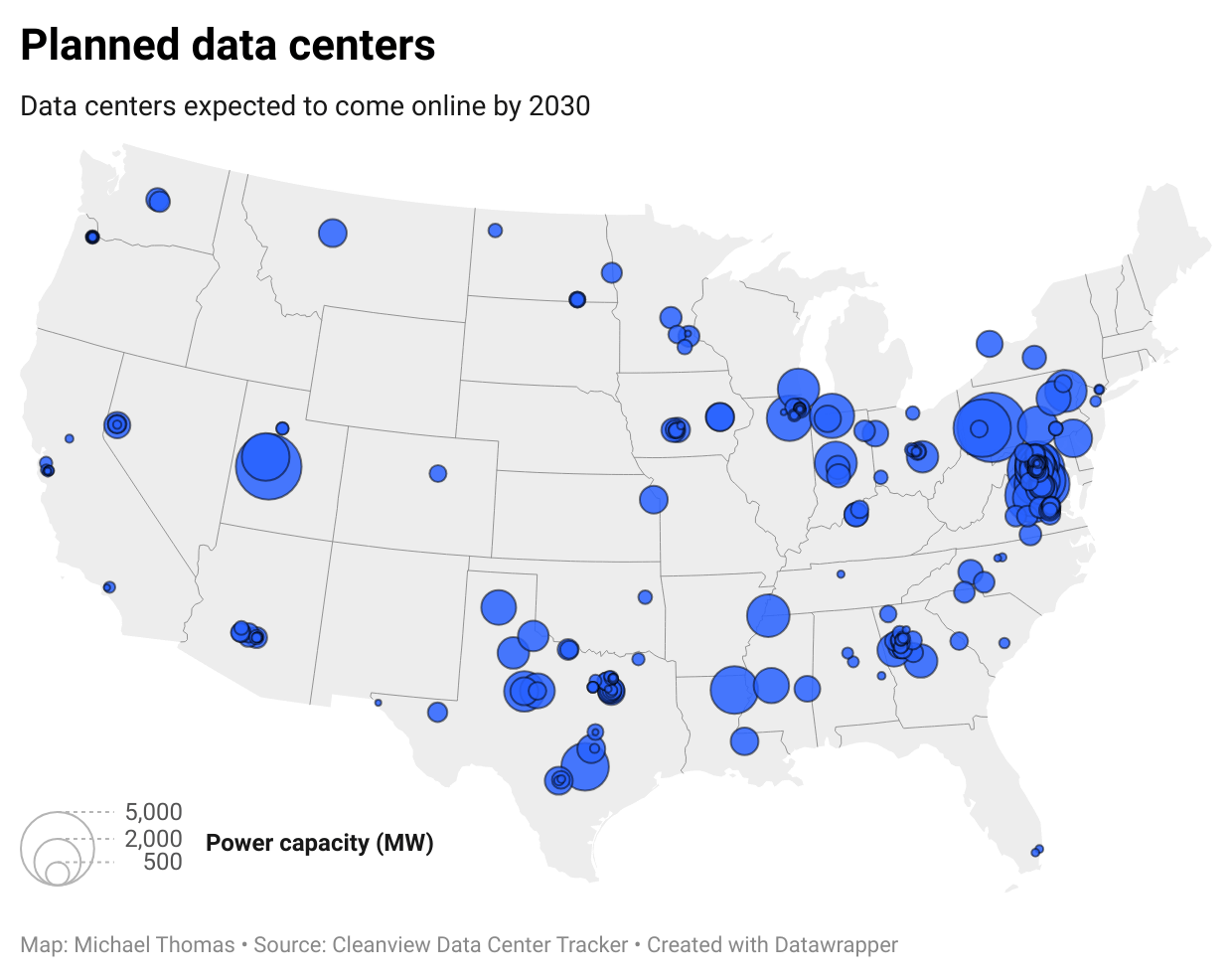
The collision between the explosive demand for generative artificial intelligence and the physical realities of the American electrical grid has reached a critical inflection point. According to recent infrastructure tracking data and regulatory filings, roughly 40 percent of all planned data center capacity in the United States is now marooned in states and municipalities actively implementing moratoriums, strict zoning reviews, or outright pauses on new facility approvals.
For years, hyperscale cloud providers—including Amazon Web Services, Microsoft Azure, Google Cloud, and Meta—along with specialized colocation operators, treated suburban and rural America as an open-ended frontier. Cheap land, low property taxes, and cooperative local utilities made locations across Northern Virginia, Georgia, Ohio, and Oregon prime destinations for sprawling server farms. Today, that playbook is unravelling. Driven by soaring local electricity rates, transformer shortages, and acute water scarcity, state legislatures and county commissioners are pushing back, threatening to disrupt multi-billion-dollar capital allocation strategies and shift the valuation multiples of leading infrastructure players.
The Catalytic Factors Driving the "Pause" Movement

The sudden wave of pushback is not a localized NIMBY phenomenon; it is a systemic structural crisis rooted in the limits of enterprise scalability and electrical engineering. Three primary catalysts are driving state and local governments to hit the brakes on digital infrastructure expansion:
1. Grid Capacity and Peak Load Pressures
Modern AI training clusters require densities exceeding 40 to 100 kilowatts per rack, a dramatic escalation from traditional cloud workloads that typically averaged 7 to 10 kilowatts. When clustered together, a single campus can demand as much electricity as a mid-sized city. Public utilities, many of which spent the last decade retiring coal-fired plants in favor of intermittent renewables without building sufficient high-voltage transmission lines, are staring down unprecedented reserve margin deficits.
2. Rate-Payer Advocacy and Political Backlash
State public utility commissions (PUCs) are increasingly sensitive to consumer advocacy groups pointing out a stark economic inequity: residential utility rates are climbing to subsidize the grid upgrades necessary to feed commercial server farms. Politicians facing election cycles are finding fertile ground in protecting constituents from surging monthly power bills, leading to legislative efforts that restrict or delay wholesale power purchase agreements for large tech developments.
3. Environmental and Resource Constraints
Beyond megawatts, hyperscale facilities are massive consumers of water for cooling loops. In drought-prone regions of the American West and Southwest, local water boards are refusing to issue permits that could strain municipal water tables. Concurrently, environmental compliance officers are challenging data centers attempting to bypass clean-energy mandates by quietly contracting with aging fossil-fuel generation assets to guarantee uninterrupted uptime.
Verified Data / Metrics Breakdown
A comparative analysis of key metrics highlights the scale of the capital trapped in regions enforcing regulatory halts versus those maintaining open development policies:
| Metric Category | Affected States (Pause/Moratorium) | Unrestricted Expansion States | Market Impact |
|---|---|---|---|
| Planned Capacity Share | ~40% of national pipeline | ~60% of national pipeline | Capital reallocation toward secondary markets |
| Average Approval Timeline | 18 to 36 months (delayed) | 6 to 12 months | Compressed enterprise ROI on land banks |
| Primary Bottleneck | Substation access & transmission queues | Fiber backhaul & labor availability | Higher capital expenditure per megawatt |
| Key Legislative Focus | Sales tax exemption rollbacks & noise/water limits | Aggressive economic development incentives | Margin compression for colocation REITs |
Industry & Market Implications: Who Wins and Who Loses?
The regulatory cooling-off period is fundamentally reshaping the competitive landscape across institutional real estate, cloud computing, and energy sectors. Market participants are scrambling to adapt their risk mitigation strategies.
The Losers: Legacy Hubs and Undiversified Developers
Markets that built their economic development models around frictionless data center growth—most notably parts of Northern Virginia, which handles a massive share of global internet traffic—are seeing land values plateau as power queues stretch past 2028. Real estate investment trusts (REITs) and specialized developers who acquired expensive land parcels under the assumption of rapid utility interconnects now face severe carrying costs. Without guaranteed power allocations, their balance sheets risk carrying stranded assets that fail to generate projected cash flows.
The Winners: Alternative Markets and Energy Innovators
Secondary and tertiary markets featuring stranded generation assets, under-utilized transmission infrastructure, or aggressive state-level support are capturing displaced capital. Furthermore, independent power producers (IPPs) and nuclear plant operators hold unprecedented pricing power. Hyperscalers are increasingly forced to partner directly with carbon-free energy generators—co-locating data centers adjacent to nuclear facilities or tapping dedicated geothermal and solar-plus-storage grids to bypass public utility roadblocks entirely.
Frequently Asked Questions (People Also Ask)
Why are states suddenly pausing data center construction?
States are implementing pauses primarily due to unprecedented stress on local electrical grids and water supplies caused by the rapid rise of power-dense AI workloads. Lawmakers are also responding to public pushback over rising residential electricity rates and the environmental footprint of large facilities.
Which states are leading the "pause" movement?
Several states and major local jurisdictions—including parts of Virginia, Georgia, Connecticut, and select counties in the Midwest and Pacific Northwest—have introduced legislation to audit utility capacities, scale back tax incentives, or place temporary moratoriums on new permits while grid upgrades are evaluated.
How does this impact enterprise cloud pricing and AI development?
As construction timelines lengthen and power acquisition costs rise, operating expenditures for cloud compute are likely to face upward pressure. Enterprises may experience tighter availability for high-performance GPU instances as hyperscalers absorb higher infrastructure overhead costs.
Are tech companies finding workarounds to these power restrictions?
Yes. Major technology firms are actively bypassing traditional public utility interconnects by funding dedicated power microgrids, contracting directly with nuclear energy providers, and investing in advanced small modular reactor (SMR) technologies to secure long-term, carbon-free baseload power.
Future Outlook: Strategic Milestones to Watch
As the data center industry navigates this regulatory bottleneck, institutional investors and enterprise architects must monitor several critical forward-looking indicators:
- Federal Energy Regulatory Commission (FERC) Rulings: Decisions regarding co-location agreements between power plants and large load centers will set the legal precedent for how data centers source off-grid electricity.
- Transmission Queue Reforms: Updates to regional transmission organization (RTO) interconnection processes will determine whether power queue wait times can be compressed from years down to months.
- Corporate Capital Expenditure Shifts: Watch for Q3 and Q4 earnings calls from major hyperscalers and data center REITs to see how capital allocation is pivoting away from saturated legacy hubs toward captive energy solutions and alternative geographic markets.
Ultimately, the narrative that digital infrastructure can scale infinitely without physical resource constraints has been thoroughly debunked. The current 40% capacity pause is not a permanent halt to the digital economy, but a necessary, albeit painful, recalibration of how power, capital, and infrastructure intersect in the era of artificial intelligence.