
Executive Takeaways
- Strategic Diversification: Nvidia’s $3.5 billion capital allocation into MediaTek marks a fundamental shift from direct hardware dominance to fabless IP integration, bypassing traditional supply chain bottlenecks.
- Countering Big Tech: The partnership directly blunts hyperscale custom silicon strategies (such as Google’s TPUs, Amazon’s Trainium/Inferentia, and Meta’s MTIA), preserving Nvidia’s enterprise valuation multiples and infrastructure scalability.
- Ecosystem Expansion: By pairing Nvidia’s CUDA software moat with MediaTek’s low-power ARM architecture and advanced system-on-chip (SoC) packaging, the alliance targets the underserved edge-AI and enterprise data center tier.
For the past four years, Wall Street has fixated on a singular macro narrative: the insatiable, margin-rich enterprise demand for Nvidia’s Hopper and Blackwell graphic processing units. Yet, beneath the surging capital expenditures of the world’s largest cloud service providers lies an existential counter-offensive. Hyperscalers—Alphabet, Amazon, Microsoft, and Meta—have aggressively poured tens of billions of dollars into proprietary, custom application-specific integrated circuits (ASICs) designed to break the monopoly of accelerated computing and protect operating margins.
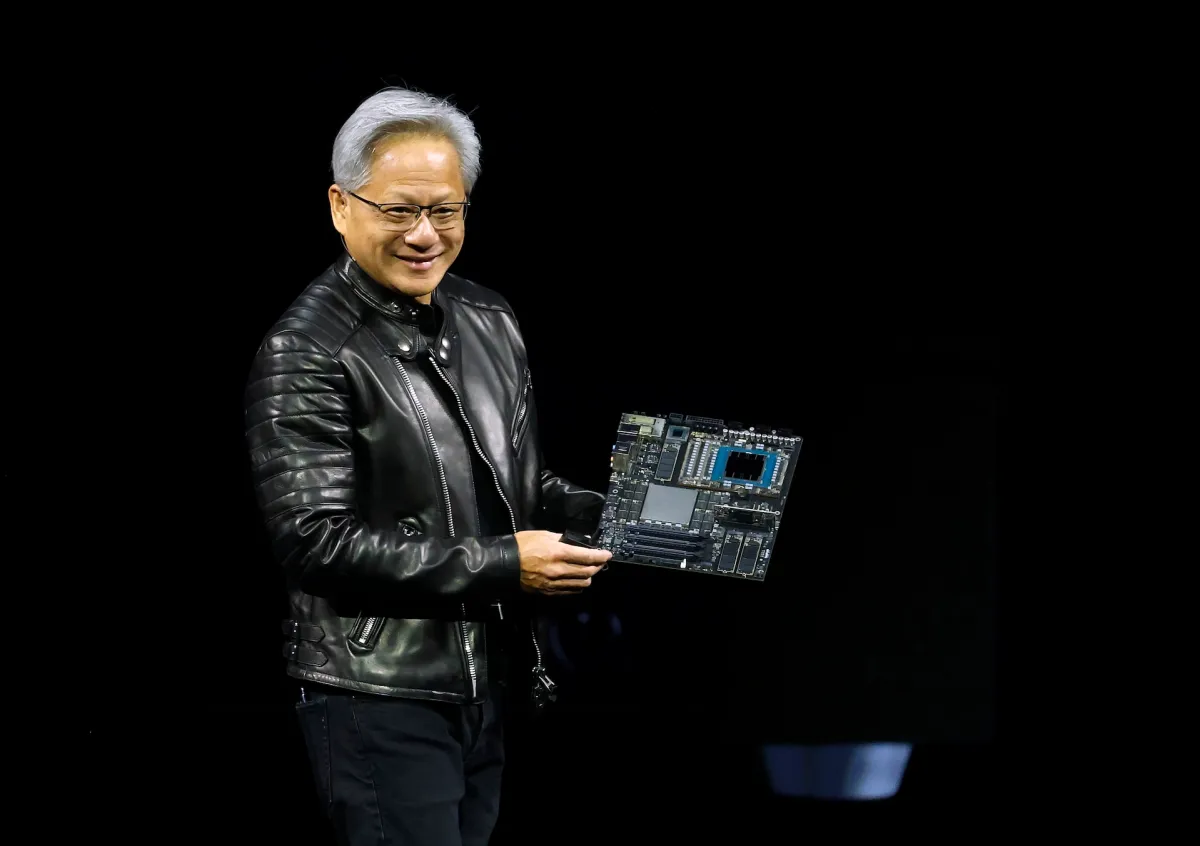
In response, Jensen Huang’s executive team has executed a masterstroke of financial engineering and geopolitical chess: a strategic $3.5 billion bet on MediaTek. Reported extensively across tech and financial markets since late August 2026, this landmark coalition is not merely a supplier agreement. It is an aggressive architectural pivot designed to reshape cloud compute architecture, redefine risk mitigation strategies, and establish absolute dominance over the next generation of artificial intelligence deployment.
The Genesis of the Partnership: Navigating CapEx Fatigue and Foundry Realities
Test Our Free AI & Tech Utilities Suite
Calculate LLM API token costs, analyze article dwell-time, or simulate tech DCA returns.
To understand the gravity of the Nvidia-MediaTek capital allocation, one must examine the macro-economic pressures facing the semiconductor industry in 2026. As enterprise ROI scrutiny intensifies, corporate IT buyers are demanding greater infrastructure scalability and lower total cost of ownership (TCO). While Nvidia’s high-end GPUs remain the gold standard for foundational model training, the inference market—representing the vast majority of operational AI workloads—calls for lean, energy-efficient, domain-specific silicon.
Big Tech’s answer has been to internalize semiconductor design. By developing in-house ASICs, companies like Google, Microsoft, and Meta attempt to bypass Nvidia’s software pricing power and hardware margins. Simultaneously, the foundry landscape remains constrained by extreme capital requirements, geopolitical friction surrounding Taiwan Semiconductor Manufacturing Company (TSMC), and soaring wafer costs at advanced nodes.
Nvidia’s $3.5 billion investment functions as an aggressive counter-maneuver. By embedding its industry-standard graphics and tensor core architecture directly into MediaTek’s robust system-on-chip (SoC) design pipelines, Nvidia secures a formidable manufacturing and distribution beachhead. This move circumvents foundry capacity bottlenecks at TSMC while leveraging MediaTek’s unrivaled prowess in consumer electronics, automotive dashboards, and low-power edge computing.
Deconstructing the Deal: Capital Allocation and Engineering Synergies

The mechanics of the $3.5 billion deployment reveal a sophisticated blueprint for market liquidity and operational integration. Rather than engaging in a high-risk, capital-intensive fab construction program, Nvidia is utilizing its formidable balance sheet to co-develop advanced chiplets that bridge the gap between heavy enterprise data centers and power-constrained edge environments.
MediaTek, traditionally known for powering a massive share of global smartphones and smart-home devices, brings critical design intellectual property (IP) in advanced packaging, high-speed SerDes, and power management integrated circuits (PMICs). When fused with Nvidia’s CUDA software ecosystem and accelerated computing libraries, the resulting hardware platforms present a formidable barrier to entry for rival custom silicon initiatives.
Industry analysts tracking market valuation multiples note that this partnership fundamentally alters Nvidia’s risk profile. By diversifying its revenue streams away from pure-play hyperscale data center capex cycles, Nvidia is insulating itself against potential cyclical downturns in enterprise AI spending. The integration allows Nvidia to capture lucrative mid-tier enterprise deployments—companies that require high-performance AI inference capabilities but lack the immense cooling and power infrastructure demanded by traditional Blackwell cluster architectures.
Verified Data & Metrics Breakdown
| Metric / Parameter | Nvidia Standalone Architecture | Nvidia-MediaTek Alliance Platform | Big Tech Custom ASIC Equivalent |
|---|---|---|---|
| Primary Focus | Frontier Model Training & Heavy Inference | Edge AI, Automotive, & Enterprise Inference | In-house Cloud Workloads & Specialized Inference |
| Capital Commitment | Organic R&D + Foundry CapEx | $3.5 Billion Strategic Investment | Varies ($2B–$10B+ per hyperscaler annually) |
| Software Ecosystem | CUDA (Proprietary / Universal) | CUDA-optimized SoC Integration | Fragmented (PyTorch/XLA-dependent) |
| Power Efficiency | High Power Density (KW per rack) | Optimized for Low-Wattage Environments | Optimized strictly for proprietary data centers |
Industry & Market Implications: Winners and Losers
The ripples of this strategic alignment extend far beyond the balance sheets of the two primary corporate entities. The competitive landscape of global semiconductors is experiencing a profound realignment.
The Winners
- Enterprise IT Buyers: Organizations seeking deployment flexibility now gain access to Nvidia-powered hardware that integrates seamlessly into existing edge infrastructure without requiring massive data center retrofitting.
- MediaTek: The Taiwanese chip designer cements its status as a premier global silicon architect, securing long-term technological leadership and deep monetization channels outside of the mobile handset market.
- Nvidia Shareholders: The partnership acts as a powerful risk mitigation instrument, defending pricing power and ensuring continued dominance across emerging verticals like autonomous vehicles and industrial IoT.
The Losers
- Hyperscale Cloud Providers: Alphabet, Amazon, and Microsoft face a strengthened competitor that can offer highly efficient, cost-effective alternatives to their proprietary custom chips, potentially eroding their captive cloud customer bases.
- Pure-Play ASIC Startups: Smaller, venture-backed AI chip startups face an even steeper uphill battle against a consolidated duopoly of advanced GPU performance and MediaTek’s massive manufacturing scale.
Frequently Asked Questions (People Also Ask)
Why is Nvidia investing $3.5 billion in MediaTek specifically?
The investment allows Nvidia to combine its world-class GPU architecture and CUDA software ecosystem with MediaTek’s expertise in low-power System-on-Chip (SoC) design and advanced packaging. This partnership enables Nvidia to effectively target the burgeoning edge-AI, automotive, and enterprise inference markets without bearing the full weight of custom foundry development alone.
How does this partnership counter Big Tech's custom AI chips?
Major cloud providers have developed custom ASICs (like Google's TPU or AWS Trainium) to lower costs and reduce reliance on Nvidia GPUs. By partnering with MediaTek, Nvidia can deliver highly efficient, versatile, and cost-effective silicon solutions tailored for enterprise edge and mid-tier deployments, undercutting the captive hardware advantages held by hyperscalers.
What impact does this have on the broader semiconductor supply chain?
This alliance diversifies manufacturing dependencies away from single-source chokepoints and optimizes foundry resource allocation. By leveraging MediaTek’s established relationships within the global manufacturing ecosystem, Nvidia enhances its supply chain resilience and regulatory compliance posture.
Will this partnership affect Nvidia’s CUDA software dominance?
Yes, positively. By integrating CUDA optimization directly into MediaTek’s versatile SoC designs, Nvidia extends its software moat deeper into consumer electronics, edge devices, and automotive systems, ensuring developers remain locked into the CUDA ecosystem regardless of the underlying hardware form factor.
Future Outlook: Strategic Milestones to Watch
As the semiconductor industry navigates the second half of the decade, several critical inflection points will dictate the success of the Nvidia-MediaTek axis. Market observers and institutional investors should monitor three primary vectors:
- Commercial Chiplet Releases: Watch for the official commercial rollout of co-developed silicon samples slated for enterprise edge and automotive tiers, expected to enter mass production cycles.
- Hyperscaler Pricing Responses: Track whether major cloud providers adjust their internal custom ASIC pricing or accelerate their own fab partnerships to counter the encroaching threat of low-power Nvidia-MediaTek solutions.
- Regulatory Scrutiny: Given the immense market capitalization and combined influence of both entities across global tech supply chains, antitrust regulators in key jurisdictions will closely scrutinize the depth of their IP sharing and market integration.
Ultimately, Nvidia’s $3.5 billion MediaTek bet demonstrates that the future of artificial intelligence hardware will not be won solely within massive, liquid-cooled data center racks. By securing a dominant foothold in edge architecture and distributed inference, Nvidia is constructing an impenetrable fortress designed to withstand the collective onslaught of Big Tech's custom silicon ambitions.



