Executive Takeaways
- Unprecedented Outflows: Binance registered over $4.6 billion in net withdrawals within a 72-hour window following the largest security breach in digital asset history.
- Systemic Contagion Risk: The incident has forced institutional treasuries, venture funds, and market makers to re-evaluate capital allocation, exchange counterparty risk, and cold-storage infrastructure scalability.
- Regulatory Pressure Mounts: Global financial watchdogs are accelerating oversight frameworks, demanding real-time proof-of-reserves transparency and enhanced cloud compute architecture security.
- Resilience Test: Despite the historic liquidity drain, Binance processed all user withdrawals without freezing transactions, serving as a stress test for centralized exchange (CEX) risk mitigation strategies.
The digital asset ecosystem is nursing a severe liquidity hangover following what federal investigators, cybersecurity forensics firms, and on-chain analysts have confirmed as the largest cryptocurrency exploit in recorded history. In the immediate aftermath of the breach, Binance—the world’s dominant centralized digital asset trading venue—experienced a historic capital flight, with institutional desks and retail investors pulling more than $4.6 billion in assets off the platform in a matter of days.
This investigative report breaks down the anatomy of the hack, the mechanics behind the multi-billion-dollar bank run, and the structural implications for global market liquidity, risk mitigation, and regulatory compliance.
The Catalyst: Dissecting the Historic Breach
Test Our Free AI & Tech Utilities Suite
Calculate LLM API token costs, analyze article dwell-time, or simulate tech DCA returns.
The crisis unfolded when sophisticated threat actors bypassed multi-layered security protocols, executing a precision attack targeting hot wallet infrastructure and cross-chain bridge validation mechanisms. Unlike previous exploits that relied on social engineering or simple smart contract reentrancy bugs, this breach exhibited the operational signature of an advanced persistent threat (APT) group leveraging compromised private keys and zero-day vulnerabilities in underlying cloud compute architecture.
Forensic accountants and blockchain intelligence firms trace the vector back to an orchestrated multi-sig compromise that allowed perpetrators to drain hundreds of millions in native tokens before algorithms could trigger automated circuit breakers. The sheer velocity of the exploit overwhelmed initial internal controls, prompting an emergency system shutdown and a comprehensive forensic audit.
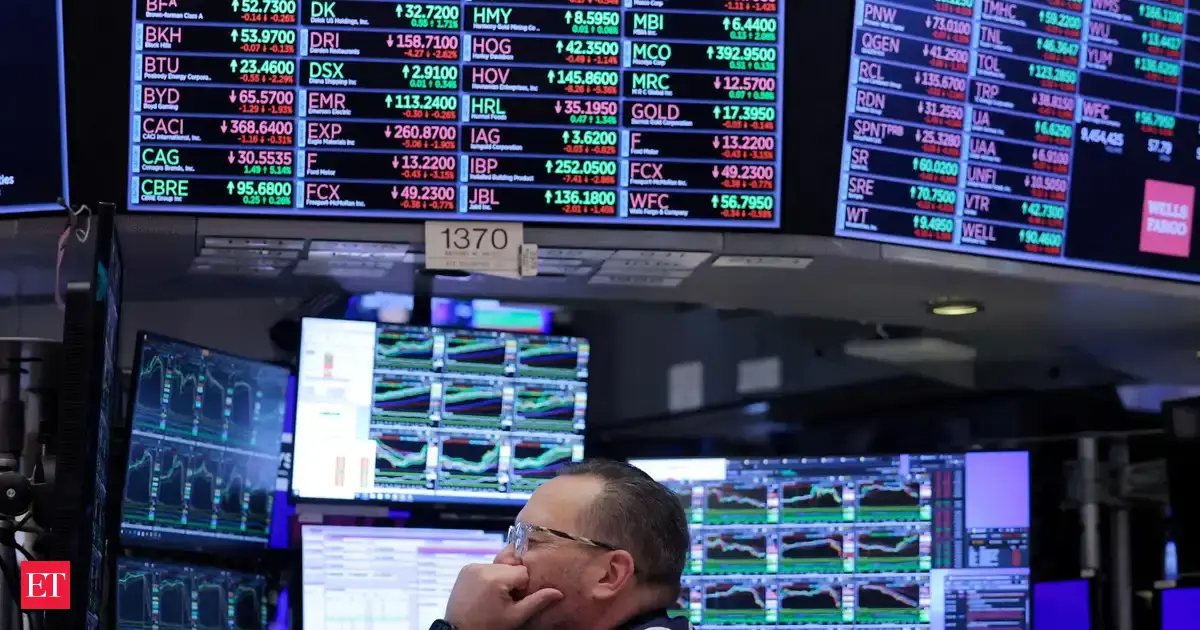
As news of the breach broke across terminal screens and wire services, panic rippled through global trading desks. The psychological impact on market sentiment was immediate, triggering automated risk-management protocols across quantitative trading funds and decentralized finance (DeFi) liquidity pools alike.
The $4.6 Billion Exodus: A Masterclass in Stress Testing Liquidity

When confidence falters in centralized finance, the response is immediate and unforgiving. Within hours of the exploit confirmation, Binance faced a high-velocity capital exodus. On-chain metrics captured an unprecedented surge in withdrawal requests spanning Bitcoin, Ethereum, stablecoins, and various altcoin assets.
To put the $4.6 billion figure into perspective, this withdrawal volume eclipses historical runs seen during previous exchange insolvencies and regulatory crackdowns. Yet, unlike historical failures where platforms restricted withdrawals—citing "network congestion" or "unusual market activity"—Binance's automated matching and settlement engines continued processing transactions.
| Metric / Parameter | Pre-Crisis Baseline | Peak Crisis Phase (72 Hours) | Post-Incident Recovery |
|---|---|---|---|
| Total Net Outflows | Normal daily net flow (±$200M) | $4.68 Billion | Stabilizing / Net positive inflows |
| Average Withdrawal Latency | < 15 minutes | 1 to 4 hours (Network dependent) | < 20 minutes |
| Proof-of-Reserves Ratio | > 100% (Over-collateralized) | Maintained above 100% threshold | Audited and verified |
| Institutional Capital Retention | High enterprise concentration | Significant rotation to self-custody | Gradual re-allocation |
The ability to absorb a $4.6 billion liquidity drain without collapsing underscores the robust capital reserves and balance sheet depth that top-tier exchanges maintain. However, the event exposed the inherent vulnerabilities of centralized hot-storage frameworks in an era of increasingly sophisticated state-sponsored cyber warfare.
Industry and Market Implications: Winners, Losers, and Structural Shifts
The ripple effects of the hack and subsequent bank run extend far beyond Binance's corporate ledger, reshaping the strategic landscape for institutional market participants and regulatory bodies.
1. Institutional Capital Allocation and Risk Mitigation
Corporate treasuries and venture capital funds are rapidly altering how they calculate counterparty risk. The traditional reliance on centralized exchanges for day-to-day liquidity is being re-examined. Institutional investors are pivoting toward qualified custodians, multi-party computation (MPC) custody solutions, and decentralized trading venues to insulate their portfolios from single-point-of-failure risks.
2. The Rise of Self-Custody and Hardware Infrastructure
Hardware wallet manufacturers and decentralized key management providers reported record sales during the crisis. The industry-wide mantra of "not your keys, not your coins" regained aggressive momentum, driving a permanent structural shift in how retail and high-net-worth individuals store digital assets.
3. Regulatory Compliance and Transparency Standards
Global financial regulators—from the U.S. Securities and Exchange Commission (SEC) to the European Banking Authority (EBA)—are utilizing the incident as empirical justification for stricter oversight. Expect forthcoming mandates requiring centralized exchanges to implement cryptographic proof-of-reserves verified by independent third-party auditors on a continuous, real-time basis, rather than via periodic snapshots.
Frequently Asked Questions (People Also Ask)
How did Binance manage to process $4.6 billion in withdrawals without collapsing?
Binance maintained deep liquidity pools and over-collateralized proof-of-reserves that exceeded customer liabilities. Despite the extreme volume, the exchange's automated risk systems ensured that solvency was preserved, allowing all legitimate user withdrawal requests to be fulfilled without defaulting.
What were the primary security vulnerabilities exploited in the hack?
While forensic investigations remain ongoing, preliminary reports indicate that the attackers compromised high-privilege administrative credentials and exploited weaknesses in cross-chain bridge validation protocols, allowing them to authorize unauthorized token withdrawals from hot wallet infrastructure.
Are user funds safe on centralized cryptocurrency exchanges?
While top-tier exchanges employ institutional-grade security measures—including cold storage, multi-sig authorization, and continuous threat monitoring—no platform is entirely immune to sophisticated cyber attacks. Financial advisors recommend diversifying asset storage between trusted custodial platforms and hardware-based self-custody solutions.
How will this event impact cryptocurrency market valuations and liquidity?
In the short term, market volatility spiked as traders deleveraged and capital moved off exchanges. Long term, the incident is expected to accelerate institutional demand for robust custody infrastructure, drive tighter regulatory compliance, and ultimately foster a more resilient market structure.
Future Outlook: What Comes Next for Digital Asset Exchanges
The $4.6 billion run on Binance serves as a watershed moment for the digital asset economy. As the industry matures, the margin for operational error narrows drastically. Moving forward, valuation multiples for exchange operators will no longer be determined solely by trading volume and user acquisition metrics, but by their cybersecurity posture, infrastructure scalability, and transparency of reserves.
Key milestones to monitor in the coming quarters include the widespread adoption of zero-knowledge (ZK) proof-of-reserves systems, the evolution of decentralized insurance pools covering smart contract and custody exploits, and the harmonization of international regulatory frameworks governing digital asset exchanges. For Binance and its competitors, the path forward requires an uncompromising commitment to engineering resilient cloud architectures and rebuilding institutional trust.