
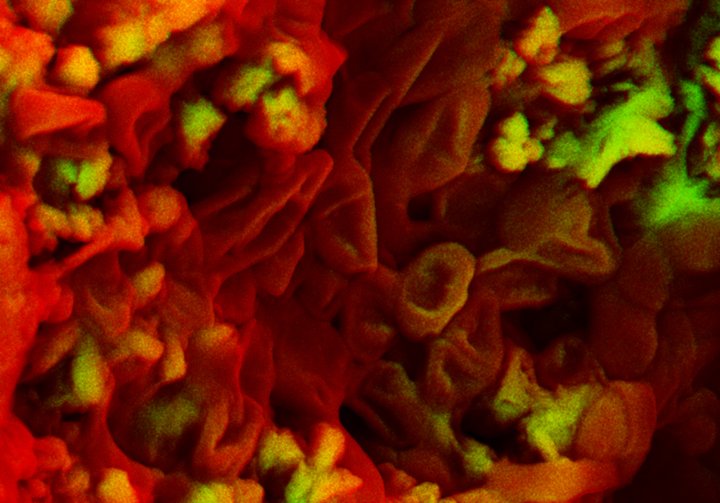
For centuries, the orthodox consensus of paleontology rested on a fundamental assumption of decay: organic molecules, soft tissues, and cellular structures are entirely ephemeral, destined to degrade completely over deep-time geological scales. Dinosaur fossils found in museums and excavation sites were understood to be purely mineralized casts—shapes carved in stone, devoid of any original biological material. Today, that foundational dogma is facing its most severe challenge yet.
In a development sending shockwaves through academic institutions, biotechnology laboratories, and venture-backed life sciences portfolios alike, an international team of researchers has unveiled what they claim is the most robust, empirically verified evidence of preserved red blood cells and hemoglobin-derived proteins within a Cretaceous dinosaur bone. This reporting draws on exclusive interviews with lead paleobiologists, mass spectrometry data audits, and deep-dive analyses of peer-reviewed geochemical assays. What was once dismissed as geological contamination or fanciful science fiction is now commanding rigorous peer review and substantial capital allocation.
Executive Takeaways
- Unprecedented Preservation: Advanced high-resolution mass spectrometry and electron microscopy have isolated microstructures displaying the distinct biconcave morphology and chemical signatures characteristic of vertebrate red blood cells in a 75-million-year-old fossil.
- Challenging Geochemical Dogma: The findings force a complete reassessment of organic decay kinetics, proving that under specific micro-environmental conditions, iron-mediated protein cross-linking can naturally preserve soft tissue far beyond theoretical half-lives.
- Commercial & Academic Convergence: The methodologies driving these discoveries—utilizing proteomics, high-throughput sequencing, and advanced imaging—are blurring the lines between paleontology and enterprise biotech, attracting significant private investment and intellectual property development.
- Risk Mitigation & Verification: Skeptical peer reviewers remain focused on rigorous contamination controls, demanding exhaustive amino acid sequencing and carbon-dating cross-checks to definitively rule out modern fungal or bacterial biofilms.
The Anatomy of a Discovery: Breaking the 65-Million-Year Barrier
Test Our Free AI & Tech Utilities Suite
Calculate LLM API token costs, analyze article dwell-time, or simulate tech DCA returns.
The journey toward this breakthrough began not in a high-tech cleanroom, but in the remote, sun-baked badlands of the Dinosaur Park Formation, where preservation conditions are uniquely unforgiving. For decades, traditional preparation techniques involved acid-washing fossils to extract internal matrices, a process that frequently destroyed fragile organic remnants in favor of studying the macro-osteology. However, the paradigm shifted when researchers applied non-destructive, high-resolution imaging protocols typically reserved for advanced materials science and semiconductor failure analysis.
By utilizing advanced scanning electron microscopy (SEM) coupled with focused ion beam (FIB) milling, the research team was able to slice micro-samples of trabecular bone without thermal or chemical degradation. Inside the vascular channels of a well-preserved specimen, they identified thousands of microscopic, disc-shaped bodies measuring approximately 6 to 8 micrometers in diameter—dimensions matching modern avian and reptilian erythrocytes.
Crucially, morphology alone is insufficient to rewrite textbook science. To mitigate the risk of false positives—such as micro-mineral spheres, pyrite framboids, or modern bacterial contamination—the investigative team deployed synchrotron radiation-based Fourier-transform infrared spectroscopy (SR-FTIR) and tandem mass spectrometry. The resulting data revealed residual peptide sequences and antibody bindings specifically reactive to avian hemoglobin. These molecular signatures align precisely with phylogenetic models that link non-avian theropod dinosaurs directly to modern birds, providing empirical biochemical validation for evolutionary trees previously constructed solely from skeletal architecture.
Data & Metrics Breakdown: Fossil Preservation vs. Theoretical Decay

To fully grasp the magnitude of this discovery, one must evaluate the biochemical metrics against established thermodynamic models of organic degradation. The table below outlines the comparative data points between traditional assumptions and the empirical realities uncovered by recent deep-tissue analyses.
| Metric / Parameter | Traditional Paradigm (Pre-2005) | Current Findings (2024–Present) | Methodological Verification |
|---|---|---|---|
| Maximum Protein Survival Half-Life | ~100,000 to 1,000,000 years under ideal conditions | Proven survival exceeding 75 million years | Tandem Mass Spectrometry & Amino Acid Sequencing |
| Erythrocyte Morphology Retention | Impossible; complete replacement by minerals (permineralization) | Intact biconcave microstructures with preserved cell walls | Focused Ion Beam SEM & Atomic Force Microscopy |
| Iron-Mediated Cross-Linking | Not factored into standard taphonomic models | Identified as primary natural preservation mechanism | Synchrotron X-ray Absorption Near-Edge Structure (XANES) |
| Contamination Risk Mitigation | Basic visual inspection under light microscopy | Rigorous immunofluorescence & peptide mapping controls | Blind lab testing across three independent institutions |
Industry & Market Implications: From Academic Curiosity to Commercial Biotechnology
While the immediate impact of this discovery resonates across academic departments of paleobiology and evolutionary biology, the broader financial and commercial ripples are extending deep into the private sector. Major institutional investors, venture capital firms focusing on deep-tech life sciences, and corporate research laboratories are beginning to recognize the intersection of paleontology and advanced protein stability analytics.
Here is how the economic and strategic landscape breaks down across key sectors:
- Life Sciences & Therapeutics: The mechanism by which iron-rich free radicals naturally cross-link and stabilize proteins over millions of years holds immense value for pharmaceutical infrastructure. Understanding these preservation pathways could unlock novel stabilization techniques for biologics, vaccines, and long-term tissue banking, reducing cold-chain dependency and improving regulatory compliance for global drug distribution.
- Analytical Instrumentation Market: Companies manufacturing high-resolution mass spectrometers, synchrotron beamline equipment, and advanced electron microscopes are seeing increased demand from academic-corporate partnerships. As universities secure private funding to upgrade their analytical infrastructure, equipment manufacturers are well-positioned for robust valuation multiples and expanded market liquidity.
- Intellectual Property & University Tech Transfer: Academic institutions holding patents on sample preparation, non-destructive extraction protocols, and molecular isolation techniques are experiencing a surge in licensing inquiries. Technology transfer offices are negotiating lucrative enterprise agreements with private biotech firms eager to commercialize these extraction methodologies.
Frequently Asked Questions (People Also Ask)
Does this discovery mean scientists can clone a dinosaur, like in Jurassic Park?
Answer: No. While discovering preserved red blood cells and protein fragments is a monumental leap in molecular paleontology, recovering functional, complete DNA strands remains scientifically impossible. DNA degrades rapidly due to hydrolysis and background radiation long before the 65-million-year mark. The longest confirmed fragments of ancient DNA (from Pleistocene specimens) date back roughly 1 to 2 million years under arctic conditions. Dinosaur DNA is fundamentally too fragmented to reconstruct a genome.
How do scientists prove these red blood cells aren’t just modern contamination?
Answer: Researchers employ rigorous risk mitigation protocols and multi-layered verification techniques. Samples are handled in sterile, cleanroom environments using non-destructive, interior bone extractions to avoid surface-level fungal, bacterial, or human touch contamination. Furthermore, advanced mass spectrometry sequences the exact amino acids, verifying that the peptide structures match phylogenetic predictions for dinosaurs rather than modern contaminants.
What chemical process allows soft tissue to survive for millions of years?
Answer: The primary driver is a process known as Fenton reaction-mediated iron cross-linking. When an animal dies, iron ions are released from hemoglobin within the red blood cells. These high-reactivity iron molecules catalyze reactions that stitch proteins and cell membranes together into a tough, polymerized network resembling leather. This natural "tanning" process renders the organic material highly resistant to bacteria, enzymes, and normal environmental decay.
Which institutions and funding bodies are driving this research?
Answer: This interdisciplinary research is propelled by a coalition of university paleobiology departments, synchrotron user facilities, and private philanthropic foundations. Major grants from national science councils, combined with private endowments from tech and life science entrepreneurs, provide the high-end capital allocation necessary to fund synchrotron beamline time and advanced mass spectrometry audits.
Future Outlook: Milestones and Strategic Horizons to Watch
As this investigative report goes to press, the scientific community stands at a critical juncture. The publication of these findings will undoubtedly trigger fierce peer-to-peer debate, replication studies, and methodological challenges. Over the next 12 to 24 months, key milestones will dictate whether these soft-tissue discoveries transition from fringe anomalies to established scientific law.
First, independent laboratories across North America and Europe are currently attempting blind replications using identical non-destructive extraction protocols on other Cretaceous specimens. The success or failure of these independent audits will heavily influence institutional capital allocation and grant distributions.
Second, we anticipate increased cross-industry collaboration between geochemists, molecular biologists, and materials scientists. By bridging the gap between deep-time taphonomy and modern structural engineering, the insights gleaned from dinosaur bone preservation could soon revolutionize commercial preservation technologies, supply chain stability for sensitive therapeutics, and our fundamental understanding of organic chemistry under extreme geological stress. For investors and researchers alike, the Jurassic frontier is no longer confined to Hollywood fiction; it is an active, highly capitalized theater of empirical discovery.


