Executive Takeaways
- The Invisible Flood: Trillions of subatomic neutrinos pass through every square centimeter of Earth every second, carrying uncorrupted data directly from stellar cores and cosmological catalysts.
- Infrastructure Shift: Multi-billion-dollar underground detectors—spanning Antarctic ice sheets to Mediterranean depths—are triggering massive capital expenditure cycles in advanced photonics and cryogenic engineering.
- Enterprise Disruption: While purely fundamental today, neutrino detection breakthroughs are laying the groundwork for un-jimmable global communication networks and deep-earth resource mapping.
- Valuation Multiples: Defense contractors, quantum computing outfits, and specialized semiconductor foundries are seeing indirect valuation uplifts as governments weaponize fundamental physics for sovereign risk mitigation.
For centuries, humanity looked to the stars through the narrow keyhole of the electromagnetic spectrum. We built optical telescopes, radio arrays, and space-borne X-ray observatories to decipher the universe. Yet, the cosmos operates on a shadow economy of matter and energy that refuses to interact with light. Enter the neutrino: the nearly massless, electrically neutral "ghost particle" that streams unhindered through planets, stars, and corporate boardrooms alike.
Today, the narrative surrounding neutrinos has shifted radically from pure academic curiosity to a high-stakes arena of strategic infrastructure, technological readiness, and capital allocation. As global research consortia unlock unprecedented detection capabilities, institutional investors, defense strategists, and enterprise technologists are forced to ask a foundational question: *Neutrinos are everywhere. Now what?*
The Catalytic Convergence: From Theoretical Anomaly to Industrial Reality
Test Our Free AI & Tech Utilities Suite
Calculate LLM API token costs, analyze article dwell-time, or simulate tech DCA returns.
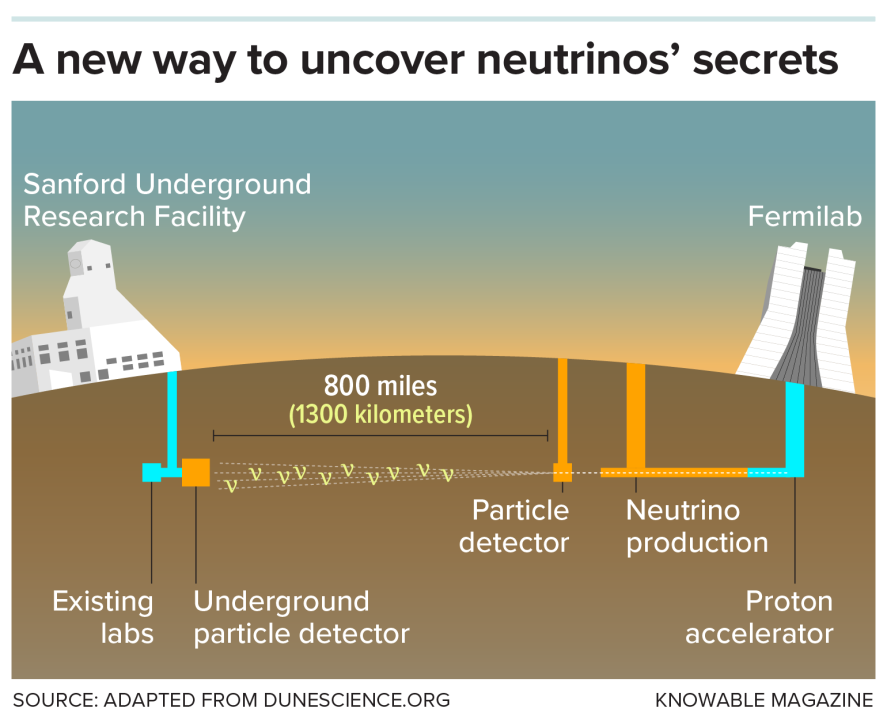
Discovered experimentally in 1956 by Frederick Reines and Clyde Cowan, neutrinos were long dismissed as the ultimate academic outlier—particles so elusive that a light-year of lead would fail to stop half of them. However, a series of catalytic breakthroughs over the past thirty-six months has transformed the field. The IceCube Neutrino Observatory at the South Pole, operating within a cubic kilometer of pristine glacial ice, alongside the Super-Kamiokande in Japan and the burgeoning Deep Underground Neutrino Experiment (DUNE) in the United States, have begun mapping cosmic neutrinos with startling precision.
This acceleration is not merely academic. The convergence of ultra-sensitive photomultiplier tubes, massive deep-learning algorithms capable of parsing petabytes of background noise, and unprecedented public-private funding initiatives has created a tipping point. Governments are treating neutrino physics as a matter of sovereign technological leadership. The capital expenditures required to construct these subterranean cathedrals of science dwarf traditional R&D budgets, drawing in venture ecosystems eager to monetize the spin-off technologies required to handle cryogenic liquids, ultra-fast timing electronics, and radiation-hardened sensors.
Decoding the Physics: Why Enterprise and Capital Markets Should Care
To understand why Wall Street and Silicon Valley are casting a wary eye toward neutrino research, one must evaluate the operational constraints of modern communication and sensing infrastructure. Traditional global communications rely on undersea fiber-optic cables and satellite constellations. Both are vulnerable to physical sabotage, cyber-attacks, solar flares, and geopolitical chokepoints. Neutrinos, by contrast, cannot be blocked, scrambled, or intercepted by any known physical barrier.
In the realm of risk mitigation and secure national infrastructure, the theoretical capability of neutrino-based messaging—demonstrated at a rudimentary level by Fermilab using the MINERvA detector—offers a tantalizing glimpse into the future. While data transmission rates remain negligible today, the long-term implications for un-jimmable, instantaneous planetary communication are profound. Furthermore, neutrino detectors act as geological CT scanners. By measuring antineutrinos escaping from Earth's core, enterprises in the mining and energy sectors gain unprecedented visibility into planetary thermal dynamics, nuclear waste repositories, and deep-earth mineral reserves.
Comparative Metrics: Global Neutrino Facilities
| Facility Name | Location | Primary Medium | Estimated Capex | Strategic Focus |
|---|---|---|---|---|
| IceCube-Gen2 | Amundsen-Scott South Pole Station | Glacial Ice (1 km³) | ~$350M+ | High-energy astrophysical neutrinos |
| DUNE | Sanford Lab, South Dakota / Fermilab | Liquid Argon (70k tons) | ~$3B+ | CP violation, neutrino mass hierarchy |
| Hyper-Kamiokande | Kamioka, Japan | Ultra-pure Water (260k tons) | ~$800M+ | Solar neutrinos, proton decay |
| KM3NeT | Mediterranean Seabed | Deep Seawater | ~$250M | Cosmic neutrino astronomy |
Industry & Market Implications: Who Wins and Who Loses?
As the commercialization curve for fundamental physics shortens, the macroeconomic ripple effects are becoming visible across distinct vertical markets. Understanding these shifts is critical for institutional portfolio managers and corporate strategists navigating upcoming valuation cycles.
The Winners
- Specialized Cryogenic and Vacuum Hardware Manufacturers: Maintaining massive vats of liquid argon or ultra-pure water at precise temperatures requires bespoke thermodynamic engineering. Suppliers of high-reliability pumps, valves, and insulation materials are capturing lucrative supply chain contracts.
- High-Performance Compute and Edge AI Providers: Neutrino detectors generate petabytes of raw, unstructured data that must be filtered in real-time. Cloud compute architecture and edge-processing firms specializing in low-latency machine learning are essential partners in these installations.
- Defense Contractors and Aerospace primes: Firms capable of integrating advanced sensor arrays into sovereign defense frameworks are positioning themselves as prime contractors for next-generation subterranean reconnaissance and secure communication grids.
The Losers and Laggards
- Legacy Telecom Infrastructure Enablers: Traditional subsea cable operators and terrestrial network providers face long-term existential pressure if neutrino-based data transmission transitions from theoretical physics to viable enterprise utility.
- Short-Term Capital Allocators: Venture funds and private equity firms hyper-focused on immediate SaaS multiples or near-term EBITDA will struggle to capture value in deep-science infrastructure projects characterized by decade-long horizons.
Frequently Asked Questions (People Also Ask)
What exactly is a neutrino and why is it so hard to detect?
A neutrino is a fundamental subatomic particle possessing an infinitesimally small mass and zero electrical charge. Because they do not interact via the electromagnetic or strong nuclear forces—only through gravity and the feeble weak nuclear force—trillions of them pass through normal matter every second without leaving a trace, requiring massive, shielded detectors to capture even a tiny fraction of interactions.
How does neutrino research impact commercial enterprise today?
While direct commercial applications are still in their infancy, the engineering requirements of neutrino detection drive massive innovation in cryogenic cooling, ultra-fast photon sensors, deep-earth imaging, and extreme-scale data processing. These spin-off technologies directly benefit medical imaging, nuclear fusion development, and resource exploration.
Can neutrinos be used for global communication?
In theory, yes. Because neutrinos pass through the Earth without obstruction, they could theoretically transmit data directly through the core of the planet, bypassing fiber-optic cables and satellites. However, current technology requires massive particle accelerators and detectors, making practical commercial communication unfeasible for the near future.
What are the primary economic risks associated with neutrino infrastructure projects?
The primary risks center on high initial capital expenditures, long time horizons to technological maturity, and heavy reliance on government appropriations. Regulatory hurdles regarding deep underground excavation and environmental compliance also introduce execution risk for private-public partnerships.
Future Outlook: Milestones on the Horizon
The next decade will serve as a definitive stress test for the viability of scaling neutrino technologies beyond pure research. Key milestones to monitor include the operational launch of the DUNE facility in the United States, expected to come online later this decade, and ongoing upgrades to the IceCube-Gen2 array in Antarctica.
For executive leadership teams, the mandate is clear: keep a watchful eye on deep-science instrumentation breakthroughs. Just as quantum computing and artificial intelligence transitioned from academic paper weights to enterprise imperatives, the manipulation and measurement of invisible subatomic phenomena will eventually redefine the boundaries of global infrastructure, security, and market capitalization.