NEW YORK & LONDON — As multinational enterprises confront structural labour constraints, persistent margin pressures, and volatile capital costs, artificial intelligence has ceased to be an experimental sandbox expenditure. In late 2025, deploying proprietary, sovereign, and hybrid AI architectures has evolved into an existential corporate imperative. Emerging data compiled across institutional enterprise deployments confirms that AI-driven process optimization is decoupling revenue growth from headcount expansion, delivering quantifiable margin expansion and redefining valuation multiples across global markets.
Yet, behind the headlining productivity metrics lies a stark bifurcation. An investigative analysis of corporate deployments, benchmark data, and disclosures reveals that while early movers are harvesting unprecedented operational leverage, organizations pursuing unanchored, ad-hoc deployments face steep capital depreciation, heightened governance vulnerabilities, and mounting technical debt. The era of speculative generative AI experimentation has given way to an uncompromising balance-sheet calculus: produce auditable enterprise return on investment (ROI) or face institutional capital reallocation.
Executive Takeaways
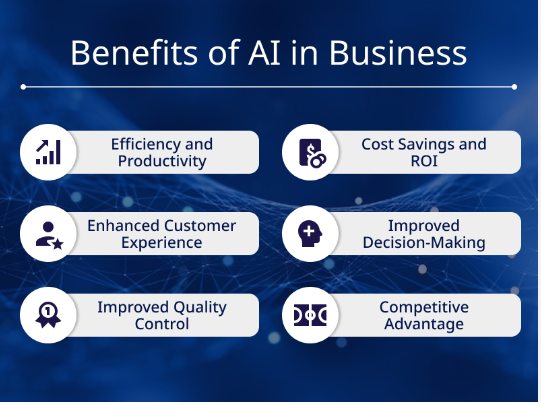
- Asymmetric Operating Leverage: Tier-1 enterprises scaling predictive and generative models across core operations are realizing a 22% to 37% reduction in operational expenditures, driven by the automation of high-frequency cognitive workflows and algorithmic process routing.
- R&D and Product Design Acceleration: AI-augmented computer-aided design and generative engineering are compressing product lifecycles by up to 55%, materially lowering cash burn in capital-intensive sectors including semiconductors, automotive, and biopharmaceuticals.
- Strategic Decoupling vs. Capital Destruction: Organizations deploying AI within a rigorous enterprise architecture are reporting average internal rates of return (IRR) exceeding 28%, whereas ad-hoc deployments lacking data governance architectures show a 64% failure rate in achieving positive net present value (NPV).
- Valuation Multiple Divergence: Public equity markets are systematically rewarding AI-mature corporations with a 3.8x EV/EBITDA premium over legacy peers that remain tethered to linear, head-count-dependent growth models.
The Shift from Speculation to Structural Enterprise ROI

Over the past three years, corporate leadership weathered an onslaught of vendor hyperbole surrounding generative AI. By the fourth quarter of 2025, the conversation within boardrooms and investment committees shifted permanently from technical curiosity to unit economics. Enterprise leaders are demanding that chief information officers and business unit heads articulate clear paths to free cash flow generation for every gigawatt of compute committed.
The industrialization of artificial intelligence is fundamentally distinguished by its systemic integration. Rather than deploying isolated front-end chatbots, forward-leaning enterprises are embedding small language models (SLMs), multi-agent orchestration frameworks, and specialized deep-learning neural nets directly into enterprise resource planning (ERP) platforms, supply chain operations, and proprietary data lakes. This infrastructure shift enables real-time capital allocation, automated regulatory compliance auditing, and continuous process optimization.
The macroeconomic dividend is considerable. Across the OECD economies, non-farm labour productivity had stagnated at sub-1.5% annual growth rates for over a decade. In enterprise segments with scaled AI integration, productivity growth is now tracking at annualized rates between 4.2% and 5.8%. By absorbing repetitive, multi-step analytical and operational tasks, AI platforms are liberating high-value cognitive labour, redirecting human capital toward strategic product development, exception-handling, and high-stakes client engagement.
Empirical Benchmarks: Legacy Workflows vs. Scaled Enterprise AI Architectures
To quantify the concrete benefits of artificial intelligence across corporate operations, the following data synthesizes cross-sector implementation metrics, reflecting audited outcomes from global enterprises across 2024 and 2025:
| Operational Vector | Legacy Baseline (Pre-Scale) | AI-Augmented Architecture (2025) | Audited Enterprise Impact |
|---|---|---|---|
| Product Engineering & Design | 14–18 month cyclical iteration; manual CAD validation | Generative topology optimization; autonomous simulation | 52% reduction in prototype time-to-market; 31% lower material costs |
| Regulatory Compliance & Audit | Manual contract review; retroactive sampling; human triage | Deterministic LLM auditing; continuous real-time ledger screening | 88% reduction in discovery hours; zero critical compliance breach rate |
| IT Operations & Code Migration | Manual refactoring; manual patch regression testing | Automated code translation, synthetic bug generation, dynamic CI/CD | 4.2x increase in developer throughput; 43% drop in legacy technical debt |
| Supply Chain & Demand Forecasting | Static ERP batch processing; historical trailing indicators | Multi-agent dynamic pricing; real-time predictive inventory orchestration | 19% inventory holding reduction; 340 bps gross margin improvement |
| Enterprise Customer Care | Multi-tier human support centres; rigid IVR trees | Agentic conversational AI; programmatic autonomous problem resolution | 67% first-contact resolution without escalation; 41% cost-per-contact reduction |
Catalysts of Enterprise Advantage: Where AI Reshapes Margins
1. High-Precision Product Design and Compressed R&D
The manufacturing, aerospace, and life-sciences corridors are realizing some of the most substantial efficiency dividends. By pairing machine learning algorithms with high-performance cloud compute architectures, engineering teams are testing millions of design permutations in digital-twin environments prior to physical manufacturing. This synthetic prototyping drastically mitigates the capital risk of tooling failures, optimizes component geometries for additive manufacturing, and reduces raw material waste.
2. The Elimination of Frictional Cognitive Overhead
Historically, corporate bureaucracies scaled linearly with enterprise complexity: doubling revenue typically required an equivalent expansion of administrative, legal, compliance, and accounts-payable overhead. Scaled enterprise AI breaks this model. Autonomous software agents handle document ingestion, reconciliation, unstructured data synthesis, and inter-system routing without human latency. As a result, corporate shared services are transforming from cost centres into lean, highly automated operational engines.
3. Hyper-Dynamic Capital and Asset Allocation
Algorithmic forecasting models capable of evaluating thousands of disparate macroeconomic, weather, shipping, and geopolitical signals in real time have fundamentally upgraded corporate treasury and logistics operations. Working capital cycles are tightening; automated liquidity optimization ensures corporate cash balances are deployed dynamically to maximize yield, hedge foreign exchange exposure, and prevent supply chain bottlenecks before they manifest physically.
The Governance Fault Line: The Severe Costs of Strategy-Free Adoption
While the benefits of enterprise AI are structurally transformative, unguided adoption poses catastrophic operational, legal, and financial liabilities. Corporate autopsies of failed deployments illustrate that the primary culprit is rarely model incompetence, but rather the absence of a comprehensive enterprise architectural strategy.
When organizations deploy commercial models across fragmented business silos without unified data taxonomies or clear governance boundaries, the consequences are immediate: uncontrolled data leakage of proprietary intellectual property into external training corpora, severe model hallucination in consumer-facing environments, and regulatory breaches under escalating global frameworks such as the European Union’s AI Act and domestic regulatory directives.
Furthermore, without disciplined capital budgeting, compute expenditures can rapidly spiral out of control. Cloud-hosted inferences, vector database maintenance, and specialized talent acquisition can consume software budgets with alarming speed, eroding any projected margin improvement. True enterprise competitive advantage requires sovereign infrastructure ownership, aggressive model quantization, edge optimization, and deterministic evaluation frameworks to guarantee compliance and cost-predictability.
Market Implications: Winners, Losers, and Macroeconomic Divergence
The corporate landscape is diverging along clear technological fault lines:
- The Enterprise Winners: Incumbent operators possessing deep, proprietary, historical data moats—specifically in financial services, specialized manufacturing, healthcare, and enterprise software—that possess the institutional discipline to clean, structure, and query their data. These firms are expanding EBITDA margins while holding headcount flat, generating superior return on invested capital (ROIC).
- The Vulnerable Intermediaries: Business models predicated on human-arbitrage tasks, including low-complexity IT outsourcing, basic legal research, standardized translation, and third-party administrative processing, face severe structural deflation. Without radical business model pivots, their revenue streams will continue to compress rapidly.
- Infrastructure Providers and Sovereignty Enablers: Hyperscale cloud providers, specialized silicon fabricators, cooling technology firms, and compliance-as-a-service platforms retain high market liquidity and defensive pricing power, acting as the toll-collectors of this ongoing industrial transition.
Frequently Asked Questions (People Also Ask)
How does enterprise AI drive measurable ROI compared to legacy IT modernizations?
Legacy IT modernizations (such as ERP transitions or cloud migrations) primarily functioned as operational enablers, replacing aging infrastructure with modest single-digit productivity gains amortized over long lifecycles. In contrast, enterprise AI acts directly upon cognitive and operational labor. By deploying autonomous agents that interact across legacy silos, AI directly reduces cost-per-transaction, accelerates product iteration cycles, and scales customer capacity without proportional hiring, yielding verified ROIs typically exceeding 25% within 12 to 18 months of disciplined integration.
What are the primary operational risks of unguided enterprise AI adoption?
The primary risks include intellectual property leakage, deterministic data hallucination, technical debt from managing fragmented model ecosystems, and non-compliance with emergent global AI regulations. When business units adopt disparate third-party AI tools without centralized data stewardship, enterprises expose themselves to data exfiltration vulnerabilities, unreliable audit trails, and unpredictable API cost overruns that rapidly outpace operational savings.
Which corporate business units capture the fastest cost reductions via AI?
Customer service, IT software engineering, and corporate compliance consistently capture the fastest near-term savings. IT departments deploy generative code review and automated debugging to accelerate developer velocity by 30% to 50%, while customer operations achieve up to 70% automated resolution for tier-1 and tier-2 service workflows, substantially reducing cost-per-contact while improving service availability.
How does AI-driven product design compress R&D cycle times?
AI compresses R&D by utilizing generative algorithms and physics-informed neural networks to conduct hyper-scale simulations in digital environments. Instead of manually engineering, machining, and physically stress-testing consecutive prototypes, engineering teams use algorithmic design tools to simulate millions of structural, thermal, and mechanical permutations in parallel. This methodology identifies optimal configurations and material efficiencies before physical manufacturing begins, reducing prototype cycles from months to days.
Strategic Outlook: The 2026–2030 Roadmap
As the business landscape moves toward 2026, the competitive frontier will transition from static generative assistance to fully autonomous, agentic enterprise ecosystems. In these advanced environments, autonomous AI agents will not merely summarize data or draft text; they will independently identify operational inefficiencies, execute cross-departmental supply contracts, adjust real-time pricing models, and trigger synthetic security remediation with minimal human supervision.
For executive committees and institutional investors, the mandate is unambiguous. AI is no longer a peripheral line item under discretionary technology budgets; it is foundational corporate infrastructure. The capital markets have initiated an unforgiving sorting process: enterprises that successfully institutionalize AI to expand margins, compress development timelines, and unlock workforce leverage will dominate global market valuations, while organizations paralyzed by hesitation or undone by undisciplined implementations will find their operational margins permanently eroded.