The $500 Billion Orbital Pivot: Inside ISRO’s PSLV-C62 Launch and the Rise of a Multipolar Space Economy
Executive Takeaways
- Orbital Oligopoly Fractures: The flawless execution of the Polar Satellite Launch Vehicle (PSLV-C62) mission from Sriharikota solidifies India’s NewSpace India Limited (NSIL) as a primary institutional counterweight to SpaceX’s Falcon 9 launch dominance.
- Enterprise Capital Re-Allocation: Western satellite operators and venture-backed constellation architects are aggressively diversifying their manifest risks, pivoting treasury capital toward non-Western launch providers to hedge against rising Western manifest congestion and premium launch rate inflation.
- Geopolitical Realignment: With Roscosmos structurally isolated by international sanctions and Europe’s Ariane 6 facing protracted commercial scaling cycles, the Indian Space Research Organisation (ISRO) has transitioned from an indigenous science bureau into a premier commercial conduit for the Global South and transatlantic commercial tech alike.
- Unit Economics Optimization: PSLV-C62 delivers optimized dollar-per-kilogram unit economics for Sun-Synchronous Orbit (SSO) insertions, unlocking institutional private equity and infrastructure fund interest across downstream geospatial intelligence, low-latency broadband, and orbital edge-computing sectors.
The Sriharikota Paradigm: Dismantling the Launch Monopoly
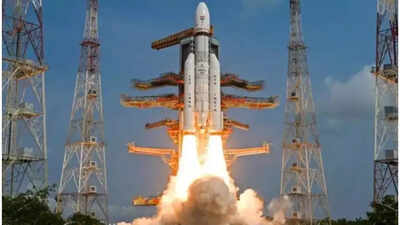
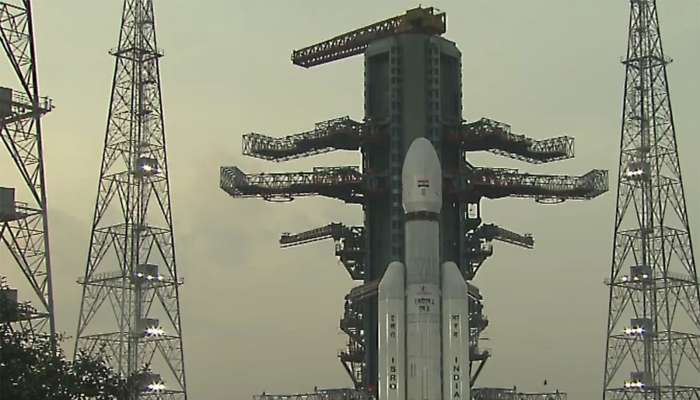
When the four-stage, 44-meter-tall PSLV-C62 vehicle cleared the first launch pad at the Satish Dhawan Space Centre on the barrier island of Sriharikota, the plume illuminated far more than the Bay of Bengal coastline. It illuminated a structural inflection point in the macroeconomics of modern aerospace. Long viewed by transatlantic space commands as an economical, domestic-focused platform, the Indian workhorse has definitively graduated into a linchpin of global orbital commerce.
The mission’s payload configuration—a high-stakes synthesis of next-generation Earth-observation assets, tactical sovereign reconnaissance platforms, and high-margin, commercial secondary-payload rideshares from multinational enterprise clients—underlines a sweeping strategic pivot. For nearly two decades, enterprise CIOs, sovereign satellite operators, and institutional telecom consortia operated under a de facto duopoly, or worse, single-vendor vulnerability. The market’s reliance on SpaceX’s unmatched cadence masked an uncomfortable balance-sheet reality: enterprise-wide single-point-of-failure risk, surging insurance underwriting exposure, and diminishing bargaining leverage on mission margins.
The successful orbital injection achieved by PSLV-C62 shatters that operational vulnerability. In an era where commercial space is projected by Morgan Stanley and Goldman Sachs to clear $1 trillion by the turn of the next decade, India’s state-commercial apparatus has decisively crossed the threshold from aspirational space power to indispensable infrastructure provider. The world order of spaceflight has ceased to be bipolar; it is now irrevocably multipolar.
The Geopolitical Vacuum: Sanctions, Delays, and the Capacity Crunch
To grasp the significance of PSLV-C62 is to examine the macro-structural breakdown of global launch capacity over the past four years. The systemic isolation of Russia’s Soyuz launch infrastructure following the escalation of geopolitical conflict in Eastern Europe excised a critical volume of reliable, medium-lift capacity from the global merchant launch market. Concurrently, the European Space Agency’s (ESA) transition from Ariane 5 to the long-delayed Ariane 6, combined with the grounding and subsequent re-certification challenges of the light-lift Vega-C, created an acute supply deficit across the continent.
American commercial players faced severe operational constraints. United Launch Alliance (ULA) systematically sunsetted its Delta IV and exhausted Atlas V inventory while pivoting toward the enterprise-heavy Amazon Project Kuiper manifests on its new Vulcan Centaur platform. SpaceX absorbed an overwhelming share of the displaced commercial and defense volume, but market dominance came at a structural cost: commercial launch pricing leverage shifted firmly in Hawthorne’s favor, and private constellation operators faced lengthy queue delays behind Starlink’s own high-density, internal deployment manifests.
Enter ISRO, commercialized through NSIL and supported by aggressive Indian space reforms pioneered under IN-SPACe (Indian National Space Promotion and Authorization Centre). By standardizing the industrial production of the PSLV platform across domestic industrial consortiums—notably tie-ups involving Hindustan Aeronautics Limited (HAL) and Larsen & Toubro (L&T)—India transitioned its manufacturing capability from craft-shop aerospace to scalable, commercial throughput. PSLV-C62 stands as the definitive enterprise proof-of-concept of this industrial transfer.
Capital Allocation, Launch Economics, and Enterprise ROI
For corporate treasurers and space-tech venture partners managing deployment horizons, the PSLV-C62 mission alters downstream valuation multiples. In the high-burn paradigm of Low Earth Orbit (LEO) constellation deployment, satellite operational life cycles rarely exceed five to seven years. Delays in deployment compress the operational earning windows of high-cost hardware depreciating rapidly on enterprise balance sheets.
While the nominal dollar-per-kilogram cost of a PSLV launch has traditionally tracked higher on paper than an internal, bulk-discounted SpaceX Transporter rideshare slot, the metric is fundamentally distorted when evaluating actual enterprise ROI. PSLV’s modular architecture and its proprietary Fourth-Stage Orbital Platform (PS4) capability offer specialized, custom-tailored orbital slot injections. For operators requiring hyper-precise orbital inclination without burning massive onboard propellant reserves to phase into position, the PSLV vehicle yields an extended satellite functional lifespan—directly reducing lifecycle capital expenditures and increasing the net present value (NPV) of individual orbital assets.
Furthermore, international satellite insurance syndicates operating out of London and Zurich have progressively awarded the PSLV line tier-one underwriting status. With a track record spanning decades and an enviable mission reliability percentage hovering north of 95%, insurance premiums for PSLV-C62 and its successor slots are trading at parity with or at discounts to unproven Western micro-launch alternatives. This reliability matrix unlocks institutional debt financing and infrastructure fund credit facilities that previously shunned emergent launch companies due to high catastrophic failure risks.
Comparative Analysis: Global Medium-to-Heavy Commercial Launch Platforms
The following verified intelligence table breaks down the competitive launch architecture confronting institutional operators in 2026:
| Launch Vehicle | Primary Operator / Nation | Payload to LEO / SSO (kg) | Estimated Commercial Cost (Per Launch) | Mission Reliability Index | Strategic Enterprise Market Segment |
|---|---|---|---|---|---|
| PSLV-C62 (XL Variant) | ISRO / NSIL (India) | 1,750 kg (SSO) / 3,800 kg (LEO) | ~$30M – $35M | 95.5%+ | Dedicated SSO injections, Global South sovereignty, constellation backfill |
| Falcon 9 (Block 5) | SpaceX (United States) | 22,800 kg (LEO, Exp.) / Rideshare | ~$67M (Dedicated) / ~$300k+ (Per 50kg Rideshare) | 99.0%+ | Mega-constellations (Starlink), high-mass defense, deep-space institutional |
| Ariane 6 (A62 Variant) | Arianespace (European Union) | 10,300 kg (LEO) | ~$75M – $90M | Operational Ramp | European sovereign autonomy, large telecom institutional satellites |
| Electron | Rocket Lab (USA / New Zealand) | 300 kg (LEO) | ~$7.5M – $8.5M | 92.0%+ | Rapid-response dedicated smallsat, agile tactical defense architectures |
Market Repercussions: Winners, Losers, and Systemic Shifts
The Beneficiaries: NewSpace India and Venture Upstarts
The primary financial victor of the PSLV-C62 breakthrough is India’s domestic aerospace supply chain. By de-risking commercial procurement through NSIL, private defense stalwarts such as Larsen & Toubro, Godrej Aerospace, and Walchandnagar Industries are moving up the value chain from components sub-contractors to full-scale systems integrators. This migration enables domestic space-tech venture companies—such as Pixxel, Skyroot Aerospace, and Agnikul Cosmos—to build upon a validated local industrial base, compressing prototype-to-orbit iteration cycles and commanding higher venture valuation multiples during institutional Series B and C funding rounds.
Simultaneously, sovereign entities across Southeast Asia, Africa, and Latin America have secured an ideological and commercial lifeline. Unwilling to tie their institutional national payloads exclusively to the regulatory orbit of the US Federal Aviation Administration (FAA) or trade-restricted platforms, these nations are utilizing ISRO’s infrastructure for sovereign observation, agricultural monitoring, and border management infrastructure.
The Losers: SmallSat Pure-Plays and Captive Western Launchers
The validation of high-cadence, cost-effective PSLV operations exerts structural margin compression on Western venture-funded "micro-launcher" startups. Over the past six years, dozens of small-launch enterprises raised billions on the promise of offering dedicated rides to smallsat operators. However, as the PSLV platform scales its commercial rideshare and mid-tier capability, smallsat startups face devastating unit-economic headwinds: their cost per kilogram remains uncompetitive against an industrialized, state-backed platform with superior flight heritage.
Furthermore, European space policy now faces an urgent reckoning. If Ariane 6 cannot radically accelerate its production cadence and compress launch integration timelines within the next 24 months, legacy European institutional payloads risk defecting in greater numbers to Indian launch complexes to avoid costly regulatory compliance penalties and missing downstream orbital spectrum filings with the International Telecommunication Union (ITU).
Frequently Asked Questions (People Also Ask)
Why is the PSLV-C62 mission considered a historic turning point in the global space economy?
PSLV-C62 marks the institutional scaling of the Indian Space Research Organisation's commercialization drive via NewSpace India Limited (NSIL). It decisively proves that medium-lift, high-precision orbital insertions can be executed reliably outside the traditional American and European aerospace complex, formally ending the Western commercial launch oligopoly and introducing true multipolar competition.
How does the unit economics of ISRO's PSLV compare to SpaceX's Falcon 9?
While SpaceX's Falcon 9 offers unbeatable per-kilogram pricing for high-mass bulk deployments to Low Earth Orbit via internal rideshare programs, ISRO’s PSLV platform provides highly competitive dedicated mission pricing (approximately $30 million to $35 million) for targeted Sun-Synchronous Orbits. This provides satellite operators with bespoke orbital insertion without burning limited onboard propellant, materially extending satellite operating lives and increasing enterprise return on investment (ROI).
What technical features make PSLV uniquely suited for commercial rideshares?
PSLV utilizes an innovative four-stage configuration combining alternating solid and liquid propulsion systems. Its advanced fourth stage (PS4) can restart multiple times in vacuum, allowing the vehicle to deposit distinct payloads into radically different orbits on a single mission. Additionally, the PS4 stage can serve as an active in-orbit experimental micro-laboratory for enterprise edge-compute and sensor testing long after payload separation.
How does the PSLV-C62 launch impact global sovereign space capabilities?
Many developing and non-aligned nations face prohibitive financial and geopolitical hurdles when attempting to procure Western or Chinese launch capacity. India's neutral diplomatic posture and highly reliable, cost-effective launch architecture position it as the sovereign partner of choice for emerging nations seeking orbital infrastructure for climate monitoring, telecommunications, and defense reconnaissance.
The Future Outlook: Scaling toward NGLV and Industrial Autonomy
The broader arc of this orbital pivot will not culminate with PSLV-C62; it merely sets the strategic baseline. India’s Department of Space is already laying capital commitments for the retirement of legacy architectures in favor of the Next-Generation Launch Vehicle (NGLV)—a semi-cryogenic, reusable heavy-lift platform designed to capture high-mass constellation deployment mandates through the 2030s.
In parallel, the industrialization of the Small Satellite Launch Vehicle (SSLV) is moving to an entirely privatized consortium model, targeted directly at the agile, sub-500kg launch market. As Western private equity reassesses exposure to capital-intensive, high-risk aerospace ventures, India’s state-backed, privately manufactured ecosystem offers an infrastructure play characterized by low baseline production costs, deep sovereign engineering reserves, and immediate orbital liquidity.
The successful mission trajectory of PSLV-C62 represents more than an orbital insertion; it documents the structural real-time decentralization of humanity's economic expansion beyond the atmosphere. The space race of the twentieth century was an ideological duel. The space economy of the twenty-first century, anchored by missions like PSLV-C62, is a multipolar, enterprise-driven marketplace—and its commercial center of gravity is decisively shifting East.