
Executive Takeaways
- Sophisticated Threat Vectors: Cybercriminal syndicates and state-sponsored actors (most notably North Korea's Lazarus Group) are deploying advanced social engineering, zero-day exploits, and AI-driven automation to target centralized exchanges and decentralized finance (DeFi) protocols alike.
- The Binance Defense Posture: As the world's largest cryptocurrency exchange by trading volume, Binance has accelerated capital allocation toward machine learning-based risk mitigation, real-time transaction monitoring, and multi-layered cloud compute architecture to protect user funds.
- Enterprise ROI on Security: Digital asset custodians and institutional platforms are discovering that infrastructure scalability must be paired with zero-trust security frameworks to maintain market liquidity and investor confidence amidst evolving regulatory compliance mandates.
The digital asset economy stands at a critical technological and geopolitical crossroads. As institutional capital allocation accelerates and retail participation rebounds, the infrastructure underpinning cryptocurrency exchanges faces unprecedented stress tests. No single entity embodies the high-stakes balancing act between rapid ecosystem growth and existential cybersecurity threats quite like Binance. Operating at the epicenter of global market liquidity, the exchange processes billions of dollars in daily transactions while serving as a primary target for sophisticated threat actors ranging from decentralized ransomware cartels to highly resourced, state-sponsored cyber espionage units.
For institutional investors, corporate treasuries, and individual retail participants, the core question has shifted from simple capital appreciation to systemic risk mitigation. How do platforms handling trillions in annualized volume safeguard their digital assets against an adversary that evolves faster than traditional regulatory compliance frameworks? To understand the current threat landscape, one must examine the anatomy of modern crypto heists, the structural vulnerabilities exploited by malicious entities, and the multi-billion-dollar defensive architecture being deployed to keep coin safe.
The Evolving Threat Matrix: From Wallet Vulnerabilities to State-Sponsored Operations
Test Our Free AI & Tech Utilities Suite
Calculate LLM API token costs, analyze article dwell-time, or simulate tech DCA returns.
The typology of cryptocurrency heists has undergone a radical transformation over the past half-decade. In the nascent days of the blockchain economy, security breaches were primarily characterized by brute-force attacks on poorly encrypted hot wallets or isolated exchange server vulnerabilities. Today, however, cybercrime is characterized by industrial-scale orchestration. Intelligence reports from leading blockchain analytics firms reveal that threat actors now operate with the operational efficiency and financial backing typically associated with nation-state military wings.
Centralized exchanges (CEXs) such as Binance present high-value, concentrated honey-pots that demand fortress-grade protection. However, the vector of attack has broadened significantly. Attackers increasingly target the seams of the broader web3 ecosystem—cross-chain bridges, decentralized finance (DeFi) liquidity pools, and third-party vendor software supply chains. By exploiting subtle logic errors in smart contracts or leveraging sophisticated social engineering campaigns against exchange employees and high-net-worth individuals, cybercriminals bypass perimeter defenses entirely.
Of particular concern to international security agencies and financial intelligence units is the proliferation of state-backed hacking groups. These entities systematically launder stolen digital assets through complex webs of privacy mixers, cross-chain swaps, and over-the-counter (OTC) broker networks. The primary objective is twofold: liquidating stolen capital to fund sanctioned state programs and testing the resilience of Western financial architecture.
Binance’s Counter-Offensive: Engineering Resilience at Scale
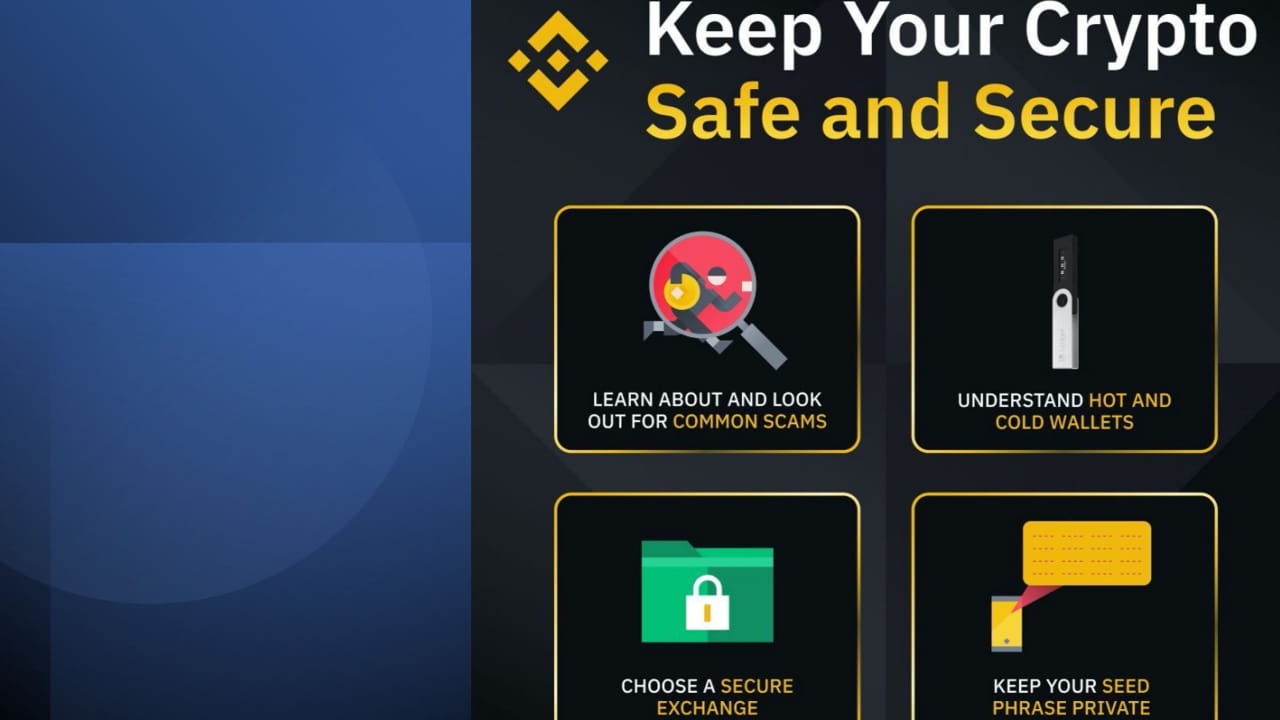
As the market leader, Binance has been forced to pioneer new paradigms in digital asset defense. Protecting a user base exceeding 150 million registered accounts requires an uncompromising approach to infrastructure scalability and risk management. Behind the user-facing trading interface lies a complex cloud compute architecture fortified by artificial intelligence and machine learning models designed to detect anomalous behavior in real-time.
Key pillars of this defensive strategy include:
- Predictive Behavioral Analytics: Advanced monitoring algorithms analyze withdrawal patterns, IP geolocation shifts, device fingerprints, and transaction velocity to flag suspicious activity before funds leave the platform.
- Secure Multi-Party Computation (MPC) & Multi-Sig Custody: Distributing cryptographic key generation and signing processes across geographically isolated hardware modules ensures that no single point of failure can compromise cold storage reserves.
- Proactive Threat Intelligence Partnerships: Binance’s security teams maintain active, round-the-clock intelligence-sharing channels with global law enforcement agencies, blockchain forensics firms, and competing exchanges to blacklist compromised addresses instantly.
- SAFU Fund Insurance Mechanism: The Secure Asset Fund for Users (SAFU) acts as an emergency financial backstop, demonstrating institutional-grade accountability and reassurance to market participants.
Verified Data: The Macro-Level Impact of Crypto Crime
To quantify the scale of the challenge facing exchanges and digital asset custodians, financial analysts look at longitudinal blockchain analytics data tracking illicit fund flows, recovery rates, and vector distributions.
| Metric Category | Historical Baseline (2021-2022) | Current Status (2023-2024) | Strategic Implication |
|---|---|---|---|
| Total Annual Crypto Stolen | $3.8 Billion - $4.1 Billion | $1.7 Billion - $2.2 Billion (Trending Lower) | Enhanced exchange security and freezing protocols are mitigating total losses despite rising attack frequency. |
| Primary Attack Vector | DeFi Protocol Exploits & Bridge Hacks | Cross-Chain Bridges & Social Engineering | Shift from purely technical code bugs to human-element manipulation and interoperability flaws. |
| Asset Recovery Rate | Less than 15% | 35% - 45% (Via CEX Cooperation) | Faster inter-exchange communication enables freezing of stolen funds before liquidity conversion. |
| State-Sponsored Share | Approx. 30% of total volume | Exceeding 50% of major heists | Geopolitical actors pose the most persistent and well-resourced threat to global digital markets. |
Industry & Market Implications: Who Wins, Who Loses
The escalating arms race between platform security architects and sophisticated cyber syndicates has profound implications for valuation multiples and market liquidity across the financial technology sector.
The Winners: Enterprise Security and Custody Providers
Platforms that specialize in institutional-grade digital asset custody, zero-trust network access, and automated compliance auditing are seeing unprecedented demand. Traditional financial institutions entering the crypto space are unwilling to compromise on security standards, driving capital toward regulated, highly compliant infrastructure providers. Furthermore, centralized exchanges that successfully demonstrate ironclad security protocols capture a "trust premium," pulling market share away from vulnerable competitors.
The Losers: Sub-Scale Platforms and Decentralized Wild-West Protocols
Exchanges lacking the capital expenditure budget required to maintain cutting-edge security architecture are facing existential threats. Regulatory compliance costs, combined with the rising frequency of costly exploits, are making sub-scale operations financially untenable. Similarly, un-audited DeFi protocols with lax governance structures are increasingly shunned by liquidity providers and institutional allocators.
Frequently Asked Questions (People Also Ask)
How do major exchanges like Binance freeze stolen funds after a hack?
When a security breach occurs, blockchain analytics firms and affected protocols alert major centralized exchanges instantly. Because centralized platforms maintain strict Know Your Customer (KYC) and Anti-Money Laundering (AML) databases, their compliance and security teams can immediately blacklist the deposit addresses associated with the hacker. If the attacker attempts to transfer stolen assets into a Binance account to liquidate them into fiat or other coins, the automated risk engines flag and freeze the funds, enabling coordination with law enforcement for recovery.
What is the single most effective way for individual investors to keep their crypto safe?
For long-term storage, the gold standard remains self-custody via a reputable hardware wallet (cold storage) that keeps private keys entirely offline and disconnected from the internet. For active traders utilizing centralized platforms like Binance, security must be maximized by enabling mandatory Phishing Code protections, hardware-based Two-Factor Authentication (2FA) such as FIDO2 YubiKeys, and strict whitelist restrictions on withdrawal wallet addresses.
Why are state-sponsored hackers increasingly targeting the cryptocurrency ecosystem?
Cryptocurrency offers pseudonymous, borderless, and near-instantaneous transfer of value without the traditional bureaucratic bottlenecks or intermediary oversight inherent in the legacy banking SWIFT network. For heavily sanctioned regimes or state-backed syndicates facing severe capital constraints, digital assets represent an efficient vehicle to generate state revenue, bypass economic blockades, and fund clandestine operations.
Future Outlook: What Comes Next in Digital Asset Security
As we look toward the horizon, the convergence of artificial intelligence, regulatory harmonization, and cryptographic innovation will redefine the security paradigm. Threat actors will undoubtedly experiment with generative AI to craft hyper-personalized social engineering attacks and automated smart contract fuzzing. In response, enterprise-grade digital asset platforms must operationalize AI-driven defensive counterparts that match machine speed with automated remediation.
Key milestones to watch over the next 24 to 36 months include:
- Mainstream Adoption of Zero-Knowledge Proofs (ZKPs): Enhancing user privacy on-chain while maintaining compliance transparency for institutional auditing.
- Mandatory Global Regulatory Frameworks: Implementation of unified cross-border security standards by bodies like the Financial Action Task Force (FATF), forcing substandard exchanges out of the market.
- Quantum-Resistant Cryptography: Early-stage migration toward post-quantum encryption algorithms to future-proof blockchain ledgers against next-generation computing threats.
Ultimately, the long-term viability of the digital asset economy hinges on an immutable truth: convenience can no longer supersede security. As Binance and other industry leaders continue to fortify their technological ramparts, the margin for error for both platforms and market participants narrows significantly. Navigating this high-stakes environment requires vigilance, institutional-grade risk mitigation, and an unyielding commitment to cryptographic hygiene.