The Valuation Mirage: Bank of England Warns Global Stock Markets Are Dangerously 'Too High' and Primed for a Fall
LONDON — In a stark warning that has sent ripples through trading desks from Wall Street to Dalal Street, the Bank of England (BoE) has issued a blunt assessment of global financial markets: stock prices are dangerously high, detached from macroeconomic realities, and highly vulnerable to a sharp correction.
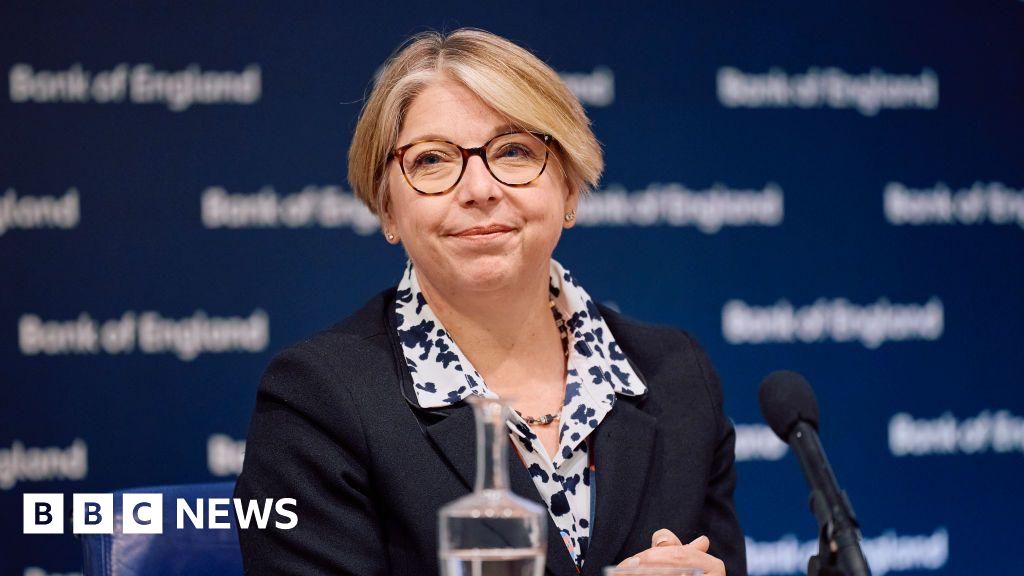
Speaking on the escalating vulnerabilities within the global financial system, the Bank of England’s Deputy Governor warned that current equity valuations fail to reflect the profound risks confronting the global economy. Speaking with broadcasters, including the BBC and GB News, the Deputy Governor urged market participants to face reality, stating, "We have to be honest and say the numbers are not matching the risks."
The warning comes at a critical juncture. Despite sluggish global growth, sticky inflation, and heightened geopolitical fragmentation, major stock indices have pushed to new record peaks in early 2026. According to the central bank, this decoupling of asset prices from fundamental economic indicators has created a fragile market structure where even a minor economic shock could trigger a widespread sell-off.
The Anatomy of Complacency: Why the BoE is Sounding the Alarm
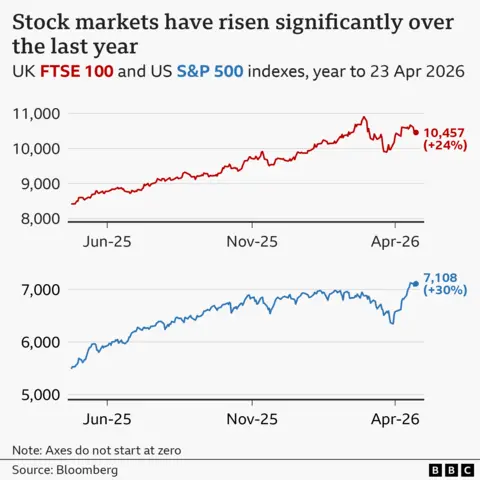
The core of the Bank of England’s concern lies in what economists call "complacency pricing." Over the past year, equity markets have been propelled upward by investor enthusiasm surrounding artificial intelligence, expectations of aggressive interest rate cuts, and resilient consumer spending. However, the BoE argues that this optimistic narrative ignores structural headwinds that are quietly compounding.
In its latest financial stability assessment, the central bank highlighted that the risk premium—the extra return investors demand for holding equities over risk-free government bonds—has shrunk to historic lows. In simple terms, investors are taking on maximum risk for minimal relative reward.
Key Global Risks Currently Ignored by Markets:
- Persistent Inflation and 'Higher-for-Longer' Rates: Despite premature celebrations of a return to 2% inflation, structural factors—such as labor shortages, deglobalization, and green energy transition costs—are keeping core inflation sticky, forcing central banks to keep borrowing costs elevated.
- Geopolitical Friction Points: Escalating trade disputes, regulatory crackdowns, and regional conflicts pose direct threats to global supply chains and corporate earnings, yet these risks remain largely unpriced in equity risk models.
- Corporate Debt Vulnerabilities: A significant wall of corporate debt, refinanced during the low-interest-rate era, is set to mature. Companies will be forced to refinance at substantially higher yields, squeezing profit margins and threatening dividends.
- Market Concentration Risks: Global indices are increasingly reliant on a handful of mega-cap technology stocks. This extreme concentration means that any earnings miss or regulatory headwind for these few giants could drag down entire benchmark indices.
By the Numbers: The Disconnect Between Value and Reality
To understand the scale of the overvaluation cited by the Bank of England, a look at key market metrics reveals how far asset prices have drifted from their historical averages. The table below illustrates the divergence between current valuations and long-term economic baselines as of Q1 2026:
| Market Indicator | Current Level (Q1 2026) | Historical Average / Target | Risk Assessment |
|---|---|---|---|
| S&P 500 Shiller PE Ratio | 34.2x | 17.1x | Highly Overvalued; implies low long-term returns. |
| Equity Risk Premium (ERP) | 1.1% | 3.5% - 4.5% | Dangerously Low; investors are not being compensated for equity risk. |
| Global GDP Growth (IMF Forecast) | 2.8% | 3.5% | Sub-par; corporate earnings growth projections remain unrealistically high. |
| Average Corporate Refinancing Rate | 6.5% | 3.2% (Pre-2022) | Severe; imminent squeeze on mid-cap and highly leveraged firms. |
What This Means for Global Investors and Wealth Managers
For institutional asset managers and retail investors alike, the BoE’s warning serves as a tactical wake-up call. The prevailing market playbook of "buying the dip" is facing its toughest test in a decade. If central banks are forced to maintain high policy rates to combat persistent inflation, the liquidity support that historically cushioned stock market declines will simply not be there.
Wealth advisors are already advising clients to transition from growth-at-any-price assets to high-quality, defensive allocations. Sectors with strong cash flows, low debt-to-equity ratios, and pricing power—such as healthcare, consumer staples, and essential infrastructure—are expected to outperform if a broader market correction materializes.
Furthermore, emerging markets, which are highly sensitive to U.S. dollar strength and global capital flows, could face severe capital flight if a risk-off sentiment takes hold. The Economic Times reports that foreign institutional investors (FIIs) are already reviewing their exposure to high-beta emerging equities, opting to lock in profits while valuations remain near peak levels.
The Outlook: A Healthy Reset or a Systemic Shock?
While the word "correction" often conjures panic, many central bankers and institutional economists view a potential market decline as a necessary, albeit painful, economic reset. An orderly asset repricing would bring valuations back in line with historical averages, cooling speculative excesses and reducing the systemic risk of a more catastrophic financial collapse down the road.
However, the transition is rarely smooth. With algorithmic trading driving a significant portion of daily market volume, any sudden shift in sentiment can trigger cascading stop-loss orders, leading to high-volatility sessions. The Bank of England's warning is an explicit message to the global financial sector: prepare for turbulence, buffer your portfolios, and acknowledge that the era of cheap money and risk-free equity gains is officially over.
Frequently Asked Questions (FAQ)
1. Is the Bank of England predicting an immediate stock market crash?
No, the Bank of England is not predicting a sudden, catastrophic crash on a specific date. Rather, it is highlighting a systemic vulnerability: that global stock markets are "too high" relative to the underlying economic risks. This overvaluation increases the probability of a significant downward correction or a prolonged bear market if economic conditions worsen or if corporate earnings fall short of high expectations.
2. How should individual retail investors react to this warning?
Retail investors should consider reviewing their portfolio asset allocation. When central banks warn of overvaluation, it is often a prudent time to ensure diversification. This may involve rebalancing away from highly concentrated, expensive tech stocks, reducing leverage, increasing exposure to defensive sectors (like utilities and consumer staples), or holding higher cash reserves to take advantage of cheaper buying opportunities if a market correction occurs.