Executive Takeaways
- Structural Intervention over Pure Cash Management: The U.S. Treasury’s decision to aggressively scale its buyback operations—doubling the purchase targets for off-the-run, longer-dated paper—signals institutional concern regarding liquidity friction in the sovereign debt market rather than routine treasury operations.
- De-Bottlenecking Primary Dealer Balance Sheets: By vacuuming up seasoned, illiquid securities across the 10-year to 30-year sectors, debt managers are insulating primary dealers from regulatory balance sheet constraints (such as the Supplementary Leverage Ratio), allowing Wall Street to warehouse incoming auction volume.
- Implicit Yield Curve Containment: While officials reject assertions of stealth Yield Curve Control (YCC), targeting duration-heavy paper while tilting new issuance toward Treasury bills serves as a de facto mechanism to prevent terminal yields from destabilizing broader corporate capital allocation.
- Fiscal-Monetary Divergence: The buyback surge creates a counter-current to the Federal Reserve’s ongoing balance sheet normalization (Quantitative Tightening), highlighting an evolving macroeconomic paradigm where debt management policy actively steers market plumbing.
When the U.S. Department of the Treasury confirmed it would double down on purchasing older, off-the-run debt securities, bond desks from Lower Manhattan to Mayfair recognized the shift for what it was: a fundamental reshaping of the world’s most critical benchmark asset class. Nominally framed as routine liquidity maintenance, the Treasury’s buyback mechanics reveal a much more pressing underlying reality. The structural capacity of private capital to seamlessly intermediate the expanding mountain of U.S. sovereign debt is approaching severe limits.
With marketable federal debt exceeding $27 trillion and fiscal deficits running at wartime levels during sustained peacetime expansion, Washington is encountering a mechanical bottleneck. Primary dealers—the 24 elite broker-dealers mandated to underwrite government debt auctions—are operating under post-2008 capital frameworks that severely penalize the holding of low-yielding, balance-sheet-heavy sovereign bonds. The result is a structural fragmentation where "on-the-run" (newly issued) Treasuries trade at a significant liquidity premium, while "off-the-run" (older, seasoned) paper languishes, creating market friction and driving up the term premium.
The Treasury’s expanded intervention is an aggressive effort to engineer liquidity from within, using the federal balance sheet to absorb duration, unfreeze dealer liquidity, and safeguard the transmission mechanism of global capital.
The Structural Anatomy of the Buyback Architecture
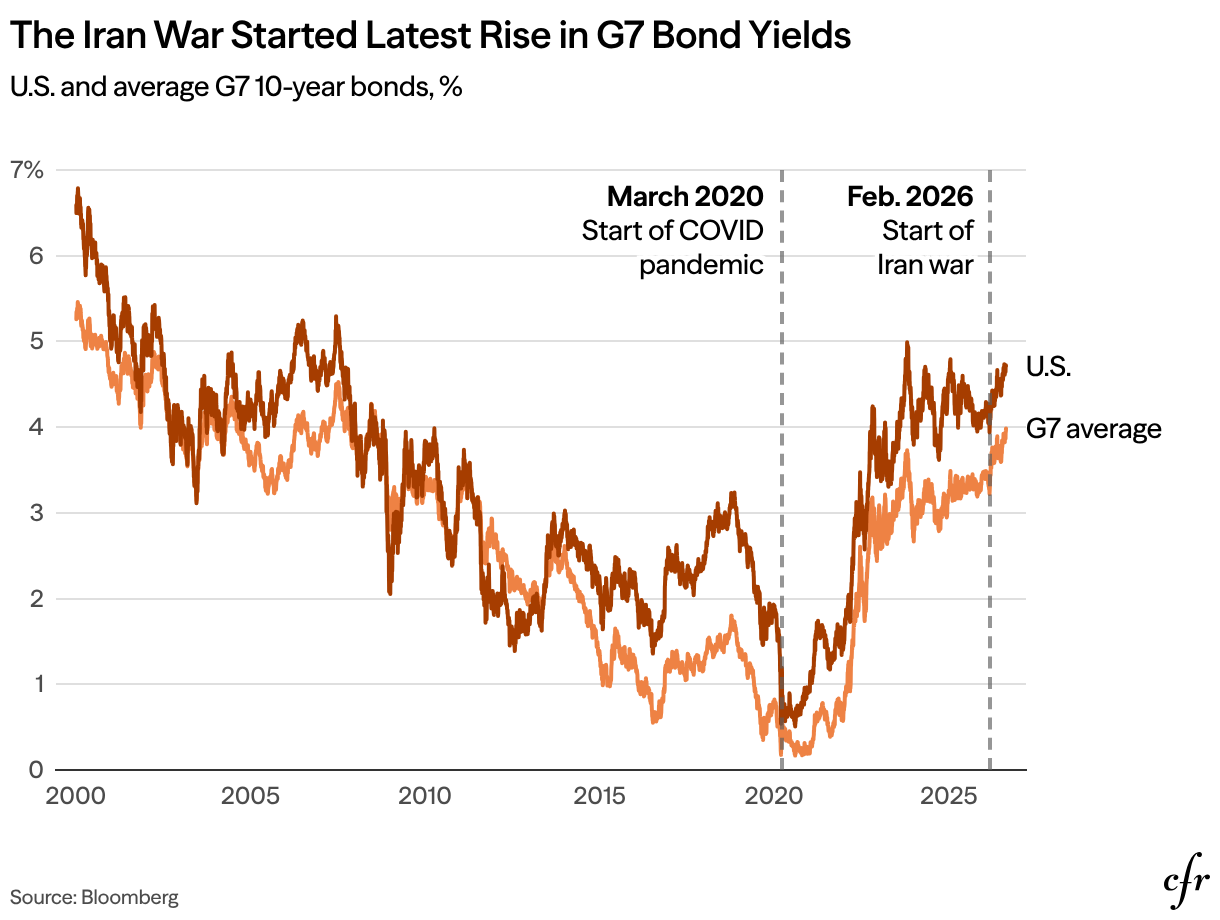
Historically, Treasury buybacks have been deployed rarely—most notably between 2000 and 2002 under Treasury Secretary Lawrence Summers, when budget surpluses allowed the government to retire high-coupon debt, and in small-scale administrative tests. The current program, executed through the Federal Reserve Bank of New York’s open market operations desk, serves a diametrically opposed purpose: it is being deployed amid generational debt expansion.
The operation runs on two distinct tracks:
- Cash Management Buybacks: Geared toward evening out lumpy tax receipt inflows and smoothing day-to-day cash balances to reduce volatility in Treasury bill issuance.
- Liquidity Support Buybacks: Specifically targeted at off-the-run securities across the nominal coupon and TIPS curves, systematically targeting tranches where dealer inventory has stagnated.
The surprise lies in the composition and scaling of the operations. The Treasury Borrowing Advisory Committee (TBAC) previously signaled cautious, incremental operations capped at modest monthly targets. Instead, the pacing for longer-duration segments—particularly the 10-to-20-year and 20-to-30-year buckets—has escalated at double the anticipated clip. By retiring less liquid bonds and funding the operations through robust front-end bill issuance, the Treasury is engaging in debt-for-debt asset-liability engineering.
Verified Program Parameters: Core Dynamics & Execution Metrics
| Metric / Dimension | Initial Program Architecture | Scaled Policy Reality | Institutional & Market Impact |
|---|---|---|---|
| Off-the-Run Long Duration Allocation | $2B – $4B per quarter across 10Y–30Y nominals | $5B – $8B+ per quarter (targeted pacing) | Extracts illiquid duration from primary dealer books; narrows basis spread. |
| Funding Mechanism | Balanced mix of bills and coupon issuance | Heavily tilted toward 4-week to 52-week Treasury bills | Capitalizes on non-bank institutional liquidity and Money Market Funds (MMFs). |
| Primary Intermediary Impact | Negligible balance sheet relief | Significant risk-weighted asset (RWA) optimization | Enhances primary dealer capacity to absorb incoming nominal auctions. |
| Interaction with Fed Quantitative Tightening (QT) | Designed to operate neutrally alongside Fed roll-off | Absorbs duration as the Federal Reserve sheds $60B/month in Treasuries | Softens market impact of central bank liquidity withdrawal. |
| Targeted Curve Sectors | Evenly distributed 2Y through 30Y | Disproportionately focused on 7Y–20Y off-the-run orphans | Eliminates structural "20-year bond discount" by mopping up overhang. |
Plumbing Under Pressure: Dealer Constraints and the Basel III Shadow
To understand why the Treasury stepped in, one must understand the regulatory landscape governing Wall Street’s primary dealers. The implementation of the Supplementary Leverage Ratio (SLR)—a post-2008 regulatory standard that requires banks to hold Tier 1 capital against total leverage exposure without risk-weighting Treasuries—permanently curtailed the ability of bank-affiliated dealers to intermediate sovereign debt.
When the Treasury issues trillions of dollars in fresh debt, these securities flow onto dealer balance sheets before being distributed to global asset managers, sovereign wealth funds, and domestic retail accounts. However, as dealer balance sheet capacity remains static while total market volume expands exponentially, the cost of warehousing seasoned paper increases. This leads to widened bid-ask spreads, elevated market volatility during stress events, and liquidity drying up in critical corners of the repo market.
By stepping into the market as an active, structural buyer of off-the-run inventory, the Treasury transforms itself from an issuer into an end-user of last resort. This move restores inventory velocity, liberating dealer balance sheets to underwrite new on-the-run auctions with reduced risk premia.
Stealth Duration Management: An Implicit Yield Stabilization Framework
While the Treasury Department maintains that debt issuance decisions are "regular and predictable," the practical impact of these expanded buybacks acts as an implicit tool for managing market duration. By repurchasing long-duration paper (which carries substantial interest rate risk) and simultaneously expanding T-bill supply, debt managers are effectively shortening the weighted average maturity (WAM) of the marketable debt stock.
This dynamic occurs against a complex macroeconomic backdrop. While the Federal Reserve attempts to maintain restrictive monetary conditions to control price pressures, the Treasury’s duration extraction cushions the long end of the curve against sharp spikes in yields. This development holds wide-ranging implications for corporate valuation multiples, commercial real estate refinancing structures, and broader enterprise risk management models that rely heavily on the 10-year and 30-year risk-free rate.
Market participants who once focused solely on the Federal Open Market Committee (FOMC) statements are now closely monitoring the Treasury’s Quarterly Refunding Announcements (QRA) with equal scrutiny. The sovereign debt issuer is now actively managing market plumbing alongside the central bank.
Industry & Market Implications: Capital Allocation Realities
The Treasury’s expanded market footprint triggers a broad realignment of risk, yields, and balance sheet profitability across major sectors:
1. Wall Street Primary Dealers: Direct Winners
Major broker-dealers gain a reliable exit route for their most illiquid, seasoned inventory. By offloading these off-the-run paper positions directly back to the government via competitive auction formats, dealers can optimize their risk-weighted assets, meet regulatory leverage requirements, and reallocate their balance sheets toward higher-margin repo financing, synthetic derivatives, and prime brokerage lending.
2. Institutional Asset Managers & Pension Funds: Mixed Realities
For liability-driven investment (LDI) managers and institutional pension funds, the intervention reduces the risk of tail-event liquidity shocks, such as the acute dislocations seen in September 2019 or March 2020. However, by smoothing the long end of the yield curve, the Treasury reduces the term premium that fixed-income managers can extract, limiting opportunistic alpha generation and forcing funds to take on corporate credit, structured products, or private debt to achieve required hurdle rates.
3. Macro Hedge Funds and Basis Trades: Changing Risk Dynamics
The massive cash-futures basis trade—where hedge funds exploit tiny discrepancies between the price of cash Treasuries and Treasury futures using elevated repo leverage—relies heavily on market depth. Treasury buybacks alter these spreads, compressing structural dislocations and altering the return profile for non-bank liquidity providers. Those prepared for shifting basis spreads will capture gains, while static positioning risks compressions in carry returns.
Frequently Asked Questions (People Also Ask)
Why did the U.S. Treasury expand its debt buyback program?
The Treasury expanded buyback operations to address growing liquidity strains and market fragmentation across off-the-run (seasoned) government debt. As the national debt has grown beyond $27 trillion, primary dealers face regulatory balance sheet constraints (such as the Supplementary Leverage Ratio) that limit their capacity to intermediate and warehouse debt. By purchasing illiquid bonds back from the market, the Treasury frees up dealer capital, improves general market liquidity, and ensures that ongoing auctions run smoothly without disruptive yield spikes.
How do Treasury buybacks differ from Federal Reserve Quantitative Easing (QE)?
While both involve purchasing government securities, their objectives and funding mechanisms differ fundamentally. Quantitative Easing (QE) is a monetary policy tool executed by the Federal Reserve, which creates new central bank reserves to buy assets, expanding the monetary base to stimulate economic activity. In contrast, Treasury buybacks are a debt management tool executed by the executive branch. The Treasury funds these buybacks entirely through fiscal resources—primarily by issuing short-term Treasury bills or using cash balances from the Treasury General Account (TGA)—resulting in a redistribution of debt maturities rather than an expansion of the monetary base.
What does the buyback expansion signal about primary dealer health?
The expansion signals that primary dealers are facing increasing pressure to intermediate record volumes of federal debt under existing regulatory frameworks. Post-crisis regulations impose heavy capital charges on warehousing Treasuries, leaving dealers ill-equipped to handle the sheer volume of issuance. The Treasury's active intervention indicates that without an institutional backstop to absorb older, less liquid bonds, sovereign market functioning could face severe liquidity risks during volatile periods.
Will Treasury buybacks lower borrowing costs for consumers and businesses?
Treasury buybacks do not directly cut base consumer interest rates, which remain anchored to the Federal Reserve’s policy rate. However, by targeting longer-dated, off-the-run securities and moderating the supply of long-term debt, buybacks help contain the "term premium" on benchmark 10-year and 30-year yields. Because corporate loans, mortgages, and consumer credit depend heavily on these long-term benchmark yields, the program helps suppress volatility and prevents borrowing costs from rising further.
Future Outlook & Critical Strategic Milestones
The Treasury’s expanded market footprint marks a permanent structural shift in how sovereign debt is managed. As federal deficits remain substantial across election cycles, debt managers will increasingly rely on active balance sheet intervention alongside conventional issuance schedules.
Over the next 12 to 18 months, three key milestones will determine whether this liquidity backstop succeeds or creates unintended market distortions:
- The Eventual End of Fed Quantitative Tightening: Once the Federal Reserve stops rolling off Treasuries from its balance sheet, the market will monitor whether the Treasury scales back its buybacks or cements them as a permanent liquidity facility for primary dealers.
- Sustained T-Bill Issuance Capacity: The Treasury’s strategy relies heavily on the market’s capacity to absorb heavy T-bill issuance. If money market fund cash moves elsewhere or reverse repo cash drains completely, funding these operations will force higher yields at the front of the curve.
- Regulatory Leverage Reforms: Market participants continue to watch for potential adjustments to the Supplementary Leverage Ratio (SLR) by banking regulators. If structural exemptions are granted for Treasuries and central bank reserves, dealer intermediation capacity could rebound, easing the need for aggressive Treasury buybacks.
By doubling its buyback firepower, the Treasury has made its stance clear: the sovereign debt engine is too critical to be left entirely to private balance sheet capacity. As structural deficits collide with tighter dealer capacity, Washington’s role as both issuer and liquidity backstop represents an essential chapter in the modern history of global finance.