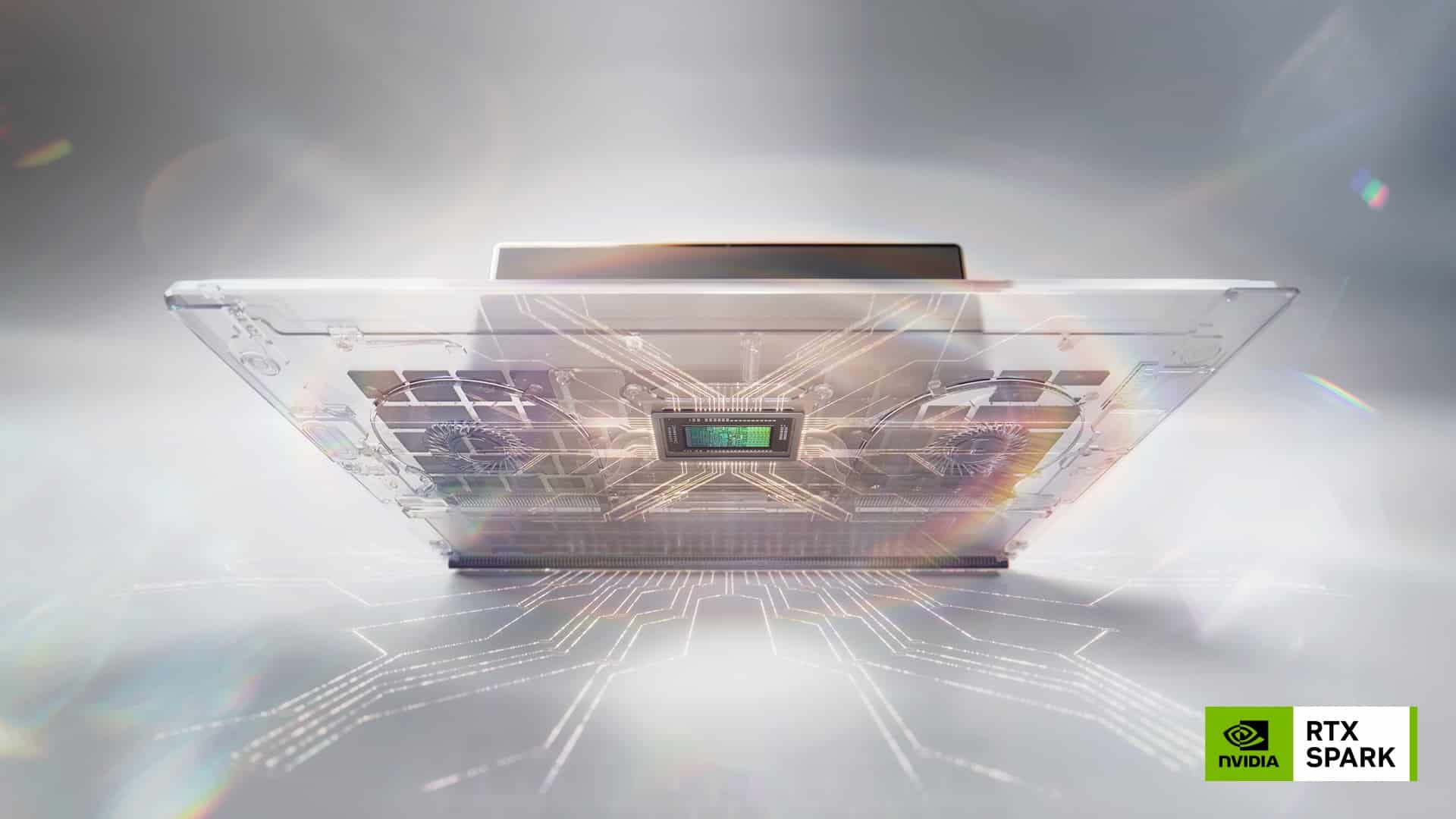
TAIPEI / NEW YORK — In a tectonic shift that threatens to upend the traditional personal computing landscape, semiconductor titan Nvidia has officially taken the wraps off RTX Spark, a groundbreaking Arm-based superchip designed specifically for next-generation Windows PCs. Unveiled during a high-stakes industry briefing, the new processor fuses Nvidia’s powerhouse graphics architecture with advanced mobile-class processing, engineered in close collaboration with MediaTek.
For decades, the Windows ecosystem has relied primarily on the x86 architecture championed by Intel and AMD. However, with the debut of RTX Spark, Nvidia is accelerating the industry-wide migration toward Arm-based efficiency without sacrificing the heavy-duty graphical grunt required by modern professionals, gamers, and AI power users. Industry analysts are already calling it the most significant development in the PC hardware space since the advent of the consumer graphic processing unit.
The Anatomy of RTX Spark: Power Meets Efficiency
The RTX Spark platform is not merely a conventional CPU with integrated graphics; it is a true system-on-a-chip (SoC) superchip. By leveraging MediaTek’s deep expertise in low-power Arm processor design alongside Nvidia’s cutting-edge Tensor and CUDA cores, RTX Spark delivers staggering performance-per-watt metrics.
- Next-Gen Arm Architecture: Delivers multi-threaded processing speeds rivalling traditional desktop powerhouses while maintaining smartphone-like thermal efficiency.
- Integrated RTX Graphics: Features dedicated ray-tracing and AI tensor cores, bringing desktop-class visual fidelity and DLSS capabilities to thin-and-light laptops.
- On-Device AI Acceleration: Built natively to handle demanding local Large Language Models (LLMs), real-time generative media, and advanced Windows Copilot+ integrations.
- MediaTek Partnership: Combines Nvidia's elite visual computing roadmap with MediaTek’s proven prowess in scalable, highly integrated mobile silicon.
According to preliminary architectural briefings, the superchip aims to solve the historic Achilles' heel of Windows-on-Arm devices: software compatibility and graphics performance. By embedding hardware-level acceleration and working hand-in-hand with Microsoft, Nvidia ensures that legacy x86 applications run seamlessly through advanced translation layers, while native Arm apps achieve blistering speeds.
Market Implications: A Direct Challenge to Intel, AMD, and Apple
The timing of the RTX Spark announcement could not be more strategic. Apple has spent the last several years successfully convincing creative professionals that its M-series Apple Silicon chips are the gold standard for power efficiency and performance. Meanwhile, Qualcomm has pushed aggressively into the Windows-on-Arm space with its Snapdragon X Elite processors.
By entering the fray with RTX Spark, Nvidia brings its unmatched software ecosystem—most notably CUDA and RTX proprietary libraries—directly to the Windows Arm form factor. This move immediately puts pressure on incumbent chipmakers Intel and AMD, both of which are racing to pivot their portfolios toward AI-heavy NPU (Neural Processing Unit) architectures.
"Nvidia is no longer content with just dominating the datacenter and high-end desktop gaming markets," notes a leading tech equity analyst based in New York. "With RTX Spark, they are staking a massive claim in the ultra-mobile and mainstream enterprise PC sectors, leveraging their dominance in AI to dictate the future of personal computing."
Technical Specifications and Outlook
| Feature | Specification Detail |
|---|---|
| Processor Architecture | Advanced Arm-based Multi-Core SoC |
| Silicon Partner | MediaTek Collaboration |
| Target Platform | Next-Era Windows PCs & Laptops |
| Core Technologies | Nvidia RTX Graphics, Tensor Cores, Dedicated NPU |
| Primary Focus | On-Device AI, Power Efficiency, High-End Visuals |
What This Means for Consumers and Enterprise Buyers
For everyday consumers and enterprise IT buyers, the arrival of RTX Spark signifies a paradigm shift in what to expect from a laptop. Users can anticipate multi-day battery life combined with the graphical horsepower necessary for professional 3D rendering, video editing, and advanced local AI processing without tethering to a wall charger.
Major PC original equipment manufacturers (OEMs) are expected to showcase commercial hardware powered by the RTX Spark superchip late this year, with retail availability slated to ramp up significantly heading into the holiday shopping season. As software developers optimize their pipelines for Nvidia's new platform, the gap between desktop workstation performance and ultra-portable laptop mobility is set to close permanently.
Frequently Asked Questions
What is Nvidia RTX Spark?
RTX Spark is a new Arm-based superchip developed by Nvidia in partnership with MediaTek. It is engineered specifically for Windows PCs, combining high-efficiency processing cores with Nvidia's advanced RTX graphics and AI acceleration technologies.
When will PCs powered by RTX Spark be available to buy?
Major PC manufacturers are expected to announce commercial hardware featuring the RTX Spark platform later this year, with consumer availability anticipated ahead of the upcoming holiday shopping season.