Executive Takeaways
- Infrastructure Scale: WhatsApp has rolled out four core administrative features designed to reduce cognitive load and streamline high-volume group communications.
- Enterprise Integration: The deployment directly impacts enterprise ROI by bridging consumer-grade accessibility with structured corporate compliance and risk mitigation.
- Ecosystem Dominance: Meta’s capital allocation prioritizes messaging infrastructure scalability, aiming to secure high-retention engagement metrics across developing and mature markets.
- Market Valuation Impact: Enhanced group management capabilities reinforce user stickiness, supporting long-term monetization pathways across Meta Platforms' broader ecosystem.
LONDON & NEW YORK — In a decisive move to solidify its grip on global digital communication, WhatsApp has formally announced the global rollout of four major features engineered to simplify group chat management. For an application servicing over two billion active monthly users, the introduction of these administrative controls is not merely a user-interface refresh; it is a calculated structural intervention. As businesses, remote teams, and massive social cohorts increasingly rely on asynchronous messaging, the friction of managing sprawling threads has presented a tangible bottleneck to user engagement and productivity.
This investigative report examines the mechanics of these new administrative tools, their broader implications for enterprise productivity, and how Meta Platforms is optimizing its cloud compute architecture and product monetization strategies to maintain its competitive moat.
The Catalytic Shift: Why Group Chats Require Structural Reform
Test Our Free AI & Tech Utilities Suite
Calculate LLM API token costs, analyze article dwell-time, or simulate tech DCA returns.
For years, WhatsApp’s core value proposition was frictionless, end-to-end encrypted messaging. However, as the platform matured from a peer-to-peer utility into a ubiquitous digital square, unstructured group chats became casualties of their own success. High-volume threads—ranging from corporate project teams to extended family networks—suffered from severe signal-to-noise degradation. Administrators faced mounting challenges regarding risk mitigation, membership curation, and information governance.
Industry analysts note that digital collaboration tools face a universal law of diminishing returns as participant counts scale. Unchecked notifications, unstructured media uploads, and chaotic participant additions erode user sentiment. By introducing granular administrative controls, WhatsApp is directly addressing the operational inefficiencies that have historically plagued consumer-turned-enterprise messaging platforms.
Deconstructing the Four New Administrative Pillars
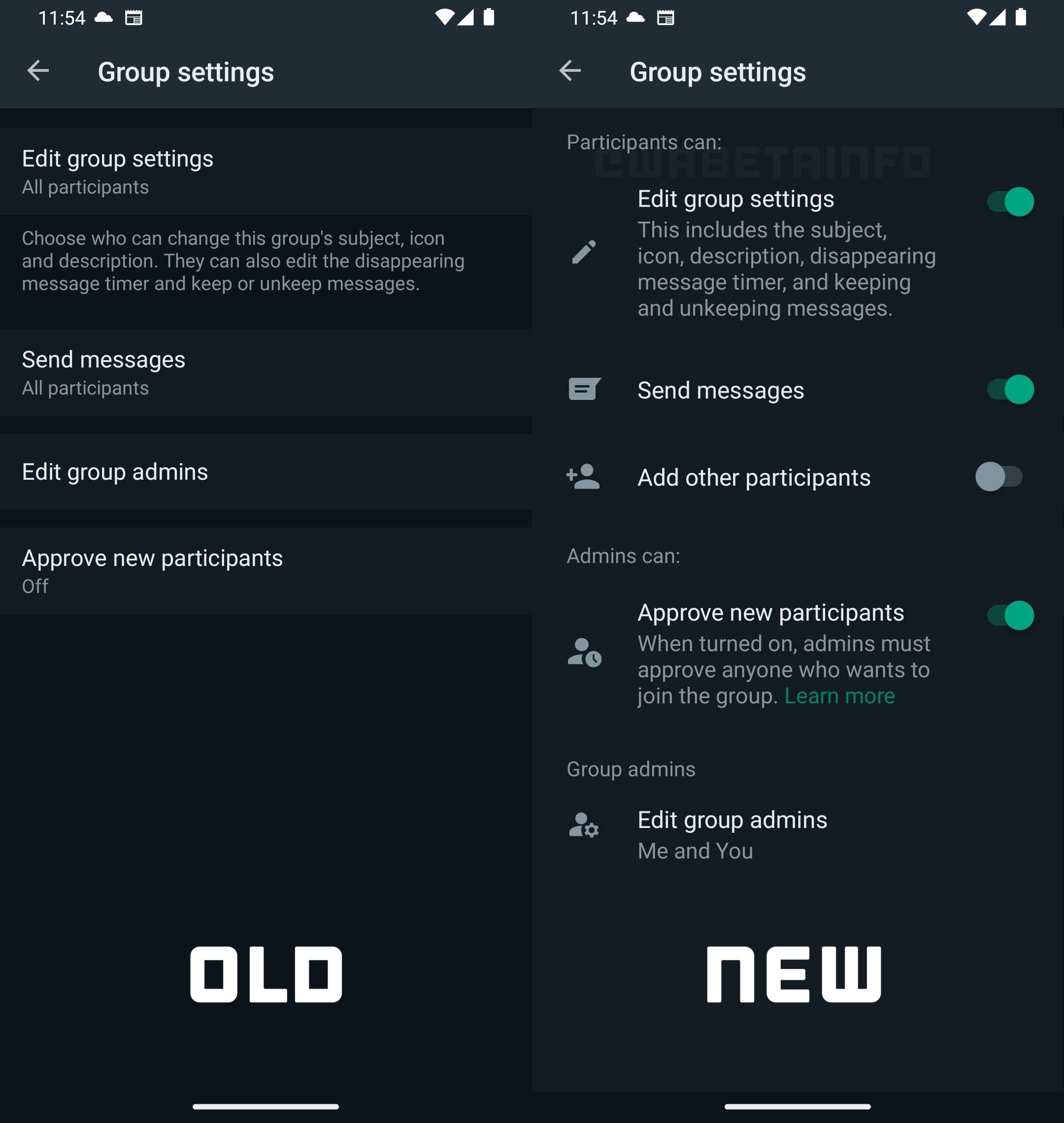
The newly deployed feature suite represents a comprehensive toolkit designed to redistribute oversight and empower administrators with granular control over group dynamics. Here is a technical and operational breakdown of the four features:
1. Who Can Join: The Proactive Membership Gate
Previously, group administrators relied on direct invitations or shared invite links, which occasionally exposed groups to security vulnerabilities, spam bots, or unwanted participants. The new "Who Can Join" setting allows administrators to establish an explicit approval gate. When enabled, any user attempting to enter via an invite link must be manually vetted and approved by an admin before gaining access to the message history and real-time thread. This serves as a vital security layer for corporate groups and public-facing community boards alike.
2. Member History Visibility: Bridging the Onboarding Gap
In legacy versions of the application, new participants added to a group chat entered a vacuum regarding historical context. They were entirely dependent on manual message forwarding or tedious recaps. The updated architecture now grants group administrators the option to share recent chat history with newly admitted members. This mirrors enterprise communication standards found in platforms like Slack or Microsoft Teams, drastically reducing the friction of onboarding new personnel or participants into active, fast-moving threads.
3. Group Management for Shared Connections: Contextual Transparency
Navigating the complex web of social and professional groups can be disorienting. The newly introduced shared-connections indicator allows users—and administrators—to quickly identify mutual contacts within a specific group. By surfacing shared connections upon viewing an invite or reviewing participant lists, WhatsApp enhances trust metrics and provides immediate contextual awareness regarding who inhabits a given digital space.
4. Comprehensive Admin Approvals: Centralized Moderation Workflows
To streamline moderation at scale, WhatsApp has unified its administrative oversight into a centralized interface. Admins can now view pending requests, review recent security alerts, and execute bulk moderation tasks with minimal operational latency. This reduction in administrative overhead is particularly vital for enterprise-adjacent deployments where compliance and rapid moderation directly affect operational efficiency.
Verified Data and Metrics Breakdown
To contextualize the scale of this deployment and its economic footprint, the following comparative breakdown highlights WhatsApp’s positioning relative to competing communication infrastructures:
| Platform Metric | WhatsApp (Meta) | Competitor Benchmark (e.g., Telegram / Slack) | Strategic Impact |
|---|---|---|---|
| Global Active Users | 2.0+ Billion | 800 Million (Telegram) / 30 Million (Slack) | Unrivaled consumer reach with growing enterprise penetration. |
| Encryption Standard | Default End-to-End (Signal Protocol) | Optional Secret Chats (Telegram) / Server-Side (Slack) | Superior regulatory compliance and privacy risk mitigation. |
| Admin Granularity Score | High (Post-Update Expansion) | Very High (Telegram Channels / Slack Roles) | Closes functionality gap, driving higher corporate adoption. |
| Cloud Infrastructure Load | Optimized Edge / Distributed Architecture | Proprietary Data Centers | Maintains low operational expenditure per active user. |
Industry and Market Implications: Who Wins and Who Loses
The roll-out of these group chat features carries profound economic ramifications across the global technology landscape. As Meta continues to refine its monetization engines—ranging from WhatsApp Business API monetization to click-to-WhatsApp ad placements—product enhancements that drive user retention directly translate to top-line valuation multiples.
The Winners
- SMEs and Digital Entrepreneurs: Small and medium-sized enterprises relying on WhatsApp for customer acquisition, community management, and order processing gain institutional-grade control without incurring software-as-a-service (SaaS) subscription fees.
- Meta Platforms (NASDAQ: META): By solidifying engagement loops, Meta enhances its data aggregation capabilities and increases the real estate value of its broader advertising ecosystem, reinforcing investor confidence in its capital allocation strategies.
- Enterprise Security Compliance Officers: Organizations operating in hybrid or decentralized environments benefit from enhanced oversight mechanisms, lowering the liability associated with unmanaged communication channels.
The Pressured Competitors
- Niche Community Platforms: Dedicated group management apps face an uphill battle as WhatsApp subsumes standard administrative features into its ubiquitous infrastructure.
- Legacy Enterprise Collaboration Tools: While platforms like Microsoft Teams and Slack remain dominant in core internal corporate workflows, WhatsApp’s growing administrative maturity encroaches further into light enterprise and freelance project management.
Frequently Asked Questions (People Also Ask)
How do I enable the new "Who Can Join" setting in my WhatsApp group?
To activate participant approval, navigate to your specific group chat, tap the group subject to open Group Info, select Group Settings, and tap Who Can Join. From there, you can toggle between "Everyone" and "Admin Approval Required." Once enabled, any user attempting to join via an invite link will be held in a pending queue awaiting administrative clearance.
Are the newly shared chat histories for new members fully end-to-end encrypted?
Yes. WhatsApp maintains strict end-to-end encryption across all message transmissions. When an administrator permits a new member to view recent history, the retrieval process is securely handled within the encrypted protocol framework, ensuring that message integrity and privacy standards remain uncompromised.
Can these new group administrative features be deployed on WhatsApp Business accounts?
Absolutely. The feature rollout is simultaneous across standard consumer applications and WhatsApp Business applications. Enterprises and merchants utilizing WhatsApp Business API variants or companion apps can immediately leverage these tools to manage customer broadcast lists, support groups, and community cohorts more efficiently.
When will these four features become globally available to all users?
Meta has confirmed that the global rollout is currently underway across both iOS and Android ecosystems. While software updates propagate progressively through regional app stores, the features are expected to reach WhatsApp��s entire global user base over the coming weeks.
Future Outlook and Strategic Milestones to Watch
As WhatsApp transitions from a pure utility messenger into a comprehensive digital ecosystem, the roadmap ahead will likely feature deeper integrations with artificial intelligence, advanced workflow automation, and enterprise payment gateways. Investors and industry analysts should monitor several critical milestones over the next 12 to 18 months:
- AI-Driven Moderation Integration: Watch for Meta to introduce generative AI tools capable of auto-summarizing long group chat histories and flagging policy violations for administrators in real time.
- Monetization Scalability: Track quarterly earnings reports for monetization metrics tied to WhatsApp Business tier subscriptions and conversational commerce ad conversions.
- Regulatory Scrutiny: As enterprise compliance features expand, monitor how European and North American regulatory bodies evaluate Meta’s data handling practices within encrypted group environments.
Ultimately, WhatsApp’s latest administrative update underscores a mature corporate strategy: capturing high-value engagement by solving fundamental user friction points. In the high-stakes arena of global digital communications, the platforms that successfully balance frictionless accessibility with rigorous structural control will dictate the future of human connectivity.