NEW YORK & LONDON — For the better part of three decades, the corporate perimeter was defined by the firewall, a digital moat designed to keep malicious actors out while keeping enterprise assets securely within. That paradigm has been permanently shattered. The mass adoption of generative artificial intelligence, multi-cloud compute architectures, and distributed workforces has rendered legacy perimeter security obsolete. At the epicenter of this technological restructuring is the Secure Web Gateway (SWG) market—a sector undergoing an unprecedented structural metamorphosis.
According to comprehensive benchmark data published by SNS Insider, the Secure Web Gateway market size was valued at USD 16.59 billion in 2025. More critically for institutional investors and technology allocators, the market is expected to expand at an aggressive Compound Annual Growth Rate (CAGR) of 22.28%. This hyper-growth trajectory is not merely a byproduct of organic IT inflation; it is the direct result of a corporate scramble to secure mission-critical AI applications against sophisticated vectors of attack that did not exist five years ago.
The Catalytic Shift: Why Traditional SWGs Fail the AI Era
To understand the current capitalization and strategic positioning of leading SWG vendors, one must examine the fundamental vulnerability of modern enterprise workflows. Employees are no longer simply browsing web pages; they are interacting with sophisticated third-party LLMs, embedding proprietary corporate source code into external AI prompts, and utilizing unvetted SaaS applications—a phenomenon commonly tracked by enterprise risk officers as "Shadow AI."
Traditional SWGs were engineered to perform URL filtering, basic malware signature matching, and rudimentary application control. They were built for a predictable, deterministic web. Today’s web, however, is dynamic, API-driven, and probabilistic. When a software engineer pastes proprietary financial algorithms into an unverified coding assistant via a browser session, or when an executive triggers an indirect prompt injection via a contaminated web document, legacy gateways stand blind.
This operational blind spot has forced a massive capital expenditure cycle across Fortune 500 boardrooms. Chief Information Security Officers (CISOs) are aggressively demanding unified platforms capable of inspecting TLS-encrypted traffic at line rate, analyzing user intent, and enforcing data loss prevention (DLP) policies natively within the data stream. Consequently, SWGs have converged with Cloud Access Security Brokers (CASBs) and Zero Trust Network Access (ZTNA) to form cohesive SASE architectures.
Market Dynamics: Valuations, Capital Allocation, and Competitive Moats
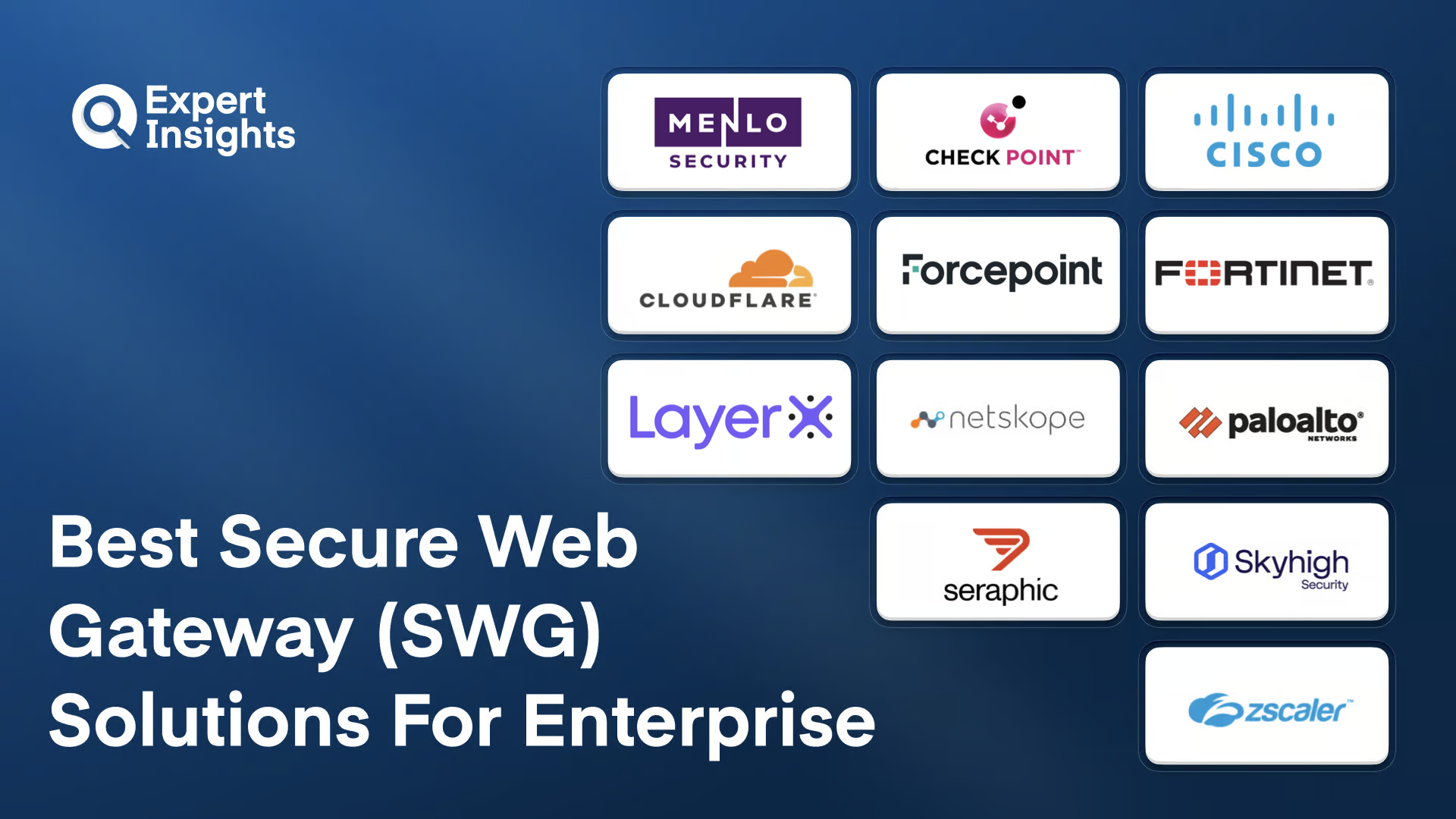
The financial mechanics underlying the 22.28% CAGR trajectory reveal a bifurcated market. On one side are legacy network hardware vendors struggling to retrofit hardware appliances into software-defined, cloud-native engines. On the other are cloud-first security heavyweights that built their multi-tenant architectures from inception to handle massive volumes of concurrent inspection without introducing latency.
Institutional portfolio managers note that valuation multiples for pure-play cloud security innovators remain elevated relative to traditional tech hardware indices. This valuation premium is justified by sticky, recurring SaaS revenue models, high net retention rates (NRR), and critical infrastructure status. When an enterprise integrates an SWG deep into its cloud compute architecture, the switching costs are astronomically high, shielding market leaders from commoditization.
Furthermore, regulatory compliance mandates—ranging from the European Union’s Artificial Intelligence Act to expanded SEC cybersecurity disclosure requirements—have transformed SWG deployment from a discretionary IT line item into an essential component of corporate risk mitigation and legal liability defense.
Verified Data & Metrics Breakdown
The following structured data table outlines the core macroeconomic and structural metrics governing the Secure Web Gateway landscape, synthesizing insights from market intelligence reports and industry analyses:
| Market Parameter | Industry Metric / Benchmark | Strategic Implication |
|---|---|---|
| Base Market Valuation (2025) | USD 16.59 Billion | Establishes a massive baseline market cap, reflecting widespread enterprise digital transformation. |
| Projected Growth Rate (CAGR) | 22.28% | Significantly outpaces broader enterprise IT budget growth, signaling critical priority status. |
| Primary Growth Driver | Generative AI Security & Data Exfiltration Prevention | Shift from simple URL filtering to deep semantic inspection of AI payloads. |
| Architectural Convergence | SWG + CASB + ZTNA (SASE Framework) | Consolidation of point security solutions into unified, cloud-native service edges. |
Industry & Market Implications: Winners and Losers
As capital continues to flow into advanced SWG platforms, the macroeconomic fallout is creating clear victors and casualties across the technology sector.
The Winners: Cloud-native cybersecurity vendors with integrated AI inspection engines are capturing oversized market share. These firms possess the massive data telemetry required to train their own machine learning models to detect zero-day prompt injections and automated exfiltration attempts. Furthermore, large multinational system integrators (SIs) are benefiting handsomely from advisory and implementation fees as enterprises re-architect their network perimeters.
The Losers: Pure-play legacy hardware firewall vendors and single-function point solution providers are facing severe margin compression. Enterprises are actively consolidating their vendor lists to reduce operational complexity and lower total cost of ownership (TCO). Point solutions that lack native integration with broader SASE ecosystems are being systematically excised from corporate balance sheets.
Frequently Asked Questions (People Also Ask)
What is a Secure Web Gateway (SWG) in the context of AI security?
An AI-optimized Secure Web Gateway is a cloud-native security solution that inspects web traffic, API calls, and user interactions with generative AI applications. Unlike legacy SWGs that focus purely on URLs and known malware, modern AI-aware SWGs inspect semantic payloads in real-time to prevent corporate data leakage, block prompt injection attacks, and enforce compliance across unmanaged SaaS and AI tools.
Why is the SWG market growing at such a rapid CAGR of 22.28%?
The rapid growth is fueled by the decentralization of the workforce, the explosion of enterprise generative AI adoption, and the proliferation of sophisticated cloud-borne cyber threats. As sensitive intellectual property routinely traverses browser-based AI interfaces, organizations are forced to invest heavily in advanced traffic inspection and data loss prevention frameworks.
How do SWGs integrate with SASE and Zero Trust architectures?
Secure Access Service Edge (SASE) architecture logically converges SWG capabilities with Cloud Access Security Brokers (CASBs), Zero Trust Network Access (ZTNA), and Firewall-as-a-Service (FWaaS) into a single, unified cloud-delivered service model. This eliminates latency bottlenecks and provides consistent security policy enforcement regardless of whether an employee is logging in from corporate headquarters or a remote home office.
What financial metrics should investors monitor when evaluating SWG vendors?
Key financial performance indicators include Annual Recurring Revenue (ARR) growth, Net Retention Rate (NRR) exceeding 115%, gross margins on cloud service delivery, and enterprise customer acquisition velocity. Additionally, free cash flow generation and R&D allocation toward proprietary AI threat intelligence engines serve as vital bellwethers for long-term market dominance.
Future Outlook: Milestones to Watch
Looking ahead, the trajectory of the Secure Web Gateway market will be dictated by how rapidly vendors can operationalize autonomous remediation agents powered by artificial intelligence. As threat actors begin leveraging AI to orchestrate polymorphic, automated web attacks, static rule-based security policies will become entirely inadequate.
Industry stakeholders should monitor key regulatory milestones, particularly evolving federal compliance frameworks regarding artificial intelligence data governance. Vendors that successfully balance deep inspection capabilities with strict adherence to data privacy regulations (such as GDPR and regional sovereign cloud mandates) will capture the lion's share of enterprise capital allocation. For institutional investors, the $16.59 billion valuation recorded in 2025 represents merely the foundational floor of a multi-decade technological reconstruction of the digital enterprise.
![Cohere vs OpenAI vs Gemini: Canada’s $79 Seat Gap [2026]](https://tech-insider.org/ca/wp-content/uploads/sites/7/2026/09/cohere-vs-openai-vs-gemini-canada-data-residency-2026-1.webp)