Executive Takeaways
Test Our Free AI & Tech Utilities Suite
Calculate LLM API token costs, analyze article dwell-time, or simulate tech DCA returns.
- Underwhelming Market Debut: Lenovo’s high-profile Googlebook 15, positioned as the flagship solution for cloud-first enterprise fleets, has met with near-unanimous critical disappointment due to underpowered hardware specs and restrictive pricing.
- Silicon & Hardware Bottlenecks: Reliance on mid-tier processing architectures and sub-par display technology cripples local Gemini AI tasks, eroding user experience despite Google’s heavy software optimization.
- Unfavorable Enterprise TCO: With an initial starting price of $849, the device struggles to demonstrate positive Total Cost of Ownership (TCO) or enterprise ROI when measured against baseline Apple Silicon MacBooks and modern Windows Copilot+ PCs.
- Strategic OEM Friction: The underwhelming reception highlights growing structural tension between Google’s ambitious cloud-compute software vision and OEM partner margins, risking market share loss in high-margin enterprise sectors.
The Promise vs. Reality: How a Premium Cloud Vision Landed with a Thud
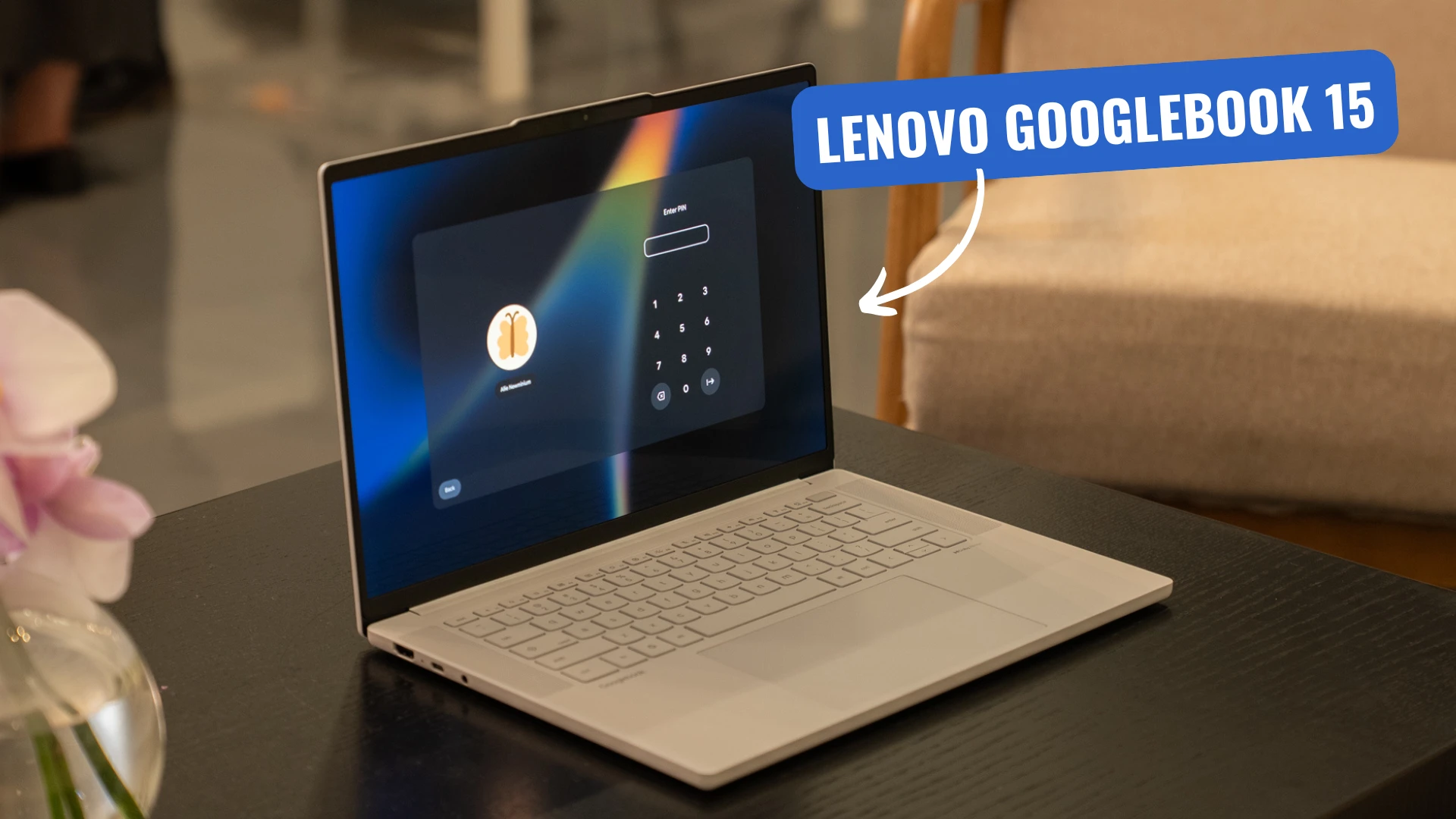
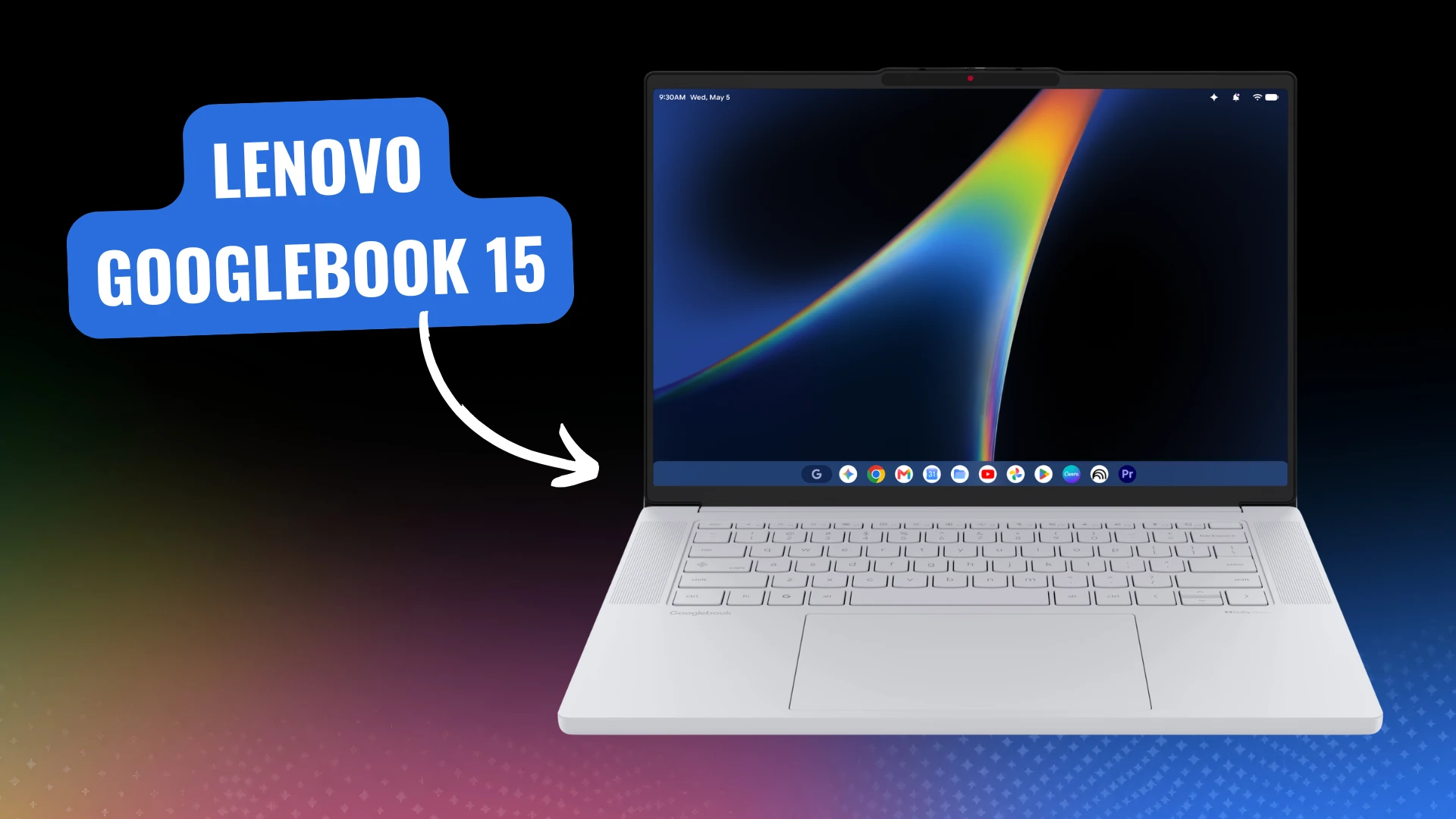
When Lenovo Group Ltd. and Alphabet Inc.’s Google division announced the Lenovo Googlebook 15, expectations across Silicon Valley and corporate IT procurement departments were high. Billed as the ultimate hybrid work engine, the machine was designed to solidify ChromeOS’s migration from budget K-12 classrooms into mainstream enterprise environments. Integrating Google’s advanced Gemini AI models directly into a sleek, 15.6-inch form factor, the device was pitched as a low-overhead, highly secure alternative to traditional Windows and macOS enterprise endpoints.
However, early hands-on reviews, teardowns, and initial enterprise pilot feedback have painted a starkly different picture. Industry analysts and tech reviewers have characterized the Lenovo Googlebook 15 as "pretty underwhelming," pointing to systemic compromises in build quality, display performance, and processing headroom. Rather than defining a new benchmark for cloud-native productivity, the laptop exposes the uncomfortable friction between aggressive hardware cost-cutting and the expanding compute requirements of modern, AI-enhanced operating systems.
For Lenovo—the world’s largest personal computer maker by shipment volume—the lackluster reception represents a miscalculation in product positioning and silicon selection. For Google, it underscores the persistent difficulty of expanding ChromeOS into higher margin enterprise tiers without tight vertical control over hardware production.
Deconstructing the Failure: Silicon Shortcuts, Display Flaws, and Thermal Throttling
At the heart of the Googlebook 15’s critical reception is a fundamental mismatch between software ambition and hardware execution. To deliver local edge-AI inference via Google’s Gemini Nano architecture, laptops require substantial memory bandwidth and dedicated Neural Processing Unit (NPU) throughput. Lenovo’s bill-of-materials (BOM) decisions, however, severely constrain these capabilities.
1. Sub-Optimal Processing & Memory Architecture
Base configurations of the Googlebook 15 deploy mid-tier silicon paired with a base cap of 8GB of unified LPDDR5 memory. Under heavy multi-tab workflows—standard for cloud-centric enterprise power users—the system frequently swaps memory to storage, introducing noticeable latency. When executing local generative AI tasks, such as automated document summarization or real-time audio transcription, thermal throttling occurs rapidly, forcing system clocks to drop by up to 25% within ten minutes of sustained load.
2. Low-Luminance, Recycled Display Panels
Despite marketing the device toward remote professionals, Lenovo opted for a 250-nit, 1080p IPS panel with limited color gamut coverage (roughly 62% sRGB). In brightly lit workplace environments or outdoor settings, screen legibility diminishes significantly. Critics have noted that utilizing visual hardware better suited for entry-level education devices undermines the laptop's $800+ MSRP.
3. Chassis Rigidity and Ergonomics
While the exterior top cover utilizes anodized aluminum to convey a premium aesthetic, the lower deck and keyboard frame rely heavily on post-consumer recycled plastic. This results in observable keyboard flex during high-speed typing and a trackpad click mechanism that lacks tactile precision, undermining the enterprise-grade ergonomics expected by corporate buyers accustomed to Lenovo’s legendary ThinkPad line.
Financial & Strategic Implications: Capital Allocation and Enterprise ROI
From an enterprise procurement perspective, hardware decisions are driven by strict financial return models, taking into account capital expenditure (CapEx), deployment costs, enterprise management licensing, and end-of-life residual value. The Lenovo Googlebook 15 fails to present a compelling capital allocation thesis for Chief Information Officers (CIOs).
At an average selling price (ASP) of $849 for viable enterprise configurations, the Googlebook 15 crosses directly into the price territory of baseline Apple M-series MacBook Airs and enterprise-grade Windows ultraportables (such as the Dell Latitude series or Lenovo’s own ThinkPad E-Series). While ChromeOS offers lower endpoint management overhead via Google Workspace Admin Console, the physical hardware's anticipated lifespan is shortened by its baseline hardware bottlenecks.
Comparative Specifications & Enterprise Value Metrics
| Metric / Feature | Lenovo Googlebook 15 | Apple MacBook Air (M3) | Lenovo ThinkPad E16 (Gen 2) | Dell Latitude 5540 |
|---|---|---|---|---|
| Baseline MSRP | $849 USD | $1,099 USD | $899 USD | $969 USD |
| Display Quality | 15.6" IPS / 250 Nits / 62% sRGB | 15.3" Liquid Retina / 500 Nits | 16.0" IPS / 300 Nits / 100% sRGB | 15.6" FHD / 300 Nits / 72% NTSC |
| Unified Memory (RAM) | 8GB LPDDR5 (Non-upgradable) | 8GB / 16GB Unified | 16GB DDR5 (Upgradable) | 16GB DDR5 (Upgradable) |
| Local AI / NPU Performance | Limited (10-15 TOPS equivalent) | Advanced (16-Core Neural Engine) | Moderate to High (Intel/AMD NPU) | Moderate (Intel AI Boost) |
| 3-Year Residual Value Est. | 18% - 22% | 45% - 52% | 30% - 35% | 28% - 32% |
| Enterprise Management | Chrome Enterprise Core | Apple Business Manager / MDM | Windows Autopilot / Intune | Windows Autopilot / Intune |
The financial math presents a clear risk. Devices with poor display technology, limited thermal dissipation, and non-expandable 8GB RAM configurations suffer accelerated economic depreciation. Enterprise lease returns for underpowered Chromebooks historical trade at substantial discounts compared to enterprise Windows laptops, eroding corporate fleet valuation models and raising the net Total Cost of Ownership.
Industry & Market Implications: Who Wins, Who Loses?
The underwhelming reception of the Lenovo Googlebook 15 ripples across the entire hardware and cloud computing ecosystem, altering vendor dynamics and procurement strategies across key sectors.
The Winners:
- Apple Inc. (NASDAQ: AAPL): Captures ongoing enterprise mindshare as corporate buyers seeking premium, lightweight, silent, high-efficiency laptops continue to standardized on MacBook Air hardware, even within cloud-centric organizations.
- Microsoft Corporation (NASDAQ: MSFT): Maintains its stronghold in mid-to-high enterprise fleets. The momentum behind Windows Copilot+ PCs gains additional runway as alternative cloud-OS hardware options fail to deliver compelling physical value.
- Tier-1 IT Infrastructure Resellers: Value-added resellers (VARs) benefit from steering enterprise clients back toward traditional, higher-margin Windows endpoints and customized deployment service contracts.
The Losers:
- Lenovo Group (HKEX: 992): Suffers margin compression on inventory investments and brand dilution within its commercial line, forcing potential price write-downs or quick promotional discounting to clearChannel channels.
- Google Cloud & ChromeOS Division: Faces delayed penetration into mainstream corporate enterprise fleets, reinforcing the market perception that ChromeOS belongs predominantly in budget-constrained educational settings or frontline worker environments rather than knowledge-worker desks.
Frequently Asked Questions (People Also Ask)
Why are reviews calling the Lenovo Googlebook 15 "underwhelming"?
Tech analysts and hardware reviewers cite a combination of overpriced baseline configurations, poor display brightness (250 nits), inadequate thermal management for sustained workloads, and a chassis that uses lower-grade plastics beneath an aluminum lid. Despite high-level integration with Google Gemini AI, the physical hardware fails to match the performance or premium feel of similarly priced Windows and Mac laptops.
Can the Lenovo Googlebook 15 handle heavy multitasking and AI workloads?
While the machine can comfortably execute standard web browsing, spreadsheet editing, and cloud video calls, it struggles under heavy multitasking. Base models featuring 8GB of non-upgradable RAM experience performance degradation when executing complex, multi-layered cloud workflows alongside edge-AI inference tasks powered by Gemini Nano.
Is the Lenovo Googlebook 15 a good investment for business enterprise fleets?
From a Total Cost of Ownership (TCO) perspective, financial analysts recommend caution. Given its relatively low residual value after three years, restricted memory limits, and sub-par panel quality, corporate IT departments generally achieve better long-term enterprise ROI by investing in mid-tier Windows laptops or entry-level Apple Silicon devices that offer longer useful lives and superior hardware performance.
How does ChromeOS on the Googlebook 15 compare to Windows Copilot+ PCs?
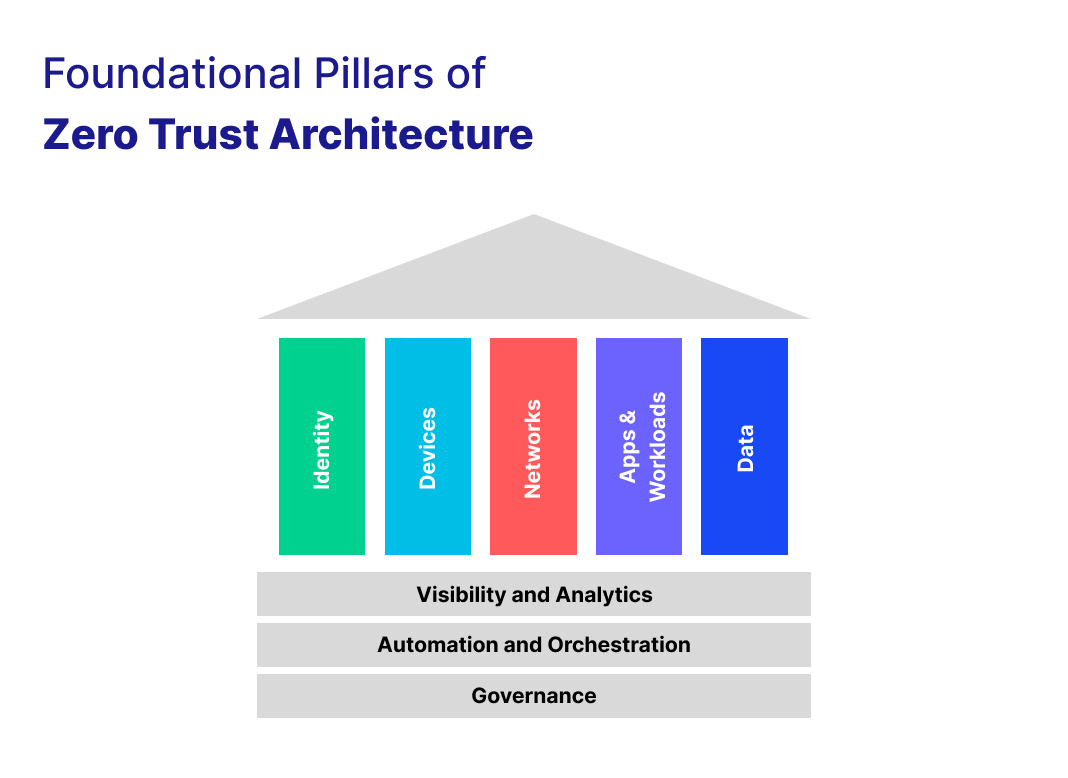
ChromeOS offers distinct advantages in deployment simplicity, fast boot times, and zero-trust cloud security integration. However, Windows Copilot+ PCs feature significantly more powerful local hardware specs, broader legacy software compatibility, superior multi-monitor display output capabilities, and deeper local AI hardware acceleration, making them more versatile for general business environments.
Future Outlook: Strategic Pivots and Milestones to Watch
To repair the market position of the Googlebook product family, Lenovo and Google must act swiftly across product planning, channel pricing, and software optimization over the coming quarters.
In the short term, market forces will likely compel Lenovo to execute price adjustments. Dropping the baseline price tag into the $599–$649 corridor would realign the device’s pricing with its actual material specs, opening up significant volume in higher-education and cost-conscious SMB segments. Simultaneously, Google’s engineering teams are expected to release software updates optimized to lower the memory overhead of local Gemini processes, mitigating early throttling issues reported by critics.
Looking further ahead to late 2025 hardware refresh cycles, the failure of this generation will accelerate a shift toward custom silicon partnerships. If Google and its hardware partners wish to establish ChromeOS as a true enterprise peer to Windows and macOS, they must abandon legacy component supply chains and enforce stricter minimum hardware standards—including mandatory 16GB RAM baselines, 300+ nit display panels, and high-efficiency NPU architectures.
Until those structural changes materialize, the Lenovo Googlebook 15 stands as a cautionary case study: a modern cloud software platform cannot overcome the drag of compromised hardware engineering.