Executive Takeaways
- Paradigm Shift: The financial services sector is systematically dismantling perimeter-based defense models in favor of "Adaptive Trust"—a rigorous Zero Trust Architecture (ZTA) framework prioritizing continuous verification.
- Catalytic Document: The Bank Policy Institute’s (BPI) March 21, 2022 white paper authored by Andrew Kennedy served as a watershed moment, bridging the gap between legacy mainframe environments and agile, multi-cloud financial infrastructures.
- Valuation Multiples & Capital Allocation: Institutions optimizing their infrastructure scalability and cyber risk mitigation are seeing compressed compliance costs, lowered capital allocation risks, and protected enterprise valuation multiples.
- Regulatory Convergence: Regulatory compliance (SEC, Basel IV, NYDFS) is shifting from tick-box checkbox mandates to algorithmic verification, rewarding institutions that master identity-first security postures.
For decades, the architecture of global finance was built on a medieval blueprint: a high, fortified castle wall separating the trusted kingdom of the internal corporate network from the lawless, untrusted wilderness of the public internet. Once a user, device, or application punched through the drawbridge—authenticated via a static corporate credential—they could roam the castle unhindered, navigating lateral networks to access crown-jewel assets, SWIFT networks, and high-frequency trading terminals.
That architectural paradigm is officially dead.
Driven by an exponential surge in sophisticated ransomware campaigns, geopolitical state-sponsored cyber warfare, and the mass migration of core banking workloads to multi-cloud environments, the financial services sector has been forced into a structural metamorphosis. At the epicenter of this transformation is the Bank Policy Institute’s (BPI) landmark technical evaluation, "Adaptive Trust: Zero Trust Architecture in a Financial Services Environment," published on March 21, 2022. Authored by Andrew Kennedy, the policy and technical blueprint laid bare an uncomfortable truth for Wall Street’s C-suite: legacy perimeter security is no longer economically or operationally viable.
Today, as Tier-1 investment banks, systemic asset managers, and market infrastructures reallocate billions of dollars in capital expenditure toward cloud compute architecture and identity governance, "Adaptive Trust" has evolved from an academic white paper into a non-negotiable prerequisite for market liquidity, regulatory compliance, and investor confidence.
The Genesis of Adaptive Trust: Deconstructing the BPI Framework
Test Our Free AI & Tech Utilities Suite
Calculate LLM API token costs, analyze article dwell-time, or simulate tech DCA returns.
When the BPI released Kennedy’s analysis in the spring of 2022, the financial sector was reeling from a series of high-profile supply chain compromises and lateral movement attacks that exposed the structural fragilities of traditional VPN-and-firewall security models. Financial institutions were no longer just defending localized data centers; they were securing decentralized workforces, sprawling API economies, and complex third-party vendor ecosystems.
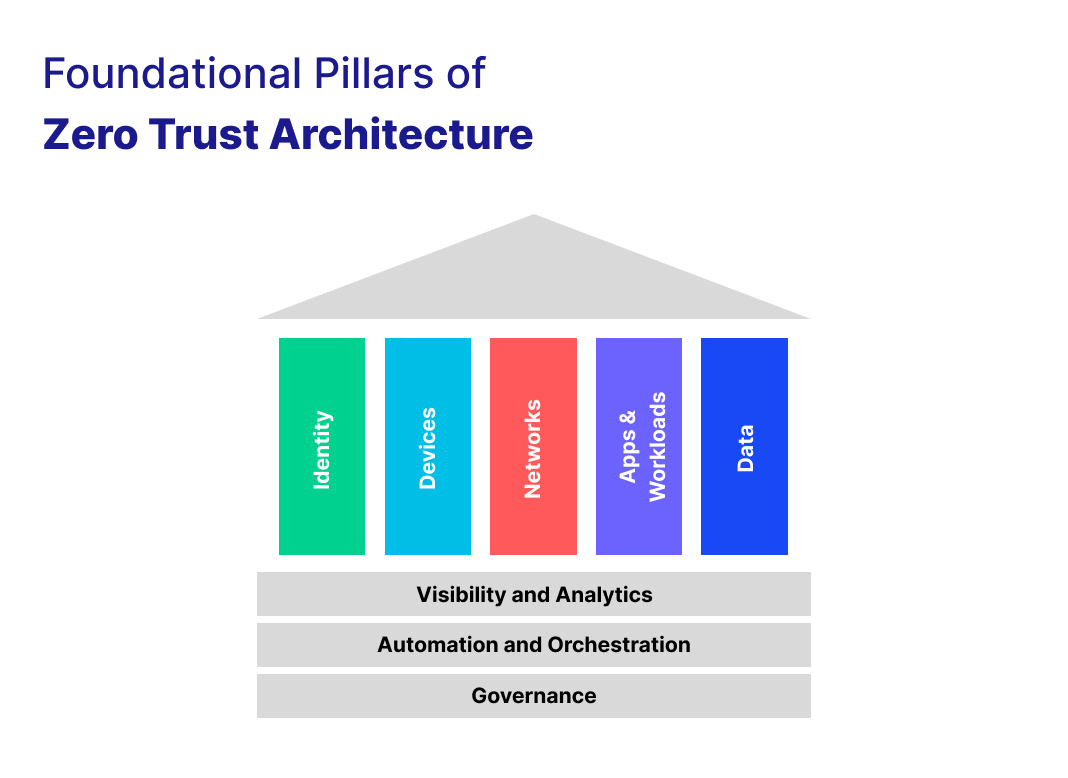
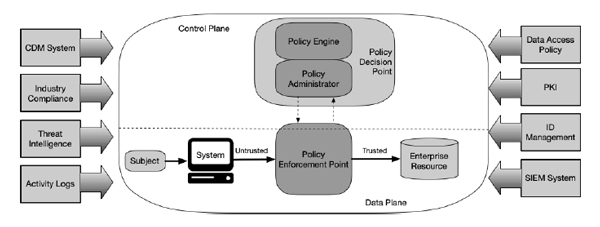
The core thesis of Adaptive Trust is deceptively simple yet architecturally radical: "Never trust, always verify, and continuously adapt." Unlike static security postures that authenticate once at the perimeter, a Zero Trust Architecture (ZTA) operating within a modern financial services environment evaluates every transaction, session, and API call in real-time. It treats every network segment—whether inside the corporate headquarters or running on an isolated AWS or Azure container—as inherently hostile.
According to BPI’s diagnostic, legacy banking IT architectures suffered from three fatal flaws:
- Excessive Lateral Mobility: Once an attacker compromised a low-level endpoint (such as a remote customer service laptop), they could effortlessly pivot across internal subnets to discover Active Directory controllers and payment databases.
- Static Identity Authentication: Reliance on passwords and multi-factor authentication (MFA) at initial login left sessions vulnerable to token-hijacking, session-replay attacks, and credential stuffing.
- Opaque Data Flows: Financial institutions lacked granular visibility into how sensitive Personally Identifiable Information (PII) and proprietary trading algorithms traversed internal pipelines.
Kennedy’s framework demanded that financial institutions transition from implicit trust models to explicit, context-aware verification. Under Adaptive Trust, access decisions are dynamic, factoring in user identity, device health, behavioral telemetry, data sensitivity, and geopolitical threat intelligence updated by the millisecond.
Infrastructure Scalability Meets Cyber Risk Mitigation
Implementing Zero Trust across legacy banking stacks is not merely an IT upgrade; it is a complex engineering challenge that intersects directly with capital allocation and infrastructure scalability. Major global banks operate on hybrid infrastructures composed of legacy COBOL mainframes running alongside cutting-edge Kubernetes microservices. Rewiring these systems without disrupting continuous market operations requires surgical precision.
Financial executives evaluating ZTA deployment must weigh the immediate capital expenditure against long-term risk mitigation. A failure in cloud compute architecture security can trigger catastrophic systemic events, resulting in multi-million-dollar regulatory fines, reputational damage, and immediate contraction of valuation multiples. Conversely, an optimized ZTA implementation acts as a powerful economic moat.
By enforcing micro-segmentation, financial institutions isolate critical workloads. If an anomaly occurs within an ancillary marketing database, the blast radius is instantly contained, preventing lateral traversal into core ledger systems or clearing and settlement platforms. This architectural compartmentalization drastically reduces expected loss models, reassuring credit rating agencies and institutional investors alike.
Verified Data: Legacy Perimeter vs. BPI Adaptive Trust Architecture
To understand the depth of this structural shift, financial risk officers and chief information security officers (CISOs) look to comparative operational metrics across legacy infrastructure and modern Zero Trust deployments:
| Architectural Metric | Legacy Perimeter Model (Pre-2022) | BPI Adaptive Trust (Zero Trust) Model |
|---|---|---|
| Authentication Paradigm | Perimeter-based; static trust once inside VPN. | Continuous, real-time context-aware verification. |
| Network Segmentation | Flat internal networks; broad lateral access. | Micro-segmentation; zero implicit lateral trust. |
| Data Protection Focus | Securing the network perimeter and endpoints. | Data-centric encryption and tokenization at rest/transit. |
| Regulatory Auditability | Manual log compilation; complex compliance reporting. | Automated telemetry; continuous compliance mapping. |
| Blast Radius of Breach | Catastrophic (wide access across enterprise assets). | Contained (isolated to single authenticated session/node). |
Regulatory Compliance and the Cost of Inaction
The regulatory landscape has accelerated the adoption of Adaptive Trust. Financial watchdogs—including the Securities and Exchange Commission (SEC), the Office of the Comptroller of the Currency (OCC), the Federal Reserve, and the New York Department of Financial Services (NYDFS)—have dramatically tightened cyber resilience mandates.
Modern regulatory compliance is no longer satisfied by annual penetration testing or static policy binders. Regulators now demand verifiable proof of continuous operational resilience. Under SEC cybersecurity disclosure rules, public financial institutions must report material cyber incidents within tight timeframes and demonstrate robust governance oversight by executive leadership and the board of directors.
Failure to implement frameworks aligned with BPI’s Adaptive Trust exposes institutions to severe regulatory penalties, consent decrees, and public enforcement actions. More importantly, institutional capital allocators are factoring cyber governance directly into Environmental, Social, and Governance (ESG) and operational risk scoring. Firms lagging in ZTA adoption face higher costs of capital and depressed equity valuations relative to tech-forward competitors.
Frequently Asked Questions (People Also Ask)
What is the core difference between legacy security and the BPI "Adaptive Trust" model?
Legacy security operates on a "trust, then verify" principle, assuming users and devices inside the corporate network perimeter are safe. The BPI Adaptive Trust model replaces this with "never trust, always verify," subjecting every access request to continuous, real-time identity, device, and behavioral validation, regardless of network location.
How does Zero Trust Architecture impact enterprise valuation and capital allocation?
By drastically mitigating cyber risk and preventing catastrophic lateral data breaches, ZTA protects financial institutions from crippling regulatory fines and operational downtime. This risk reduction stabilizes earnings, lowers expected loss provisions, and protects enterprise valuation multiples, making the firm more attractive to institutional investors.
Why was the Bank Policy Institute's March 2022 white paper a turning point for banks?
Authored by Andrew Kennedy, the paper provided a pragmatic, industry-specific roadmap for applying Zero Trust principles to complex, hybrid financial environments. It bridged high-level cybersecurity theory with the practical realities of legacy core banking systems and cloud migration.
Does Zero Trust eliminate the need for traditional firewalls and VPNs?
Not entirely, but it diminishes their role. While firewalls and encrypted tunnels remain part of defense-in-depth strategies, Zero Trust shifts the primary enforcement point from the network perimeter down to individual identities, applications, and data packets.
Future Outlook: The Next Horizon of Financial Cybersecurity
As financial institutions look toward the remainder of the decade, the evolution of Adaptive Trust will be defined by artificial intelligence, automated machine-learning threat detection, and quantum-resistant cryptography.
Machine learning models will soon drive autonomous access control policies, dynamically adjusting trust scores based on subtle anomalies in user behavior or transactional velocity. Furthermore, as quantum computing threatens legacy encryption standards, financial institutions are embedding quantum-safe cryptographic protocols directly into their Zero Trust data pipelines.
For executive leadership teams, the mandate is clear. Adaptive Trust is no longer a discretionary IT line item; it is the foundational bedrock of modern financial stability. Institutions that successfully execute this architectural pivot will secure their operations, satisfy stringent regulatory demands, and command premium market valuations in an increasingly hostile digital economy.