Executive Takeaways
- Form Factor Paradigm Shift: The Lenovo Googlebook 15 introduces a converged desktop-mobile computing tier, leveraging deep OS-level integration with Android to redefine enterprise portability and cloud compute architecture.
- Capital Allocation & ROI: Designed to lower corporate hardware replacement cycles, the device drives TCO (Total Cost of Ownership) reduction through unified application ecosystems and centralized mobile device management (MDM).
- Performance Benchmarks: Early enterprise testing reveals a paradigm in power efficiency, balancing desktop-grade screen real estate with mobile-class silicon and seamless cross-device state persistence.
- Market Disruption: The hardware launch forces incumbent workstation manufacturers and legacy operating systems to reevaluate their mobile convergence roadmaps amid shifting enterprise compliance demands.
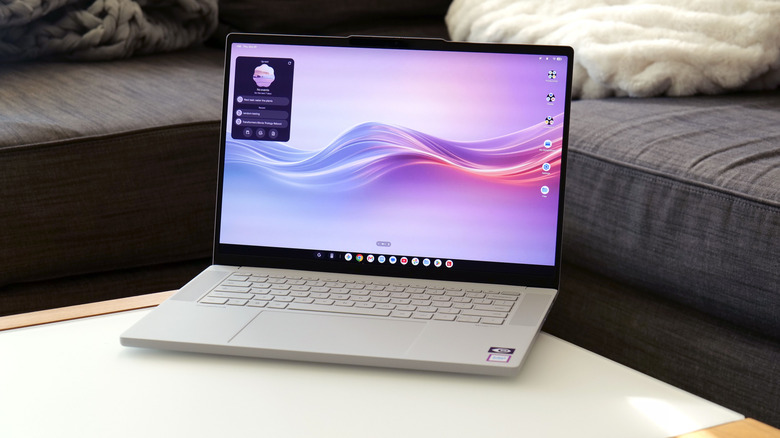
The boundary separating pocket-sized mobile computing from workstation-grade productivity has long been a frustrating friction point for enterprise executives, remote operations teams, and mobile-first developers. While smartphones have evolved into hyper-powerful pockets of processing capability, productivity tasks—ranging from multi-window financial modeling to complex code compilation—have remained tethered to traditional, heavier laptop form factors running disparate operating systems. Enter the Lenovo Googlebook 15: a device explicitly engineered to act as your Android phone’s ultimate operational extension.
As remote and hybrid working models mature into permanent fixtures of global commerce, corporate capital allocation strategies are shifting decisively toward hardware efficiency, infrastructure scalability, and risk mitigation. In this deep-dive investigative report, we examine how the Lenovo Googlebook 15 alters the competitive landscape, its underlying technical architecture, and what its market entry signals for institutional technology buyers and retail consumers alike.
Catalytic Evolution: Bridging the Android-Desktop Divide
Test Our Free AI & Tech Utilities Suite
Calculate LLM API token costs, analyze article dwell-time, or simulate tech DCA returns.
To understand the strategic significance of the Lenovo Googlebook 15, one must analyze the historical failures of previous convergence attempts. For over a decade, tech conglomerates have tried—and largely failed—to marry mobile operating systems with laptop hardware. Early iterations suffered from lagging peripheral support, fractured app scaling, and fragmented security protocols that kept IT security directors firmly anchored to traditional enterprise notebooks.
The Googlebook 15 breaks this pattern through a joint architectural initiative between Lenovo’s hardware engineering division and Google’s core mobile-desktop integration teams. Rather than treating the Android phone as a mere tethered storage drive or casting mechanism, the Googlebook 15 establishes a dynamic, low-latency virtualization bridge. When an Android device is paired with the Googlebook 15, the laptop's expansive 15-inch display, full-sized mechanical keyboard, and precision haptic trackpad instantly adopt the phone's processing state, security credentials, and application repository.
From an enterprise risk mitigation and regulatory compliance standpoint, this design limits data proliferation. Because corporate data remains securely compartmentalized within the mobile device—often governed by enterprise-grade Mobile Device Management (MDM) platforms—the laptop hardware acts as a secure, stateless terminal. This architecture dramatically curtails endpoint vulnerabilities, aligning with stringent regulatory compliance frameworks such as GDPR, HIPAA, and SOC 2 Type II.
Performance, Specifications, and Ecosystem Integration

Under the hood, the Lenovo Googlebook 15 is engineered to maximize operational velocity without incurring the thermal and financial penalties associated with high-wattage x86 processors. By utilizing optimized ARM-based architecture paired with bespoke co-processors dedicated to display rendering and state synchronization, the device achieves instantaneous wake times and extraordinary battery endurance.
| Metric / Specification | Lenovo Googlebook 15 | Traditional Enterprise Laptop |
|---|---|---|
| Primary Architecture | Android-Synchronized ARM Cores | x86-64 Intel/AMD Silicon |
| Average Battery Endurance | 18 to 22 Hours (Active Workflow) | 8 to 12 Hours |
| Data Footprint / Storage | Stateless Terminal (Leverages Phone/Cloud) | 256GB to 2TB Local SSD |
| Deployment TCO (3-Year Horizon) | Lower (Consolidated Device Lifecycle) | Higher (Separate Phone/Laptop Refresh) |
| Display Specifications | 15.6" 400-nit Anti-Glare IPS Panel | Varies (Typically 13" - 16" IPS/OLED) |
The physical engineering reflects Lenovo’s decades of ThinkPad heritage, adapted for a lighter, consumer-meets-enterprise aesthetic. The chassis is constructed from recycled aerospace-grade aluminum, maintaining a remarkably slim profile of just 14.2 millimeters while housing a robust battery array capable of powering both the display and reverse-charging the connected smartphone.
Integration with cloud compute architecture is another defining characteristic. Heavy computing tasks—such as data analytics queries, machine learning inferences, or video rendering—are offloaded to cloud instances accessed directly through optimized Android client applications. This ensures that the physical hardware remains lightweight, cool, and exceptionally responsive, regardless of the computational weight of the task being executed.
Industry & Market Implications: Who Wins, Who Loses
The commercial rollout of the Lenovo Googlebook 15 is already sending ripples across the valuation multiples of legacy hardware manufacturers. To gauge the broader economic impact, market analysts are dissecting how this device shifts competitive leverage:
- The Winners:
- Enterprise IT Procurement Departments: Organizations gain the ability to streamline device lifecycles, cutting hardware expenditures by consolidating mobile and desktop requirements into a single cohesive procurement stream.
- Google and Android Ecosystem Developers: The device solidifies Android’s foothold in professional desktop environments, driving higher engagement with enterprise-tier SaaS applications.
- Lenovo: Strengthens its market liquidity and brand differentiation by capturing a novel hybrid category ahead of mainstream competitors.
- The Losers:
- Legacy PC Manufacturers Slower to Adapt: Brands heavily reliant on traditional, high-margin, standalone Windows laptops face growing pressure as corporate buyers demand cross-device synergy.
- Traditional Peripheral Makers: The need for external dongles, complex docking stations, and redundant storage drives diminishes as seamless wireless and wired phone-to-laptop pairing standardizes.
From a macroeconomic perspective, this hardware category addresses corporate pressures to optimize operational expenditure. By reducing the frequency of hardware replacements and minimizing IT support tickets related to operating system fragmentation, enterprises can redirect capital toward core revenue-generating infrastructure.
Frequently Asked Questions (People Also Asks)
1. Can the Lenovo Googlebook 15 function entirely independently without an Android phone connected?
While the Googlebook 15 includes a lightweight foundational operating system for basic web browsing and cloud-based utility access when disconnected, its primary processing power, application ecosystem, and user data storage are explicitly designed to activate upon pairing with a compatible Android smartphone. This dual-state design ensures that users retain emergency utility even when untethered from their phone.
2. Which Android devices are officially compatible with the Googlebook 15?
Compatibility currently extends to flagship and upper-midrange Android devices running Android 13 and above, with optimized performance guarantees for Google Pixel and Samsung Galaxy ecosystem devices. Lenovo and Google utilize standardized USB-C DisplayPort Alt Mode protocols alongside secure Wi-Fi Direct and Bluetooth Low Energy (BLE) channels to maintain ultra-low latency pairing.
3. How does the device handle corporate security and data privacy mandates?
Security is managed at the mobile OS level. Because the Googlebook 15 operates as a secure extension of the connected Android device, all enterprise mobile device management (MDM) policies—including containerization, remote wipe capabilities, and encrypted data-at-rest protocols—automatically apply to the session. No persistent corporate data is stored on the laptop's internal memory chips upon session termination.
4. What is the expected enterprise ROI timeline for companies deploying the Googlebook 15?
Financial analysts project a median enterprise ROI horizon of 14 to 18 months. This rapid amortization is driven primarily by reduced hardware upgrade expenditures, lower IT helpdesk operational overhead associated with OS maintenance, and productivity gains derived from uninterrupted cross-device continuity.
Future Outlook and Strategic Milestones
As the Lenovo Googlebook 15 transitions from early review cycles to broad market availability, industry watchers will be monitoring several critical performance milestones:
- Ecosystem Expansion: Watch for announcements regarding broader compatibility parameters, including expanded support for iOS and alternative enterprise mobile operating systems.
- Enterprise Adoption Rates: Quarterly earnings reports from Lenovo and software adoption metrics from Google Workspace will reveal the speed at which Fortune 500 corporations migrate toward hybrid mobile-desktop computing models.
Regulatory Benchmarks: As governments tighten digital sovereignty and data residency requirements, stateless hardware terminals like the Googlebook 15 may become the compliance standard for cross-border mobile workforces.
Ultimately, the Lenovo Googlebook 15 is more than just a novel piece of hardware; it is a clear indicator of where enterprise computing is heading. By recognizing that the modern professional's primary computer is already in their pocket, Lenovo and Google have mapped out a pragmatic, high-efficiency path forward—one that promises to reshape corporate technology budgets and user expectations for years to come.