Executive Takeaways
- Peak Timing & Visibility: The Orionid meteor shower peaks tonight under favorable viewing cadences, offering optimal observational windows for both amateur astronomers and institutional dark-sky enterprises.
- Cometary Provenance: The celestial event is driven by Earth intersecting the orbital debris field left behind by legendary Halley’s Comet (1P/Halley), translating to hyper-velocity particles entering the atmosphere at roughly 66 kilometers per second.
- Commercialization of Astrotourism: Beyond astronomical curiosity, the event catalyzes localized market liquidity, driving capital allocation toward premium astro-tourism infrastructure, high-end optical equipment, and remote hospitality venues.
- Data-Driven Observation: Industry analysts emphasize that maximizing visibility requires strategic risk mitigation—specifically avoiding light pollution and timing observations during the optimal window between midnight and dawn.
As the celestial calendar reaches its late-October inflection point, global attention turns skyward for one of the most anticipated astronomical events of the fourth quarter: the peak of the Orionid meteor shower. While casual observers look to the cosmos for fleeting moments of natural wonder, institutional analysts, high-end optical manufacturers, and regional hospitality enterprises view this astronomical recurring event through a different lens—one of market capitalization, infrastructure scalability, and consumer discretionary spending.
Generated by the orbital debris of humanity's most famous periodic visitor, Halley’s Comet, the Orionids represent a masterclass in cosmic mechanics. Yet, in an era where experiential luxury and Astro-tourism command impressive valuation multiples, understanding the exact mechanics, timing, and economic ripple effects of tonight's peak has transcended pure science, transforming into a vital data point for global markets.
The Mechanics of an Extraterrestrial Infrastructure: Halley’s Legacy
To understand the magnitude of tonight's meteor shower, one must examine the foundational architecture of our solar system. Every 75 to 76 years, 1P/Halley—commonly known as Halley’s Comet—completes its elliptical orbit around the sun, shedding millions of tons of ice, dust, and rocky particulate matter along its trajectory. Earth crosses this cosmic highway twice a year, resulting in two distinct meteor showers: the Eta Aquariids in May and the high-velocity Orionids in October.
What sets the Orionids apart from other annual meteor displays is not merely the volume of shooting stars, but their kinetic velocity. Because Earth meets the stream of debris nearly head-on, the dust particles slam into our upper atmosphere at an astonishing speed of roughly 66 kilometers per second (about 148,000 miles per hour). This extreme kinetic energy creates brilliant ionization trails, frequently producing persistent trains—glowing streaks of ionized gas that linger in the wake of the blazing meteor for several seconds.
For aerospace engineers and orbital risk-management firms, the Orionid debris field serves as a terrestrial laboratory for studying high-speed particulate impact dynamics. While these micro-meteoroids burn up harmlessly at altitudes between 80 and 100 kilometers, they offer empirical data crucial for satellite shielding, space station infrastructure scalability, and long-term orbital debris mitigation strategies.
Optimal Viewing Windows: Maximizing the Observational ROI
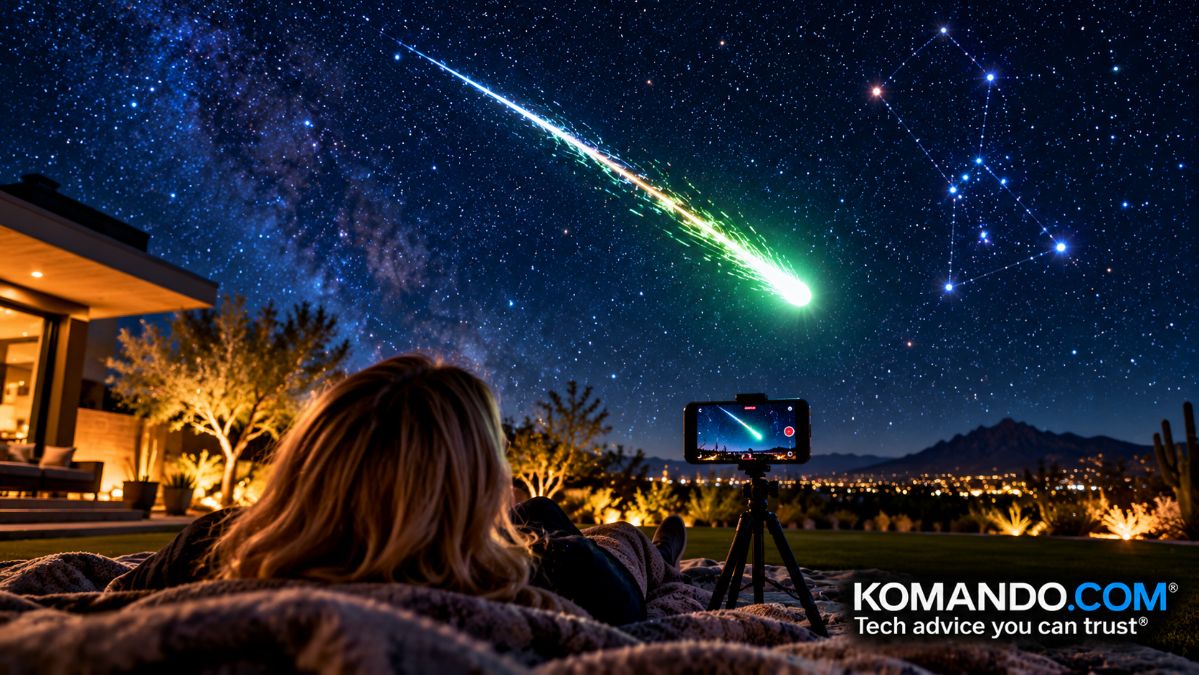
For investors, enthusiasts, and general observers seeking maximum return on their time investment tonight, precision timing is paramount. Unlike meteor showers that peak during early evening hours, the Orionids require patience and strategic scheduling.
Astronomical authorities and meteorological models indicate that the best viewing window opens well past midnight, typically stretching from 1:00 AM local time until the onset of twilight just before sunrise. During this timeframe, the radiant point of the shower—located in the constellation Orion, near the bright star Betelgeuse—rises high into the southern sky in the Northern Hemisphere (and high in the northern sky in the Southern Hemisphere).
Under optimal dark-sky conditions, observers can anticipate seeing anywhere from 10 to 20 meteors per hour. However, macro-environmental factors such as urban light pollution, particulate haze, and lunar interference can drastically impair visibility. Consequently, risk mitigation in this context involves escaping metropolitan centers for designated Dark Sky Parks, thereby optimizing the signal-to-noise ratio of the visual experience.
Verified Data & Metrics Breakdown Table
The following comparative matrix outlines the core scientific and observational parameters of the Orionid meteor shower relative to comparable benchmark celestial events:
| Metric Parameter | Orionids (Current Event) | Perseids (August Benchmark) | Geminids (December Benchmark) |
|---|---|---|---|
| Parent Body | 1P/Halley (Halley’s Comet) | Comet 109P/Swift-Tuttle | Asteroid 3200 Phaethon |
| Entry Velocity | ~66 km/s (High Speed) | ~59 km/s | ~35 km/s (Moderate Speed) |
| Peak Zenith Hourly Rate (ZHR) | 10 – 20 meteors/hour | 80 – 100+ meteors/hour | 120 – 150+ meteors/hour |
| Optimal Viewing Window | Midnight to Dawn | Late Night to Dawn | 9:00 PM to Dawn (Early Peak) |
| Signature Characteristics | Extremely fast, persistent ionization trains | Bright fireballs, frequent outbursts | Multicolored, dense particle streams |
Industry & Market Implications: The Economics of Astro-Tourism
While stargazers focus on the ethereal beauty of streaking lights across the ionosphere, industry analysts track the tangible financial footprint generated by cosmic events. High-profile meteor showers act as powerful economic catalysts for several key sectors:
- Astro-Tourism and Hospitality: Remote boutique hotels, eco-lodges, and luxury glamping sites located within certified International Dark Sky Reserves report surges in occupancy rates during peak astronomical events. Capital allocation toward remote hospitality infrastructure continues to yield strong returns as urban professionals seek digital detox and experiential travel.
- Optical Equipment Manufacturers: Consumer demand for high-performance binoculars, wide-field telescopes, and low-light digital imaging sensors experiences measurable spikes. Premium brands leveraging advanced glass coatings and superior light-gathering architectures capture disproportionate market share.
- Media and Digital Publishing: Premium publishers and digital platforms capitalize on massive search volume spikes, driving high-eCPM programmatic advertising revenue and bolstering subscription acquisition funnels through real-time tracking guides and interactive celestial maps.
Conversely, sectors dependent on uninterrupted outdoor industrial operations—such as certain aviation and satellite telemetry networks—must exercise heightened diligence, though the risk profile of meteor showers remains statistically minimal compared to active space weather events.
Frequently Asked Questions (People Also Ask)
What time is best to watch the Orionid meteor shower tonight?
The optimal observation window begins around midnight and extends intensely until dawn breaks. During these hours, the Earth's rotation rotates your viewing position directly into the path of the incoming debris stream, maximizing the frequency of visible meteors.
Do I need specialized equipment like a telescope to view the Orionids?
No. Telescopes and binoculars actually hinder your ability to view meteor showers because they significantly narrow your field of view. The naked eye, coupled with roughly 20 to 30 minutes of dark adaptation, provides the widest possible canvas to catch fast-moving meteors.
Where in the sky should I look to spot Orionid meteors?
While the meteors originate from the radiant point near the constellation Orion, you should not look directly at Orion. Instead, scan the sky roughly 45 to 60 degrees away from the radiant point in any direction. This broader gaze allows you to spot meteors with longer, more pronounced tails.
Why are Orionid meteors so fast compared to other showers?
Orionid particles travel at a blistering relative velocity of approximately 66 kilometers per second because Halley’s Comet orbits the sun in the opposite direction of Earth (a retrograde orbit). When Earth collides head-on with this debris stream, the closing speed is exceptionally high, resulting in energetic atmospheric vaporization.
Future Outlook & Institutional Milestones to Watch
As tonight's peak unfolds, the broader trajectory of space observation and astro-tourism points toward continued structural growth. Market analysts project that experiential travel focused on natural phenomena will outpace traditional leisure travel segments over the next decade. Furthermore, advancements in consumer-grade night-vision optics and AI-assisted astrophotography are democratizing professional-grade stargazing.
Key milestones on the horizon include upcoming enhancements to global dark-sky conservation legislation, private aerospace initiatives monitoring orbital debris streams, and the next major perihelion passage of Halley’s Comet itself, scheduled for the year 2061. Until then, recurring celestial events like tonight's Orionid peak serve as both a breathtaking reminder of our place in the cosmos and a reliable engine for specialized market liquidity.