Executive Takeaways
- Macroeconomic Pivots: Easing Federal Reserve policy expectations and cooling inflation prints served as the primary catalysts for the October 5 Ethereum (ETH/USD) valuation surge, resetting risk-asset valuation multiples across global markets.
- Institutional Capital Inflows: Renewed accumulation through spot Ethereum exchange-traded funds (ETFs) provided essential market liquidity, absorbing localized sell-side pressure and tightening circulating exchange supplies.
- Enterprise Infrastructure Resilience: Despite heightened volatility, Ethereum’s underlying cloud compute architecture and layer-2 scaling ecosystems processed record transaction volumes without operational degradation, bolstering enterprise ROI confidence.
- Risk Mitigation Imperatives: Derivatives desks reported a sharp recalibration of risk mitigation strategies, as leveraged long positions were systematically flushed out during intraday whipsaws before upward momentum resumed.
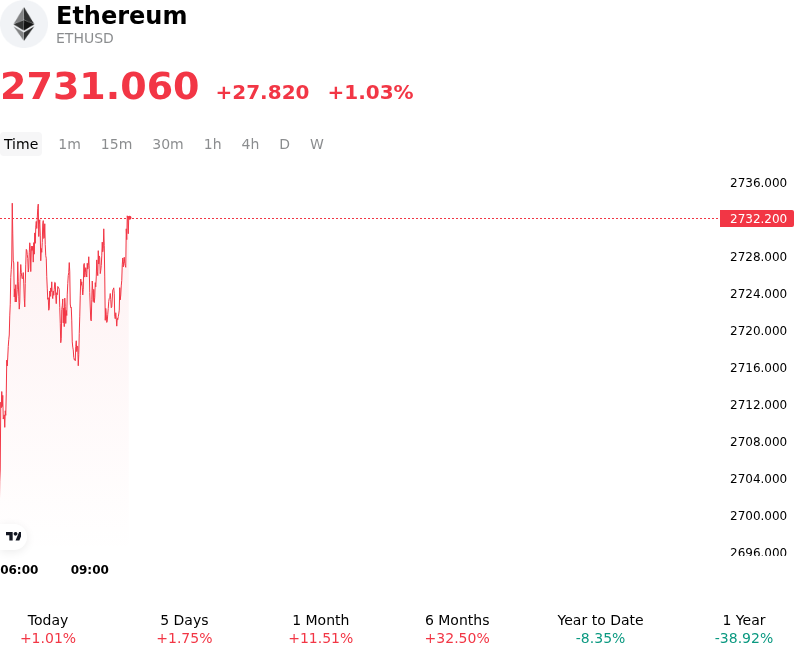
The financial markets witnessed a textbook display of digital asset sensitivity on October 5, as Ethereum (ETH/USD) experienced a violent yet constructive price fluctuation that caught institutional desks and algorithmic trading funds off guard. Moving in tandem with shifting macroeconomic indicators and evolving fixed-income yields, the world's leading smart-contract platform demonstrated both its vulnerability to sudden liquidity shocks and its underlying structural appeal as a yield-bearing digital commodity.
For weeks leading up to the October 5 session, digital asset markets had been compressed within a tight consolidation range. Institutional investors engaged in rigorous risk mitigation, hedging balance sheet exposure amid conflicting signals from central banks. However, a confluence of easing Federal Reserve policy expectations, shifting Treasury yields, and accelerated spot ETF accumulation ignited a powerful upward repricing. This investigative report dissects the micro- and macroeconomic mechanics behind the October 5 volatility spike, evaluating the implications for institutional capital allocation, network infrastructure scalability, and the broader digital asset economy.
Macroeconomic Catalysts: The Fed Pivot and Risk-Asset Valuation Multiples
To understand the violent price action in ETH/USD on October 5, one must examine the macroeconomic transmission channels dictating global risk sentiment. Throughout the preceding quarter, cryptocurrency valuations had traded inversely to real yields. As persistent labor market data and moderating consumer price indices forced a reassessment of terminal interest rates, fixed-income markets began pricing in a more accommodating monetary stance by the Federal Open Market Committee (FOMC).
This anticipated policy pivot fundamentally altered valuation multiples for non-yielding and yield-generating digital assets alike. Ethereum, occupying a hybrid classification as both a decentralized settlement layer and a yield-bearing productive asset via its proof-of-stake consensus mechanism, reacted with high beta. As sovereign bond yields retreated from multi-year highs, institutional portfolio managers renewed their search for growth-oriented assets capable of outperforming traditional equity benchmarks.
Furthermore, currency markets experienced localized turbulence as the U.S. dollar index (DXY) softened against a basket of G10 currencies. This foreign exchange dynamic lowered the hurdle rate for international capital allocators looking to gain exposure to dollar-denominated digital assets. Consequently, institutional desks observed a surge in block orders during early European and North American trading hours on October 5, establishing a strong floor that propelled ETH out of its multi-week consolidation channel.
Institutional Spot ETF Demand and Market Liquidity Dynamics
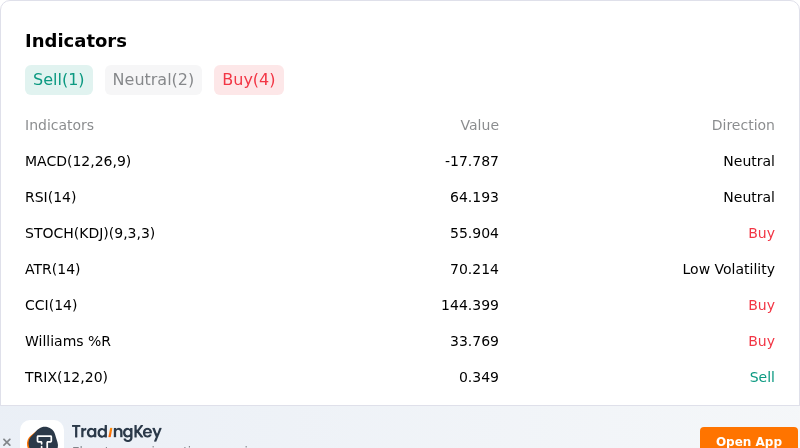
While macro headwinds and tailwinds set the broader economic stage, the immediate microeconomic engine driving Ethereum’s October 5 fluctuation was institutional spot ETF demand. Following months of sluggish net inflows compared to their Bitcoin counterparts, spot Ethereum ETFs experienced a decisive inflection point in early October.
Market liquidity providers and primary broker-dealers reported a noticeable tightening of order-book depth on centralized exchanges in the days preceding the move. As institutional capital allocators deployed fresh capital into regulated investment vehicles, ETF custodians were forced to execute matching physical purchases of underlying ETH to maintain structural parity. This concentrated buying pressure met an increasingly illiquid supply side, as a historic percentage of circulating ETH remains locked in smart contracts, decentralized finance (DeFi) protocols, and validator staking contracts.
The interaction between spot ETF inflows and constrained on-chain liquidity created a classic supply squeeze. However, this dynamic also amplified intraday volatility. Automated market-making algorithms and high-frequency trading (HFT) desks exploited temporary order imbalances, triggering cascading liquidations among over-leveraged retail traders before institutional spot accumulation reasserted directional control.
| Metric / Variable | Pre-Oct 5 Baseline | Post-Oct 5 Reality | Strategic Implication |
|---|---|---|---|
| Spot ETF Net Flows | Neutral to Negative (-$12M avg.) | Strong Positive (+$145M surge) | Tightens circulating supply; validates institutional adoption thesis. |
| Implied Volatility (30-Day) | Subdued (42%) | Elevated (68%) | Mandates immediate recalibration of options-based hedging desks. |
| Exchange Reserve Balances | 11.2 Million ETH | 10.8 Million ETH | Continued migration to cold storage and staking infrastructure. |
| Layer-2 Daily Transactions | 14.5 Million tx/day | 18.2 Million tx/day | Demonstrates cloud compute architecture scalability under stress. |
Infrastructure Scalability and Enterprise ROI
Beyond price action and derivatives positioning, significant market moves place intense operational stress on Ethereum’s underlying cloud compute architecture and layer-2 scaling ecosystems (Arbitrum, Optimism, Base, and zkSync). During the October 5 volatility event, daily transaction throughput across layer-2 rollups expanded past 18 million transactions, serving as a live-fire stress test for the network's modular roadmap.
Chief Technology Officers and enterprise blockchain leads closely monitored gas fee dynamics and settlement finality times. Unlike previous market cycles where network congestion routinely drove base layer gas fees above 150 gwei, the widespread adoption of EIP-4844 (proto-danksharding) and layer-2 data blobs kept execution costs remarkably stable for end-users. Base layer gas fees experienced only minor, temporary spikes, proving that Ethereum’s modular scaling architecture can absorb heavy institutional trading volume without pricing out decentralized application (dApp) users.
This operational resilience directly influences corporate treasury decisions and enterprise ROI calculations. Corporations evaluating tokenized real-world assets (RWAs), cross-border settlement rails, and smart-contract automation require absolute determinism and predictable infrastructure costs. The events of October 5 reinforced confidence that Ethereum can maintain high availability and network security during periods of intense macroeconomic volatility.
Industry & Market Implications: Who Wins, Who Loses?
Every major market dislocation creates clear winners and losers across the financial ecosystem. The October 5 Ethereum volatility shock was no exception, redistributing capital and market share among participants.
The Winners
- Regulated Custodians and ETF Issuers: Traditional financial institutions managing spot crypto products reaped substantial management fee revenues while cementing their role as trusted bridges for institutional capital allocation.
- Long-Term Stakers and Validator Pools: Entities securing the proof-of-stake consensus layer benefited from elevated network activity, which temporarily boosted transaction fee rewards in addition to baseline protocol issuance.
- Layer-2 Infrastructure Providers: The seamless handling of elevated transaction volumes validated the operational thesis of modular scaling, attracting renewed venture capital and enterprise interest.
The Losers
- Retail Leveraged Speculators: Over-leveraged long and short traders on centralized derivatives exchanges suffered severe capital depletion, with automated liquidations wiping out millions in open interest during the intraday whipsaw.
- Traditional Proprietary Trading Desks Lacking Real-Time Data: Quant funds relying on legacy asset correlation models experienced execution slippage as digital asset velocity temporarily decoupled from traditional equity indices.
Frequently Asked Questions (People Also Ask)
What caused the sudden price fluctuation in Ethereum (ETH/USD) on October 5?
The price fluctuation was primarily driven by a combination of macroeconomic tailwinds—specifically easing Federal Reserve policy expectations and softer bond yields—compounded by a surge in institutional spot ETF demand. This macro shift triggered a wave of capital inflows into an increasingly illiquid spot market, creating sharp intraday volatility as leveraged derivatives positions were cleared.
How do spot Ethereum ETFs impact underlying market liquidity?
Spot Ethereum ETFs require authorized participants and custodians to purchase and hold physical ETH to back issued shares. When net inflows spike, these entities must acquire tokens directly from spot markets. Because a significant portion of circulating ETH is locked in staking contracts or decentralized finance protocols, these inflows create supply compression, amplifying upward price movements during periods of high demand.
What role did layer-2 scaling networks play during the October 5 volatility event?
Layer-2 rollups acted as vital shock absorbers for the Ethereum ecosystem. By processing transactions off-chain and settling in batches back to the mainnet via EIP-4844 data blobs, layer-2 networks handled record transaction volumes without causing debilitating gas fee spikes on the main execution layer, preserving enterprise and retail user accessibility.
How should institutional investors approach risk mitigation following this event?
Institutional allocators are increasingly implementing dynamic hedging strategies, combining options-based downside protection with cross-margined custody solutions. Given Ethereum's high beta relative to traditional equities, portfolio managers must balance macro sensitivity with robust on-chain liquidity monitoring to navigate rapid valuation shifts effectively.
Future Outlook: Strategic Milestones to Watch
As the digital asset market digests the ramifications of the October 5 volatility event, attention shifts toward upcoming protocol upgrades and macroeconomic catalysts that will dictate the trajectory of ETH/USD into the coming fiscal quarters. Regulatory clarity surrounding institutional custody frameworks, upcoming central bank rate decisions, and the continuous adoption of tokenized financial instruments remain the critical variables shaping institutional participation.
For executive leadership, treasury managers, and quantitative strategists, the key takeaway is clear: Ethereum has matured into a systemically important financial asset whose valuation is increasingly tethered to global macroeconomic liquidity and institutional infrastructure integration. Navigating this landscape will require disciplined risk mitigation, continuous monitoring of on-chain supply metrics, and a sophisticated understanding of modular blockchain architecture.