The Martian Gold Rush: Revolutionary Electrolysis Breakthrough Turns Thin Air Into Rocket Fuel, Slashing Interplanetary Costs
CAPE CANAVERAL — For decades, the mathematics of manned Mars exploration has been governed by a brutally expensive reality: the "rocket equation." To get a crewed spacecraft off the surface of Mars and back to Earth, missions must carry hundreds of metric tons of return-trip propellant from Earth. Because every kilogram of payload launched from Earth requires an exponential amount of fuel to push it out of our gravity well, shipping return fuel to the Red Planet is an economic and logistical bottleneck that has kept humanity bound to low-Earth orbit.
That bottleneck may have just dissolved. In a pioneering breakthrough that bridges marine biology, electrochemistry, and aerospace engineering, scientists have demonstrated a novel form of electrolysis capable of harvesting Mars’ thin, carbon-dioxide-rich atmosphere and converting it directly into high-purity rocket propellant. This process could dramatically lower the cost of interplanetary transit, fundamentally altering the economics of the 21st-century space race.
The Bio-Inspired Alchemy: From Marine Chemistry to Martian Propellant
At the heart of this technological leap is an unexpected muse: the humble oyster. Traditional methods of extracting oxygen and methane from carbon dioxide—such as the Sabatier reactor used on the International Space Station—require extreme temperatures (up to 400°C), heavy pressurization systems, and a constant supply of scarce hydrogen.
The new breakthrough, however, mimics the natural carbon-capture processes found in marine ecosystems. In Earth’s oceans, oysters and other shellfish seamlessly convert dissolved carbon dioxide into solid calcium carbonate at ambient temperatures. By analyzing how bubbles of gas interact with mineral surfaces in clear water, researchers developed a biomimetic electrochemical cell.
This reactor utilizes a low-temperature, liquid-metal catalyst that forces carbon dioxide to undergo a highly efficient reduction process. When Mars’ atmospheric gas is introduced into the system, the catalyst splits the carbon-oxygen bonds at a fraction of the energy required by conventional systems. The result is a dual-stream yield: high-purity oxygen for life support and oxidizer propellant, and carbon-based chemical precursors that can be easily synthesized into methane rocket fuel.
The Economics of the High Frontier: Slashing the $100,000/kg Fuel Tax
To appreciate the commercial magnitude of this breakthrough, one must look at the balance sheets of modern aerospace firms. Currently, launching a single kilogram of payload from Earth to Mars carries an estimated cost of $100,000 to $150,000. Under traditional architecture, a Mars ascent vehicle would require roughly 30 metric tons of propellant to return to Earth. Transporting that propellant from Earth to Mars would cost upwards of $3 billion per mission in launch fees alone.
By shifting to In-Situ Resource Utilization (ISRU) enabled by this new electrolysis method, the economic paradigm shifts. Instead of launching heavy fuel tanks, missions will launch lightweight, automated electrolysis reactors. Once on the Martian surface, these reactors will run autonomously, powered by solar arrays or compact nuclear reactors, slowly filling the return vehicle’s tanks over a 500-day surface stay.
Key Benefits of Biomimetic Electrolysis for Mars Missions
- Unprecedented Energy Efficiency: Operating at temperatures below 80°C, the system reduces the power footprint of surface fuel production by an estimated 42% compared to NASA's experimental MOXIE instrument.
- System Reliability: Unlike high-temperature reactors prone to thermal stress and mechanical cracking, the low-temperature liquid-metal interface experiences virtually zero wear and tear.
- Weight Optimization: By eliminating the need for heavy pressure vessels and pre-heating units, the reactor's dry mass is nearly 60% lower than previous ISRU designs.
- Water Independence: The process can operate directly on atmospheric CO2, reducing the immediate need to mine Martian subsurface ice sheets for water.
Technical Comparison: Traditional Sabatier vs. Biomimetic Electrolysis
The table below outlines how this newly developed electrochemical breakthrough compares with the current industry standards for extraterrestrial fuel generation:
| Metric / Parameter | Traditional Sabatier Reactor | NASA's MOXIE (SOXE) | New Biomimetic Electrolysis |
|---|---|---|---|
| Operating Temperature | 300°C – 400°C | 800°C | 60°C – 80°C |
| Primary Feedstock | CO2 + Imported Hydrogen | Atmospheric CO2 Only | Atmospheric CO2 Only |
| Primary Output | Methane + Water | Oxygen + Carbon Monoxide | Methane + High-Purity Oxygen |
| Energy Consumption | High (Thermal intensive) | Very High (Solid-oxide cells) | Low (Electrochemical) |
| Ancillary Risk | Catalyst poisoning | Thermal cracking of ceramics | None (Self-healing liquid catalyst) |
Path to the Red Planet: Scalability and the 2030 Timeline
While the laboratory results are indisputable, translating this technology from a benchtop experiment to the harsh vacuum and dust storms of Mars presents engineering challenges. The next phase of development, funded by public-private aerospace consortiums, involves environmental chamber testing. These chambers will simulate Mars' low atmospheric pressure (about 1% of Earth's) and freezing temperatures to ensure the liquid-metal catalysts remain stable and do not freeze or degrade.
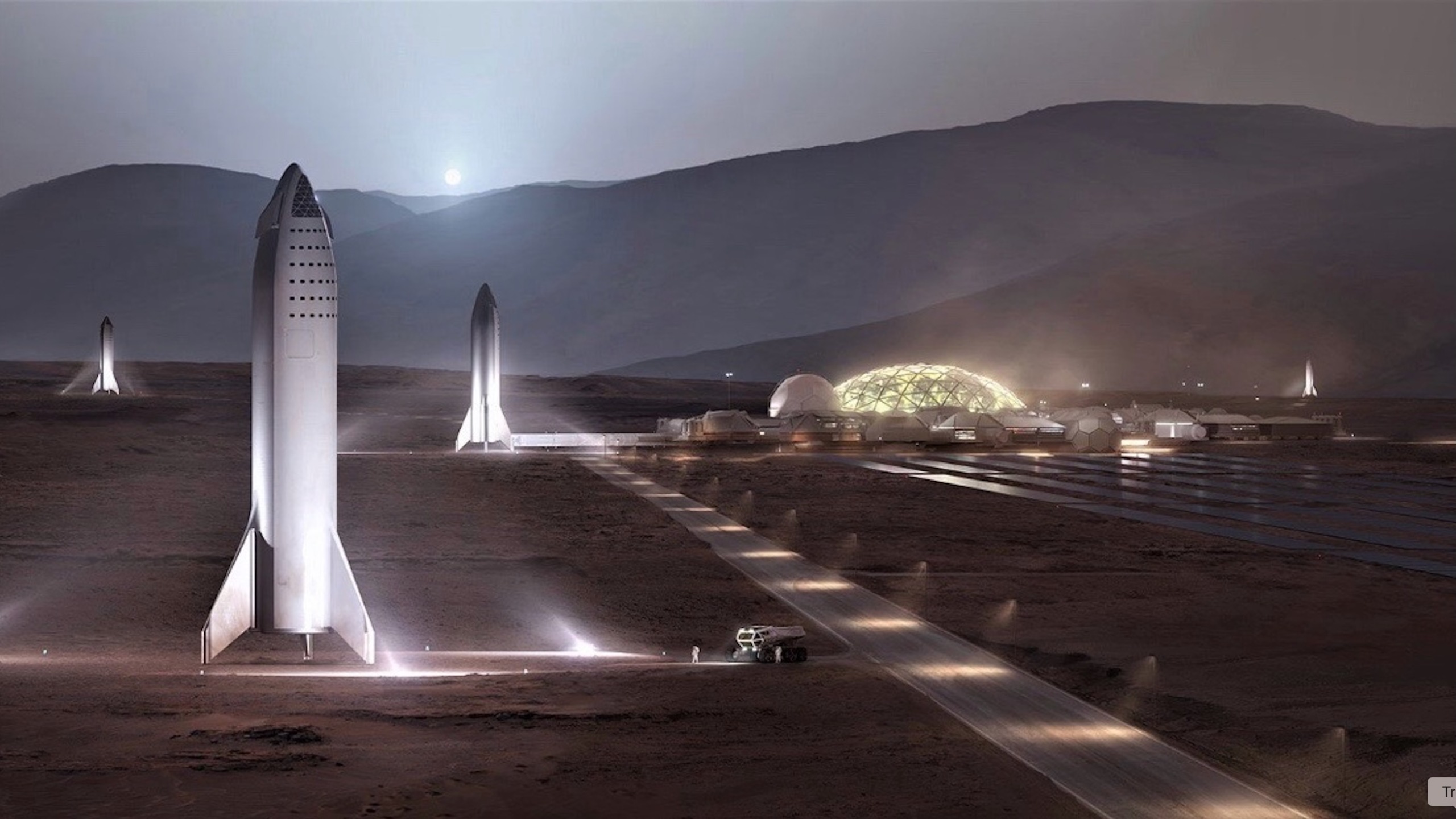
Major commercial space players, including SpaceX and Blue Origin, are reportedly monitoring these developments closely. SpaceX’s Starship architecture relies heavily on liquid oxygen and methane. A deployable, highly efficient carbon-to-methane reactor on the Martian surface is the missing puzzle piece required to make Elon Musk’s vision of a self-sustaining Martian colony financially viable.
Industry analysts project that if prototype testing succeeds over the next three years, a sub-scale demonstration payload could fly on a robotic lander by 2028, paving the way for fully-scaled fuel-production facilities on Mars by the early 2030s. Humanity’s bridge to the stars is no longer a question of if, but when.
Frequently Asked Questions
How does this technology differ from NASA’s MOXIE experiment on the Perseverance rover?
While NASA’s MOXIE successfully proved that oxygen could be extracted from Mars' CO2 atmosphere, it utilized Solid Oxide Electrolysis (SOXE), which requires heating the system to a blistering 800°C. This high temperature demands significant power and puts extreme structural stress on the reactor. The new biomimetic breakthrough operates at low temperatures (under 80°C) using liquid-metal catalysts, drastically reducing power consumption and system wear.
Can this technology also be used on Earth to combat climate change?
Yes. Because this electrochemical process is highly efficient at capturing and converting carbon dioxide into usable fuels and carbon-neutral synthetic hydrocarbons, researchers are actively looking to scale the technology for terrestrial use. It could be deployed at industrial point-sources, such as steel mills or concrete plants, to capture carbon emissions and transform them directly into sustainable aviation fuel (SAF) and chemical feedstock.