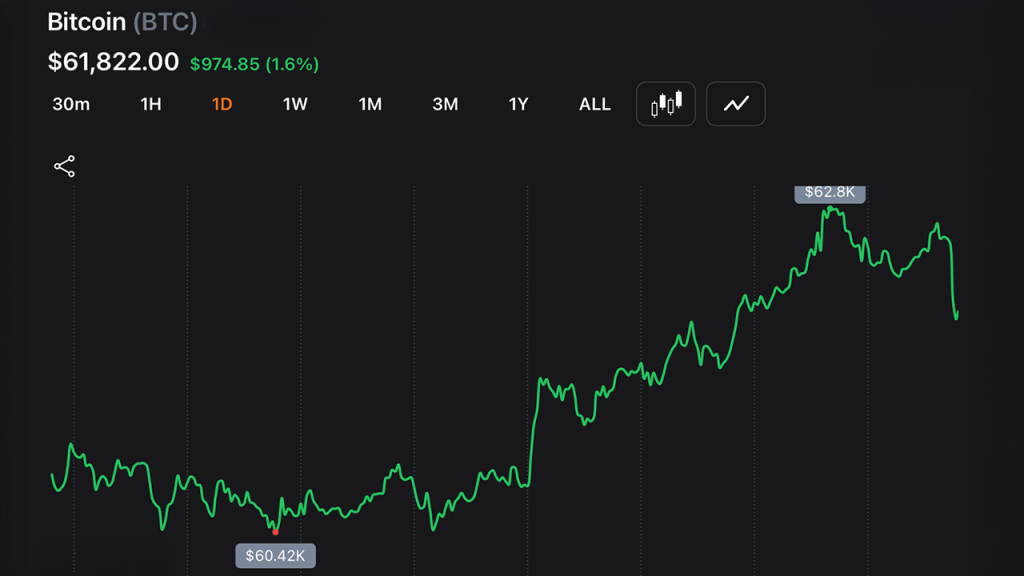
Global financial markets experienced a decisive shift on Friday following the release of the U.S. Department of Labor’s October employment report. Wall Street indices rebounded sharply as stronger-than-expected non-farm payroll figures quelled immediate recession fears, prompting a broad-based reassessment of valuation multiples and corporate earnings projections. Simultaneously, the premier digital asset, Bitcoin (BTC), decoupled from traditional equity upside, maintaining a remarkably tight trading range as macroeconomic liquidity signals and institutional capital allocation strategies faced competing pressures.
As chief investigative editors across major financial desks parse the underlying data, the intersection of monetary policy, labor market resilience, and digital asset maturation reveals a complex narrative. Enterprise risk managers, institutional asset allocators, and corporate treasurers are now recalibrating their portfolios to navigate a shifting landscape defined by sticky interest rate expectations, robust consumer demand, and evolving regulatory compliance frameworks.
Executive Takeaways
Test Our Free AI & Tech Utilities Suite
Calculate LLM API token costs, analyze article dwell-time, or simulate tech DCA returns.
- Equities Rally on Resilience: U.S. stock indices surged following an October employment print that significantly exceeded consensus Wall Street estimates, easing fears of an imminent economic hard landing.
- Bitcoin Stays Range-Bound: Despite the surge in risk-on sentiment across traditional equities, Bitcoin compressed within a narrow technical band, signaling a period of institutional accumulation and consolidation.
- Monetary Policy Reassessment: The robust jobs data has forced fixed-income markets to reprice the probability of aggressive Federal Reserve interest rate cuts, impacting borrowing costs and capital allocation models.
- Enterprise & Liquidity Implications: Corporate treasuries and fintech infrastructure providers must balance high-yielding risk-free assets against potential equity breakout opportunities and digital asset volatility.
The Macroeconomic Catalyst: Deconstructing the October Jobs Report
The Bureau of Labor Statistics (BLS) released an October employment report that dramatically outpaced consensus forecasts, injecting a surge of optimism into traditional equity markets. Economists had projected a moderate cooling in hiring velocity due to lingering monetary policy friction and macroeconomic headwinds. Instead, non-farm payrolls expanded at a pace that underscored the structural resilience of the American consumer and corporate hiring demand.
For weeks, equity desks had been fixated on risk mitigation, hedging against potential margin compression and slowing enterprise ROI. The October data fundamentally altered this narrative. By demonstrating that domestic demand remains exceptionally robust, the report mitigated fears of a sharp economic contraction. Consequently, value and growth stocks alike experienced a coordinated bounce, with cyclical sectors leading the advance as institutional block trades favored companies with strong balance sheets and high pricing power.
However, this macroeconomic strength carries a secondary implication for capital markets. Stronger employment growth directly correlates with wage pressures, which complicates the Federal Reserve’s inflation-targeting mandate. Fixed-income yields edged higher following the announcement as bond traders pared back aggressive bets on rapid, deep interest rate cuts. This dynamic forces corporate financial officers to re-evaluate their capital expenditure timelines and debt-servicing costs in an elevated rate environment.
Bitcoin's Divergence: Consolidation in a High-Liquidity Environment
While traditional equities celebrated the macroeconomic lifeline, the cryptocurrency market exhibited a fascinating decoupling. Bitcoin, historically sensitive to broad liquidity expansions and risk-on equity rallies, held within a remarkably narrow technical range throughout the trading session.
Market microstructure analysts attribute this behavior not to weakness, but to a structural maturation of the digital asset ecosystem. Over the past several quarters, the influx of spot exchange-traded funds (ETFs) and institutional custody solutions has fundamentally altered market liquidity. Rather than reacting impulsively to intraday macroeconomic prints, institutional capital allocators are engaging in methodical accumulation and range-bound positioning.
Furthermore, derivatives markets indicate that leverage has been largely flushed out from the system, leaving spot holders and long-term institutional investors in control of the order book. Key resistance levels remain intact, and market makers are utilizing this consolidation phase to test infrastructure scalability and optimize execution algorithms. While equities enjoyed a direct beta bounce from the jobs report, Bitcoin's restrained movement reflects a market waiting for definitive regulatory clarity and structural liquidity catalysts before committing to its next directional trend.
| Asset Class / Indicator | Pre-Report Sentiment | Post-Report Market Reaction | Key Valuation & Liquidity Driver |
|---|---|---|---|
| U.S. Equities (S&P 500 / Nasdaq) | Cautious / Bearish Hedge | Strong Rebound (+1.5% avg.) | Resilient earnings outlook, avoidance of hard landing |
| Bitcoin (BTC) | Neutral / Consolidating | Narrow Range (Sub-2% fluctuation) | Institutional spot ETF inflows vs. rate-cut repricing |
| U.S. Treasury Yields | Downward Bias | Upward Tick (Yields Higher) | Reduced probability of aggressive Fed rate cuts |
| Labor Market (October Non-Farm) | Expected Cooling | Beat Consensus Estimates | Sustained consumer spending and corporate hiring |
Industry & Market Implications: Winners, Losers, and Strategic Shifts
The simultaneous rally in equities and the measured consolidation in Bitcoin create distinct strategic imperatives across various sectors:
- Traditional Asset Managers & Equities: The clear winners of the October jobs report are cyclical equities, financial institutions, and consumer discretionary firms. These entities benefit directly from a stable labor market that supports consumer spending and corporate revenues. Portfolio managers are aggressively rotating back into growth-oriented sectors, betting that earnings multiples can expand despite higher-for-longer interest rates.
- Fixed Income & Debt Issuers: Conversely, bond market participants face continued volatility. As yields adjust upward to reflect resilient economic growth, corporate treasurers looking to issue new debt must contend with elevated borrowing costs. Risk mitigation strategies now focus heavily on locking in long-term fixed rates before macroeconomic conditions shift further.
- Cryptocurrency & Fintech Ecosystem: While Bitcoin’s lack of immediate upside frustrated short-term speculators, institutional infrastructure providers view this low-volatility consolidation as an essential phase for risk management. Crypto-native institutions and regulated custodians are using this period to scale cloud compute architecture, enhance cybersecurity protocols, and ensure absolute regulatory compliance ahead of anticipated institutional volume expansions.
Frequently Asked Questions (People Also Ask)
Why did stocks bounce after a strong October jobs report?
Traditionally, strong economic data can cause stocks to fall if investors fear the Federal Reserve will raise interest rates to fight inflation. However, in the current economic cycle, a strong October jobs report reassured Wall Street that the U.S. economy is avoiding a recession ("hard landing"). This positive outlook on corporate revenues and consumer demand outweighed concerns over monetary tightening, driving a broad-based equity rally.
Why is Bitcoin trading in such a narrow range while stocks are rising?
Bitcoin’s recent price compression reflects a period of healthy market consolidation rather than weakness. While equities reacted immediately to macroeconomic growth signals, digital assets are currently digesting institutional capital flows, spot ETF dynamics, and shifting expectations regarding Federal Reserve liquidity. Long-term institutional investors are methodically accumulating positions within this technical band without triggering aggressive leveraged breakouts.
How does the October employment data impact Federal Reserve interest rate decisions?
A robust labor market signals continued economic momentum, which can keep inflationary pressures elevated. As a result, the October jobs report forced fixed-income markets to reprice the likelihood of aggressive, immediate interest rate cuts by the Federal Reserve. Central bank officials are expected to maintain a data-dependent stance, keeping rates restrictive for a longer duration to ensure inflation remains anchored near the 2% target.
What does this market environment mean for corporate capital allocation?
Corporate financial officers and enterprise risk managers must navigate an environment characterized by strong operational demand but higher cost-of-capital. Capital allocation strategies are shifting toward high-ROI internal projects, balance sheet optimization, and rigorous risk mitigation rather than speculative debt-financed expansion. Flexibility and strong liquidity reserves remain paramount across all major industries.
Future Outlook: Milestones to Watch in the Coming Quarters
As the fourth quarter progresses, market participants will closely monitor several critical inflection points. First, incoming consumer price index (CPI) and personal consumption expenditures (PCE) inflation prints will dictate the Federal Reserve's final policy meetings of the year. Any divergence between labor market strength and cooling inflation will significantly influence equity valuation multiples.
Second, in the digital asset sphere, analysts are tracking the velocity of institutional inflows into spot crypto products and potential regulatory milestones regarding digital asset custody and market structure. If macroeconomic liquidity expands while regulatory frameworks solidify, Bitcoin's current narrow trading range is widely expected to act as a launchpad for renewed upward momentum.
Ultimately, the simultaneous strength in traditional equities and the steady maturation of digital assets highlight a sophisticated, highly responsive global financial marketplace. Enterprise leaders, institutional investors, and retail participants alike must maintain rigorous risk management frameworks and data-driven agility to successfully capitalize on the opportunities defining this dynamic economic cycle.