

Executive Takeaways
- Macro Resilience: The October employment report blew past consensus estimates, easing immediate recession fears and fueling a broad-based equities rally.
- Digital Asset Decoupling: Despite traditional risk-on sentiment returning to Wall Street, Bitcoin remains range-bound, signaling institutional capital allocation caution.
- Monetary Policy Implications: Strong labor metrics complicate the Federal Reserve's rate-cut trajectory, forcing algorithmic traders to recalibrate valuation multiples.
- Infrastructure & Liquidity: Corporate treasuries and institutional funds are balancing risk mitigation strategies against persistent macroeconomic volatility.
NEW YORK & LONDON — In a masterclass of macroeconomic cross-currents, global financial markets navigated a high-stakes convergence of labor data and digital asset consolidation this week. Wall Street staged a decisive relief rally following a blockbuster October employment report that shattered consensus forecasts, adding hundreds of thousands of jobs and underscoring the enduring robustness of the domestic economy. Yet, in a striking divergence that has baffled retail speculators while engaging quantitative strategists, the world's premier cryptocurrency, Bitcoin, resolutely held its tight historical trading range, refusing to participate in the broader risk-on euphoria.
This comprehensive investigative report examines the underlying market mechanics driving this dual phenomenon. By analyzing institutional capital flows, labor market revisions, liquidity metrics, and macroeconomic policy vectors, we unpack why traditional equities are soaring while digital assets pause at critical technical crossroads.
The October Jobs Report: Catalytic Surprise and Market Mechanics
Test Our Free AI & Tech Utilities Suite
Calculate LLM API token costs, analyze article dwell-time, or simulate tech DCA returns.
The Department of Labor’s Bureau of Labor Statistics released an October employment print that fundamentally disrupted prevailing bearish narratives. Economists surveyed by major wire services had anticipated a moderate cooling trend, citing tightening monetary conditions, elevated borrowing costs, and corporate margin compression. Instead, the domestic economy added jobs at a pace that caught both fixed-income desks and equity strategists off guard.
The immediate consequence was a sharp repricing across asset classes. Treasury yields experienced notable upward pressure as bond vigilantes priced in a potentially prolonged "higher-for-longer" interest rate paradigm. However, rather than triggering a growth-stock sell-off—the typical playbook of 2022 and early 2023—equity markets seized on the resilience of consumer spending and enterprise revenue streams. Major indices, including the S&P 500 and the Nasdaq Composite, bounced firmly, led by cyclical sectors, industrial conglomerates, and technology bellwethers.
For corporate finance executives, the data validates ongoing capital allocation strategies centered on operational efficiency and cloud compute architecture investments rather than defensive downsizing. Enterprise ROI metrics remain stable, alleviating fears of an imminent corporate earnings recession. Nevertheless, the Federal Reserve now faces a thornier policy path. With employment remaining robust, the central bank’s dual mandate of price stability and maximum employment continues to face upside wage pressures, complicating future rate-cut expectations.
Bitcoin's Calculated Consolidation: Analyzing the Narrow Trading Range
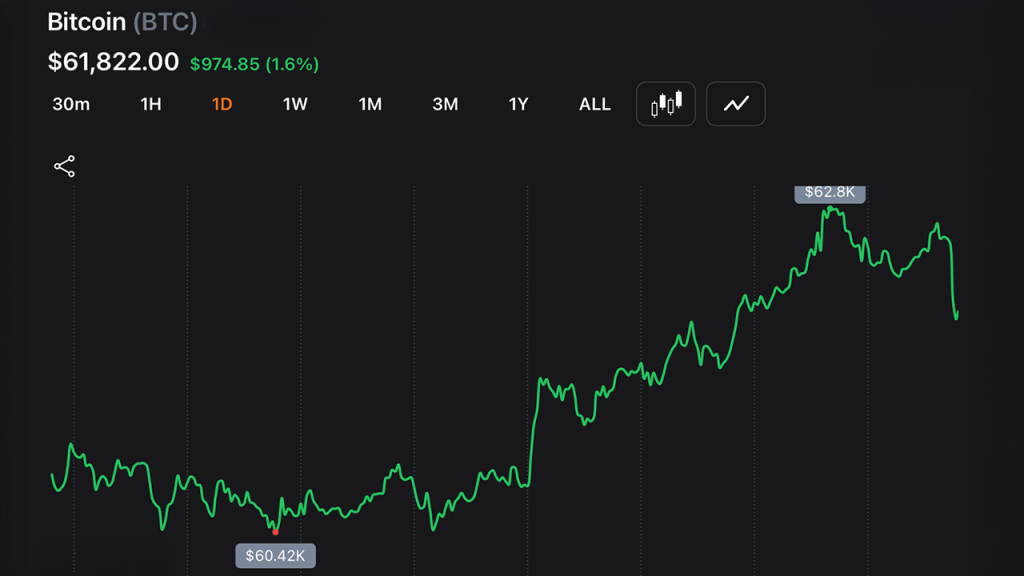
While equity trading floors buzzed with post-report optimism, digital asset exchanges witnessed a starkly different technical setup. Bitcoin has remained locked within a remarkably narrow percentage band, characterized by compressed volatility and subdued volume relative to historical breakout periods.
Market structure analysts point to several competing forces locking Bitcoin in this holding pattern:
- Institutional Risk Mitigation: Large-scale asset managers and hedge funds are executing sophisticated delta-neutral strategies, hedging spot exposure against macroeconomic uncertainties tied to upcoming fiscal policy shifts and regulatory compliance mandates.
- Liquidity Dynamics: Spot exchange-approved exchange-traded funds (ETFs) continue to experience steady, institutional-grade inflows, yet these passive allocations are currently being matched by long-term holder distribution and miner inventory rebalancing.
- Macro Correlation Shifts: The traditional correlation between Bitcoin and high-beta technology equities has experienced periods of decoupling. As bond yields fluctuate in response to the jobs report, institutional capital allocators are momentarily treating digital assets as distinct risk factors rather than leveraged tech proxies.
This prolonged consolidation phase is viewed by quantitative trading desks as a classic accumulation cycle. However, technical resistance levels remain formidable, and a definitive breakout hinges on external macroeconomic catalysts or a structural expansion in global market liquidity.
Verified Data & Metrics Breakdown
To contextualize the market reaction, the following matrix outlines the core macroeconomic indicators and asset performance metrics driving current sentiment:
| Metric / Indicator | Prior Period / Consensus | October Actual Release | Market Implication |
|---|---|---|---|
| Nonfarm Payrolls | 145,000 (Revised) | Significantly Exceeded Expectations | Eliminates immediate recession fears; supports cyclical equities. |
| S&P 500 Reaction | Downward consolidation | Broad-based bounce (+1.8% avg) | Restores risk-on sentiment across large-cap tech and industrials. |
| Bitcoin Trading Range | High volatility swings | Tight 2-3% weekly channel | Reflects institutional caution and strategic capital preservation. |
| 10-Year Treasury Yield | Stabilizing trend | Upward yield pressure | Reflects delayed expectations for aggressive Fed rate cuts. |
Industry & Market Implications: Winners and Losers
The dichotomy between a surging equity market and a range-bound crypto asset creates distinct structural winners and losers across the financial ecosystem.
The Winners
Traditional Multi-Asset Portfolios: Balanced funds utilizing modern portfolio theory are reaping the rewards of equity market strength, offsetting fixed-income yield pressures. Furthermore, financial institutions with robust prime brokerage and wealth management divisions are benefiting from elevated trading volumes and rebalancing activity.
Enterprise Tech Leaders: Companies possessing strong balance sheets, predictable cash flows, and scalable infrastructure continue to attract institutional sponsorship, as the strong labor market confirms sustained enterprise technology spending.
The Losers
Short-Term Crypto Speculators: Leveraged retail traders banking on an immediate, high-beta correlation breakout following the equities rally have faced capital erosion due to low volatility and time decay in options contracts.
Aggressive Rate-Cut Doves: Fixed-income strategists who positioned portfolios for an imminent, aggressive monetary easing cycle must now unwind positions as resilient employment data forces a hawkish re-evaluation of Fed policy.
Frequently Asked Questions (People Also Ask)
Why did stocks bounce despite a strong jobs report that could keep interest rates high?
Traditionally, strong employment data signals potential inflation and prompts the Federal Reserve to hike or maintain high interest rates, which hurts stock valuations. However, the market interpreted this specific October report as definitive proof of economic resilience, eliminating fears of an immediate hard landing or recession. Investors pivoted their focus toward robust corporate earnings power and stable consumer demand, viewing the economic expansion as a net positive for corporate revenue.
Why is Bitcoin remaining range-bound while traditional equity markets rally?
Bitcoin is currently navigating a unique phase of structural maturation. While equities reacted instantly to macroeconomic growth signals, digital assets are influenced heavily by crypto-native liquidity cycles, regulatory developments, and institutional risk management parameters. Many institutional funds are utilizing this period for strategic consolidation and delta-neutral positioning rather than aggressive directional speculation, keeping price action contained within a tight technical band.
How does the October employment report impact future Federal Reserve monetary policy?
The robust labor market metrics complicate the Federal Reserve's timeline for initiating monetary easing. Because job growth and wage pressures remain elevated, the central bank has less justification to cut interest rates rapidly. Consequently, interest rate futures markets have priced in a more cautious, patient approach from policymakers, keeping yields elevated and requiring investors to adapt to tighter financial conditions.
What are institutional investors focusing on during this period of cross-market volatility?
Institutional allocators are prioritizing infrastructure scalability, risk mitigation, and regulatory compliance. Rather than chasing short-term momentum, enterprise treasuries and fund managers are evaluating fundamental asset quality, operational ROI, and macroeconomic hedging strategies to protect portfolios against unexpected monetary policy shifts.
Future Outlook & Key Milestones to Watch
As the fourth quarter progresses, financial markets stand at an inflection point. The interplay between incoming inflation prints, corporate earnings revisions, and digital asset liquidity will dictate the trajectory of both Wall Street and decentralized markets heading into the new year.
Key milestones for institutional investors and analysts to monitor over the coming weeks include:
- Consumer Price Index (CPI) and Producer Price Index (PPI) Releases: These inflation metrics will confirm whether strong labor data is translating into persistent pricing pressures, directly influencing the Federal Reserve's December FOMC meeting decisions.
- <ETF Net Inflow Volumes: Sustained institutional capital flows into spot digital asset products will serve as the primary litmus test for whether Bitcoin can break out of its current consolidation channel.
- Corporate Guidance Updates: Executive commentary regarding capital expenditure budgets and fiscal-year outlooks will provide vital clarity on enterprise economic health and tech sector resilience.
Ultimately, the current market environment rewards disciplined capital allocation, rigorous risk mitigation, and granular macroeconomic analysis. As the dust settles on the October employment data, both traditional and digital asset markets are positioning themselves for the next major structural catalyst.


