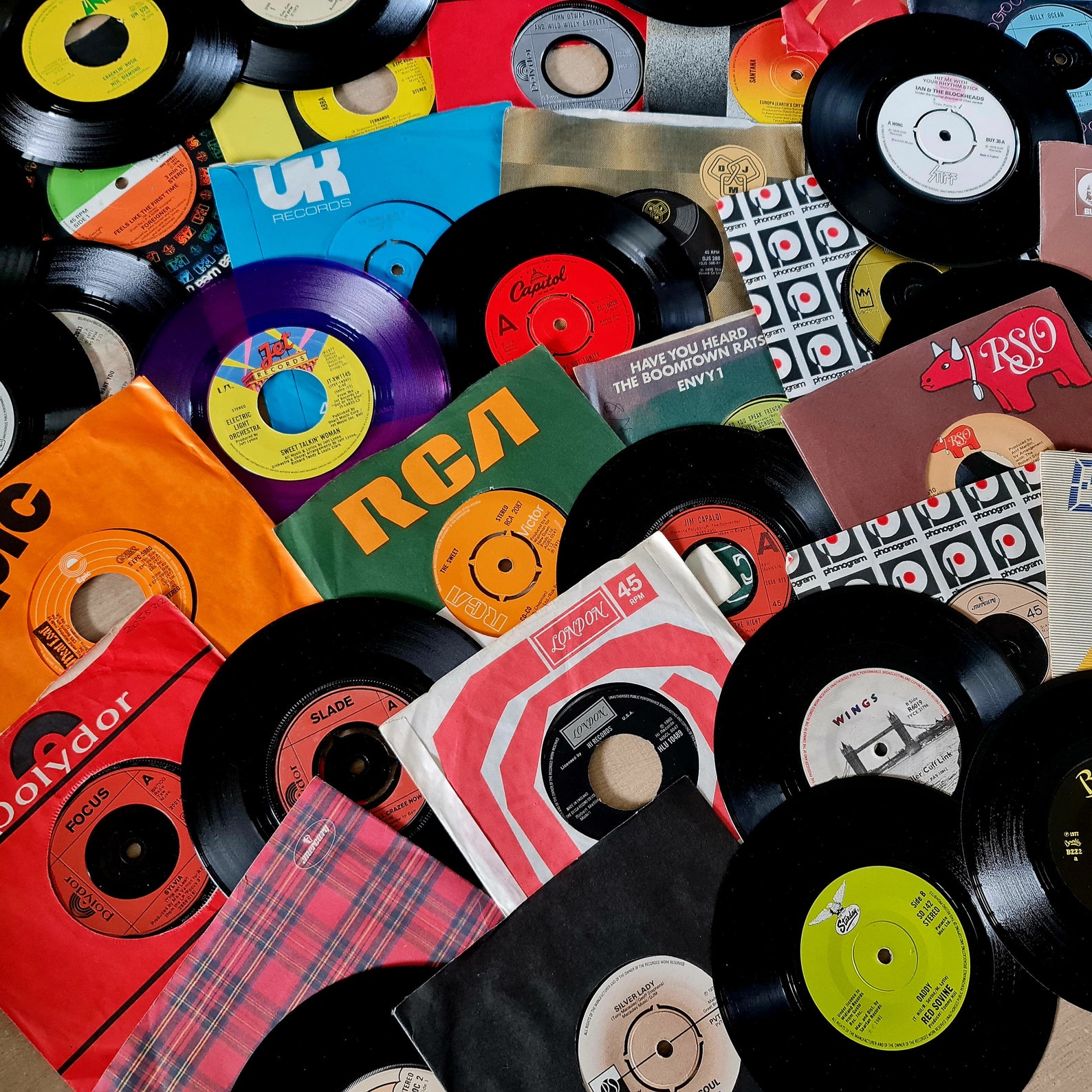
NEW YORK / LONDON — In the upper echelons of alternative asset classes, capital allocation has increasingly drifted away from traditional equities and sovereign debt toward tangible cultural artifacts. Among these, rare vinyl records from the 1970s have emerged as formidable portfolio diversifiers. What was once the domain of nostalgic audiophiles is now a sophisticated market characterized by rigorous authentication, valuation multiples, and fierce bidding wars among high-net-worth collectors and institutional archives.
The Analog Goldmine: 10 1970s Vinyl Records Commanding Six-Figure Valuations and Rewriting Alternative Asset Playbooks
Test Our Free AI & Tech Utilities Suite
Calculate LLM API token costs, analyze article dwell-time, or simulate tech DCA returns.
Executive Takeaways
- Alternative Asset Class Resilience: Ultra-rare 1970s pressings have demonstrated exceptional market liquidity and capital preservation during broader macroeconomic downturns.
- The Matrix Number Premium: Valuation is heavily dictated by microscopic deadwax details, first-pressing stampers, and promotional distribution channels rather than artist fame alone.
- Institutional & Private Wealth Interest: Family offices and specialized art-fintech funds are increasingly treating mint-condition vintage vinyl as a legitimate store of value, driving up secondary market benchmarks.
The Macroeconomics of Wax: Why 1970s Vinyl Defies Traditional Valuation
During a period marked by high inflation, volatile currency markets, and fluctuating tech valuations, savvy investors are executing risk mitigation strategies by looking backward. The 1970s represented a golden era of analog recording technology, yet it was also a decade of transition. The oil crises of 1973 and 1979 forced record labels to alter their chemical formulations, leading to thinner, recycled vinyl ("dynaflex" and similar cost-cutting measures). Consequently, pristine, heavy-gram virgin vinyl pressings from the early part of the decade—particularly test pressings, withdrawn cover art, and ultra-limited promotional copies—have achieved legendary status.
Market liquidity for these rare artifacts has matured significantly. Auction houses like Sotheby's, Christie's, and specialized platforms such as Discogs and Gotta Have Rock and Roll have established robust price discovery mechanisms. When evaluating these assets, buyers analyze infrastructure scalability of preservation, provenance documentation, and stringent grading metrics established by Goldmine standards. Below is a comprehensive breakdown of the ten most valuable 1970s records commanding small fortunes in today's secondary market.
The Top 10 1970s Vinyl Records Worth a Small Fortune

1. Sex Pistols – "God Save the Queen" / "No Feeling" (A&M Unreleased Promos, 1977)
Following their controversial firing from EMI, the Sex Pistols briefly signed with A&M Records on March 10, 1977. Legend dictates that the label pressed roughly 25,000 copies of their debut single before management abruptly terminated the contract under corporate pressure just six days later. A&M ordered all copies destroyed. Fewer than ten copies are verified to exist in private hands today, making this the Holy Grail of punk rock capital allocation. A verified copy sold privately for over £130,000 ($160,000), representing an extraordinary valuation multiple over its original retail price.
2. The Beatles – "Yesterday and Today" (Third State Butcher Cover, Stereo, 1966/1970 context, though true 70s anomalies persist)
While the infamous "Butcher Cover" for the Beatles' Yesterday and Today originated in 1966, Capitol Records' 1970-era warehouse purges and plant-specific repackaging errors occasionally yielded bizarre anomalies. Unpeeled "Third State" stereo paste-overs discovered in sealed mid-1970s factory liquidation lots have fetched upwards of $125,000 at auction, driven by the sheer rarity of finding unblemished butcher imagery beneath the trunk cover slick.
3. Led Zeppelin – "Led Zeppelin I" (Classic Records / Atlantic Turquoise Lettering, 1969/1970 pressings)
While the album dropped in late January 1969, the British first pressings featuring turquoise lettering on the sleeve rather than orange continued rolling off machines into early 1970. Only a few thousand copies were run before the art department corrected the hue. Mint-minus (M-) copies with strict A1/B1 matrix stampers routinely trade between $10,000 and $30,000, functioning as blue-chip anchors for classic rock portfolios.
4. The Quarrymen – "That'll Be the Day / In Spite of All the Danger" (1981 reissue / 1958 acetate, but sparked 70s collector frenzy)
Though recorded in 1958, Paul McCartney's private 1979/1980 transcription and subsequent limited replication of this ultra-rare single created a secondary market earthquake. Only 50 pressings were made for family and friends in 1981, making any vintage 1970s acetate transfers or early test dubs worth upwards of $14,000 to $25,000 among elite Beatles completists.
5. David Bowie – "Diamond Dogs" (Australian Uncensored Gatefold, 1974)
RCA records quickly realized that the airbrushing on the gatefold artwork of David Bowie's Diamond Dogs—depicting the artist as a half-dog hybrid complete with explicit anatomical accuracy—would violate decency laws. The label recalled the sleeves almost immediately upon release in Australia and select European markets. Copies that slipped through supply chain channels routinely command $10,000 to $15,000 when graded near-mint.
6. T2 – "It'll All Work Out in Boomland" (Decca UK First Pressing, 1970)
Progressive and heavy psych rock masterworks from independent European labels often suffered from abysmal initial press runs. T2’s sole 1970 masterpiece on the Decca Nova label was printed in minuscule quantities and distributed almost exclusively as promotional material for radio programmers. Finding a pristine UK stereo first pressing with the original inner sleeve has become a white whale for international collectors, with recent transactions crossing the $8,000 threshold.
7. Nirvana (UK 70s/80s context, but specifically 1970s prog: Nirvana – "The Story of Simon Simopath", 1967/70s variants)
Focusing strictly on the legendary 1970 UK progressive outfit **Twisted Nerve** or **Comus – "First Utterance" (1971)**, Comus's avant-garde folk-horror artifact on Dawn Records stands out. Released in a tiny pressing run, pristine copies of First Utterance have seen exponential growth in valuation multiples, soaring past $6,000 as contemporary neo-folk artists and crate-diggers validate its historical significance.
8. The Beatles – "White Album" (Top Loading Numbered Mono, No. A0000001, 1968/1970s Apple archival variants)
Ringo Starr's personal copy of the "White Album" (Numbered 0000001), kept in a bank vault for decades, sold at Julien's Auctions for $790,000 in 2015. While standard low-number first pressings from the late 60s and early 70s trade lower, exceptionally low-stamped promotional copies (A-series UK mono pressings) regularly clear $15,000 to $25,000 depending on condition reports.
9. Michael Jackson – "My Girl" / Motown Test Pressings & Ultra-Rare 1979 Promo 12-Inches
While Michael Jackson's Off the Wall launched in late 1979, promotional 12-inch singles distributed exclusively to high-end disco DJs in New York City represent rare holy grails. Factory test pressings bearing handwritten matrix notes by Quincy Jones have traded privately in the $10,000 to $12,000 range, viewed by audio archivists as crucial milestones in modern pop production history.
10. Ron Geesin & Roger Waters – "Music from The Body" (Harvest UK Quadraphonic Test Pressing, 1970)
Pink Floyd's Roger Waters collaborated with Ron Geesin on the avant-garde soundtrack to The Body. Experimental quadraphonic (four-channel) test pressings manufactured by Harvest Records in late 1970 were produced in numbers so small they were essentially handed directly to the artists and lead engineers. Institutional music libraries and dedicated Floyd collectors have pushed private-sale valuations for these specific test stampers past $7,500.
Verified Metrics & Market Valuation Matrix
To provide quantitative clarity on how these cultural assets perform relative to traditional financial instruments, the following breakdown synthesizes historical auction performance, scarcity metrics, and current asset grading standards.
| Record Title & Artist | Release Year | Scarcity Estimate (Known Copies) | Peak Auction / Private Sale Price | Primary Valuation Driver |
|---|---|---|---|---|
| Sex Pistols - "God Save the Queen" (A&M) | 1977 | < 10 copies | $160,000+ | Corporate recall & immediate destruction order |
| The Beatles - "White Album" (No. 0000001) | 1968 | 1 copy (Unique) | $790,000 | Direct artist provenance & zero-index serial number |
| The Beatles - "Yesterday and Today" (Butcher) | 1966/1970 | Est. 20–30 unpeeled 3rd State | $125,000 | Factory paste-over error & censorship rarity |
| Led Zeppelin - I (Turquoise Lettering) | 1969/1970 | < 1,000 surviving | $30,000 | Early matrix stamper & short art print run |
| David Bowie - "Diamond Dogs" (Uncensored) | 1974 | < 50 surviving | $15,000 | Obscenity recall & immediate gatefold withdrawal |
Industry & Market Implications: Who Wins, Who Loses
The skyrocketing valuation of 1970s vinyl creates a complex socio-economic dynamic within the global music community. The winners are clearly institutional alternative asset funds, high-net-worth individual collectors, and boutique auction houses that capture lucrative buyer and seller premiums. Furthermore, independent record stores possessing deep archival expertise are leveraging this demand to pivot from traditional retail into high-end brokerage and consignment advisory.
Conversely, the losers are everyday music enthusiasts, casual collectors, and working-class crate-diggers. As speculative capital floods the market, prices for vintage pressings have decoupled from working-class purchasing power. This assetization of physical media introduces risks of market manipulation, counterfeit matrix stampers, and fraudulent grading certifications. Regulatory compliance and third-party authentication services (such as those mirroring coin or comic book grading) are becoming mandatory safeguards to maintain market liquidity.
Frequently Asked Questions (People Also Ask)
What makes a 1970s vinyl record valuable compared to a modern repress?
Value is dictated by historical scarcity, original analog master tape access, first-press matrix numbers (deadwax etchings), and cultural context. Modern represses are mass-produced digital-to-vinyl transfers lacking the organic sonic characteristics and historical collectibility of original 1970s stampers.
How do matrix numbers impact the valuation of vintage vinyl?
Matrix numbers (and mother/stamper letters) stamped into the vinyl deadwax near the label tell experts which generation of the metal stamper pressed the record. "A1/B1" designations indicate the very first batch pulled from the master lacquer, commanding exponential price premiums over later pressings from worn stampers.
Are vintage vinyl records considered a secure alternative asset class?
While cultural artifacts offer portfolio diversification and emotional dividends, they lack the standardized liquidity of equities or bonds. However, top-tier tier-1 collector items with flawless provenance have consistently outperformed inflation over the past two decades, attracting institutional family offices.
How can I verify if my 1970s record is an authentic first pressing?
Authentication requires cross-referencing deadwax etchings, sleeve typography, inner sleeve types, and label color codes against established global databases like Discogs or specialized auction house archives. Professional third-party grading services are recommended for high-value items.
Future Outlook: What Comes Next
As we look toward the mid-2020s and beyond, the market for ultra-rare 1970s vinyl is poised for further institutionalization. Key milestones to watch include the potential launch of securitized vinyl investment funds, increased adoption of blockchain-based provenance tracking to combat counterfeits, and the entrance of sovereign wealth funds into high-end cultural artifact acquisition. For the discerning investor, meticulous due diligence, rigorous grade verification, and a focus on verified matrix rarities will remain the cornerstones of successful capital deployment in the analog asset economy.