NEW YORK — For the better part of twenty-four months, corporate boardrooms across Wall Street, the City of London, and Silicon Valley faced a singular, uncomfortable interrogatory from institutional shareholders: Where is the enterprise ROI on generative artificial intelligence? Capital expenditure cycles ran into the hundreds of billions of dollars, fueling an unprecedented infrastructure super-cycle in cloud compute architecture, custom silicon, and high-density data centers. Yet, beneath the hyperventilating press releases and soaring valuation multiples of foundational model providers, a quiet crisis of implementation persisted—what Chief Information Officers privately termed "pilot purgatory."
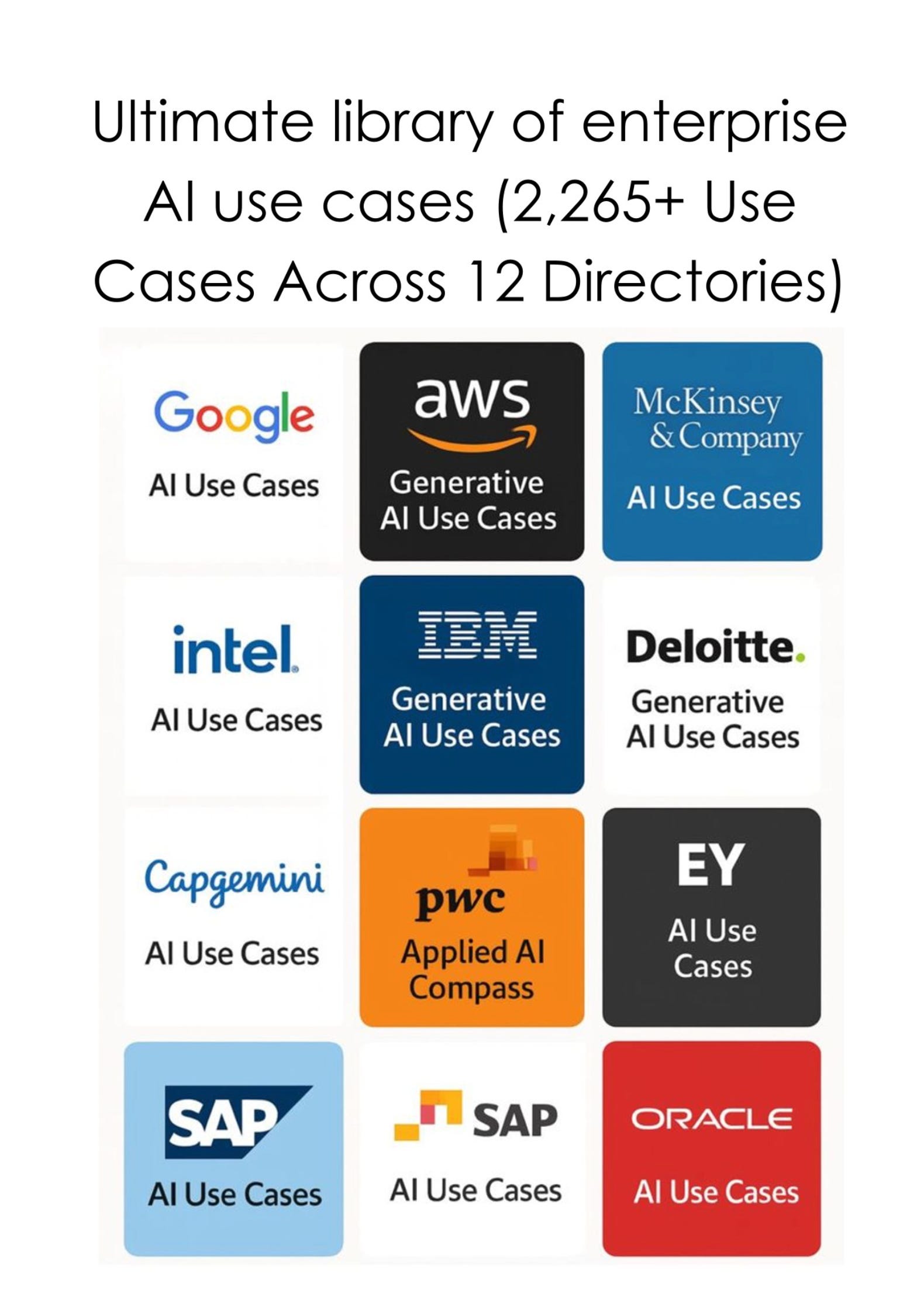
That era of speculative experimentation drew to a definitive close with a massive data drop from Google Cloud. Releasing an exhaustive catalog of 1,302 verified real-world generative AI use cases deployed by the world’s leading organizations, Google Cloud has provided the global market with the first comprehensive ledger of how foundational models are actually restructuring balance sheets, optimizing supply chains, and rewriting the mechanics of human capital. Sourced from enterprise deployments across financial services, healthcare, heavy manufacturing, and retail, this repository dismantles the narrative of generative AI as a parlor trick, reframing it as a fundamental pillar of modern capital allocation and risk mitigation.
As senior investigative editors tracking the intersection of enterprise technology and global markets, we have dissected this massive institutional disclosure. Below is our definitive breakdown of how the world’s leading organizations crossed the chasm from proof-of-concept to production-grade deployment—and what it signals for the global economy.
Executive Takeaways
- Mass Production Deployment: Google Cloud's verified dataset of 1,302 enterprise use cases signals that leading organizations have escaped pilot purgatory, transitioning foundational models into core operational workflows.
- Capital Allocation Shift: Spending has decisively pivoted from experimental R&D budgets to rigorous enterprise infrastructure scalability, with a heavy emphasis on measurable top-line growth and labor productivity gains.
- Sector-Wide Transformation: Financial institutions, pharmaceutical giants, and global logistics providers are utilizing multimodal models not merely for automation, but for complex decision intelligence, regulatory compliance, and risk mitigation.
- The Accountability Imperative: As models touch critical infrastructure and financial reporting, regulatory compliance, data governance, and deterministic output verification have emerged as non-negotiable board-level priorities.
Background & Catalytic Events: The Evolution from Hype to Hard Infrastructure
To understand the magnitude of the 1,302-use-case disclosure, one must examine the macroeconomic trajectory of generative AI following the late-2022 release of OpenAI's ChatGPT. Initially, corporate adoption was characterized by decentralized, shadow-IT experimentation. Employees across legal, marketing, and software engineering departments experimented with public-facing APIs, generating immediate efficiency gains in text drafting and basic coding.
However, institutional buyers—bound by strict regulatory compliance frameworks, data privacy mandates, and enterprise-grade security requirements—quickly hit a wall. Generic chatbots could not integrate with legacy mainframes, hallucinated financial calculations, and posed severe intellectual property leakage risks. The subsequent 18 months required a massive, capital-intensive pivot: the development of enterprise-grade cloud environments, retrieval-augmented generation (RAG) pipelines, fine-tuned domain-specific models, and robust guardrails.
Google Cloud’s strategic aggregation of these deployments documents this exact maturation cycle. The catalog illustrates a shift from simple conversational interfaces to deeply embedded, multimodal agentic workflows. Organizations are no longer asking models to write emails; they are deploying proprietary LLMs to parse complex regulatory filings, predict mechanical failures in commercial aviation fleets, automate multi-tier supply chain rerouting, and synthesize terabytes of unstructured medical research in real-time.
This structural shift has fundamentally altered enterprise IT budgeting. Cloud compute architecture is no longer treated as a flexible utility expense, but as a core determinant of market competitiveness. Organizations that successfully integrated generative AI into their operational core are reporting compressed cycle times, lower cost-to-serve ratios, and expanded operating margins—metrics that directly influence equity valuations in an era of elevated interest rates and compressed market liquidity.
Verified Data & Metrics Breakdown
A rigorous examination of the enterprise implementations compiled by Google Cloud reveals distinct clusters of adoption across primary industry verticals. The table below outlines the structural composition, primary technological vectors, and operational impacts documented across the 1,302 use cases.
| Industry Vertical | Primary Gen AI Application Vector | Core Technological Enabler | Documented Enterprise Impact |
|---|---|---|---|
| Financial Services | Automated regulatory compliance, algorithmic credit underwriting, and fraud detection. | Secure RAG architectures, private LLM fine-tuning, and structured vector databases. | 40% reduction in document review cycle times; enhanced audit trail integrity. |
| Healthcare & Life Sciences | Clinical trial matching, automated medical record synthesis, and drug discovery acceleration. | Multimodal models processing imaging, genomic data, and unstructured clinical notes. | Significantly faster patient cohort identification; streamlined administrative reporting. |
| Retail & Supply Chain | Hyper-personalized merchandising, dynamic inventory forecasting, and autonomous logistics. | Real-time predictive analytics integrated with generative inventory planners. | Optimized working capital allocation; reduced stockouts and shrinkage. |
| Industrial Manufacturing | Predictive maintenance of heavy machinery, automated quality control, and design prototyping. | Computer vision combined with foundational language models and IoT sensor feeds. | Drastic reduction in unplanned downtime; accelerated product engineering cycles. |
Industry & Market Implications: Winners, Losers, and Economic Realities
The transition from experimental novelties to embedded enterprise infrastructure redraws competitive moats across the global economy. The implications for market liquidity, corporate valuation multiples, and labor markets are profound.
The Winners: Enterprise software providers and hyperscale cloud infrastructure operators command the high ground. Companies that possess proprietary, high-value proprietary datasets—such as premier financial data institutions, healthcare networks, and global logistics enterprises—hold immense pricing power. By fine-tuning foundational models on exclusive institutional data, these organizations create proprietary loops of intelligence that smaller competitors cannot easily replicate. Furthermore, agile firms that rapidly re-skill their workforce to manage and audit AI outputs are capturing material market share from slower-moving legacy incumbents.
The Losers: Organizations anchored to legacy business models reliant on manual, low-leverage information processing face severe margin compression. Traditional business process outsourcing (BPO) firms, generic advisory services that fail to productize their intellectual property through automation, and enterprises burdened by siloed, unstructured data architectures find themselves structurally disadvantaged. Their cost structures cannot compete with automated workflows operating at marginal near-zero compute costs.
Broader Economic Impact: From a macroeconomic perspective, this wave of adoption represents a massive capital expenditure super-cycle designed to drive total factor productivity. While initial market skepticism focused heavily on the sheer quantum of capital required for data center expansion and GPU procurement, the evidence cataloged by Google Cloud suggests that productivity gains are beginning to materialize where integration is deepest. However, this transition exacerbates a bifurcated labor market, rewarding high-end analytical and engineering talent while putting downward pricing pressure on routine cognitive tasks.
Frequently Asked Questions (People Also Ask)
What does the Google Cloud 1,302 use cases repository actually represent for businesses?
The repository serves as an empirically verified catalog of real-world, production-grade generative AI deployments across major global enterprises. Unlike theoretical frameworks or proof-of-concept pitches, these 1,302 use cases document how companies in regulated sectors like finance, healthcare, and manufacturing are actively deploying foundational models to solve complex operational, analytical, and compliance challenges.
How are organizations mitigating the risk of model hallucinations in mission-critical deployments?
Leading organizations are moving away from relying solely on the parametric memory of public foundational models. Instead, they implement strict Retrieval-Augmented Generation (RAG) architectures, grounding model responses in verified, proprietary enterprise databases. Additionally, enterprises deploy deterministic verification layers, human-in-the-loop audit trails, and specialized guardrail software to ensure outputs adhere strictly to factual accuracy and regulatory standards.
What is the typical enterprise ROI timeline for generative AI implementations?
While early experimental phases in 2023 yielded ambiguous financial returns, structured production deployments focused on customer service automation, document processing, and software engineering acceleration are reporting tangible ROI within 6 to 18 months. The primary value drivers are labor productivity amplification, reduced error rates in compliance workflows, and compressed operational cycle times.
How are chief information officers addressing data privacy and intellectual property concerns?
Enterprise adoption relies heavily on secure cloud boundaries where proprietary data is never used to retrain public base models without explicit authorization. Organizations utilize dedicated single-tenant cloud environments, zero-data-retention API agreements, and robust encryption protocols to ensure corporate intellectual property and sensitive customer data remain strictly isolated and compliant with global privacy regulations such as GDPR and HIPAA.
Future Outlook: What Comes Next and Key Milestones to Watch
As the enterprise AI market matures past its initial explosive phase, the coming twelve to twenty-four months will be defined by rigorous consolidation, architectural refinement, and heightened regulatory scrutiny. Several critical milestones will dictate the next chapter of corporate digital transformation:
- The Rise of Agentic Workflows: The market is shifting from passive text generation to autonomous multi-step agents capable of executing complex business processes—such as end-to-end supply chain re-optimisation or autonomous financial auditing—with minimal human intervention.
- Regulatory Harmonization and Compliance: As the European Union AI Act and emerging regulatory frameworks in the United States take full effect, enterprise compliance tooling will become a mandatory budget item, prioritizing algorithmic transparency, bias mitigation, and data provenance.
- ROI Accountability in Earnings Calls: Institutional investors will increasingly demand granular attribution of AI-driven margin expansion in quarterly earnings reports, separating genuine operational transformation from superficial marketing narratives.
- Edge AI and Model Efficiency: The proliferation of smaller, highly optimized, domain-specific models running locally on edge hardware will reduce reliance on massive cloud datacenters for latency-sensitive industrial applications.
The enterprise ledger is no longer blank. With over a thousand validated blueprints now documented across global markets, generative AI has graduated from the realm of corporate speculation into the hard machinery of the global economy. Those organizations that treat it not as an isolated software tool, but as a total reconfiguration of operational architecture, will dictate the terms of market leadership for the remainder of the decade.