Executive Takeaways
- Structural Transformation: Isabel Schnabel’s landmark November 2025 address outlines a permanent transition away from crisis-era balance sheet bloat toward a leaner, demand-driven operational framework.
- Collateral Architecture & Capital Allocation: The European Central Bank (ECB) is redefining its risk mitigation strategies, prioritizing high-quality liquid assets (HQLA) and reshaping collateral eligibility to safeguard long-term market liquidity.
- Commercial Banking Pressures: Tier-1 and regional financial institutions must radically overhaul their treasury management, liquidity buffers, and capital allocation models as excess reserves evaporate.
- Monetary Policy Transmission: The operational shift guarantees that the control of short-term interest rates relies on structural lending portfolios rather than perpetual asset purchases.
FRANKFURT — In a watershed moment for European monetary policy, the European Central Bank has officially laid the architectural groundwork for a post-crisis reality. Speaking at the elite ECB Conference on Money Markets, Isabel Schnabel, Member of the Executive Board, delivered a blueprint titled "Towards a new Eurosystem balance sheet." This comprehensive policy pivot signals the definitive end of the quantitative easing era that defined the post-2008 financial landscape and the European sovereign debt crisis.
For institutional investors, corporate treasurers, and global banking executives, the implications of this structural downsizing extend far beyond central banking theory. They directly influence enterprise ROI, structural valuation multiples across the financial sector, and capital allocation strategies for the next decade. As the Eurosystem pivots toward a leaner operating model, market participants must re-engineer their liquidity frameworks to navigate a permanently altered European money market ecosystem.
The Catalytic Shift: Moving Beyond Crisis-Era Excess
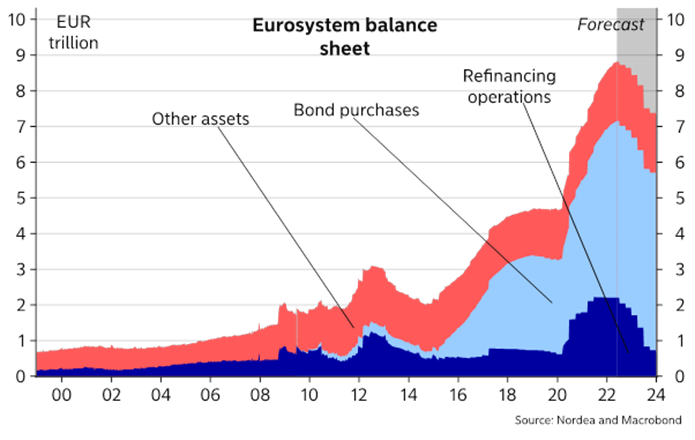
For more than a decade, the Eurosystem balance sheet operated under a regime of abundance. Massive Asset Purchase Programmes (APP) and Pandemic Emergency Purchase Programmes (PEPP), alongside ultra-long-term refinancing operations (TLTROs), flooded the Eurozone banking sector with trillions of euros in excess liquidity. While these interventions successfully averted systemic collapse and deflationary spirals, they fundamentally distorted the price discovery mechanism of the unsecured interbank market.
The new balance sheet paradigm, championed by Schnabel and backed by empirical research from prominent monetary economists, recognizes that perpetual central bank market dominance is unsustainable. The strategic objective is clear: recalibrate the Eurosystem's footprint so that its balance sheet size is strictly dictated by the autonomous factors of the balance sheet—such as banknotes in circulation and government deposits—and structural monetary policy needs, rather than bloated portfolios of sovereign and corporate debt.
This operational transition requires sophisticated risk mitigation and precise infrastructure scalability. As the ECB allows legacy bond portfolios to run off via passive quantitative tightening (QT), commercial banks can no longer rely on a limitless cushion of risk-free central bank reserves. Consequently, liquidity management has shifted from a passive operational chore to an active core competency requiring rigorous regulatory compliance and dynamic treasury optimization.
Deconstructing the New Operational Framework

The architecture of the new Eurosystem balance sheet rests on several foundational pillars designed to ensure robust transmission of monetary policy while fostering deep, resilient private-rate markets. Chief among these is the floor system versus corridor system debate, where the ECB is carefully calibrating the equilibrium level of reserves necessary to steer short-term interest rates efficiently.
Key structural adjustments highlighted in the strategy include:
- Active Portfolio Run-Off: Gradual reduction of legacy asset holdings without abrupt market dislocations, ensuring predictable capital market digestion.
- Demand-Driven Refinancing: Re-establishing regular, repo-based lending operations as the primary conduit for providing liquidity to solvent banking counterparties.
- Strict Collateral Standards: Maintaining stringent haircuts and high-quality collateral thresholds to protect the Eurosystem balance sheet against macroeconomic shocks and credit degradation.
- Market-Driven Intermediation: Incentivizing private sector banks to resume active peer-to-peer lending and repo market participation, restoring natural market liquidity.
Financial institutions are already altering their balance sheet management. The scarcity of excess liquidity forces treasurers to optimize their liquidity coverage ratios (LCR) and net stable funding ratios (NSFR) through active market operations rather than relying on overnight central bank deposit facilities.
Verified Data: Evolution of the Eurosystem Balance Sheet
A rigorous quantitative examination of the Eurosystem's consolidated financial statements illustrates the dramatic pivot from peak expansion to structural normalization.
| Balance Sheet Metric | Peak Crisis Era (2021–2022) | Transition Phase (2024–2025) | Target Normalized State |
|---|---|---|---|
| Total Assets | ~€8.8 Trillion | ~€6.5 Trillion | Significantly Lower (Demand-Driven) |
| Asset Purchase Portfolios (APP/PEPP) | >€5 Trillion | Declining via active run-off | Zero / Portfolio Exhaustion |
| Excess Liquidity / Reserves | >€4.5 Trillion | ~€3 Trillion and descending | Secular Equilibrium Level |
| Refinancing Operations (TLTROs) | Peak utilization >€2 Trillion | Practionally Matured / Repaid | Standard MROs and LTROs only |
Industry & Market Implications: Winners and Losers
The systemic unwinding of the Eurosystem balance sheet is not a neutral monetary exercise; it creates distinct economic winners and losers across the financial and corporate landscape.
The Winners
- Money Market Funds (MMFs) & Short-Term Fixed Income: As excess central bank liquidity recedes, repo rates and short-term yields normalize, providing highly attractive risk-adjusted returns for cash investors and institutional MMFs.
- Interbank Lending Desks: The revival of unsecured and secured interbank markets revitalizes trading revenues and restores traditional broker-dealer intermediation business models.
- Prudent Capital Allocators: Banks and corporations with robust, diversified funding profiles and advanced cloud compute architecture for real-time treasury analytics gain a distinct competitive edge over structurally sluggish peers.
The Losers
- Debt-Dependent Sovereigns: Peripheral Eurozone sovereigns accustomed to aggressive ECB bond absorption must now appeal directly to private capital markets, potentially facing wider sovereign yield spreads.
- Weakly Capitalized Banks: Institutions that relied on cheap, perpetual central bank funding (such as TLTROs) face higher marginal funding costs and margin compression.
- High-Valuation Growth Sectors: Asset classes that thrived on hyper-abundant, zero-interest-rate liquidity face ongoing valuation multiple contractions as risk-free discount rates settle at higher structural plateaus.
Frequently Asked Questions (People Also Ask)
What is the primary objective of the ECB's new balance sheet strategy?
The primary objective is to transition the Eurosystem away from crisis-era emergency interventions toward a leaner, structurally sound balance sheet. This ensures that monetary policy is transmitted efficiently through market-based mechanisms while minimizing central bank footprint interference in private capital and debt markets.
How does balance sheet normalization affect commercial bank reserves?
As asset purchase programs run off and legacy refinancing operations mature, excess liquidity reserves held by commercial banks at the central bank decline. Banks must actively manage their liquidity buffers, rely more heavily on interbank repo markets, and compete for private deposits to meet regulatory liquidity requirements.
Will the new balance sheet framework impact European sovereign bond yields?
Yes. With the ECB stepping back as a dominant buyer of government debt, sovereign issuers must increasingly rely on private institutional investors. This transition can lead to increased price sensitivity and potentially wider yield spreads for countries with weaker fiscal fundamentals.
What role does collateral management play in the new Eurosystem operational design?
Collateral management is central to the new framework. Because refinancing operations will serve as the primary liquidity conduit, the ECB maintains rigorous risk mitigation standards, ensuring that all assets pledged by counterparties meet strict high-quality liquid asset (HQLA) criteria to safeguard the central bank's balance sheet.
Future Outlook: Milestones and Strategic Watchpoints
As the European Central Bank executes this historic operational pivot, institutional executives and investors must closely monitor several critical milestones over the coming quarters. The pace of passive asset portfolio run-off, the calibration of minimum reserve requirements, and the structural demand for weekly refinancing operations will dictate the speed of market adjustment.
Ultimately, the success of the new Eurosystem balance sheet will be measured by its ability to maintain uncompromised price stability while revitalizing Europe's private financial plumbing. For enterprises navigating this transition, investing in agile treasury technology, robust regulatory compliance frameworks, and proactive risk mitigation strategies will be the definitive differentiator between market leadership and obsolescence.