Executive Takeaways
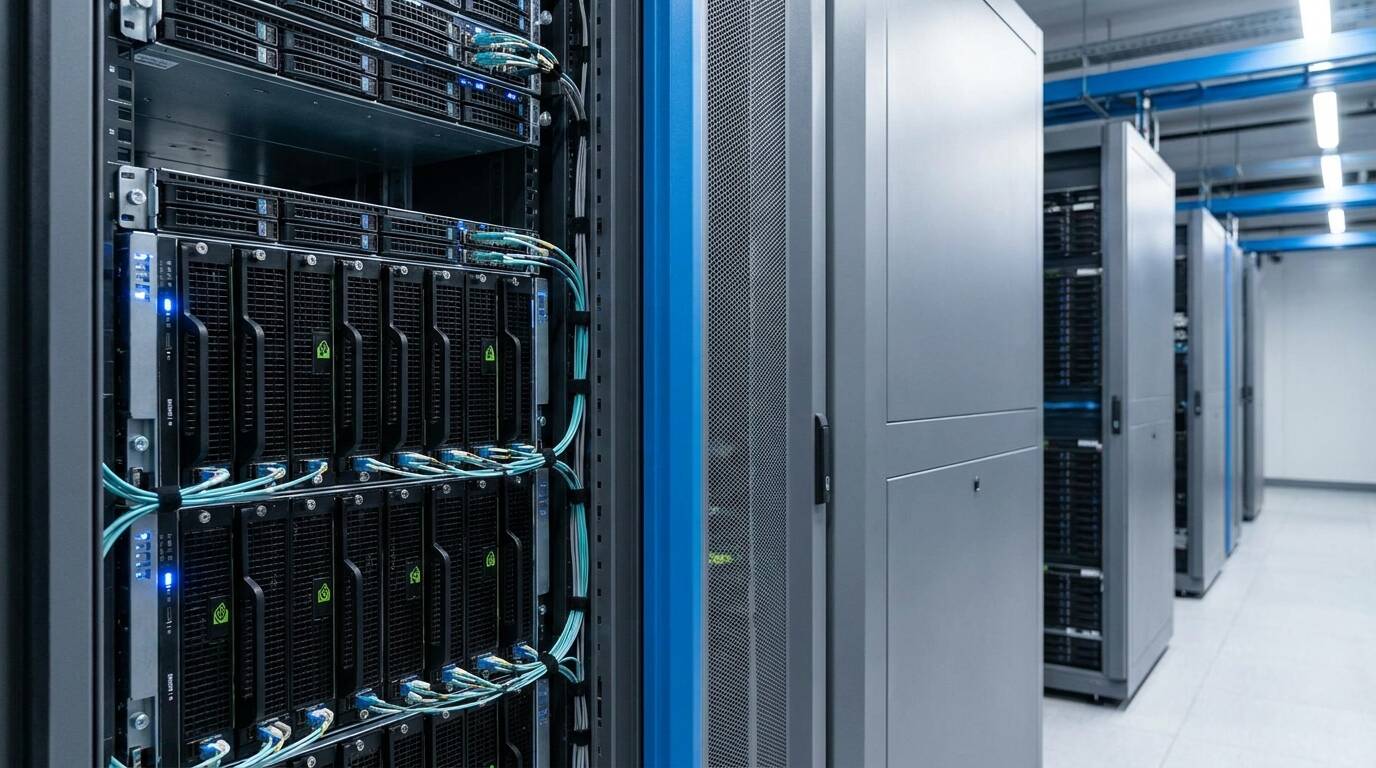
- Capital Expenditure Super-Cycle: Hyperscalers and alternative cloud providers are projected to deploy over $250 billion into generative AI infrastructure, shifting the bottleneck from raw compute to power grid capacity and liquid-cooling architecture.
- The Enterprise ROI Pivot: Institutional capital is rotating away from pure-play speculative foundational model developers toward vertically integrated software providers and specialized neo-cloud operators demonstrating immediate productivity gains.
- Diversification Beyond Silicon: While semiconductor designers remain the market bellwether, enterprise software leaders, database architects, and alternative infrastructure providers now form the backbone of a balanced 2026 allocation strategy.
The artificial intelligence investment thesis has officially graduated from a speculative gold rush into a rigorous exercise in corporate balance sheet scrutiny, enterprise ROI verification, and infrastructure scalability. As global markets look toward the back half of the decade, institutional portfolio managers face a radically transformed landscape. The era of buying any ticker with an "AI" suffix has yielded to a sophisticated regime where enterprise adoption, energy procurement strategies, and proprietary data moats dictate market capitalization winners and losers.
Drawing from comprehensive analyses originally synthesized by premier financial research groups like The Motley Fool and verified against institutional disclosures, this investigative report examines the structural shifts defining the AI equities market. We dissect the top 10 foundational picks driving the 2026 digital economy—ranging from dominant silicon architects and cloud hyperscalers to specialized neo-cloud providers and enterprise software incumbents—and provide a definitive framework for navigating valuation multiples, risk mitigation, and capital allocation.
The Evolution of the AI Trade: From Foundation Models to Operational Monopolies
To understand the current positioning of the top 10 market leaders, one must examine the macroeconomic trajectory that preceded it. Between 2023 and 2025, the market concentrated heavily on raw processing unit (GPU) scarcity and foundational large language model (LLM) training milestones. By 2026, the strategic imperative has fundamentally inverted. The primary challenge is no longer merely training models with billions of parameters; it is deploying, maintaining, and scaling inference workloads across complex, secure enterprise environments while generating measurable top-line expansion.
This maturation has forced a bifurcation in the market. Companies with robust enterprise ecosystems, defensible proprietary data pipelines, and deep-pocketed balance sheets are successfully monetizing artificial intelligence through software-as-a-service (SaaS) upcharges, agentic automation frameworks, and consumption-based cloud compute models. Conversely, firms lacking integrated infrastructure or clear pathways to margin expansion face severe multiple contractions as institutional investors demand concrete proof of capital efficiency.
The 10 Definitive AI Equities for 2026

A rigorous evaluation of current market liquidity, technological moats, and enterprise adoption rates highlights ten distinct entities setting the benchmark for artificial intelligence execution:
- Nvidia (NVDA): Retaining its status as the foundational hardware tollbooth of the AI revolution, Nvidia's continuous iteration of accelerated computing platforms and proprietary CUDA software ecosystem cements its grip on data center architecture.
- Alphabet (GOOGL): Leveraging its unparalleled proprietary data assets, global search distribution, and custom Tensor Processing Unit (TPU) silicon, Alphabet remains uniquely positioned to capture both consumer search evolution and enterprise cloud AI demand via Google Cloud Platform (GCP).
- Microsoft (MSFT): As the primary orchestrator of the enterprise generative AI shift through its deep partnership with OpenAI and its ubiquitous Azure cloud ecosystem, Microsoft turns AI integration into sticky, high-margin software subscriptions.
- CoreWeave: Representing the vanguard of alternative cloud compute, this specialized neo-cloud provider has redefined infrastructure scalability by offering custom-built GPU clusters optimized explicitly for heavy AI training and inference workloads.
- Meta Platforms (META): By championing open-source foundational models (the Llama ecosystem) while simultaneously utilizing proprietary models to hyper-target digital advertising and algorithmic discovery, Meta drives unmatched user engagement and ad monetization.
- Adobe (ADBE): The definitive creative software incumbent has successfully transitioned its vast digital media and marketing user base onto generative AI engines like Firefly, insulating its subscription model against upstart disruption.
- Alibaba (BABA): Serving as the bellwether for international enterprise AI deployment, Alibaba integrates advanced cloud infrastructure with customized models tailored for the massive Asian digital commerce and enterprise automation markets.
- Amazon (AMZN): Through Amazon Web Services (AWS), Bedrock, and proprietary Trainium/Inferentia silicon, Amazon captures a massive share of enterprise workloads by offering flexible, highly secure multi-model deployment options.
- Palantir (PLTR): Palantir’s Artificial Intelligence Platform (AIP) has established the gold standard for operationalizing unstructured data into actionable military and commercial intelligence, boasting unprecedented enterprise conversion speeds.
- Oracle (ORCL): Oracle Cloud Infrastructure (OCI) has emerged as an unexpected hyperscale powerhouse, winning massive enterprise and sovereign AI cloud contracts due to its high-performance networking architecture and aggressive pricing strategies.
Verified Data & Metrics Breakdown
Evaluating these market leaders requires a side-by-side examination of their strategic positioning, primary infrastructure focus, and monetization vectors within the 2026 economic environment.
| Company Ticker | Core AI Specialization | Primary Monetization Vector | Strategic Advantage |
|---|---|---|---|
| NVIDIA (NVDA) | Accelerated Hardware & CUDA Software | GPU Sales & Enterprise Software Licensing | Unrivaled software lock-in and hardware performance lead. |
| Microsoft (MSFT) | Cloud Compute & Enterprise Copilots | Azure Consumption & Per-User SaaS Add-ons | Deep enterprise relationships and seamless Office integration. |
| Alphabet (GOOGL) | Custom Silicon & Multimodal Models | Cloud Services, Advertising Efficiency, & APIs | Massive proprietary data ecosystem and custom TPUs. |
| CoreWeave | Specialized Neo-Cloud Infrastructure | High-Performance GPU Cloud Rental Contracts | Agility and rapid deployment tailored specifically for LLMs. |
| Palantir (PLTR) | Operational AI & Ontology Construction | Enterprise & Government Software Licensing | Immediate enterprise ROI via the AIP "Bootcamp" model. |
Industry & Market Implications: Winners and Losers
The structural evolution toward deployment-stage artificial intelligence carries profound macroeconomic ramifications. Capital allocation is no longer forgiving of vague technological promises; boardroom executives demand clear, auditable cost-benefit analyses before committing multi-million-dollar IT budgets.
The Clear Winners: Vertically integrated hyperscalers possessing captive cloud ecosystems, proprietary power procurement pipelines, and established enterprise software channels stand to capture the lion's share of incremental corporate IT spending. Furthermore, specialized infrastructure providers like CoreWeave and Oracle demonstrate that enterprise customers are actively bypassing legacy constraints to secure high-performance compute capacity wherever it is available.
The Vulnerable Segments: Conversely, commodity software providers failing to embed generative workflows directly into their core value proposition face severe churn risks. Additionally, hardware startups lacking software ecosystems (the CUDA equivalent) find it increasingly difficult to dislodge entrenched silicon incumbents, leading to potential consolidation or liquidation across the semiconductor supply chain.
Frequently Asked Questions (People Also Ask)
What are the primary risks when investing in AI stocks in 2026?
The foremost risks include regulatory crackdowns on data privacy and anti-competitive practices, potential power grid bottlenecks restricting data center expansion, and the danger of capital expenditure over-allocation resulting in diminished return on invested capital (ROIC) if enterprise monetization stalls.
How do neo-cloud providers like CoreWeave differ from traditional hyperscalers?
Neo-cloud providers focus exclusively on high-density GPU clusters optimized for massive parallel processing and AI model training/inference. Unlike diversified hyperscalers (such as Amazon or Microsoft) that offer broad portfolios of general cloud services, neo-clouds provide streamlined, high-performance infrastructure specifically targeted at intensive AI workloads with minimal legacy overhead.
Is enterprise software outperforming hardware in the current market cycle?
The market has entered a transitional phase. While hardware remains the indispensable foundation, institutional capital is actively rotating into enterprise software providers and application layer leaders (such as Palantir and Microsoft) that demonstrate immediate productivity gains and recurring SaaS revenue streams derived from AI features.
What role does energy infrastructure play in AI stock valuations?
Energy procurement has become a critical valuation metric. Because next-generation AI data centers require unprecedented megawatt capacity, companies that secure reliable, low-cost power agreements—including nuclear, natural gas, and advanced renewables—hold a distinct competitive advantage in scaling operations without incurring prohibitive utility costs or grid delays.
Future Outlook: Milestones to Monitor
As the market navigates through 2026 and beyond, investors and analysts must track several pivotal milestones to gauge the enduring health of the artificial intelligence sector. First, observe enterprise IT budget allocations reported during quarterly earnings calls: look specifically for proof that generative AI pilots are converting into multi-year, production-grade software contracts. Second, monitor regulatory developments surrounding intellectual property rights, international data sovereignty laws, and antitrust scrutiny targeting major platform operators.
Finally, keep a close watch on breakthroughs in energy grid modernization and next-generation chip architecture efficiency. The companies that successfully optimize compute-to-power ratios while maintaining uncompromised enterprise security will dictate the upper echelon of global market capitalization for the remainder of the decade.