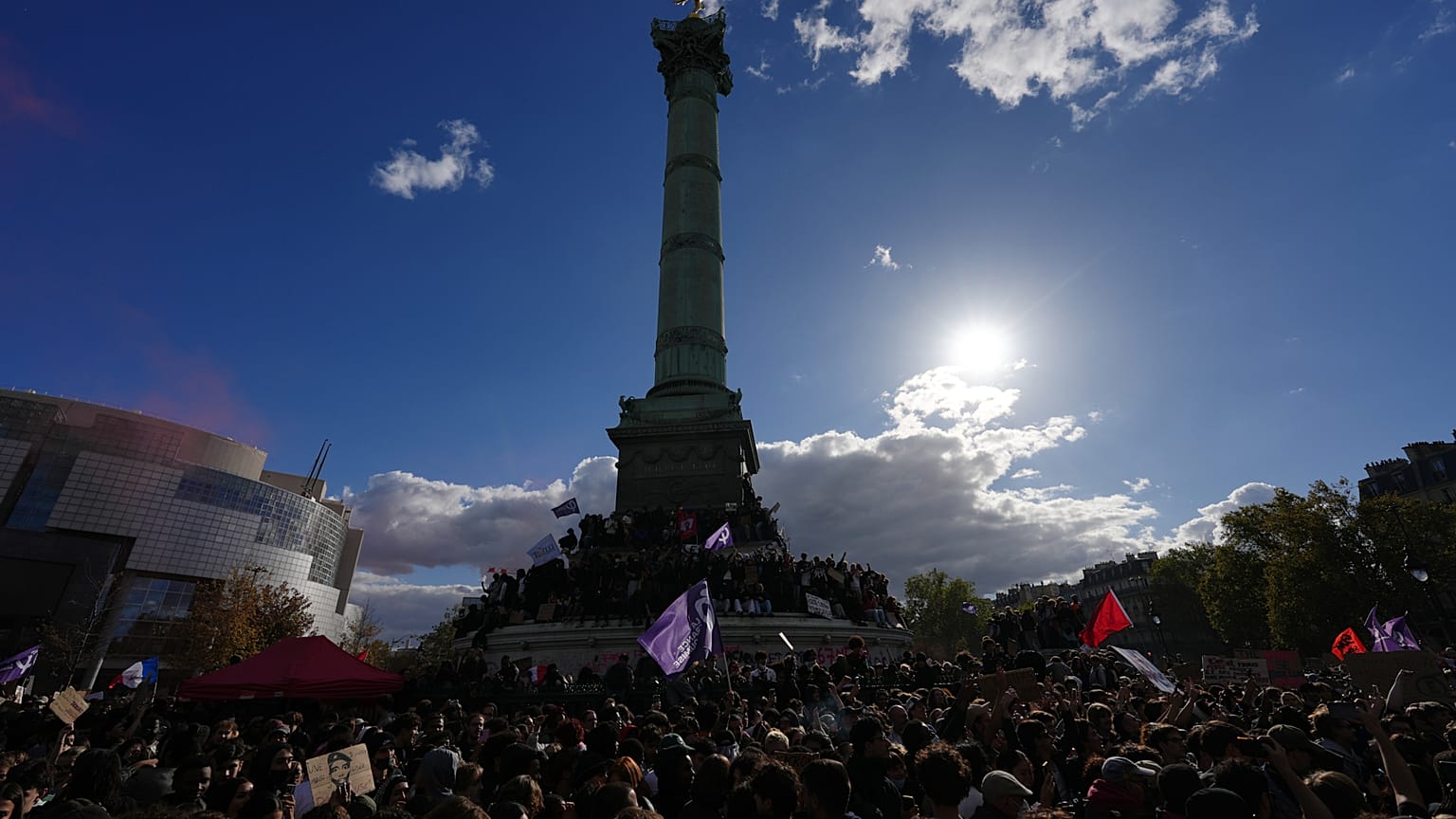
PARIS — In a sweeping demonstration of political leverage that threatens to upend France’s fragile parliamentary equilibrium, veteran leftist firebrand Jean-Luc Mélenchon addressed an ocean of tens of thousands of student demonstrators at Place de la Bastille, declaring that the symbolic heart of French revolutionary history had been “retaken.” The mass student mobilization, which paralyzed transport corridors across the Right Bank and triggered security crackdowns across the capital, represents far more than an episodic youth protest: it marks a coordinated escalation by La France Insoumise (LFI) to exploit mounting structural discontent, challenge austerity-driven fiscal consolidation, and force a constitutional crisis.
The demonstration brings together a convergence of university blockades, secondary school walkouts, and public-sector union delegations. Catalyzed by acute student cost-of-living inflation, housing shortages, contentious higher-education selection mechanisms, and broader geopolitical grievances, the rally swiftly morphed into an overt referendum on the executive branch. As Paris clears debris and assesses the institutional fallout, institutional investors, credit-rating agencies, and sovereign debt desks across Europe are recalibrating the political risk premium tethered to French sovereign assets.
Executive Takeaways
- Symbolic Escalation: Jean-Luc Mélenchon’s assertion that “the Bastille is retaken” represents an aggressive rhetorical pivot designed to consolidate the fragmented New Popular Front (NFP) coalition around radical youth mobilization rather than institutional compromise.
- Wide Discrepancies in Mobilization Metrics: Independent monitors and trade union organizers claimed turnout exceeding 100,000 participants across the broader Paris metropolitan area, whereas the Prefecture of Police officially logged approximately 28,000 marchers, reflecting entrenched narrative warfare over the movement's true scale.
- Capital Market Vulnerability: The resurgence of street-level political volatility arrives as France’s 10-year sovereign bond (OAT) yield spread over German Bunds hovers near post-Eurozone-crisis highs, threatening enterprise capital allocation and escalating corporate borrowing costs across the CAC 40.
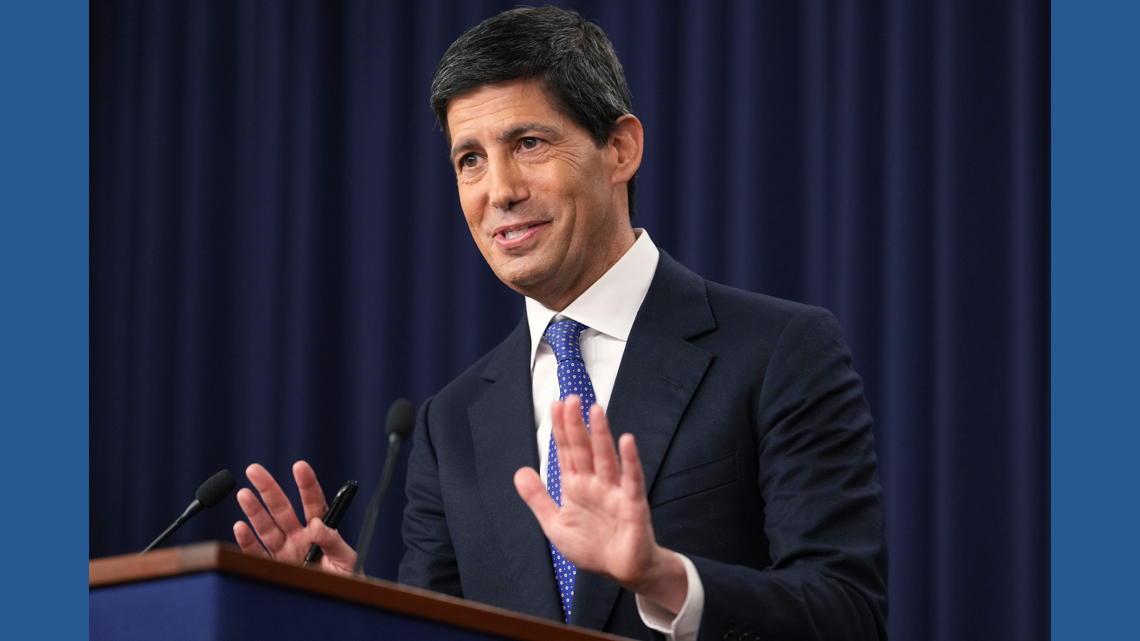
- International Geopolitical Ripple Effects: The Paris unrest has drawn sharp transatlantic scrutiny, with senior U.S. political figures, including Senator Marco Rubio, characterizing the resurgence of radical left-wing street activism as an indicator of systemic European governance fragility.
The Crucible at Place de la Bastille: Ground Zero of a Coordinated Insurgency

By early afternoon, the historic perimeter flanking the July Column transformed into an ideological fortress. Crowds organized by the National Union of Students of France (UNEF), the Union Syndicale Lycéenne (USL), and university strike coordinating committees converged from the Latin Quarter, Place de la République, and the Boulevard Henri-IV corridor. Banners denouncing state austerity, housing precarity, and institutional inertia were hoisted alongside Palestinian flags and anti-capitalist insignia, underscoring the eclectic ideological composition of modern French youth dissent.
Mounting an improvised stage overlooking the esplanade, Mélenchon delivered an unyielding address that directly targeted the executive branch’s tenuous governing mandate. “They believed they could govern through exhaustion, through administrative decrees, through contempt for the young and the working class,” Mélenchon proclaimed to thunderous applause. “Today, the youth of France have answered. The Bastille is retaken. This is not the end of a march; it is the opening salvo of a civic revolution that will not retreat until popular sovereignty is restored.”
On the ground, the tone combined festival-like solidarity with militant resistance. “We cannot afford groceries, our student residences are decrepit, and we are told to prepare for an economic future defined by austerity and geopolitical conflict,” said Camille Laurent, a 21-year-old philosophy undergraduate at Sorbonne University, who participated in the campus occupation preceding the march. “This is no longer merely about educational grants; it is about who holds power in this republic.”
As the evening progressed, mobile units of the Compagnies Républicaines de Sécurité (CRS) deployed tear gas and water cannons along Rue de la Roquette and Boulevard de la Bastille to disperse splinter factions of masked cortège de tête agitators, resulting in dozens of arrests, smashed storefronts, and significant municipal infrastructure damage.
Catalysts of Discontent: Dissecting the Structural Friction
While Mélenchon’s incendiary rhetoric captured global headlines, the combustible environment across Parisian universities is rooted in protracted economic and institutional failure. A confluence of structural pressures has eroded the purchasing power and upward mobility of French youth:
- Student Poverty and Cost-of-Living Compression: According to data compiled by student welfare associations, the cost of university life in France increased by more than 6.5% year-over-year in the latest academic term. Soaring private-market rents in the Île-de-France region, paired with steep food inflation, have pushed reliance on emergency student food banks to historic highs.
- The Dysfunctions of Parcoursup and MonMaster: Algorithmic allocation platforms for undergraduate and postgraduate admissions continue to generate widespread alienation. Students decry the opaque selection criteria that leave tens of thousands without academic placements, branding the platforms as state-mandated social sorting mechanisms.
- Disinvestment in Higher Education Infrastructure: Years of budgetary restraint under successive centrist administrations have strained physical campus infrastructure, leaving lecture halls overcrowded, staff-to-student ratios degraded, and operational budgets for research facilities structurally deficient.
- Geopolitical and Civil Liberties Frustrations: The government's restrictive posture toward pro-Palestinian demonstrations across elite campuses—such as Sciences Po and the École Normale Supérieure—has catalyzed accusations of authoritarian drift, aligning academic free-speech grievances with broader international justice movements.
Quantitative Breakdown: Mobilization Metrics and Sovereign Exposure
The scale of the Paris student mobilization signals elevated political and systemic risk that extends beyond civil unrest into budgetary and macroeconomic performance metrics.
| Metric / Indicator | Government / Institutional Data | Organizer / Independent Estimate | Macroeconomic & Market Implication |
|---|---|---|---|
| Paris Demonstration Turnout | 28,000 (Prefecture of Police) | 110,000+ (UNEF / Strike Coalition) | Contested mandate; persistent threat of rolling general strikes. |
| Campus Disruptions Nationwide | 14 Campuses Fully Blocked | 38 Universities Impacted / Occupied | Direct productivity losses; heightened operational security costs. |
| French 10Y Sovereign Yield (OAT) | 3.15% (+6 bps on event week) | Spread over Bund: ~78-83 bps | Elevated debt-servicing costs; investor demand for political risk premium. |
| Municipal & Public Security Costs | €4.2M (Deployment & Cleanup, est.) | Excludes Private Retail Property Damage | Direct fiscal drag on Paris regional administration budgets. |
| Student Poverty Incidence Rate | 19.8% (Official Insee Threshold) | 32.0% (Union Assessment on Basic Needs) | Structural headwind against domestic consumption growth. |
Sovereign Risk, Capital Allocation, and Enterprise Impact
The sudden escalation of street protests poses immediate challenges for institutional asset managers, corporate treasurers, and global investment committees exposed to French sovereign debt and domestic equities. France’s fiscal trajectory is already under stringent oversight from the European Commission due to an excessive deficit procedure. Any domestic upheaval that paralyzes the government's ability to execute fiscal consolidation introduces systemic friction.
1. Widening Sovereign Spreads and Corporate Debt Issuance:
The spread between French 10-year OATs and German Bunds remains an acute gauge of political anxiety. With the far-left deploying youth movements to destabilize the parliamentary process and the far-right waiting in the wings to leverage the resulting security concerns, foreign asset allocators are treating French sovereign instruments with renewed caution. A sustained risk premium directly elevates the cost of capital for tier-1 French corporate debt issuers, compressing net interest margins and constraining enterprise ROI.
2. Equity Market Volatility in Domestic-Facing Sectors:
While the multinational giants of the CAC 40 (such as luxury conglomerates and defense primes) maintain robust foreign revenue bases that shield them from domestic unrest, domestically focused sectors—retail banking, real estate, transportation, and consumer services—face pronounced headwinds. Foot-traffic disruptions in central commercial corridors, coupled with consumer sentiment contraction, threaten fourth-quarter retail revenues across Paris and secondary urban centers.
3. Threat of a Coordinated Autumn Strike Cascade:
The critical vulnerability for the executive branch is the potential for cross-sector contagion. If university student strikes interface with key public-sector logistics, railway workers (SNCF), and energy infrastructure unions (CGT), the risk profile shifts from manageable civil dissent to acute supply-chain disruption. For global supply chains operating cross-border logistics networks via France, risk mitigation mandates immediate stress-testing of ground transit contingencies.
International Reverberations and Geopolitical Friction
The scenes of unrest cascading across Paris have triggered critical assessments across international capitals, most notably in Washington. Senior U.S. foreign-policy figures have utilized the Bastille protests to caution against the structural fragility of European political institutions.
Senator Marco Rubio (R-FL) and prominent members of the U.S. foreign relations apparatus publicly scrutinized the events, pointing to the mobilization as evidence of radicalization within European political hubs and a failure of centrist governance to enforce civil order. Such critiques reflect broader anxieties in the international finance and diplomatic community: an economically stalled, politically paralyzed France compromises NATO cohesion, dilutes European Union regulatory initiatives, and diminishes the continent’s strategic autonomy on the global stage.
Frequently Asked Questions (People Also Ask)
Why did Jean-Luc Mélenchon say "the Bastille is retaken"?
Mélenchon employed the historical metaphor of Place de la Bastille—the foundational symbol of the 1789 French Revolution—to frame the mass student demonstration as a modern, historic revolt against the established executive branch. By invoking the Bastille, he sought to legitimize street mobilization as a constitutional counterweight to an unpopular parliamentary agenda, signaling that the leftist coalition views direct popular action as a viable mechanism to challenge state authority.
What specific issues ignited the latest Paris student protests?
The student movement is driven by a multi-layered set of grievances: acute inflation in food and housing costs affecting young people, widespread frustration with university admissions platforms (Parcoursup and MonMaster), deep-seated opposition to fiscal austerity in higher education budgets, and widespread mobilization over global geopolitical matters, including protests against administrative crackdowns on pro-Palestinian student speech.
How do the Paris student strikes affect French financial markets and the CAC 40?
While the CAC 40 index includes heavily globalized corporations with diversified foreign revenues, sustained political instability amplifies the sovereign spread between French 10-year bonds (OATs) and benchmark German Bunds. This increases borrowing costs across the French public and private sectors, exerts downward pressure on domestic equities (especially retail, utilities, and domestic banks), and discourages long-term foreign direct investment (FDI).
Is the French government at risk of collapse due to these demonstrations?
The student demonstrations alone cannot formally dissolve the National Assembly; however, they significantly raise the likelihood of a parliamentary crisis. By amplifying social pressure on the streets, the movement pushes opposition parties—including the New Popular Front and the National Rally—closer to coordinating votes of no confidence against the governing cabinet, threatening the viability of executive legislative priorities.
Future Outlook: Strategic Milestones to Watch
As the academic strike committees attempt to institutionalize their gains across regional university hubs, the French political landscape faces several critical inflection points over the coming weeks:
- University Assembly Coordination: Watch whether university walkouts expand beyond Paris to industrial and academic bastions such as Lyon, Marseille, Toulouse, and Rennes. National strike coordination would signal that student unrest is transforming into a sustainable, long-term movement.
- Parliamentary Budget Maneuvering: The ultimate test will occur in the National Assembly. Mélenchon's assertive public stance is explicitly engineered to pressure moderate leftists within the Socialist and Green parties away from fiscal compromises with the center, increasing the likelihood that upcoming budget votes could trigger an immediate government-collapsing vote of no confidence.
- Credit Rating Trajectory: International rating agencies (S&P Global, Moody's, and Fitch) are systematically updating their sovereign assessments of France. A continuation of structural ungovernability and street-driven policy concessions will directly threaten France’s sovereign credit rating, with negative implications for Eurozone-wide fiscal cohesion.
The echoes of the revolution across Place de la Bastille underline a fundamental reality: France’s political center of gravity has once again pivoted from the corridors of the Palais Bourbon to the streets of the capital, leaving executive authority increasingly beleaguered and financial markets on high alert.