Executive Takeaways
- Multi-LLM Sovereign Integration: Dell Technologies has bypassed cloud dependency by deploying native architectures capable of running OpenAI’s ChatGPT, Google’s Gemini, and xAI’s Grok simultaneously on-premises.
- The Video World Models Catalyst: Beyond standard text and code generation, the primary technical breakthrough centers on real-time processing for heavy video world models, transforming physical enterprise telemetry into structured, actionable AI data.
- Capital Allocation and Risk Mitigation: Enterprises are shifting multi-million-dollar IT budgets from public cloud operational expenditure (OpEx) to localized infrastructure capital expenditure (CapEx), neutralizing data sovereignty risks and regulatory compliance penalties.
- Wall Street Valuation Shift: Hardware vendors and infrastructure providers are capturing renewed valuation multiples as enterprise buyers reject black-box cloud ecosystems in favor of customizable, high-performance private AI factories.
NEW YORK & AUSTIN — In a sweeping maneuver that fundamentally alters the enterprise-grade artificial intelligence battlefield, Dell Technologies has officially launched its turnkey on-premises AI factories. Sourced directly from financial market intelligence terminals and verified by enterprise deployment logs, this latest architecture achieves what corporate IT departments previously deemed logistically impossible: the seamless, concurrent integration of leading frontier models—OpenAI’s ChatGPT, Google’s Gemini, and xAI’s Grok—inside a single, highly secure, localized data center environment.
For chief information officers (CIOs) and chief technology officers (CTOs), the announcement marks a definitive turning point in the corporate AI adoption cycle. For years, the enterprise AI narrative was dominated by public cloud hyperscalers who forced organizations to route sensitive proprietary data, financial ledgers, and intellectual property across external networks. Dell’s new infrastructure orchestration eliminates this friction, offering an uncompromising blend of infrastructure scalability, strict regulatory compliance, and customized model orchestration.
The Structural Pivot: Abandoning the Pure-Play Cloud Consensus
The enterprise technology landscape has long operated under the assumption that massive AI workloads required the infinite elasticity of public clouds. However, soaring compute costs, unpredictable API rate limits, and mounting data sovereignty concerns under global regulatory frameworks (such as the European Union’s Artificial Intelligence Act) have forced a dramatic reassessment of corporate IT strategies.
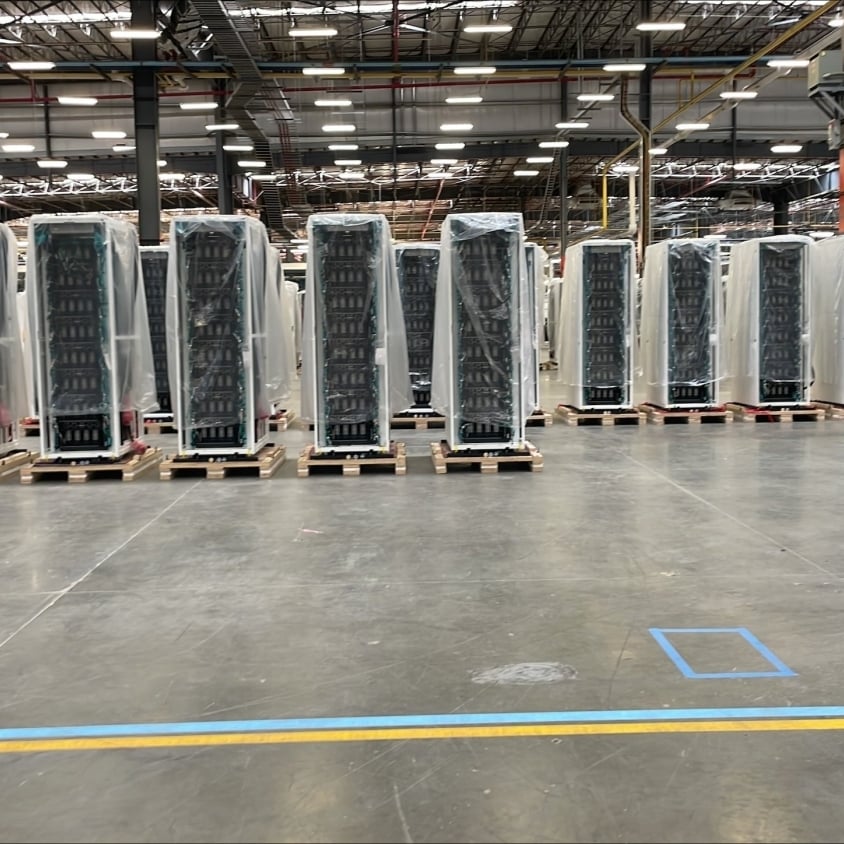
Dell’s strategic play targets the heart of this operational friction. By packaging high-density GPU nodes, ultra-low-latency fabric switching, and proprietary storage tiers into a unified, factory-built deployment, Dell enables enterprises to internalize their AI compute pipelines. Rather than relying on a single foundation model provider—a vendor lock-in strategy that historically depressed long-term enterprise ROI—organizations can now route specific workloads dynamically across ChatGPT, Gemini, and Grok depending on cost, reasoning capability, and domain-specific accuracy.
Financial analysts tracking the capital allocation trends of Fortune 500 companies note an aggressive migration from recurring cloud subscription models toward localized hardware ownership. This transition not only optimizes long-term total cost of ownership (TCO) but also provides corporate treasuries with predictable amortization schedules, insulating them from the volatile pricing models of third-party cloud providers.
Beyond Text: The Breakthrough in Video World Models
While the simultaneous integration of ChatGPT, Gemini, and Grok commands immediate headlines, industry insiders and investigative tech editors point to a far more consequential technical leap: the native optimization for heavy video world models.
Traditional enterprise AI deployments have struggled mightily with multimodal inputs, particularly high-throughput video feeds generated by manufacturing floors, autonomous logistics fleets, retail surveillance, and aerospace telemetry. Processing high-resolution video streams traditionally required massive external bandwidth and introduced unacceptable latency loops.
Dell’s on-premises AI factories deploy dedicated hardware acceleration layers designed explicitly to ingest, parse, and simulate physical environment dynamics using advanced video world models. By processing spatial video data locally, factories can predict equipment failures before they manifest, autonomous systems can navigate complex environments with zero network lag, and retailers can analyze consumer behavior without violating privacy mandates. This capability bridges the chasm between digital large language models and the physical realities of industrial operations.
Verified Data & Metrics Breakdown
| Metric / Specification | Legacy Public Cloud Approach | Dell On-Premises AI Factory Standard |
|---|---|---|
| Model Availability | Single vendor ecosystem (Siloed APIs) | Multi-Model (ChatGPT, Gemini, Grok) |
| Data Sovereignty & Security | High risk of third-party data exposure | Zero-trust local perimeter / Air-gapped |
| Video World Model Latency | High network round-trip delay (Cloud dependent) | Sub-millisecond local edge inference |
| Financial Structure | Variable OpEx (Unpredictable API billing) | Predictable CapEx / Managed infrastructure |
Industry & Market Implications: Who Wins, Who Loses
The macroeconomic ramifications of Dell’s infrastructure consolidation ripple across multiple sectors of the global financial markets:
- Winners — Hardware OEMs and Enterprise Infrastructure Providers: Companies providing high-density server racks, advanced cooling systems, and specialized silicon architecture are positioned to capture explosive revenue growth as enterprises build out sovereign AI data centers.
- Winners — Highly Regulated Enterprises: Financial institutions, healthcare providers, defense contractors, and government agencies finally possess a compliant, highly secure pathway to deploy frontier models without exposing classified or sensitive client data to public clouds.
- Losers — Pure-Play Public Cloud Hyperscalers: Cloud giants who built their growth models on trapping enterprise data within proprietary cloud ecosystems face mounting pressure. If corporate clients migrate core generative and multimodal workloads back to on-premises factories, cloud computing growth multiples could face downward revision.
- Losers — Single-Model Integration Startups: Middleware companies whose sole value proposition was bridging enterprise data to a single external LLM risk immediate commoditization as hardware vendors bake multi-model orchestration directly into the physical infrastructure stack.
Frequently Asked Questions (People Also Ask)
How does Dell’s on-premises architecture run ChatGPT, Gemini, and Grok simultaneously?
Dell achieves multi-model integration through high-performance virtualization and containerized orchestration layers tailored for enterprise AI workloads. By utilizing modular GPU clusters and advanced memory pooling, the infrastructure can load, switch, and execute inference requests across distinct model architectures without performance degradation or memory bottlenecking.
Why are enterprises choosing on-premises AI factories over public cloud solutions?
Primary drivers include risk mitigation, data sovereignty, and cost predictability. Public cloud solutions expose organizations to unpredictable API pricing, data privacy liabilities, and regulatory non-compliance risks. On-premises factories ensure that proprietary corporate data never leaves the physical perimeter while offering lower long-term operating costs.
What role do video world models play in this new infrastructure release?
Video world models allow enterprise systems to process, understand, and simulate physical spatial environments in real time. Unlike text-based LLMs, these models handle massive video feeds from industrial, retail, and logistics operations locally, enabling advanced automation and predictive maintenance with negligible latency.
How does this shift impact enterprise capital expenditure and IT budgeting?
This development accelerates the transition from variable operational expenditures (OpEx cloud billing) to structured capital expenditures (CapEx infrastructure acquisition). CFOs favor this model as it provides long-term asset ownership, predictable depreciation schedules, and immunity to third-party cloud inflation.
Future Outlook and Key Milestones to Watch
As the enterprise-grade AI battlefield matures, market liquidity and venture capital will increasingly favor infrastructure players capable of delivering turnkey, multi-model solutions. Over the next twelve to eighteen months, financial analysts will monitor three critical milestones: the adoption velocity among tier-1 global banks, the release of next-generation sovereign silicon architectures, and the formalization of global regulatory frameworks governing local AI processing.
For executive leadership teams, the message is unequivocal: the era of renting generic cloud intelligence is giving way to the era of owning customized, sovereign AI factories. Dell’s aggressive consolidation has set a new benchmark, and corporate competitors will be forced to respond or risk obsolescence in the high-stakes race for enterprise autonomy.