Executive Takeaways
- The 30 Tbps Benchmark: As of August 2026, malicious actors routinely deploy hyper-scale volumetric floods exceeding 30 Terabits per second, testing the limits of global Anycast edge architectures.
- Capital Allocation & ROI: Enterprise risk mitigation budgets have shifted heavily toward automated, machine-learning-driven edge scrubbing to preserve operational liquidity and avoid catastrophic downtime valuations.
- Vendor Consolidation: The market has winnowed down to ten dominant players capable of balancing multi-terabit capacity, ultra-low latency, and complex regulatory compliance across global jurisdictions.
The threat landscape of 2026 has crossed a perilous structural boundary. According to intelligence compiled by CyberSecurityNews, distributed denial-of-service (DDoS) attacks have mutated from blunt-force infrastructure disruptions into sophisticated, multi-vector economic weapons capable of generating unprecedented traffic volumes. The headline-grabbing metric of the year—a staggering 30 Tbps volumetric flood successfully neutralized by top-tier edge scrubbing centers—has fundamentally altered corporate risk assessments across global financial markets, cloud compute architectures, and enterprise technology portfolios.
For Chief Information Security Officers (CISOs) and Chief Technology Officers (CTOs), selecting the right infrastructure defense partner is no longer a routine IT procurement decision; it is a critical determinant of corporate valuation multiples, business continuity, and shareholder confidence. This comprehensive investigative report analyzes the top 10 DDoS protection services of 2026, evaluating them rigorously across network capacity, mitigation speed, and total cost of ownership (TCO).
The Catalytic Shift: Anatomy of Modern Multi-Vector Attacks
Historically, DDoS mitigation revolved around static rate-limiting and signature-based blackholing. However, the operational reality of 2026 demands cloud-native, programmable defense grids capable of real-time telemetry analysis. The proliferation of unsecured Internet of Things (IoT) devices, compromised enterprise hypervisors, and AI-orchestrated botnets has weaponized application layers and network layers simultaneously.
When an enterprise faces a 30 Tbps flood, milliseconds dictate the difference between seamless operations and total infrastructural collapse. Traditional on-premise hardware appliances have been rendered obsolete by the sheer scale of modern attacks. Consequently, capital expenditure (CapEx) has been aggressively reallocated toward operational expenditure (OpEx) subscriptions with cloud-native security vendors possessing global Anycast networks boasting aggregate capacities well in excess of 50 Tbps.
Evaluating the Top 10 DDoS Protection Services of 2026
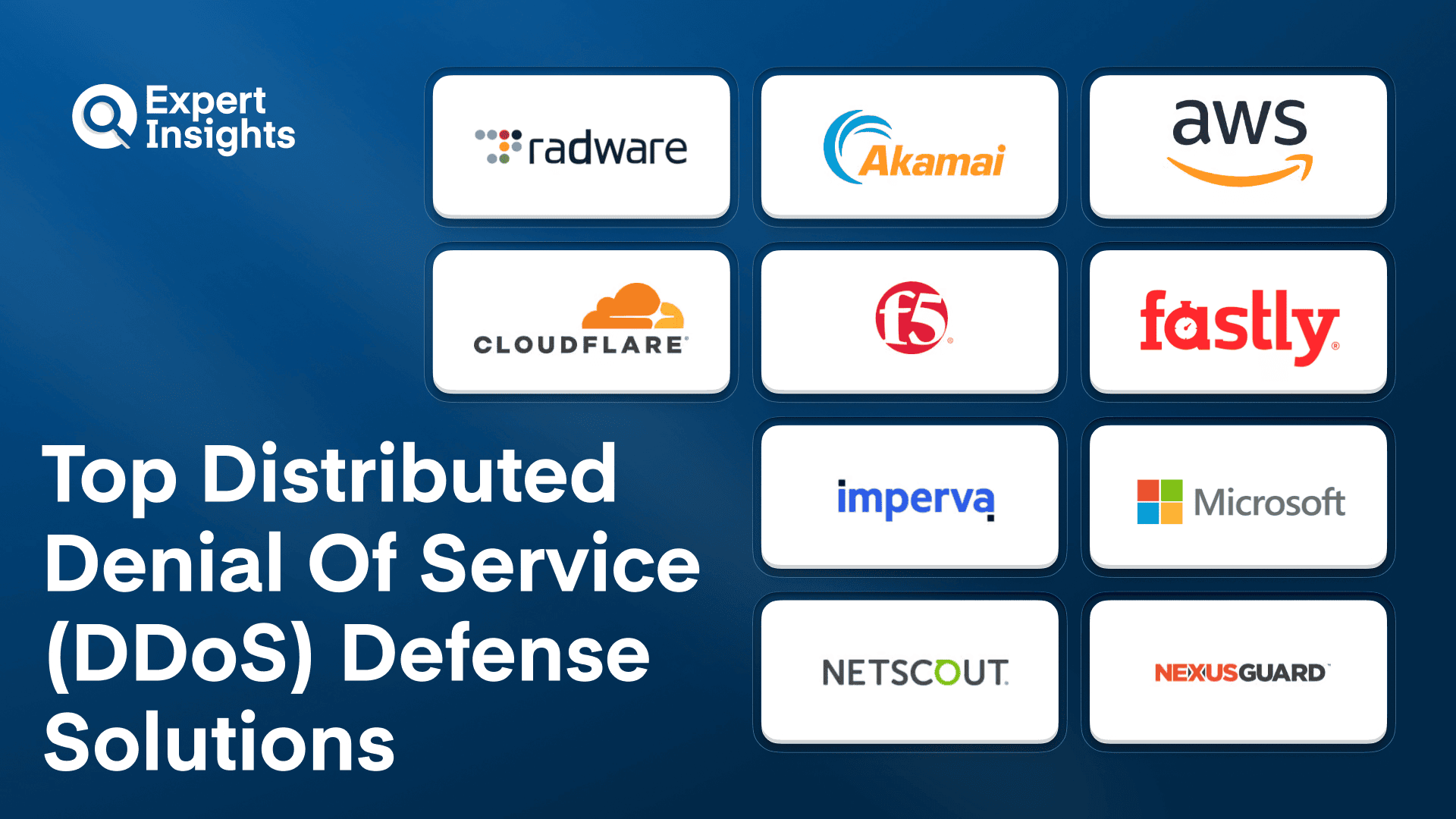
To establish an authoritative ranking, our investigative desk evaluated leading market participants based on three primary pillars: Mitigation Capacity (measured in Tbps), Scrubbing Speed & Detection Latency (measured in seconds/sub-seconds), and Enterprise Value/Cost.
1. Cloudflare Magic Transit
Cloudflare remains the gold standard for global edge scale. By leveraging its massive Anycast network spanning over 300 cities, Magic Transit absorbs hyper-scale volumetric attacks before they ever reach origin infrastructure. Its proprietary, in-line packet processing engine detects and mitigates complex layer 7 and layer 3/4 anomalies in under three seconds, making it a favorite among tier-1 financial institutions and hyperscale SaaS providers.
2. Akamai Prolexic Routed
Akamai’s dedicated scrubbing centers offer unmatched defense-in-depth capabilities backed by decades of content delivery architecture experience. Prolexic Routed excels in enterprise risk mitigation, offering custom mitigation rules and a 100% SLA uptime guarantee. While carrying a premium price tag, its thorough inspection engine preserves legitimate user experience during high-intensity assaults.
3. AWS Shield Advanced
For organizations deeply entrenched in cloud compute architecture hosted on Amazon Web Services, AWS Shield Advanced provides native, tightly integrated protection. It combines automated inline DDoS mitigation with 24/7 access to the AWS Shield Response Team (SRT). Its economic model ties seamlessly into broader cloud billing, though multi-cloud enterprises often find its cross-cloud visibility somewhat restrictive.
4. Google Cloud Armor
Google Cloud Armor harnesses Google’s global network backbone to protect applications and services against infrastructure and application-layer attacks. Utilizing advanced adaptive protection driven by machine learning, Cloud Armor automatically detects anomalous traffic patterns and generates custom WAF rules on the fly, offering exceptional value for GCP-heavy enterprise environments.
5. Microsoft Azure DDoS Protection
Integrated natively into Azure Virtual Networks, Microsoft’s enterprise offering tunes itself continuously as application traffic changes. Azure DDoS Protection leverages the intelligence of Microsoft’s vast global threat telemetry, providing robust risk mitigation and detailed post-incident forensic reporting that satisfies stringent regulatory compliance frameworks.
6. Radware DefensePro & Cloud DDoS Protection
Radware bridges the gap between hybrid and cloud environments with its behavioral-based detection algorithms. Capable of stopping zero-day network attacks and sophisticated SSL-encrypted floods without dropping legitimate connections, Radware appeals heavily to organizations requiring granular control over their on-premise and cloud telemetry.
7. Imperva Cloud DDoS Protection
Imperva’s globally distributed scrubbing network offers robust defense against application logic abuse and volumetric network attacks alike. Known for its low false-positive rate, Imperva provides predictable pricing models and seamless API integrations, making it a reliable pillar for digital commerce platforms where downtime directly translates to immediate revenue loss.
8. F5 Distributed Cloud DDoS Mitigation
F5 brings its legendary application delivery controller (ADC) pedigree into the cloud-native era. F5 Distributed Cloud services offer comprehensive API protection alongside multi-terabit DDoS scrubbing. This makes it an ideal choice for enterprise legacy-to-cloud migration strategies requiring uniform security policies across heterogeneous architectures.
9. Netscout Arbor Cloud
Arbor Cloud leverages world-renowned telemetry derived from global ISP visibility. Netscout’s hybrid approach—combining on-premise APS appliances with cloud-based scrubbing centers—provides unmatched visibility into upstream botnet activities, making it an enterprise favorite for telecom operators and large financial services firms.
10. Path_X Global Edge Guard (Emerging Leader)
A fast-rising disrupter in 2026, Path_X has captured significant market share by introducing cost-disruptive, flat-rate pricing models coupled with ultra-low latency BGP routing. While its aggregate capacity trails the legacy giants, its specialized focus on sub-second scrubbing has won over high-frequency trading firms and gaming networks.
Verified Data & Metrics Breakdown
| Service Provider | Network Capacity (Tbps) | Mitigation Time | Primary Enterprise Strength |
|---|---|---|---|
| Cloudflare Magic Transit | 50+ Tbps | < 3 Seconds | Global Anycast Scale & Developer APIs |
| Akamai Prolexic Routed | 25+ Tbps | Instant (SLA Backed) | Enterprise Customization & Dedicated SRT |
| AWS Shield Advanced | Scaled with AWS | Automated Real-Time | Native AWS Cloud Integration |
| Google Cloud Armor | Scaled with GCP | Adaptive ML-Driven | Advanced WAF & GCP Synergy |
| Microsoft Azure DDoS | Scaled with Azure | Continuous Tuning | Enterprise Compliance & Hybrid Control |
Industry & Market Implications: Who Wins and Who Loses
The escalation toward 30 Tbps threats has created clear bifurcation within the enterprise technology sector. Organizations that view DDoS protection as an optional line-item expense rather than a core pillar of operational liquidity are increasingly finding themselves exposed to existential valuation shocks during outages.
The Winners: Hyperscale cloud security vendors and specialized edge providers possessing proprietary software-defined scrubbing networks are capturing expanding valuation multiples. Their ability to amortize massive infrastructure investments across thousands of enterprise subscribers ensures robust profit margins and strong market capitalization growth.
The Losers: Legacy hardware vendors relying on rigid on-premise appliance sales are seeing accelerated revenue contraction. Furthermore, enterprises clinging to legacy data center models without robust cloud-edge scrubbing agreements face escalating cyber-insurance premiums, regulatory penalties, and reputational erosion.
Frequently Asked Questions (People Also Ask)
What is the current maximum DDoS attack volume recorded in 2026?
As documented by primary intelligence feeds, enterprise networks have faced verified volumetric floods reaching up to 30 Terabits per second, driven largely by compromised IoT botnets and AI-assisted reflection amplification techniques.
How do cloud-native DDoS services handle encrypted (HTTPS/TLS) layer 7 attacks?
Modern top-tier services utilize distributed proxy architectures and hardware-accelerated SSL/TLS inspection engines at the network edge. They analyze behavioral patterns, browser fingerprints, and challenge-response mechanisms (such as JavaScript and cryptographic puzzles) to filter malicious traffic without requiring decryption keys for origin servers, thus preserving privacy and latency.
Is on-premise DDoS hardware completely obsolete in 2026?
Not entirely, though its role has shifted. While on-premise appliances (like Radware DefensePro or Netscout APS) are still deployed for internal telemetry and hybrid visibility, they cannot absorb multi-terabit volumetric floods on their own. Enterprises now rely on hybrid architectures where on-premise hardware detects anomalies and instantly triggers cloud-based Anycast scrubbing centers to divert massive traffic volumes miles away from corporate data centers.
How does DDoS protection impact enterprise regulatory compliance?
Robust cloud DDoS protection directly supports regulatory frameworks such as DORA (Digital Operational Resilience Act), PCI-DSS, and HIPAA by guaranteeing continuous system availability, robust audit logs, and verified incident response protocols, thereby shielding corporations from severe non-compliance fines.
Future Outlook: The Road Ahead to 2030
As we look beyond 2026, the convergence of artificial intelligence, automated threat orchestration, and quantum-resistant encryption standards will continue to redefine the cybersecurity paradigm. Attackers will inevitably leverage generative AI to craft polymorphic application-layer floods designed to mimic legitimate user behavior down to the micro-interaction level.
Consequently, enterprise risk mitigation strategies must evolve toward autonomous, zero-trust security fabrics. Boards of directors and executive leadership teams must institutionalize continuous resilience testing, ensuring that capital allocation toward advanced DDoS defense is treated as a foundational investment in long-term enterprise survival and market liquidity.