

Zelensky Confirms Secret Transfer of North Korean P.O.W.s to South Korea: Inside the High-Stakes Geopolitical Handover
KYIV / SEOUL — In a stunning geopolitical development that directly links the battlefields of Eastern Europe to the highly volatile Korean Peninsula, Ukrainian President Volodymyr Zelensky confirmed that Ukraine has captured and transferred two North Korean prisoners of war (P.O.W.s) to South Korea. The unprecedented transfer, executed under intense secrecy, marks a major escalation in the intelligence war surrounding Pyongyang's direct military involvement in Russia’s invasion of Ukraine.
Speaking on the sidelines of the United Nations, President Zelensky revealed the harrowing details of the capture, noting that one of the North Korean soldiers attempted to commit suicide upon realization of his capture. The disclosure sheds light on the extreme psychological pressure and draconian indoctrination faced by North Korean troops deployed by Kim Jong Un to support Vladimir Putin’s war effort.
The Suicide Attempt: Fear of Repatriation and Pyongyang's Wrath
According to Ukrainian military intelligence sources, the two North Korean combatants were captured during intense close-quarters fighting in the Kursk oblast, a Russian border region where Ukraine launched a surprise counter-offensive last year. North Korea has reportedly deployed upwards of 11,000 soldiers to assist Russian forces in reclaiming the territory.
Zelensky stated that the captured soldiers were severely malnourished and disoriented when they fell into Ukrainian hands. Upon realizing he was being taken prisoner, one of the soldiers attempted to end his own life. Ukrainian medics intervened to save him.
"One soldier tried to kill himself when he realized he was captured," Zelensky said, highlighting the terrifying psychological conditioning these troops undergo. North Korean soldiers are reportedly told by their commanders that capture by Western or Ukrainian forces will result in brutal torture, and that any surrender will result in the immediate execution or forced labor of their families back in North Korea.
Executive Summary: Key Takeaways of the P.O.W. Transfer
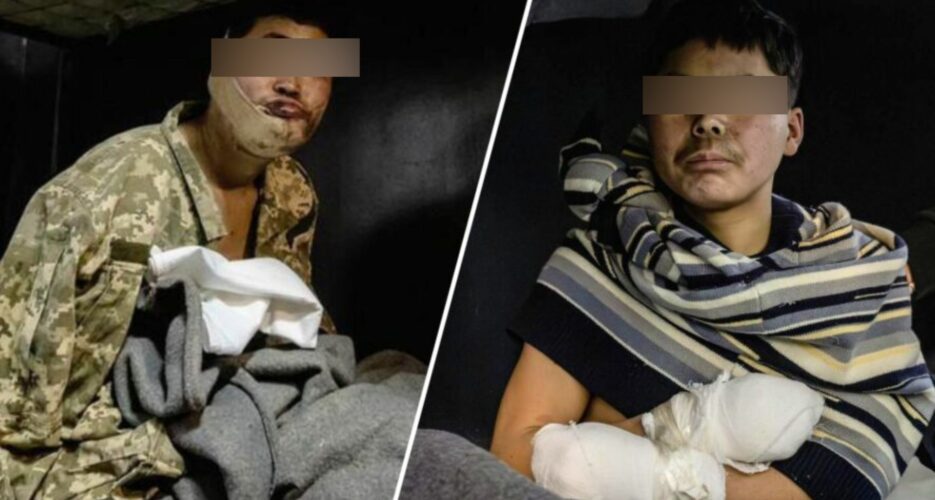
- Unprecedented Intelligence Handover: This is the first confirmed case of North Korean combatants captured in Europe being transferred directly to South Korean custody.
- High-Value Intelligence Windfall: South Korea’s National Intelligence Service (NIS) is now interrogating the soldiers to extract critical data on North Korean military training, communication systems, and the terms of the Moscow-Pyongyang military pact.
- The Suicide Factor: The suicide attempt by one captive underscores the severe fear of reprisal and intense indoctrination under which Kim Jong Un's forces operate.
- Diplomatic Escalation: The transfer is bound to infuriate both Moscow and Pyongyang, potentially pushing South Korea to abandon its long-standing policy of not sending lethal weapons directly to Ukraine.
Why Seoul Wanted the Captives: An Intelligence Goldmine
For South Korea, the custody of active-duty North Korean soldiers captured in a combat zone is an intelligence asset of incalculable value. South Korea’s constitution technically claims sovereignty over the entire Korean Peninsula, meaning North Korean citizens are legally viewed as South Korean nationals under specific defection and human rights frameworks.
Military analysts point out that the NIS will focus on several high-priority intelligence vectors during their debriefing:
1. Assessment of Combat Readiness and Morale
Western intelligence has long debated the actual combat efficacy of the Korean People's Army (KPA), which has not fought a major war since 1953. Interrogating these soldiers will reveal the true state of their physical conditioning, tactical training, and willingness to fight in a foreign war.
2. Russian Integration and Communications
A major bottleneck for North Korean troops in Russia has been the language barrier. South Korean investigators will probe how Russian commanders issued orders to North Korean units, whether translators were embedded, and how effectively Russian electronic warfare and drone


