Executive Takeaways
- Ground Zero for Cyber Risk: Artificial intelligence systems became the primary vector for enterprise cyberattacks during the second half of 2025, shifting risk from traditional IT perimeters to core algorithmic architectures.
- Supply Chain Fragility: According to the latest TrendAI™ State of AI Security Report, vulnerabilities are no longer isolated to application interfaces; they permeate foundational machine learning (ML) frameworks, open-source repositories, and multi-cloud compute pipelines.
- The Prompt Injection Crisis: Emerging defense mechanisms, such as Layered Prompt Injection Representation (LPIR), are being rushed into production as sophisticated threat actors exploit semantic loopholes in large language models (LLMs).
- Capital Allocation Shift: C-suites are recalibrating enterprise ROI projections, redirecting capital expenditure from pure model scaling toward aggressive risk mitigation, compliance frameworks, and infrastructure hardening.
For the past four years, global boardrooms have been consumed by a singular, relentless pursuit: deploying generative artificial intelligence at scale. Driven by soaring valuation multiples and the fear of structural obsolescence, enterprises poured trillions into cloud compute architecture, large language models (LLMs), and autonomous agent workflows. Yet, beneath this gilded veneer of digital transformation, a systemic crisis has been quietly compounding.
According to the landmark TrendAI™ State of AI Security Report released by Trend Micro, the second half of 2025 marked a definitive inflection point. AI systems transitioned from being productivity engines to becoming ground zero for global cyber risk. As organizations rushed to integrate automated reasoning engines into core operational systems, they inadvertently inherited a labyrinth of fragile supply chains, unvetted training dependencies, and deep-seated architectural vulnerabilities.
The Anatomy of AI Ecosystem Fault Lines
The contemporary artificial intelligence stack is radically different from traditional software architectures. While legacy systems rely on deterministic codebases governed by strict logic gates, modern AI environments operate on probabilistic inference, vast vector databases, and opaque third-party libraries. This fundamental shift has exposed enterprise infrastructure to entirely new classes of exploitation.
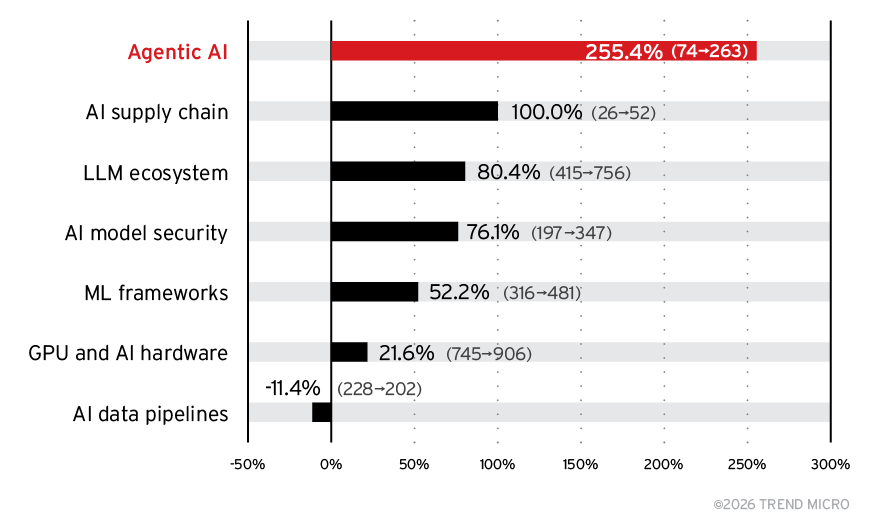
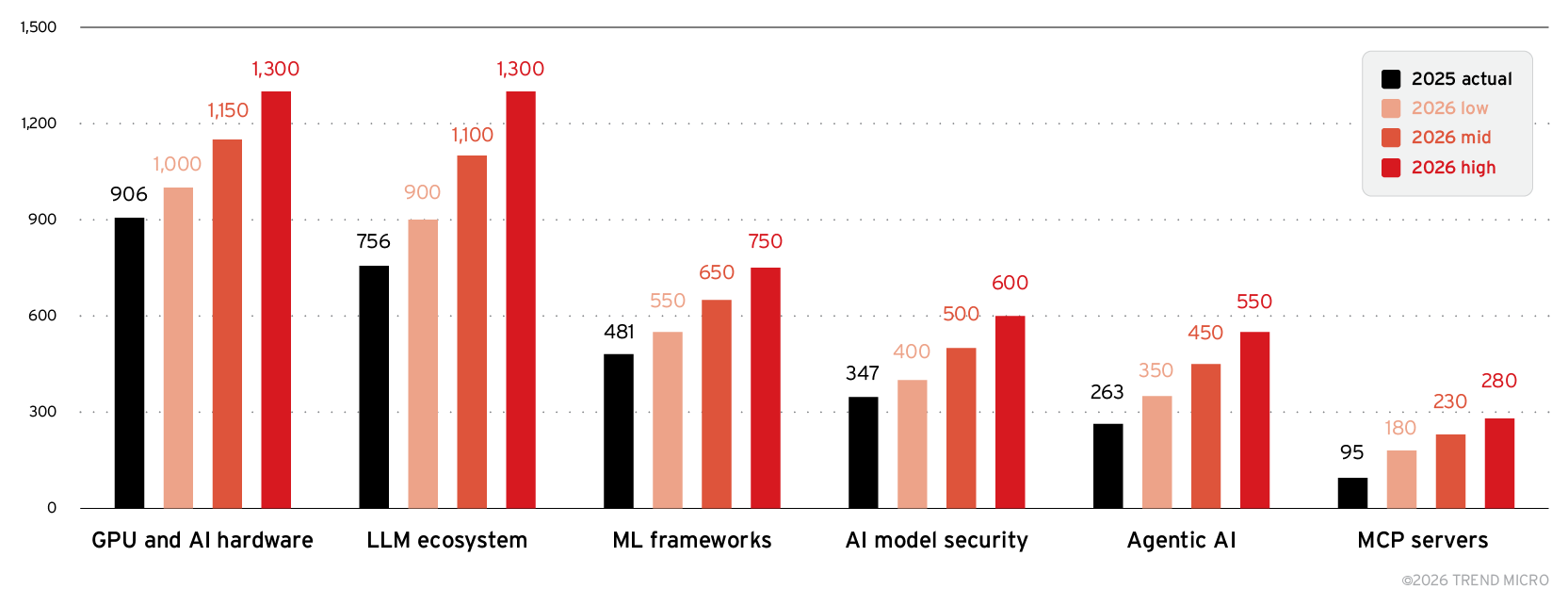
The Fault Lines in the AI Ecosystem investigation reveals that threat actors are no longer just targeting traditional network perimeters or endpoint devices. Instead, they are weaponizing the very components that make modern AI so powerful:
- Compromised ML Frameworks: Open-source machine learning libraries—frequently treated as trusted building blocks by corporate developers—have become hotbeds for malicious package injections and unpatched remote code execution (RCE) flaws.
- AI Supply Chain Opacity: Enterprises frequently have zero visibility into the provenance of pre-trained models, fine-tuned weights, and third-party APIs integrated into their software development life cycles (SDLC).
- Vector Database Exploits: As Retrieval-Augmented Generation (RAG) architectures become the enterprise standard for connecting LLMs to proprietary data, attackers are successfully executing indirect prompt injections to exfiltrate confidential corporate assets.
Financial institutions, healthcare providers, and federal contractors are discovering that accelerating infrastructure scalability without commensurate risk mitigation creates catastrophic balance sheet liabilities. A single successful compromise of an autonomous enterprise agent can trigger severe regulatory compliance penalties, catastrophic intellectual property theft, and immediate market capitalization erosion.
Defending the Frontier: The Rise of Layered Prompt Injection Representation
As the threat landscape matures, security technologists are racing to establish defensive paradigms capable of neutralizing semantic-layer attacks. Traditional firewalls and web application firewalls (WAFs) are fundamentally blind to malicious instructions embedded within natural language prompts. To combat this, advanced cybersecurity firms are pioneering novel defense architectures.
Central to this counter-offensive is Layered Prompt Injection Representation (LPIR). As highlighted in recent technical analyses by Trend Micro, LPIR provides a multi-tiered defensive framework designed to inspect, decompose, and neutralize adversarial prompts before they ever reach the core LLM inference engine.
By breaking down incoming user queries into distinct semantic layers—separating operational instructions from contextual data payloads—LPIR allows security systems to identify anomalous command structures, jailbreak attempts, and token manipulation strategies in real time. For chief information security officers (CISOs), implementing layered defense models like LPIR is no longer an optional security overlay; it is a baseline fiduciary requirement for maintaining operational continuity.
Verified Data & Metrics Breakdown
To quantify the shifting risk paradigm across global markets, the following comparative breakdown synthesizes metrics from the TrendAI™ State of AI Security Report against historical enterprise security benchmarks:
| Metric Category | Legacy IT Security Era (2022–2023) | AI Ecosystem Era (H2 2025–2026) | Strategic Enterprise Impact |
|---|---|---|---|
| Primary Attack Surface | Endpoints, Cloud Perimeters, Active Directory | ML Frameworks, LLM APIs, Vector Databases | Shift from network defense to algorithmic logic protection. |
| Primary Vulnerability Vector | Unpatched software, Phishing, Misconfigurations | Prompt Injections, Supply Chain Weight Poisoning | Requires specialized semantic auditing tools (e.g., LPIR). |
| Capital Allocation Focus | Endpoint Detection & Response (EDR), SIEM | AI Governance, Red Teaming, Cloud Compute Security | Surge in budget allocation toward AI-specific risk mitigation. |
| Regulatory Exposure | Data Privacy (GDPR, CCPA) | Algorithmic Bias, Autonomous Liability, EU AI Act | Severe non-compliance penalties and executive liability. |
Industry & Market Implications: Who Wins and Who Loses
The exposure of systemic fault lines within the artificial intelligence ecosystem is triggering an immediate re-pricing of technology assets across global equity markets. The fallout creates distinct economic winners and losers:
- The Winners: Specialized AI Security Providers. Companies capable of delivering robust runtime protection, supply chain provenance tracking, and semantic firewalls (such as Trend Micro’s advanced AI security suites) are experiencing unprecedented commercial demand. Institutional investors are rotating capital toward cybersecurity firms that bridge the gap between traditional IT infrastructure and generative AI pipelines.
- The Losers: Unsecured AI Adopters and Open-Source Naivety. Enterprises that deployed foundational models without rigorous red-teaming or supply chain auditing are facing severe operational disruptions. Furthermore, smaller software vendors relying blindly on unverified open-source ML repositories are seeing customer churn as enterprise procurement departments mandate stringent security attestations.
- Broader Economic Impact: Insurance markets are simultaneously tightening terms. Cyber insurance underwriters are introducing punitive riders or outright exclusions for unsecured AI deployments, forcing CFOs to treat AI risk management as a board-level priority rather than a secondary IT checkbox.
Frequently Asked Questions (People Also Ask)
What are the primary fault lines in the current AI ecosystem?
The primary fault lines include vulnerabilities in foundational machine learning frameworks, deeply opaque AI supply chains, unvetted open-source model weights, and the vulnerability of Retrieval-Augmented Generation (RAG) architectures to indirect prompt injection attacks.
How does Layered Prompt Injection Representation (LPIR) protect LLMs?
LPIR is an advanced defensive framework that inspects, decomposes, and neutralizes adversarial prompts by separating operational instructions from contextual data payloads. This enables security systems to catch jailbreak attempts and token manipulation strategies before malicious queries execute within the core LLM.
Why did AI systems become ground zero for cyber risk in late 2025?
As enterprises rushed to deploy generative AI for autonomous workflows and customer-facing operations, threat actors rapidly evolved their tactics to exploit probabilistic reasoning, semantic inputs, and software supply chain dependencies faster than traditional corporate security perimeters could adapt.
What steps should enterprise CFOs and CISOs take to mitigate AI security risks?
Organizations must reallocate capital toward comprehensive AI governance, implement rigorous supply chain provenance tracking for all open-source models, mandate runtime semantic firewalls (such as LPIR), and align compliance frameworks with emerging global regulations like the EU AI Act.
Future Outlook: What Comes Next
As we navigate through 2026, the trajectory of enterprise artificial intelligence will be defined by consolidation and rigorous accountability. The era of unchecked, rapid deployment is officially over, superseded by an era of defensive maturity. Regulatory bodies across North America, Europe, and Asia are finalizing strict liability frameworks that hold executive leadership directly accountable for algorithmic failures and data exfiltration breaches.
Key milestones to watch over the next twelve months include the mandatory adoption of cryptographic bill-of-materials (CBOMs) for AI models, the mainstream integration of automated semantic firewalls into cloud compute architecture, and increased consolidation within the enterprise cybersecurity sector as legacy vendors race to acquire native AI defense capabilities. For investors and industry leaders alike, the message is unequivocal: long-term market leadership in the age of intelligence belongs exclusively to those who master the delicate balance between rapid innovation and bulletproof ecosystem security.