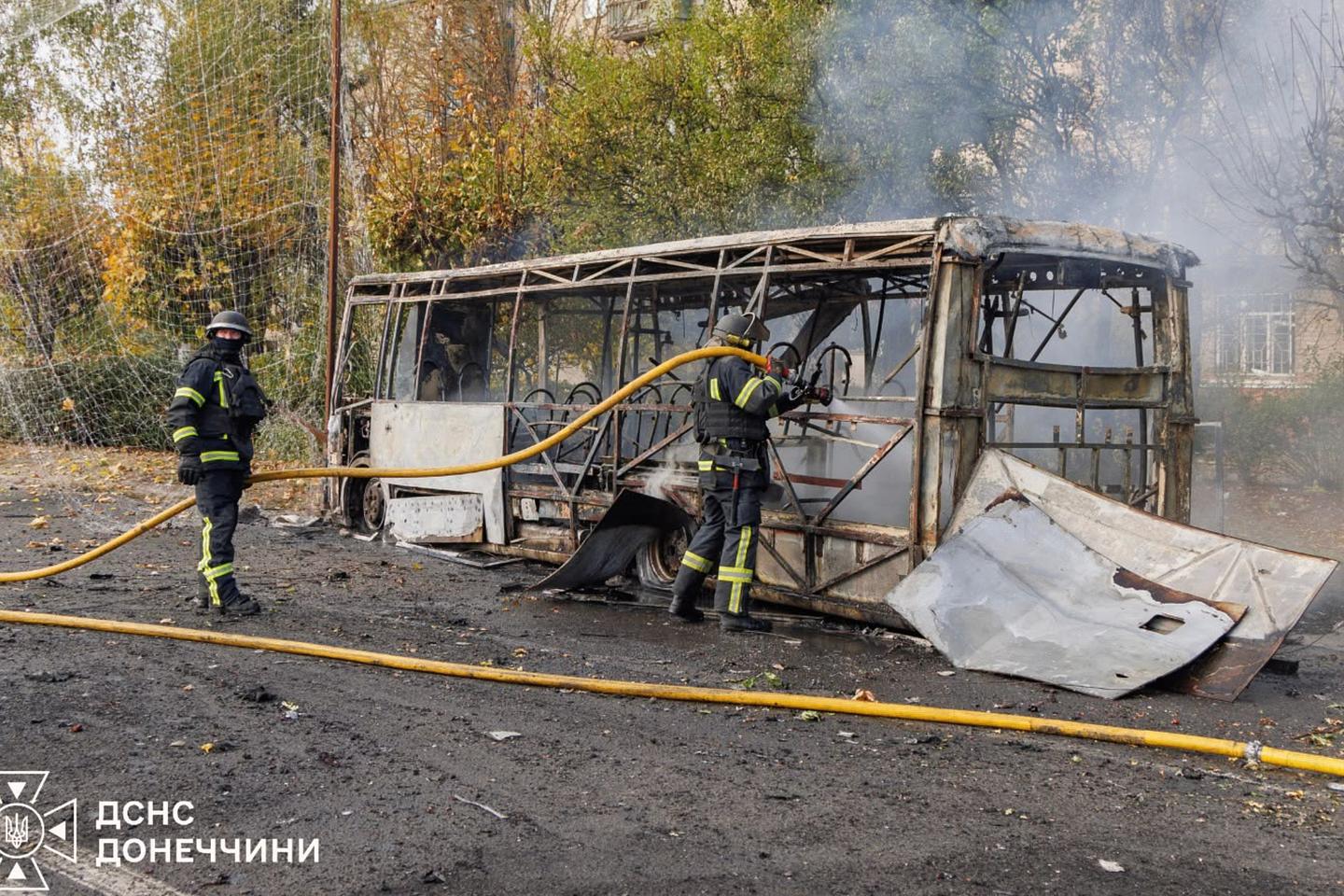
Executive Takeaways
- Devastating Mass Casualty Event: A Russian precision strike on a civilian transit hub in eastern Ukraine has claimed at least 30 lives, highlighting the mounting human cost as the conflict enters a highly kinetic, escalatory phase.
- Strategic Encirclement: The attack directly targets the logistical arteries feeding Ukraine’s "fortress belt"—the heavily fortified urban chain of Slovyansk, Kramatorsk, Druzhkivka, and Kostiantynivka.
- Defense Sector Valuation Surge: Escalating hostilities are driving institutional capital allocation toward prime defense contractors, pushing valuation multiples to near-record highs amid prolonged supply chain disruptions and expanded procurement cycles.
- Macro-Financial Instability: The threat of a breakthrough in the Donbas is driving up sovereign risk premiums across Eastern Europe, impacting market liquidity and forcing a reassessment of corporate risk mitigation strategies.
The Catalyst: Carnage on the Logistics Spine of the Donbas
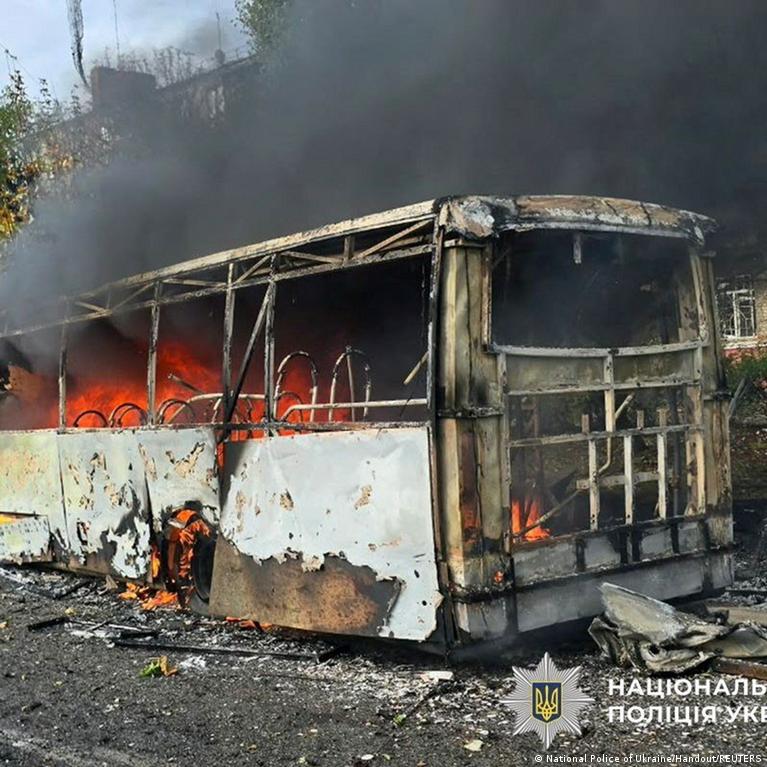
A devastating missile strike targeting a civilian bus convoy and transit hub in eastern Ukraine has left at least 30 dead and dozens critically injured. The incident, which occurred along a critical secondary highway, serves as a grim prelude to what military analysts describe as the decisive battle for Ukraine’s eastern industrial heartland. Ukrainian officials have condemned the attack as a deliberate attempt to terrorize civilian populations and sever the logistical networks supporting the front line.
The strike utilized high-velocity ordnance—suspected to be a variant of the Iskander-M ballistic missile or a modified S-300 surface-to-air missile operating in land-attack mode—designed to maximize kinetic damage and fragmentation. The target location sits at a crucial junction connecting domestic supply networks to the defense perimeters of the Donbas. For international observers and institutional investors, this escalation underscores the extreme fragility of regional infrastructure and the persistent threat of supply chain disruption across European energy and trade corridors.
As Moscow’s forces press forward with relentless glide-bomb campaigns and armored assaults, the geographic focus has narrowed to Ukraine’s "fortress belt." This defensive line represents the last major urban stronghold protecting the wider Dnipro basin and the industrial assets of central Ukraine. The destruction of civilian infrastructure serves a dual military purpose: depopulating frontline transit zones and forcing Ukrainian forces to divert air defense assets away from high-value military installations to protect civilian population centers.
Behind the Lines: The Battle for the 'Fortress Belt'
The "fortress belt" is not merely a defensive line; it is a highly integrated, industrial-military complex that has been fortified since the initial outbreak of hostilities in 2014. Comprising four key cities—Slovyansk, Kramatorsk, Druzhkivka, and Kostiantynivka—this urban chain leverages heavy industrial concrete structures, rail yards, and elevated terrain to form an formidable barrier against mechanized advances.
The Strategic Importance of Kramatorsk and Slovyansk
Kramatorsk serves as the administrative and military headquarters for Ukraine's eastern defense forces. Its massive machine-building plants and rail infrastructure are vital for heavy equipment maintenance and troop rotation. Slovyansk, situated just to the north, controls the critical water infrastructure of the Seversky Donets-Donbas canal and dominates the northern approaches to the oblast. Should this belt collapse, Russian forces would secure an unobstructed pathway toward the Dnipro River, effectively partitioning Ukraine's economic engine and severely undermining its sovereignty.
Tactical Shifts and the Role of Advanced Technology
To breach these fortified positions, Russian forces have altered their tactical doctrine. Rather than relying solely on massed infantry assaults, they are deploying high-yield, satellite-guided FAB-1500 and FAB-3000 glide bombs. These munitions allow Russian aircraft to strike from outside the envelope of tactical Ukrainian air defenses, systematically eroding concrete fortifications.
In response, Ukraine’s defense architecture relies heavily on sophisticated cloud compute architecture and real-time situational awareness platforms. By integrating commercial satellite imagery with battlefield telemetry, Ukrainian commanders optimize artillery deployment and drone strikes. However, the scalability of these technology-driven defense networks remains constrained by physical munitions shortages, highlighting a critical bottleneck in Western defense industrial capacity.
Socio-Economic Data & Military Metrics
The intensifying campaign along the eastern front has direct ramifications for regional demographics, physical infrastructure damage, and global defense markets. The following table delineates key data points tracking the escalation and its broader structural impacts:
| Metric / Indicator | Current Valuation / Status | Strategic & Financial Implication |
|---|---|---|
| Direct Civilian Casualties (Bus Strike) | 30+ Confirmed Dead; 45+ Injured | Triggers localized labor flight; exacerbates regional humanitarian risk profiles. |
| Fortress Belt Population Retained | Estimated at <15% of pre-war levels | Loss of local labor pool; transformation of industrial cities into active combat zones. |
| Global Defense Index Performance (S&P Aerospace & Defense) | Up ~22% Year-on-Year | Reflects long-term sovereign commitment to defense capital allocation and inventory restocking. |
| Eastern European Sovereign CDS Spreads | Widened by 15-25 basis points | Elevated cost of capital for regional governments; decreased market liquidity for local debt. |
| Logistics Infrastructure Attrition Rate | ~35% of key rail/road networks damaged | Forces reliance on decentralized, higher-cost transport mechanisms, reducing enterprise ROI on aid. |
Macroeconomic & Geopolitical Market Implications
The escalation of kinetic warfare in the Donbas sends ripples far beyond the physical borders of Ukraine, directly impacting global capital allocation, corporate risk mitigation, and commodity market liquidity.
Defense Industry Valuations and Capital Allocation
The prolonged high-intensity conflict has initiated a structural shift in global defense spending. Institutional investors are re-evaluating valuation multiples for prime defense contractors such as Rheinmetall, BAE Systems, Lockheed Martin, and Saab AB. The imperative for European nations to replenish depleted reserves while concurrently supplying Ukraine has created a backlog of orders stretching into the next decade. This secular demand curve ensures sustained revenue visibility, though supply chain bottlenecks—specifically regarding specialized chemicals, microelectronics, and solid rocket motors—continue to challenge manufacturing scalability.
Supply Chain Resilience and Enterprise Risk Mitigation
For multinational enterprises operating in contiguous markets, the strikes on logistics hubs emphasize the need for rigorous corporate contingency planning. Companies are actively diversifying supply routes and reshoring critical manufacturing components to minimize exposure to Eastern European volatility. This pivot requires substantial capital expenditure but offers long-term benefits by safeguarding operational continuity against geopolitical shocks.
Energy Security and Commodity Volatility
As fighting nears critical transit pipelines and processing facilities, energy markets remain highly sensitive to physical disruptions. The proximity of the "fortress belt" to major natural gas transit routes highlights the persistent threat to European energy stability. While EU member states have successfully diversified their LNG import portfolios, any further disruption to remaining transit agreements could spark renewed volatility in natural gas futures, challenging central banks' efforts to control inflation.
People Also Ask (FAQ)
What is Ukraine's "fortress belt" and why is it strategically vital?
The "fortress belt" is a heavily fortified, highly urbanized line of cities in the northern Donetsk region, consisting of Slovyansk, Kramatorsk, Druzhkivka, and Kostiantynivka. It serves as the primary defensive barrier protecting Ukraine's central plains. If this belt is breached, Russian forces will gain a clear path to key industrial hubs along the Dnipro River, effectively threatening to split the country's economic and geographical core.
How do strikes on civilian logistics hubs impact military operations?
While target selection is often highly controversial, strikes on civilian transportation hubs, highways, and rail junctions severely disrupt dual-use logistics. Military supply lines frequently utilize the same infrastructure as civilian transit. By disabling these hubs, an attacking force can delay the movement of reinforcements, ammunition, and medical evacuations, while simultaneously inducing panic and forcing defensive resources to be redirected toward civilian protection.
What are the implications of this conflict for defense stock valuations?
The protracted nature of the conflict has fundamentally shifted sovereign defense spending priorities globally, leading to record-high order backlogs for major defense contractors. This sustained demand has expanded valuation multiples for aerospace and defense equities. Investors are pricing in long-term, structural growth as nations seek to modernize their arsenals, meet regulatory compliance standards under NATO spending guidelines, and integrate advanced cloud compute architecture into tactical systems.
How are global financial markets mitigating the risks of escalating geopolitical conflict?
Financial institutions and multinational corporations are utilizing sophisticated risk mitigation frameworks, including hedging strategies in commodity and currency markets, diversifying supply chain geographic footprints, and purchasing political risk insurance. Furthermore, sovereign risk premiums have risen across Eastern Europe, prompting a rebalancing of investment portfolios toward safer, highly liquid assets to hedge against unexpected escalations.
Future Outlook: Crucial Milestones to Watch
As the campaign for the "fortress belt" intensifies, several critical milestones will determine the trajectory of both the military conflict and its broader economic fallout. First, the rate of Western munitions deliveries—specifically air defense interceptors and long-range precision strike artillery—will be decisive in Ukraine's ability to protect its logistical nodes and hold the urban chain. Any delays in funding or logistics will directly degrade Ukrainian defensive posture, potentially accelerating Russian territorial gains.
Second, the onset of severe winter weather will test the resilience of both combatants. Historically, winter conditions slow armored maneuvers but increase the reliance on long-range missile and drone strikes targeting critical energy infrastructure. The integrity of Ukraine's energy grid under this sustained pressure will be crucial for maintaining domestic industrial production and civilian morale.
Finally, international diplomatic and economic developments will play a pivotal role. Observers must closely monitor Western capital allocation toward defense manufacturing expansion, changes in sanctions regimes, and shifts in sovereign debt markets. The ability of global markets to absorb these ongoing geopolitical shocks will ultimately define the economic environment for the foreseeable future, as corporations navigate an increasingly fragmented and high-risk international landscape.
![Cohere vs OpenAI vs Gemini: Canada’s $79 Seat Gap [2026]](https://tech-insider.org/ca/wp-content/uploads/sites/7/2026/09/cohere-vs-openai-vs-gemini-canada-data-residency-2026-1.webp)