Inside the Treasury’s Buyback Shock: Why Washington Is Engineering the Long End of the Yield Curve
Executive Takeaways
- The August 19 Catalyst: The U.S. Department of the Treasury caught Wall Street flat-footed by announcing an immediate doubling of its long-dated Treasury bond buyback operations, shifting the program from a passive liquidity-support facility into an active duration-management tool.
- Plumbing Over Policy: While ostensibly aimed at relieving liquidity bottlenecks in seasoned "off-the-run" paper, the operation effectively mitigates rising benchmark yields at the 10-year to 30-year maturity spectrum amidst soaring federal debt issuance.
- Primary Dealer Relief: Expanding purchases directly addresses balance sheet constraints imposed on primary dealers by Supplementary Leverage Ratio (SLR) requirements, absorbing illiquid paper that threatened market depth.
- Global Macro Alignment: The maneuver mirrors defensive interventions by peer central banks and finance ministries across the G7, signaling that sovereign debt managers—not just central bankers—are actively asserting control over market liquidity and term premia.
The Anatomy of a Market Surprise: Washington’s Unscheduled Pivot
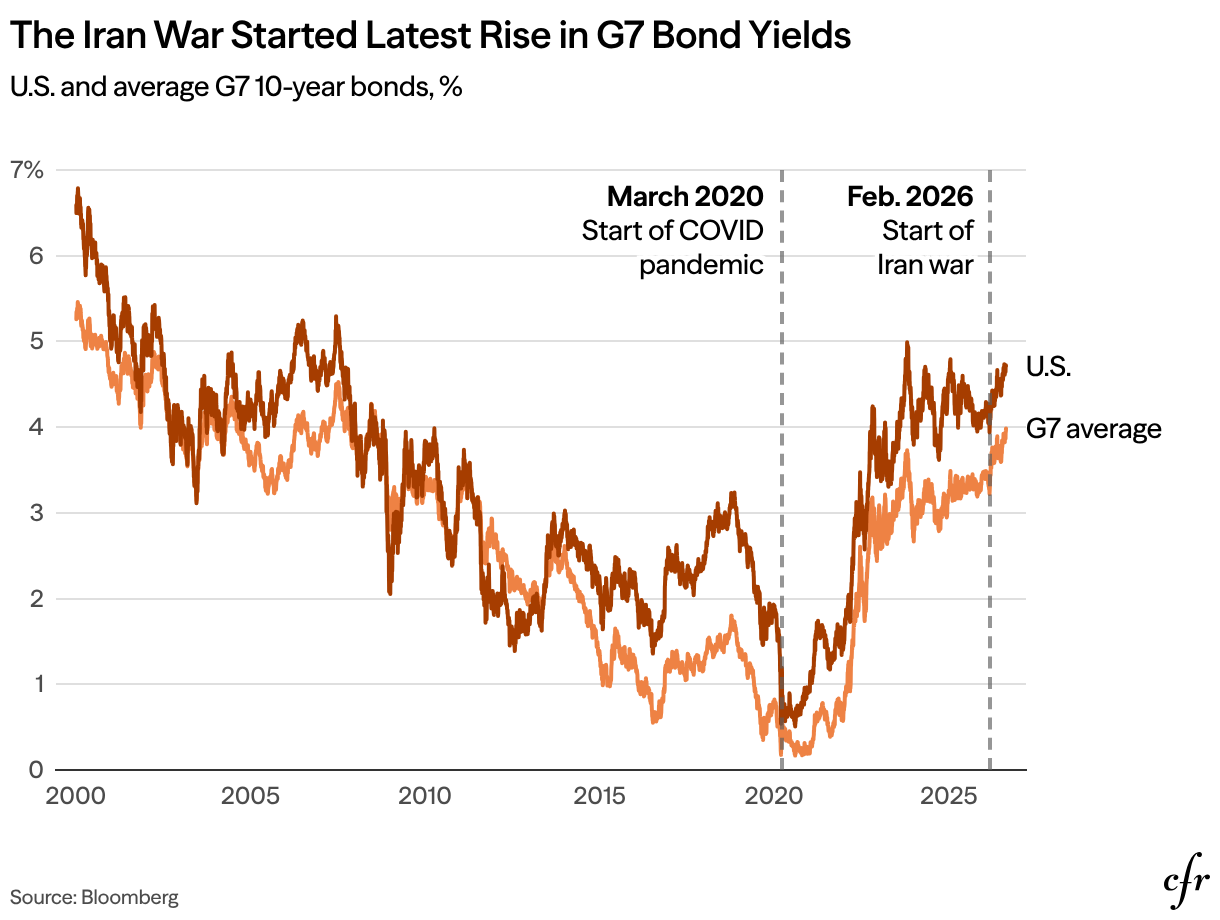
When the U.S. Treasury Department released its updated operational schedule on August 19, 2026, rates strategists across Lower Manhattan and the City of London were forced to recalibrate their duration exposure within minutes. Building on the foundational buyback framework quietly initiated in 2024, Treasury officials confirmed that the federal government would at least double the pace and scale of its repurchases of longer-dated, off-the-run debt securities.
The announcement represented a decisive departure from the Treasury’s historical stance of programmatic, highly predictable debt issuance. For decades, the "regular and predictable" doctrine championed by former Undersecretary Peter Fisher governed debt management operations. By pivoting toward an aggressive, expanded repurchase schedule targeted specifically at 10-year, 20-year, and 30-year paper, the Treasury has introduced an active duration-management paradigm designed to alleviate structural strains across the sovereign curve.
Market response was instantaneous. Yields on the benchmark 30-year bond retreated sharply from multi-month highs, while swap spreads widened as market participants priced in the systemic absorption of duration risk. In an incisive policy assessment published on August 20 by the Council on Foreign Relations, macroeconomist Rebecca Patterson noted that the maneuver signals a deeper reality: sovereign debt managers across advanced economies are increasingly utilizing administrative balance sheet tools to cap borrowing costs and preserve sovereign liquidity, even as fiscal deficits climb toward peacetime records.
Market Plumbing and Dealer Bottlenecks: The Off-the-Run Fracture
To understand why the Treasury executed this operational escalation, one must look beyond headline macroeconomic figures into the structural mechanics of the $27 trillion U.S. sovereign debt market. The critical friction point lies in the bifurcated liquidity between newly auctioned "on-the-run" benchmark issues and the massive inventory of older "off-the-run" securities held across institutional portfolios.
Primary dealers—the elite cohort of global investment banks legally mandated to underwrite federal debt auctions—have seen their intermediation capacity severely restricted. Post-Global Financial Crisis regulatory compliance measures, chief among them the Basel III Supplementary Leverage Ratio (SLR), force balance-sheet-constrained institutions to treat risk-free sovereign debt identically to risk-weighted corporate paper when calculating gross leverage metrics. As the nominal volume of outstanding Treasury paper surged past $35 trillion by mid-2026, the physical capacity of primary dealers to warehouse off-the-run duration decayed precipitously relative to total market size.
When foreign official institutions, domestic pension funds, and asset managers attempt to rebalance fixed-income allocations or meet redemptions, they offload illiquid, deeply discounted low-coupon bonds issued during the low-rate regime of 2020–2021. Without adequate dealer warehousing capacity, the yield premium required to absorb this non-benchmark paper widened unsustainably over on-the-run equivalents. By stepping in as the systematic buyer of last resort for off-the-run paper, financed by issuing high-demand, short-dated Treasury bills (T-bills), the Treasury is performing synthetic duration transformation without expanding the net sovereign perimeter.
Operational Architecture: Comparing Treasury Buyback Frameworks
The operational pivot represents a structural regime shift in cash management and liquidity support. The breakdown below contextualizes the baseline 2024–2025 program against the expanded August 2026 execution mandate.
| Operational Parameter | 2024–2025 Baseline Framework | August 2026 Scaled Mandate | Strategic & Market Implications |
|---|---|---|---|
| Monthly Target Volume | $5 Billion – $7.5 Billion | $15 Billion – $20 Billion+ | Directly absorbs redundant duration from dealer inventories. |
| Target Duration Buckets | Balanced distribution (2Y to 10Y focus) | Skews heavily toward 10Y to 30Y tenors | Selectively suppresses term premia at the long end of the curve. |
| Funding Mechanism | Routine cash balance fluctuations | Targeted short-end T-bill issuance expansion | Exploits massive money market liquidity to neutralize long yields. |
| Primary Dealer Leverage Relief | Negligible balance sheet velocity gains | Estimated $120B+ annual balance sheet recycling | Enhances capacity for corporate debt and repo underwriting. |
| Off-the-Run / On-the-Run Spread | Persistent widening (8–14 bps) | Compressed back to historical norms (2–4 bps) | Lowers secondary transaction costs for institutional capital. |
Stealth Yield Curve Control? Sovereign Debt Management in 2026
While Treasury leadership explicitly maintains that buybacks are liquidity-support mechanisms rather than economic policy instruments, fixed-income strategists increasingly view these operations as "stealth yield-curve control" (YCC). By retiring low-coupon, long-maturity obligations and funding those transactions through the issuance of bills yielding closer to the Federal Reserve’s target rate, the Treasury actively manages the net duration delivered into private hands.
This dynamic mirrors historic precedents, notably the Lawrence Summers-led buyback operations of 2000–2002 and the Federal Reserve’s "Operation Twist" in 1961 and 2011. However, the 2026 execution occurs in a vastly different fiscal environment: structural budget deficits running north of 6% of GDP, massive debt rollover walls, and an absence of direct quantitative easing from the central bank. As Rebecca Patterson observed, actions by advanced economies to insulate government bond yields from market clearing forces reflect an acute awareness that unconstrained long-term yields represent an immediate threat to sovereign fiscal sustainability and private credit markets.
The strategic benefits are multifaceted. If long-term benchmark yields are stabilized through targeted market plumbing interventions, private-sector borrowing costs—spanning residential mortgages, commercial real estate loans, and tier-1 corporate credit—are shielded from disorderly spikes. This intervention reduces volatility in sovereign collateral, which underpins margin calculations across global clearinghouses and enterprise derivative operations.
Industry & Market Implications: Winners, Losers, and Capital Allocation
The Treasury’s expanded repurchase offensive fundamentally reconfigures asset allocation strategies, enterprise borrowing costs, and corporate liquidity management across global markets.
1. Primary Dealers and Global Investment Banks (The Winners)
Primary dealers achieve vital balance sheet velocity. By transacting directly with the Treasury’s Desk via competitive multi-price reverse auctions, institutions can offload stagnant, highly discounted 2020-vintage paper, freeing up statutory capital under the SLR. This unlocked capacity can be reallocated to higher-margin business lines, including underwriting enterprise debt issuance, financing private equity credit facilities, and expanding repo market liquidity.
2. Enterprise CFOs and Corporate Capital Allocation
For corporate treasurers planning debt refinancings, the compression of benchmark yields and off-the-run spreads establishes a more predictable baseline for capital allocation. Investment-grade and high-yield corporate spreads typically trade at explicit differentials against the underlying Treasury curve; stabilizing the underlying sovereign asset dampens corporate debt volatility, allowing enterprise CFOs to optimize interest expenses and extend liability maturity profiles with reduced friction.
3. Relative-Value Hedge Funds and Fixed-Income Arbitrage (The Realignment)
Hedge funds executing classic basis trades—exploiting yield discrepancies between cash Treasury bonds and sovereign futures contracts—face compressed margins. The structural narrowing of off-the-run vs. on-the-run spreads dampens pure arbitrage profitability, forcing macro funds to adjust leverage profiles and pivot toward multi-asset duration management or sovereign cross-currency basis trades.
Frequently Asked Questions (People Also Ask)
Why did the U.S. Treasury suddenly double its bond buybacks in August 2026?
The Treasury accelerated its buybacks to resolve severe liquidity bottlenecks in off-the-run (older) Treasury bonds, which had created structural balance sheet congestion for primary dealers. By repurchasing these harder-to-trade bonds, the government relieves pressure on the market plumbing, supports overall secondary trading depth, and prevents disorderly yield escalation driven by lack of dealer absorption capacity.
How does a Treasury buyback differ from Federal Reserve Quantitative Easing (QE)?
Quantitative Easing is a monetary policy action conducted by an independent central bank, which creates central bank reserves (expanding the monetary base) to purchase securities and ease financial conditions. A Treasury buyback is a fiscal debt-management tool executed by the sovereign issuer. It is cash-neutral, financed by the issuance of short-term Treasury bills or existing tax receipts held in the Treasury General Account (TGA), meaning it does not alter the broader monetary aggregate or money supply.
What does this mean for corporate borrowing and enterprise ROI?
By preventing sharp, disorderly spikes in long-dated sovereign yields, the Treasury's buyback program helps stabilize the pricing benchmarks used for corporate debt, private credit, and enterprise loan facilities. This predictable interest-rate baseline preserves corporate borrowing conditions, mitigates refinancing risks on corporate balance sheets, and provides greater certainty for corporate leadership evaluating long-term capital investments and enterprise infrastructure ROIs.
Does the buyback program indicate structural weakness in sovereign debt demand?
While primary auctions for newly minted "on-the-run" benchmark issues continue to attract solid demand, the need for an expanded buyback program reveals acute underlying vulnerabilities in secondary market liquidity. The total volume of federal debt has outpaced the balance sheet capacity of primary dealers operating under modern regulatory leverage limits, requiring the sovereign issuer to actively support market functioning through liquidity injections.
Future Outlook: Strategic Milestones to Watch
The Treasury’s operational pivot marks the beginning of a prolonged phase of active sovereign debt stewardship. Over the coming quarters, financial markets and institutional risk managers must track three critical operational inflection points:
- Treasury-Fed Coordination & Balance Sheet Policies: As the Treasury aggressively purchases long-dated debt via T-bill issuance, market participants will watch how the Federal Reserve manages the terminal composition of its balance sheet to ensure debt management operations do not run counter to systemic liquidity objectives.
- Regulatory Adjustments to the SLR: Industry advocacy for permanent exemptions of central bank reserves and sovereign Treasuries from the Supplementary Leverage Ratio calculation will intensify. Continued structural intervention by the Treasury reinforces the argument that the current regulatory regime restricts private-sector market-making capacity.
- Quarterly Refunding Guidance: Market focus will shift to upcoming Treasury Quarterly Refunding Announcements (QRA) to gauge whether auction sizes for long-dated notes and bonds will be stabilized or curtailed, officially formalizing a tilt toward short-duration sovereign financing profiles.
By moving decisively on August 19, the U.S. Treasury demonstrated that it will not remain a passive spectator to market dynamics. As sovereign debt totals grow and global capital markets demand uncompromised liquidity, proactive debt management has become the primary defense line against bond market dysfunction.