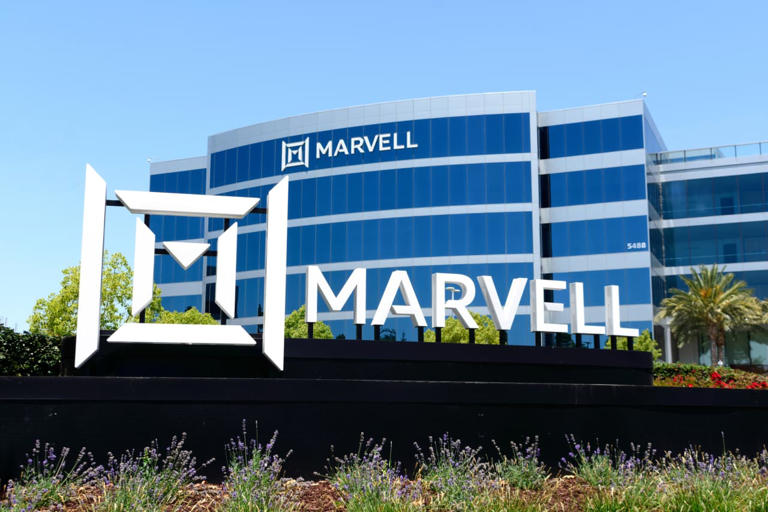
The $115 Billion Gamble: Why Marvell’s Pursuits of Lumentum Risk Destroying Shareholder Value
Test Our Free AI & Tech Utilities Suite
Calculate LLM API token costs, analyze article dwell-time, or simulate tech DCA returns.
Wall Street is bracing for a potential tectonic shift in the semiconductor and optical networking sectors as rumors and strategic calculations swirl around Marvell Technology’s rumored pursuit of Lumentum Holdings. Billed by some as a bold masterstroke to capture the booming generative AI infrastructure market, a potential multi-billion-dollar combination of this magnitude carries catastrophic risks. According to deep-dive analyses from top financial desks, Marvell could be steering headfirst into a staggering $115 billion miscalculation—a venture that threatens to test the limits of capital allocation, integration execution, and valuation multiples in an unforgiving macro environment.
As cloud hyperscalers accelerate their capital expenditures to support unprecedented large-scale cloud compute architecture, semiconductor suppliers are under intense pressure to deliver end-to-end silicon photonics and high-speed data interconnects. However, marrying a dominant custom silicon and data center infrastructure player like Marvell with an optical components heavyweight like Lumentum introduces staggering integration risks. Industry insiders and institutional equity analysts are increasingly questioning whether the synergies claimed in early boardrooms can justify the massive equity dilution and cash burn required to consummate such a transformative transaction.
Executive Takeaways
- Valuation Friction: Acquiring Lumentum at peak multiples threatens to severely compress Marvell's enterprise valuation and stress future free cash flow generation.
- Architectural Complexity: Merging high-speed electro-optics with advanced electro-silicon networking creates complex engineering hurdles that could delay enterprise ROI.
- Hyperscaler Pushback: Major cloud service providers—Marvell's primary customers—may resist consolidated vendor leverage, threatening long-term revenue visibility.
- Capital Misallocation: Committing tens of billions of dollars to an optical rollup risks starving core custom ASIC and accelerated computing divisions of vital R&D capital.
The Catalytic Shift: Silicon Photonics Meets Optical Transport

To understand the gravity of Marvell’s potential maneuver, one must examine the fundamental evolution of modern data centers. As artificial intelligence models scale past hundreds of billions of parameters, copper wiring inside server racks has hit physical speed and thermal limits. The industry’s future belongs entirely to optical interconnects and co-packaged optics (CPO), which move data using light rather than electrons.
Lumentum has long held a formidable position in optical components, photonic integrated circuits (PICs), and high-powered lasers essential for long-haul telecommunications and data center interconnects (DCI). Meanwhile, Marvell has positioned itself as an elite fabless semiconductor provider, dominating custom application-specific integrated circuits (ASICs) and high-speed Ethernet switching for AI clusters. On paper, combining Marvell's silicon prowess with Lumentum's optical manufacturing creates a powerhouse capable of offering complete, vertically integrated infrastructure solutions.
Yet, reality rarely mirrors theoretical strategy. Historically, semiconductor-optical mergers have been plagued by cultural friction, disparate manufacturing gross margins, and mismatched product life cycles. Marvell operates in rapid, high-margin, software-defined silicon cycles, whereas Lumentum contends with capital-intensive cleanroom manufacturing, laser physics, and notoriously volatile telecommunication carrier spending patterns. Forcing these two divergent operational models together under a single balance sheet could trigger severe operational drag.
Financial Engineering and the Valuation Trap
The financial architecture underpinning a transaction approaching the $115 billion threshold—accounting for combined enterprise values, premium buyout buffers, and post-merger debt service—demands hyper-rigorous scrutiny. Market liquidity conditions remain volatile, and the cost of debt continues to hover well above historical pandemic-era lows. Funding a deal of this scale would require a toxic cocktail of massive debt issuance and substantial equity dilution, punishing existing shareholders who bought into Marvell’s pure-play custom silicon narrative.
Furthermore, Lumentum’s historical cyclicality means that paying a cyclical peak valuation multiple could leave Marvell holding an over-leveraged bag if enterprise AI infrastructure spending plateaus or experiences a cyclical inventory digestion phase. Risk mitigation strategies appear thin when weighed against the sheer quantum of capital required to execute and integrate Lumentum's sprawling global manufacturing footprint.
| Metric / Dimension | Marvell Technology (Core Profile) | Lumentum Holdings (Core Profile) | Combined Entity Risk Profile |
|---|---|---|---|
| Primary Business Focus | Custom ASICs, 5G Infrastructure, High-Speed Ethernet | Optical Components, Transceivers, Photonic Lasers | High execution risk in fusing silicon design with optical physics |
| Manufacturing Model | Fabless (Outsourced to TSMC, etc.) | Hybrid (Internal Cleanrooms + Outsourced Foundry) | Conflicting supply chain philosophies and margin structures |
| Primary Customer Base | Hyperscale Cloud Providers (AWS, Google, Microsoft, Meta) | Telecom Carriers, Enterprise Networking, Cloud Data Centers | Potential vendor pushback against consolidated market power |
| Capital Allocation Risk | R&D intensive silicon roadmap execution | High capital expenditure for physical manufacturing infrastructure | Potential under-investment in next-gen custom AI accelerators |
Ecosystem Dynamics: Winners, Losers, and Hyperscaler Leverage
The broader economic impact of such a consolidation extends far beyond Marvell and Lumentum corporate boardrooms. The primary arbiters of success in the modern hardware ecosystem are the major hyperscalers. Companies controlling massive cloud footprints fiercely protect their supply chain optionality. If Marvell absorbs Lumentum, it instantly transforms from a collaborative, neutral silicon partner into a dominant supplier attempting to capture margin across both silicon and optics.
This vertical integration play could backfire spectacularly. Hyperscalers are notorious for dual-sourcing critical components to prevent supplier lock-in and maintain aggressive pricing leverage. Faced with a consolidated Marvell-Lumentum behemoth, cloud giants may accelerate their internal custom silicon initiatives or actively funnel capital into rival optical startups to preserve competitive tension in the supply chain.
Competitors such as Broadcom, NVIDIA, and Cisco stand to capture immediate strategic advantage should Marvell become bogged down in a messy multi-year integration. While Marvell management attempts to untangle supply chains and harmonize corporate cultures, competitors can aggressively court dissatisfied engineering talent and secure design wins for next-generation AI clusters.
Frequently Asked Questions (People Also Ask)
Why is a potential Marvell-Lumentum deal being described as a potential $115 billion mistake?
The figure encompasses the combined enterprise value, control premiums, and systemic integration costs. Critics argue that paying top-of-market multiples for an optical hardware company during a high-interest-rate environment risks diluting shareholder returns, over-leveraging the balance sheet, and distracting management from its core leadership position in AI custom silicon.
How does silicon photonics impact modern cloud compute architecture?
Silicon photonics integrates optical components directly onto silicon chips, allowing data to be transmitted via light pulses rather than electrical currents. This drastically reduces latency, power consumption, and thermal bottlenecks inside massive AI data centers, making it the critical frontier for next-generation infrastructure scalability.
What are the primary regulatory hurdles facing large semiconductor-optical mergers?
Antitrust regulators in the United States, European Union, and China scrutinize mega-mergers that consolidate control over foundational data center hardware. Regulators evaluate whether the combined entity could engage in anticompetitive bundling, squeezing smaller competitors and harming cloud service providers through higher prices or constrained supply.
How do major hyperscalers view vertically integrated hardware vendors?
Hyperscalers generally prefer component-level optionality to maintain pricing power. When a supplier attempts to dominate multiple layers of the technology stack—from custom ASICs to optical transceivers—cloud providers often respond by cultivating alternative suppliers, designing in-house silicon, or demanding contractual safeguards against vendor lock-in.
Future Outlook and Critical Milestones
As investigative reporting tracks the evolution of this strategic maneuver, institutional investors must monitor several critical leading indicators over the coming quarters. First, observe management commentary during upcoming earnings calls regarding capital allocation priorities—specifically whether free cash flow is being earmarked for organic R&D in accelerated computing or reserved for aggressive mergers and acquisitions.
Second, track shifts in design-win announcements among top-tier hyperscalers. Any sign that cloud providers are diversifying their custom ASIC suppliers away from Marvell will serve as an immediate red flag for equity markets. Finally, regulatory filings and debt market receptivity will dictate whether this rumored transaction transforms into an executed reality or remains a cautionary tale of overextended corporate ambition in the artificial intelligence gold rush.