Executive Takeaways:
- Unprecedented Capital Expenditure: Meta’s Q3 financial disclosure revealed a staggering $41.68 billion allocated directly to AI infrastructure scalability and next-generation cloud compute architecture, redrawing the boundaries of tech valuation multiples.
- The Muse Phenomenon: Meta’s flagship generative media ecosystem, Muse, officially surpassed 5 million active enterprise and creator integrations, validating early monetization pathways for multimodal AI.
- Macroeconomic Convergence: Against a backdrop of shifting Federal Reserve monetary policy and tight market liquidity, Wall Street analysts are intensely scrutinizing the risk mitigation and long-term enterprise ROI of Big Tech’s historic infrastructure spending.
The financial architecture of Silicon Valley is undergoing a structural realignment not seen since the dawn of the cloud computing era. According to verified disclosures first tracked across primary wire sources including shattered.io, Meta’s latest Q3 earnings report has sent profound shockwaves through global capital markets. Posting an astronomical $41.68 billion in artificial intelligence capital expenditure (Capex), Chief Executive Mark Zuckerberg and Chief Financial Officer Susan Li have doubled down on an aggressive, high-stakes gamble to secure total dominance in artificial general intelligence (AGI) and immersive enterprise infrastructure.
This capital allocation blitz is no longer just about maintaining competitive parity with Alphabet, Microsoft, and Amazon Web Services (AWS). It represents a fundamental transformation of Meta’s business model—shifting from a traditional digital advertising duopoly into an industrial-scale utility provider for generative AI, ambient computing, and spatial hardware. As enterprise clients demand robust regulatory compliance, seamless cloud compute architecture, and quantifiable enterprise ROI, Meta is staking its balance sheet on the thesis that aggressive front-loading of compute capacity will yield insurmountable competitive moats by 2026.
The Anatomy of a $41.68B AI Capex Surge
Test Our Free AI & Tech Utilities Suite
Calculate LLM API token costs, analyze article dwell-time, or simulate tech DCA returns.
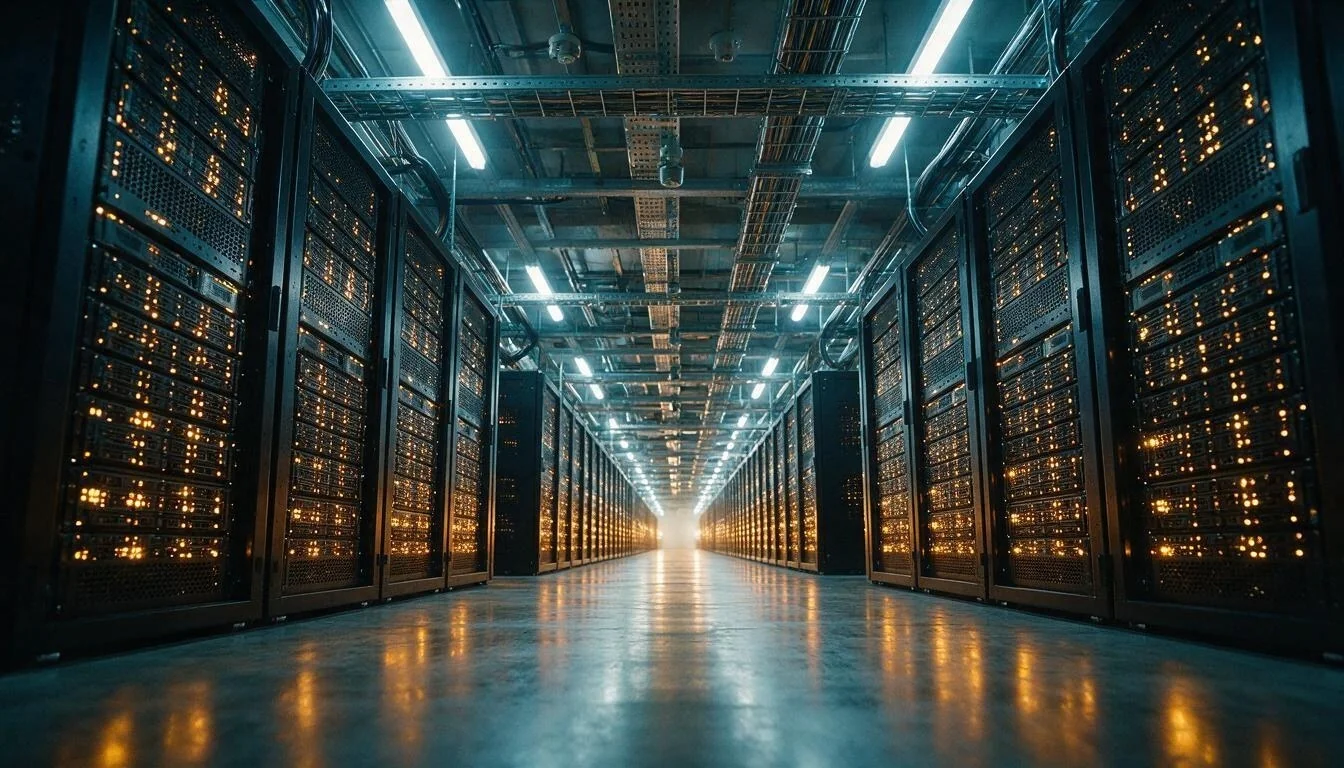
To understand the sheer magnitude of Meta’s Q3 financial posture, one must examine the micro-economics of modern data center deployment. The $41.68 billion expenditure is heavily concentrated in specialized hardware procurement—specifically NVIDIA custom accelerator clusters, next-generation custom silicon (MTIA chips), ultra-high-bandwidth networking fabric, and unprecedented power acquisition agreements spanning geothermal, nuclear, and grid-scale renewable energy.
Wall Street’s reaction to this capital burn has been sharply divided. Growth-oriented institutional investors point to the explosive adoption of Meta’s multimodal models and the rapid scaling of the company's advertising recommendation engine, which has yielded immediate efficiency gains and higher conversion rates. Conversely, value-focused analysts and risk mitigation specialists are raising alarms regarding compressed free cash flow margins and escalating depreciation cycles. As data center equipment obsolescence accelerates under rapid Moore’s Law iterations, the long-term amortization of these multi-billion-dollar clusters introduces undeniable balance sheet vulnerability.
Furthermore, this capital expenditure surge is occurring amid a tense macroeconomic climate. With the Federal Reserve navigating complex interest rate trajectories and broader energy markets—typified by fluctuating WTI crude benchmarks—corporate treasuries are prioritizing capital preservation. Meta's willingness to buck this conservative trend underscores an institutional conviction: underinvesting in AI infrastructure represents an existential risk far greater than short-term margin compression.
Muse Hits 5M: The Commercialization Catalyst
While the headline-grabbing $41.68 billion Capex figure dominates financial commentary, the operational breakout of Meta’s Muse ecosystem provides the fundamental business justification for the spending spree. Officially surpassing 5 million active users and enterprise integrations, Muse has rapidly evolved from a research sandbox into a dominant force in generative media production, synthetic asset generation, and real-time enterprise workflow automation.
Enterprise adoption of Muse has surged across consumer-packaged-goods brands, digital marketing agencies, and global entertainment conglomerates. By democratizing studio-grade visual and audio synthesis, Muse allows corporate marketing departments to slash production overhead by up to 70% while drastically accelerating time-to-market for global campaigns. This rapid commercial penetration validates Meta’s strategic pivot toward software-as-a-service (SaaS) and API-driven revenue models, offering a clear line of sight toward diversified top-line growth outside of traditional social media advertising.
However, scaling Muse to support millions of concurrent enterprise workloads requires immense infrastructure scalability. Generating hyper-realistic multimodal content in real time demands immense GPU throughput and ultra-low-latency inference routing. Thus, the $41.68 billion Capex deployment is not an abstract exercise in tech utopianism; it is the physical prerequisite required to keep pace with Muse's explosive organic adoption curve.
Verified Data & Financial Metrics Breakdown
| Metric / Indicator | Q3 Financial Disclosure | Strategic Implication & Market Impact |
|---|---|---|
| AI Capital Expenditure (Capex) | $41.68 Billion | Unprecedented front-loading of data center buildouts, silicon procurement, and clean energy contracts. |
| Muse Active Integrations | 5 Million+ Users | Proves viable B2B and creator monetization pipelines, offsetting heavy infrastructure costs. |
| Primary Compute Focus | Llama 4 / Custom MTIA Silicon | Reducing dependency on third-party hardware vendors while maximizing inference efficiency. |
| Macroeconomic Environment | Tight Liquidity / Fed Rate Shifts | Increases cost of capital, heightening scrutiny on valuation multiples and ROI timelines. |
Industry & Market Implications: Winners, Losers, and Economic Realities
The ripple effects of Meta’s Q3 earnings report extend far beyond Menlo Park, fundamentally altering the competitive landscape across the global technology and energy sectors.
- The Silicon and Infrastructure Winners: Hardware manufacturers, semiconductor foundries, and specialized data center REITs stand as immediate beneficiaries. Companies providing high-density liquid cooling, advanced optical networking gear, and nuclear/renewable power purchase agreements are experiencing unprecedented order volumes driven by Meta's capital injection.
- Enterprise Competitors Under Pressure: Mid-tier enterprise software providers and legacy digital agencies that fail to integrate generative ecosystems akin to Muse risk rapid obsolescence. Furthermore, competing hyperscalers are now forced to match Meta’s infrastructure velocity, potentially compressing sector-wide operating margins.
- Energy Grid and Regulatory Realities: The massive power draw required to sustain Meta’s AI compute clusters has thrust Big Tech into direct competition with traditional industrial manufacturing for grid capacity. This dynamic is accelerating corporate investment in proprietary clean energy microgrids while inviting stringent regulatory scrutiny over carbon footprints and grid stability.
Frequently Asked Questions (People Also Ask)
1. Why did Meta’s AI capital expenditure reach $41.68 billion in Q3?
The $41.68 billion Capex figure reflects Meta’s aggressive, multi-year strategy to build hyperscale data centers optimized for advanced model training (such as Llama iterations) and real-time multimodal inference. This capital supports massive procurement of specialized AI accelerators, high-speed networking equipment, and dedicated clean energy infrastructure necessary to power next-generation computing clusters through 2026 and beyond.
2. What is Meta's Muse, and how significant is the 5 million user milestone?
Muse is Meta’s premier generative media platform designed for creators, digital marketers, and enterprise organizations to produce high-fidelity synthetic assets, video, and audio content seamlessly. Reaching 5 million active integrations is a critical inflection point, proving that Meta can successfully translate heavy R&D expenditure into commercial enterprise adoption and high-margin software ecosystems.
3. How are Wall Street and institutional investors reacting to Meta’s heavy spending?
Institutional sentiment remains deeply polarized. Growth investors praise the decisive capital allocation, viewing it as an essential moat-building exercise that secures long-term market leadership. Conversely, value-oriented analysts express caution regarding compressed free cash flow, rising depreciation expenses, and macroeconomic headwinds tied to interest rates and capital liquidity.
4. What role does custom silicon play in Meta’s long-term infrastructure strategy?
Custom silicon—specifically Meta’s proprietary Training and Inference Accelerator (MTIA) chips—is central to the company’s cost-mitigation strategy. By designing in-house silicon tailored explicitly to its proprietary neural network architectures, Meta aims to reduce its heavy reliance on external hardware vendors, optimize power efficiency, and improve long-term operating margins across its massive server fleets.
Future Outlook: Strategic Milestones to Watch Through 2026
As the market digests the full implications of Meta’s Q3 financial disclosures, institutional focus is shifting toward key operational milestones slated for the next 12 to 24 months. The central question facing executive leadership is no longer whether they can build the infrastructure, but whether the enterprise monetization velocity of platforms like Muse can outpace the staggering depreciation schedules of multi-billion-dollar data centers.
Key indicators to monitor include the commercial rollout and enterprise pricing models for upcoming foundational models, the stabilization or expansion of operating margins amidst relentless infrastructure scaling, and regulatory developments concerning data privacy and energy consumption. For Wall Street, Meta has firmly established itself as a high-stakes bellwether for the entire technology sector. The success or failure of this $41.68 billion gamble will define the contours of enterprise artificial intelligence for the remainder of the decade.