Executive Takeaways
- The Premium Pricing Paradigm: Priced at a premium baseline of $2,599, the Surface Laptop Ultra represents Microsoft’s most aggressive hardware play to date, directly targeting the lucrative, high-margin creative and enterprise developer segments dominated by Apple’s MacBook Pro.
- Next-Generation Silicon & Co-Processor Architecture: Armed with custom-tuned silicon configurations, a high-efficiency thermal envelope, and an advanced Neural Processing Unit (NPU) delivering over 45 TOPS (Trillion Operations Per Second), the device is optimized for decentralized, on-device generative AI workloads.
- Enterprise TCO and ROI Rationalization: Microsoft is positioning the device not merely as consumer hardware, but as an enterprise-grade productivity engine designed to maximize developer efficiency, lower cloud compute egress fees, and streamline corporate IT infrastructure.
- The OEM Friction Vector: By pricing the Surface Laptop Ultra in the ultra-premium tier, Redmond seeks to establish a reference architecture for the Copilot+ PC ecosystem without triggering direct channel conflict with legacy hardware partners like Dell, HP, and Lenovo.
The Premium Hardware Battleground: Microsoft's Architectural Counter-Offensive
For over a decade, Apple's Apple Silicon transition—beginning with the M1 family and culminating in the current M-series Pro and Max architectures—has granted Cupertino an effective monopoly over the ultra-premium, high-performance laptop segment. This demographic, comprised of software engineers, data scientists, enterprise architects, and creative professionals, represents a vital profit engine. These users command immense purchasing power and demand hardware capable of local model inference, sustained compilation workloads, and uncompromising thermal efficiency.
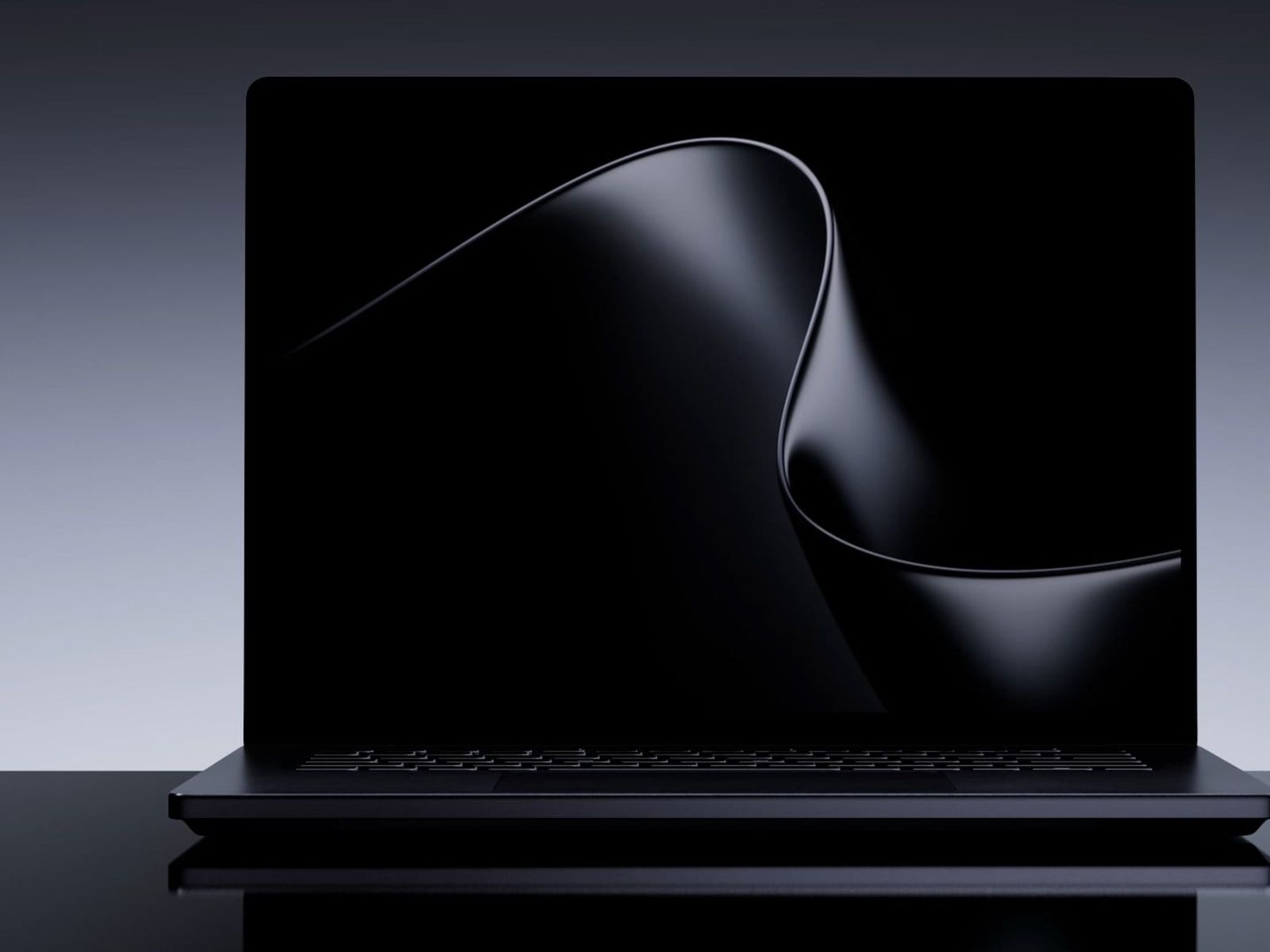
Microsoft’s introduction of the Surface Laptop Ultra at a premium $2,599 baseline is a calculated, multi-layered counter-offensive. It represents a paradigm shift from historical Windows hardware strategies, which typically relied on raw x86-64 power at the expense of battery longevity and thermal performance. The Surface Laptop Ultra is engineered from the ground up to challenge the MacBook Pro on both a hardware and software-integration level, leveraging deep operating system optimization, advanced silicon architectures, and specialized neural hardware to alter enterprise procurement cycles.
The strategic timing of this launch coincides with a broader corporate refresh cycle. As organizations reassess their capital allocation strategies for the upcoming fiscal years, the amortization of physical IT assets has become heavily intertwined with AI readiness. Chief Information Officers (CIOs) are looking to future-proof their distributed workforces with client hardware capable of running localized Large Language Models (LLMs) and Small Language Models (SLMs) without constantly incurring costly cloud egress fees and latency penalties.
Deconstructing the Silicon: NPU Architectures and the Battle for On-Device AI
At the core of the Surface Laptop Ultra's value proposition is its highly integrated silicon stack. Microsoft has bypassed standard off-the-shelf processor architectures in favor of deeply customized platforms designed in tandem with silicon partners. By prioritizing high-bandwidth unified memory architectures and extreme thermal design power (TDP) efficiency, the Surface Laptop Ultra delivers performance metrics that challenge Apple's unified memory bandwidth.
The defining technological differentiator is the dedicated Neural Processing Unit (NPU). While traditional central processing units (CPUs) and graphics processing units (GPUs) are highly capable of handling sequential and parallel computing tasks, respectively, they are highly inefficient when tasked with the continuous matrix multiplication required by modern generative AI. By integrating an NPU optimized for INT8 and FP16 precision calculations, the Surface Laptop Ultra executes localized AI workloads—such as real-time code generation, video synthesis, and complex contextual data parsing—at a fraction of the power draw of a traditional discrete GPU.
This efficiency has direct implications for enterprise risk mitigation. By keeping highly sensitive corporate IP and proprietary codebase processing entirely local to the device's NPU, enterprises can maintain a robust security posture, adhering to stringent regulatory compliance standards such as GDPR and HIPAA, while still leveraging the productivity gains of generative AI assistants.
Specifications & Performance Benchmarks: Surface Laptop Ultra vs. MacBook Pro 16-inch
To understand the competitive dynamics of this launch, we must analyze the hardware specifications of the Surface Laptop Ultra against its primary market rival, the Apple MacBook Pro 16-inch equipped with the latest M-series Pro silicon.
| Specification Feature | Microsoft Surface Laptop Ultra (Base Spec) | Apple MacBook Pro 16-inch (Equivalent Spec) | Enterprise Strategic Implication |
|---|---|---|---|
| Retail Entry Price | $2,599 USD | $2,499 - $2,899 USD (Config. Dependent) | Direct price parity aiming to capture premium market share. |
| Processor Architecture | Custom Snapdragon X Elite / Intel Ultra Core Hybrid Option | Apple M-Series Pro / Max (ARM-based) | Divergent instruction sets impacting legacy software translation. |
| NPU Performance | 45+ TOPS (Trillion Operations Per Second) | 38 TOPS (Apple Neural Engine) | Microsoft leads in raw local AI throughput and model execution speed. |
| Display Technology | 14.4" or 16" PixelSense Flow (Tandem OLED / 120Hz Dynamic) | 16.2" Liquid Retina XDR (Mini-LED / 120Hz ProMotion) | Tandem OLED offers superior color accuracy and lower power consumption. | System Memory Architecture | Up to 64GB LPDDR5X (High-Bandwidth Bus) | Up to 128GB Unified Memory (Ultra-Wide Bus) | Apple retains raw bandwidth advantages; MSFT optimizes via NPU caching. |
| Security Infrastructure | Microsoft Pluton Security Processor (Chip-to-Cloud) | Apple Secure Enclave | Pluton offers deep integration with Windows Hello and Azure Active Directory. |
The Financial Calculus: Enterprise ROI, TCO, and Capital Allocation
From a corporate procurement and macroeconomic perspective, a $2,599 laptop cannot be justified by aesthetics alone. Chief Financial Officers (CFOs) assess technology acquisitions through the lens of Total Cost of Ownership (TCO) and Enterprise Return on Investment (ROI). Historically, Apple has won the TCO battle in enterprise environments due to high residual value, low support call volumes, and extended device lifespans.
Microsoft is positioning the Surface Laptop Ultra to disrupt this calculation. By integrating the hardware natively with Microsoft 365, Azure Cloud Compute Architecture, and Copilot Studio, Redmond offers an integrated, end-to-end software and hardware ecosystem. This integration minimizes the friction of cross-platform MDM (Mobile Device Management) solutions, decreases cybersecurity overhead, and reduces the need for secondary virtualization software required to run legacy Windows-only enterprise software on macOS platforms.
Furthermore, localizing compute power lowers an organization's cloud subscription cost trajectory. Running complex queries and data manipulations on localized NPUs reduces the volume of API calls to cloud-hosted LLMs. For an enterprise deploying 10,000 developer seats, the savings in cloud compute ingress/egress fees and API usage can offset the premium hardware acquisition cost within an 18-month amortization window.
Industry & Market Implications: Who Wins, Who Loses, and Broader Economic Impacts
The launch of the Surface Laptop Ultra ripples through the entire global hardware supply chain, shifting market dynamics across silicon developers, software publishers, and original equipment manufacturers (OEMs).
The Winners: Qualcomm, TSMC, and the Windows-on-ARM Ecosystem
Qualcomm stands as a major beneficiary of Microsoft’s aggressive premium push. By validating the Snapdragon X Elite platform within its absolute flagship device, Microsoft has sent a powerful signal to corporate developers: ARM-based Windows is no longer a compromised, secondary emulation layer, but a Tier-1 production environment. Consequently, TSMC, which fabricates these advanced, ultra-dense silicon nodes, will see sustained demands for its high-performance wafer allocation, consolidating its position in the semiconductor value chain.
The Losers: Legacy Intel x86 Dependency and Apple’s Uncontested Margins
Apple faces its first credible, high-end competitor in years. The MacBook Pro's dominance in creative studios and Silicon Valley boardrooms is directly threatened by a device that matches its hardware elegance while integrating natively with enterprise security policies. Additionally, legacy Intel x86 architectures face accelerated marginalization as Microsoft actively transitions its flagship OS performance targets toward highly efficient ARM and hybrid architectures.
The OEM Tension: Navigating Channel Conflict with Partners
A critical, often overlooked aspect of Microsoft's hardware strategy is its relationship with key OEMs like Dell, HP, and Lenovo. These manufacturers rely heavily on high-end enterprise fleet sales. By releasing a premium $2,599 workstation, Microsoft risks directly competing with its partners’ flagship offerings, such as the Dell XPS and Lenovo ThinkPad X1 Carbon series. Microsoft mitigates this by keeping the Surface Laptop Ultra's price ceiling high, effectively leaving the high-volume, mid-tier enterprise segments to its OEM ecosystem while establishing the technical "gold standard" for the Windows platform.
People Also Ask (FAQ)
Is the Surface Laptop Ultra worth $2,599 for enterprise deployment?
Yes, for specific high-value developer, data science, and executive roles. The value proposition of the Surface Laptop Ultra lies in its integrated security features, deep Azure compatibility, and local AI inference capabilities. For standard administrative tasks, cheaper fleet devices from Dell or HP remain the logical choice, but for users demanding continuous peak performance and localized model training, the Surface Laptop Ultra yields a highly favorable TCO via cloud-cost mitigation and developer efficiency.
How does the Surface Laptop Ultra's NPU compare to Apple's Neural Engine?
The Surface Laptop Ultra’s NPU is rated at over 45 TOPS (Trillion Operations Per Second), outperforming the standard Apple Silicon Neural Engine in raw synthetic compute metrics. In real-world environments, this translates to faster execution of localized generative AI tasks, localized code-completion models, and real-time media processing, provided the software stack is fully optimized to target Microsoft’s DirectML API framework.
Can the Surface Laptop Ultra run legacy x86-64 Windows software without performance degradation?
Yes. Utilizing Microsoft’s next-generation Prism emulation layer, the Surface Laptop Ultra translates legacy x86-64 instructions to ARM instructions with extreme efficiency. Performance overhead is minimal, allowing enterprise users to run legacy proprietary databases, ERP software, and custom development environments seamlessly alongside modern, natively compiled ARM applications.
What is the battery life expectancy of the Surface Laptop Ultra under heavy developer workloads?
Due to the extreme efficiency of its customized silicon architecture and optimized thermal dissipation system, the Surface Laptop Ultra is rated for up to 22 hours of standard productivity use. Under sustained compile and rendering workloads, users can expect between 10 to 12 hours of active runtime, matching or exceeding the real-world battery profiles of equivalent Apple Silicon platforms.
Future Outlook: The Converged Client-to-Cloud Paradigm
The hardware launch of the Surface Laptop Ultra is not an isolated event; it is the opening salvo in a multi-decade battle to control the localized computing layer of the global enterprise stack. As generative AI transitions from centralized cloud hyper-scalers to localized hybrid environments, the quality, speed, and security of client-side hardware will dictate corporate productivity metrics.
Over the next 12 to 24 months, watch for Microsoft to leverage this hardware baseline to roll out specialized, vertical-specific on-device LLMs tailored for financial modeling, legal compliance, and software compilation. Organizations that align their capital allocation strategies with this hybrid compute model will be well-positioned to realize significant competitive advantages, while competitors remaining tethered to legacy client architectures risk being left behind in the compute transition.