Cosmic Thunder: Why SpaceX’s Sonic Booms and NASA’s New ‘One-in-a-Million’ Super-Telescope Are Redefining the Space Economy
CAPE CANAVERAL, Fla. — The global space economy is undergoing an unprecedented acceleration, marked by rattling sonic booms over the Space Coast, revolutionary leaps in deep-space observation, and the relentless march of the world's largest rocket. In this weekly space intelligence briefing, we analyze the critical developments driving this orbital paradigm shift: SpaceX’s routine sonic disruptions, NASA’s upcoming Nancy Grace Roman Space Telescope, and the evolving geopolitical stakes of the Starship program.
Executive Summary: The Weekly Orbit
- Rattling the Coast: SpaceX’s increasing launch-and-return cadence is making double sonic booms a regular reality for Florida residents, signaling a transition from experimental spaceflight to industrial-scale orbital logistics.
- The Cosmic Needle in a Haystack: NASA's Nancy Grace Roman Space Telescope, slated for a 2027 launch, is engineered to capture "one-in-a-million" cosmic phenomena, leveraging a field of view 100 times greater than Hubble.
- Starship’s Strategic Shadow: As regulatory clearances align, SpaceX prepares for its next high-velocity test flights, aiming to secure U.S. dominance in the race to the Moon and Mars.
The Sound of Progress: SpaceX’s Falcon 9 Booms Rattle Central Florida
For decades, a sonic boom was a rare, historic event associated with Space Shuttle landings or military test flights. Today, it is the soundtrack of modern commerce. Residents across Central Florida were recently treated to a stark reminder of this shift as a Falcon 9 booster returned to Cape Canaveral Space Force Station’s Landing Zone 1 (LZ-1), generating its signature double sonic boom that rattled windows and shook ground structures miles away.
This "double bang" occurs because of the booster's unique geometry. As the 15-story-tall first stage plunges back through the atmosphere at supersonic speeds, shockwaves compress at both the nose cone and the engine base. To the human ear on the ground, these closely spaced shockwaves merge into a sharp, thunderous crack-crack.
From an economic standpoint, these booms are the sound of unprecedented cost efficiency. By successfully landing and reusing first-stage boosters, SpaceX has slashed the marginal cost of putting payloads into low-Earth orbit (LEO) to under $1,500 per kilogram. With plans to push launch cadences past 140 flights annually, local municipalities and the Federal Aviation Administration (FAA) are actively working to normalize these acoustic footprints as standard industrial activity, despite occasional public noise complaints.
NASA’s Roman Telescope: Hunting the 'One-in-a-Million' Cosmic Anomalies
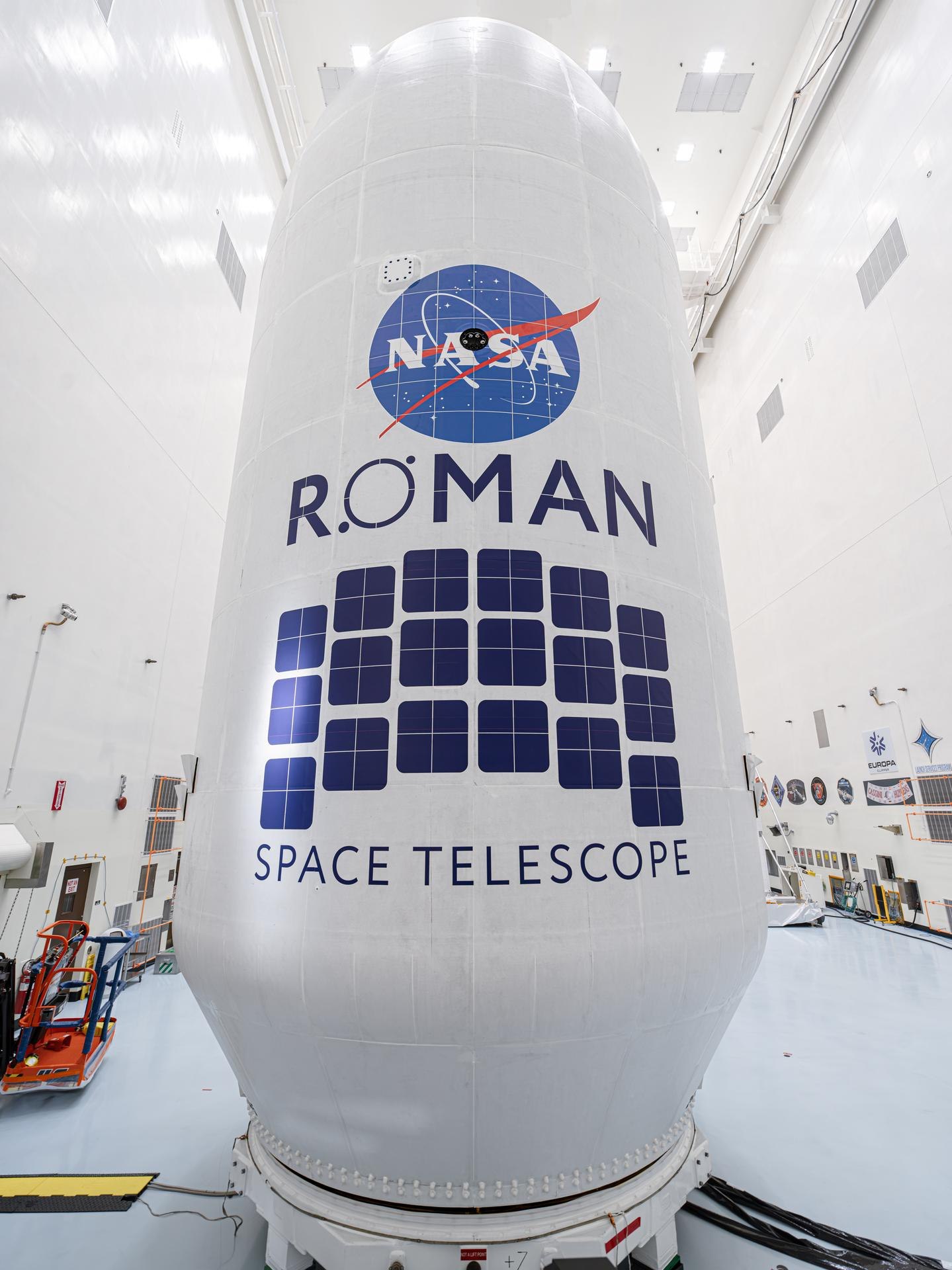
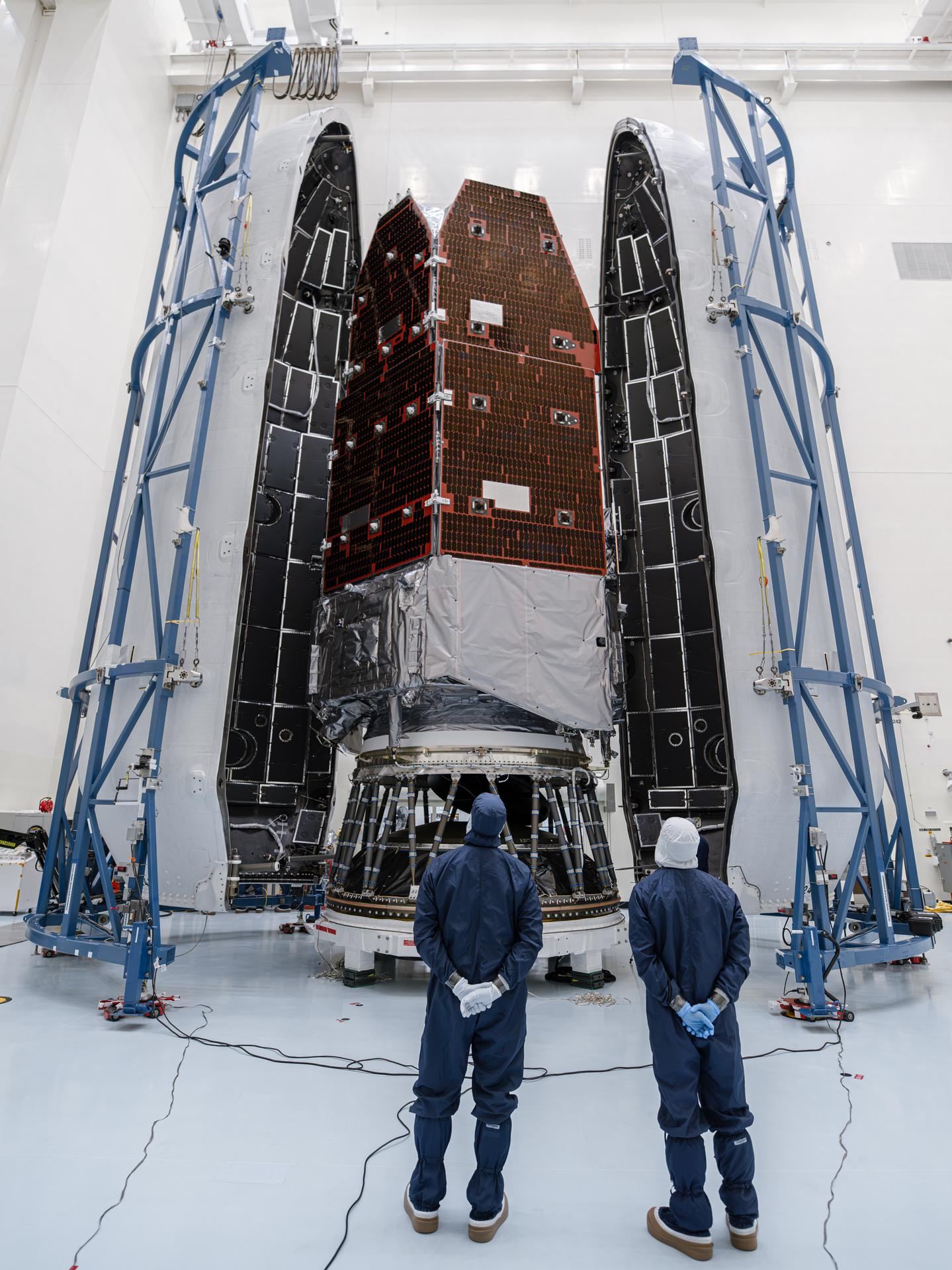
While SpaceX dominates the logistical infrastructure of LEO, NASA is setting its sights on the edge of the observable universe. The space agency's next flagship observatory, the Nancy Grace Roman Space Telescope, is currently undergoing rigorous thermal vacuum testing to prepare for its targeted launch in May 2027.
Astronomers are calling the Roman Telescope a "game-changer" for observational astrophysics. While the James Webb Space Telescope (JWST) peerlessly zooms in on ultra-faint, specific points of interest, Roman is built for breadth. It possesses a field of view 100 times larger than that of the legacy Hubble Space Telescope, allowing it to map giant swaths of the sky in a fraction of the time.
According to astrophysicists at NASA’s Goddard Space Flight Center, this vast observational capability will allow Roman to detect "one-in-a-million" cosmic events. Chief among these is gravitational microlensing—a phenomenon where the gravity of a foreground star acts as a natural magnifying glass to reveal rogue planets, primordial black holes, and dark matter structures that would otherwise remain completely invisible.
"With Webb, we are looking through a needle. With Roman, we are looking through a wide-angle lens. It will allow us to conduct a cosmic census, finding the rarest needles in the cosmic haystack."
— Dr. Dominic Benford, Program Scientist for the Roman Mission
Starship's Momentum: The Catalyst of the New Space Age
No discussion of modern space dominance is complete without the looming silhouette of Starship, SpaceX’s fully reusable super-heavy launch system. As the company refines its orbital flight profiles out of Starbase in Boca Chica, Texas, the pressure on international rivals and legacy aerospace contractors is intensifying.
Starship is not merely a rocket; it is a geopolitical leverage point. NASA has invested nearly $4 billion in Starship’s Human Landing System (HLS) variant to return American astronauts to the lunar surface under the Artemis III mission. The upcoming test flights are designed to master hot-staging, propellant transfer in orbit, and the pinpoint recovery of both the Super Heavy booster and the Starship spacecraft itself. If successful, Starship will render existing heavy-lift launch vehicles economically obsolete overnight.
By The Numbers: Comparing the Titans of Space
To understand the sheer scale of these technological leaps, we examine the technical profiles of the current and upcoming cornerstones of global space exploration:
| System / Spacecraft | Primary Mission | Key Metric / Capability | Target Operational Era |
|---|---|---|---|
| SpaceX Falcon 9 | Commercial Payload & Starlink Deployment | Reusability (up to 20+ flights per booster) | Active (High-frequency) |
| Nancy Grace Roman | Dark Energy & Exoplanet Survey | 100x Hubble's Field of View | 2027 Launch Target |
| James Webb (JWST) | Deep Infrared Observatory | Ultra-high-resolution deep-field imaging | Active (L2 Orbit) |
| SpaceX Starship | Heavy Cargo & Lunar/Mars Colonization | 100-150 Metric Ton Payload to LEO (Fully Reusable) | Active Flight Testing Phase |
Future Outlook: The Converging Space Frontier
The convergence of commercial launch frequency, elite deep-space science, and rapid heavy-lift development marks a golden era for the aerospace sector. In the coming months, expect a heightened regulatory focus on launch noise mitigation along the Florida coastline, even as NASA locks down the final integration phases of the Roman Telescope. The capital inflows into space-tech companies are expected to surge as these platforms transition from development pipelines to operational assets, permanently reshaping communications, national security, and scientific discovery.
Frequently Asked Questions (FAQ)
1. Why do SpaceX landings create a double sonic boom instead of a single one?
When the Falcon 9 booster returns for a ground landing, it travels faster than the speed of sound. Shockwaves are generated at multiple points on the vehicle—principally at the top (interstage/nose) and the bottom (engine cluster). Because these two primary shockwaves are separated by the physical length of the booster and travel to the ground almost simultaneously, observers hear them as two distinct, consecutive booms.
2. How does the Roman Space Telescope complement the James Webb Space Telescope?
The two space telescopes are highly complementary. The James Webb Space Telescope (JWST) is designed to peer deeply into incredibly narrow patches of sky to examine specific, highly detailed targets in infrared. In contrast, the Nancy Grace Roman Space Telescope will perform massive, wide-field surveys of the sky. Once Roman identifies rare, anomalous, or highly interesting objects (the "one-in-a-million" targets), astronomers can then direct JWST’s high-power narrow-field lens to study those specific objects in greater detail.