The Detroit Ultimatum: Inside the Audacious Push by American Automakers to Permanently Ban Chinese Cars
WASHINGTON — In what is shaping up to be the most consequential regulatory showdown in modern automotive history, a powerful coalition of American auto industry leaders is quietly but aggressively lobbying Washington for an unprecedented economic weapon: a permanent, blanket ban on Chinese-made connected vehicles and software from entering the United States market.
The push, which has accelerated behind closed doors in Washington and Detroit, marks a dramatic escalation from traditional tariff-based protectionism. No longer satisfied with the Biden administration’s landmark 100% tariffs on Chinese electric vehicles (EVs), domestic manufacturers are warning that nothing short of a total, legally codified ban can prevent an existential wipeout of the American automotive supply chain.
At the center of this storm is the Alliance for Automotive Innovation, representing major legacy giants like General Motors, Ford, and Stellantis. While the industry largely aligns with the national security rationale behind keeping Chinese-made connected tech off American roads, the logistics of pulling off such a decoupling are triggering massive anxiety. John Bozzella, the Alliance’s President and CEO, has repeatedly cautioned policymakers that while the objective is necessary, the execution must be flawless.
Executive Summary: The Battle Over the American Roadway
- The Core Demand: US automakers are lobbying for a permanent statutory ban on Chinese connected vehicles, hardware, and software, arguing that tariffs alone cannot stop Beijing’s state-subsidized juggernaut.
- National Security vs. Market Reality: The White House is prepared to leverage the Commerce Department’s national security powers to block Chinese vehicle software, but industry leaders warn that hasty regulations could inadvertently paralyze existing supply chains.
- The Bozzella Intervention: Industry lobbyist John Bozzella has urged regulators to "get the details right," advocating for realistic transition timelines so domestic manufacturers can purge Chinese-sourced components without shutting down assembly lines.
- Global Precedent: A permanent ban by the US would likely pressure the European Union and other Western allies to move beyond current tariff structures and adopt similar exclusionary policies.
Why Tariffs Aren't Enough: The Economics of the "BYD Threat"
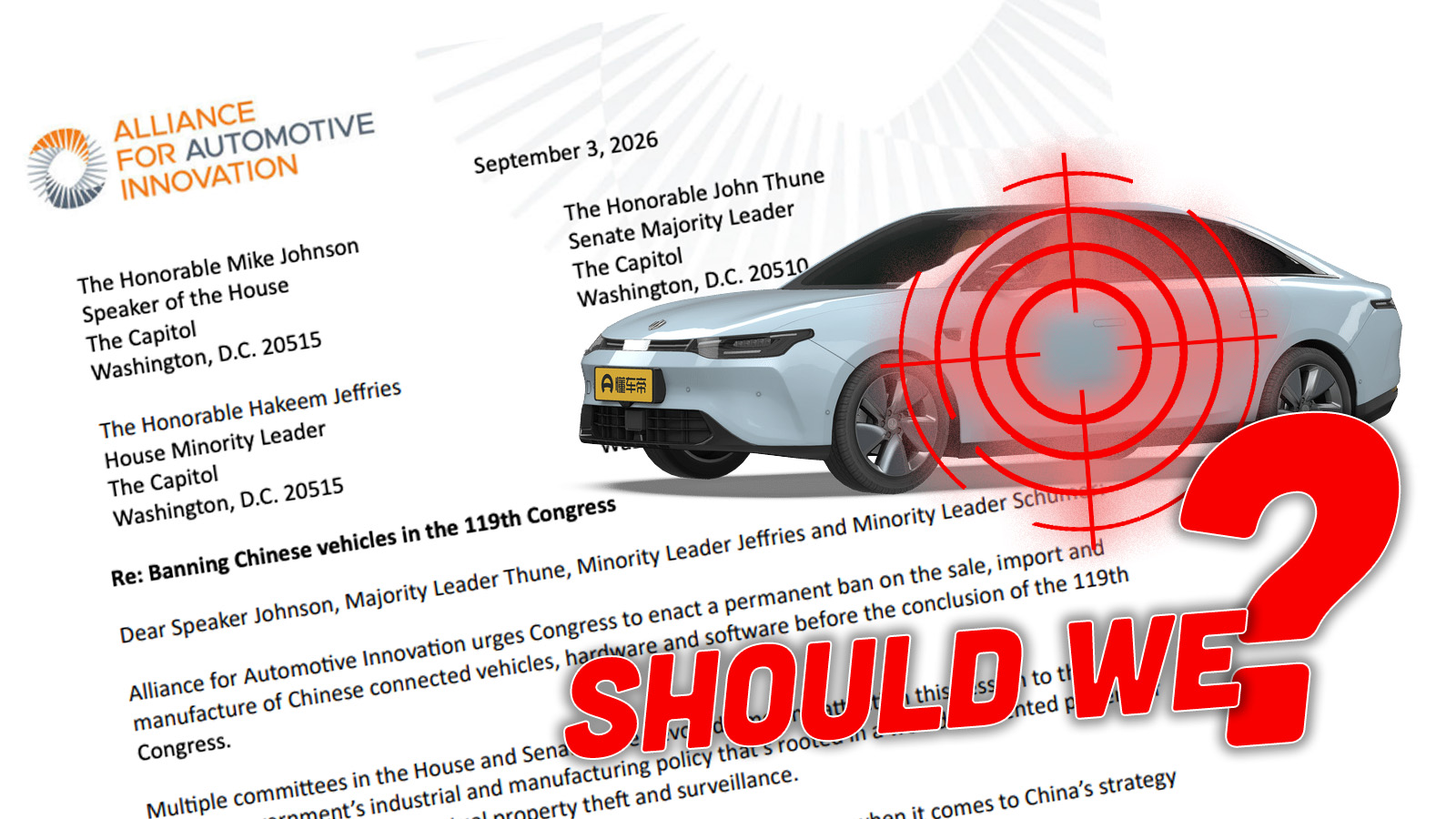
For months, Washington believed that raising tariffs to 100% on Chinese EVs would act as an impenetrable moat. However, Detroit’s executive suites quickly realized that the cost structures of Chinese giants like BYD, Geely, and Chery are so heavily subsidized by Beijing that they can absorb triple-digit tariffs and still undercut American-made vehicles. Furthermore, Chinese firms have actively bypassed US tariffs by constructing massive manufacturing hubs in Mexico, exploiting the United States-Mexico-Canada Agreement (USMCA) to gain backdoor entry into the lucrative American market.
This dynamic has forced a strategic pivot. Rather than relying on tax-based deterrents, the American auto industry is framing the threat through the lens of national security and data privacy. Modern electric vehicles are essentially supercomputers on wheels, equipped with cameras, LiDAR, GPS, and advanced software capable of mapping American infrastructure and harvesting vast amounts of consumer data. By banning the software and hardware under national security protocols, the US can legally bar these vehicles entirely—regardless of where they are assembled.
The Fine Print: What Automakers are Demanding
According to sources familiar with the ongoing discussions, the proposed ban would target two primary categories: complete vehicles manufactured by Chinese-owned entities, and specific telematics and automated driving systems designed or controlled by companies linked to the Chinese Communist Party (CCP). However, implementing this without triggering a systemic shock to global supply chains is proving to be an administrative nightmare.
Understanding the Defensive Moats: Tariffs vs. Proposed Bans
To understand the sheer scale of the lobbying effort, it is vital to contrast the existing trade defense mechanisms with the permanent restrictions currently being debated in Washington:
| Policy Mechanism | Current Status | Economic Impact | Industry Vulnerabilities |
|---|---|---|---|
| Section 301 Tariffs | Implemented (100% on Chinese EVs) | Increases import costs; easily bypassed via third-country manufacturing (e.g., Mexico). | Does not stop Chinese companies from licensing tech to US partners. |
| Commerce Dept. Software Ban | Under Active Review / Proposed Rule | Bans Chinese connected vehicle software; effectively blocks imports of smart vehicles. | Requires complex certification; risk of disrupting existing US vehicle telemetry. |
| Statutory Permanent Ban | Lobbied / Under Negotiation | Absolute market exclusion for Chinese-branded automotive hardware and platforms. | Could trigger retaliatory bans on US vehicles and chips in the massive Chinese market. |
"Get the Details Right": The Industry's Quiet Warning
While Detroit is united in wanting to keep Chinese competitors out, there is deep concern over the collateral damage of a poorly drafted regulation. John Bozzella, speaking on behalf of the Alliance for Automotive Innovation, has urged the federal government to move with precision. Bozzella’s primary concern is that a sweeping, immediate ban on any software or hardware containing Chinese components could inadvertently ground thousands of vehicles currently being produced by American, European, and Japanese brands.
"We want the details of this policy to be correct," Bozzella stated, emphasizing that global automotive supply chains are incredibly complex. Modern vehicles contain tens of thousands of micro-components, and trace amounts of Chinese-developed code or sub-assemblies are deeply embedded in Western automotive ecosystems. If Washington imposes an immediate, unyielding ban without sufficient lead time, it could trigger widespread production delays for domestic automakers who are still transitioning their own supply chains away from China.
What Lies Ahead: A Fragile Decoupling
As the Biden administration prepares its final rulings on connected vehicle technologies, the geopolitical stakes could not be higher. If a permanent ban is successfully implemented, it will mark the formal split of the global automotive sector into two distinct, non-overlapping hemispheres: a Western ecosystem led by US, European, and Japanese manufacturers, and an Eastern ecosystem dominated by China's hyper-efficient, state-backed EV giants.
For American consumers, this decoupling means the era of ultra-cheap, high-tech EVs will remain out of reach for the foreseeable future. For Detroit, it represents a precious, high-stakes window of time to achieve cost parity and scale their own EV portfolios before the geopolitical walls shift again.
Frequently Asked Questions
Why are US automakers pushing for a total ban instead of just relying on tariffs?
While the current 100% tariffs make direct imports from China unprofitable, Chinese automakers are heavily subsidized and can easily bypass tariffs by building assembly plants in Mexico. Additionally, Chinese companies can license their cheap, advanced EV software to Western brands. A total, permanent ban based on national security and software sovereignty is the only way to completely close these loopholes.
What are the primary risks of implementing a permanent software and hardware ban?
The primary risk is supply chain disruption. Because Western automakers have spent decades integrating global supply chains, many US-made cars contain minor components, sensors, or software lines sourced from China. If a ban is enacted too quickly without adequate transition periods, domestic production could grind to a halt. There is also a high risk of retaliatory measures from Beijing against American companies operating in China.