Executive Takeaways
- Accelerated Timeline: NASA leadership has formally shifted strategic directives to compress decades-long lunar infrastructure deployment into an aggressive two-year execution window, echoing the existential pace of the 1960s Apollo program.
- Capital Allocation & Enterprise ROI: The pivot demands a radical restructuring of federal procurement frameworks, unlocking multi-billion-dollar contracts for private-sector aerospace prime contractors and commercial payload service providers.
- Geopolitical & Market Pressures: Intensifying international competition for cislunar dominance and strategic resource rights has forced a departure from traditional bureaucratic risk mitigation toward high-velocity risk tolerance.
- 기술 (Technical) & Infrastructure Scalability: Success hinges on rapid-deployment modular habitats, autonomous in-situ resource utilization (ISRU) systems, and robust cislunar supply chains capable of supporting permanent human presence.
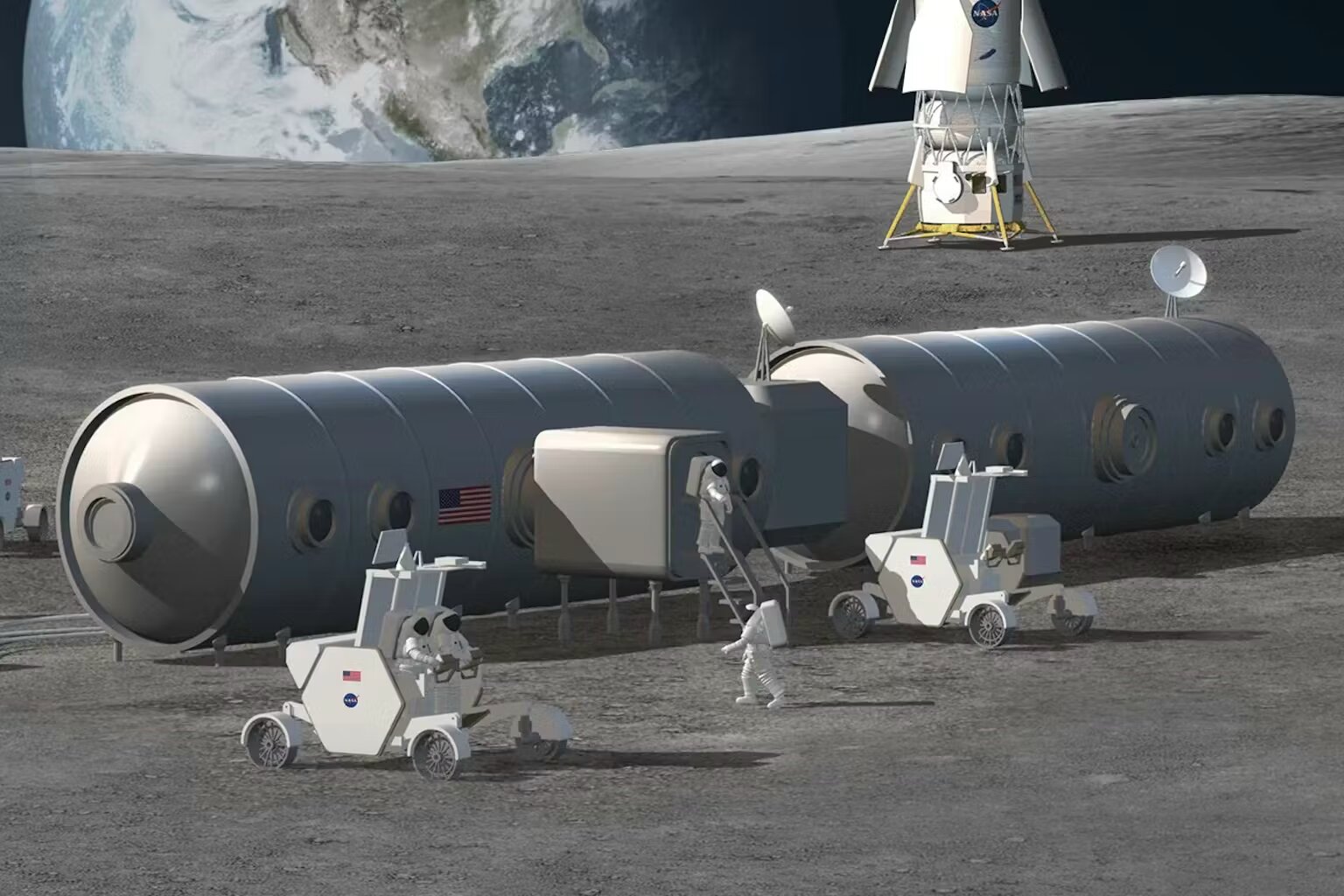
WASHINGTON — In the quiet corridors of the National Aeronautics and Space Administration (NASA) headquarters, a seismic cultural and operational shift is underway. Decades of incrementalism, plagued by budget overruns, shifting political mandates, and risk-averse program management, have been abruptly cast aside. In their place is an uncompromising mandate: resurrect the existential urgency of the Apollo era, construct a permanent lunar base, and land astronauts on the surface within an accelerated two-year window.
Interviews with senior aerospace executives, procurement officials, and congressional advisors reveal that this pivot is no mere public relations campaign. It is a fundamental overhaul of federal space policy driven by mounting geopolitical realities, technological maturity in the private sector, and an acute awareness that the economic architecture of the 21st-century solar system is being written today. For Wall Street, venture capital syndicates, and enterprise technology firms, this acceleration represents an unprecedented inflection point in the valuation multiples, market liquidity, and capital allocation strategies underpinning the burgeoning space economy.
The Catalyst: Geopolitical Pressure and the Cislunar Gold Rush
To understand the suddenness of NASA's operational gear-shifting, one must examine the external pressures acting upon Washington policymakers. The contemporary space environment bears little resemblance to the bipolar Cold War dynamic of the 20th century. Today, a multipolar space race involves aggressive state actors alongside a deeply capitalized private commercial sector capable of orbital execution that routinely outpaces legacy bureaucratic timelines.
The strategic prize is no longer merely planting a flag and returning home. The permanent commercialization and militarization of cislunar space—the vast region of space extending out to the Moon's orbit—has transformed the lunar South Pole into the most strategically vital real estate in the solar system. Permanently shadowed craters containing billions of tons of water ice offer the essential raw materials for life support systems and rocket propellant production. Controlling these resources equates to controlling the future energy and logistical nodes of interplanetary commerce.
Faced with foreign competitors rapidly advancing their own heavy-lift capabilities and lunar exploration schedules, the White House and congressional oversight committees issued a directive to NASA: bypass traditional procurement bottlenecks. The agency’s historical reliance on cost-plus contracting—which frequently rewards delays and inefficiency—is being aggressively supplanted by fixed-price milestone contracts and public-private partnerships. This structural evolution shifts the burden of risk mitigation onto commercial prime contractors, incentivizing rapid innovation and aggressive hardware delivery schedules.
Engineering the Two-Year Sprint: Technical Realities and Infrastructure Scalability

Compressing a decades-long roadmap into a 24-month execution window requires a radical departure from conventional aerospace engineering paradigms. Where Apollo relied on custom-built, single-use hardware designed under an open-ended federal checkbook, the modern lunar push leverages commercial off-the-shelf (COTS) components, advanced cloud compute architecture for autonomous navigation, and heavy-lift launch vehicles already operating at scale.
However, the technical hurdles remain monumental. Building a sustainable moon base within two years demands simultaneous advancements across multiple critical vectors:
- Modular Habitat Deployment: Traditional rigid-body construction is too heavy and logistically complex for rapid deployment. The current strategy relies on expandable, inflatable habitats outfitted with radiation-shielding polymers and automated life-support systems.
- In-Situ Resource Utilization (ISRU): Hauling water and fuel from Earth is cost-prohibitive. The two-year framework mandates the immediate deployment of autonomous robotic prospectors designed to mine lunar regolith, extract water ice, and convert it into liquid hydrogen and liquid oxygen.
- Power Generation Grid: Solar power alone is insufficient for permanent installations experiencing two-week-long lunar nights. NASA and its private partners are fast-tracking compact nuclear fission surface power systems capable of delivering continuous, high-kilowatt electrical output.
- Autonomous Cloud Compute Architecture: With a communication latency of roughly 2.5 seconds each way, lunar surface assets cannot rely on real-time terrestrial telemetry. Edge-computing nodes and artificial intelligence frameworks must govern critical infrastructure operations locally.
Market Impact: Winners, Losers, and Enterprise ROI
The market implications of NASA’s aggressive timeline are reverberating across global financial markets. Traditional aerospace and defense primes that failed to adapt to the agile, commercial-first paradigm are facing immediate margin compression as flexible, venture-backed startups capture high-value payload and habitation contracts.
Conversely, firms specializing in advanced materials, robotics, autonomous software, and propulsion are experiencing a surge in valuation multiples. Venture capital deployment into cislunar infrastructure technology has broken historical records, driven by the realization that government validation acts as a powerful de-risking mechanism for broader commercial markets.
| Metric / Parameter | Legacy NASA Approach | New Apollo-Urgency Framework | Market & Financial Impact |
|---|---|---|---|
| Procurement Model | Cost-Plus, Multi-Decade | Fixed-Price Commercial Milestones | Accelerated Enterprise ROI; Higher Contractor Accountability |
| Execution Timeline | 8 to 12 Years per Phase | 18 to 24 Months End-to-End | Compressed Capital Cycles; Heightened Execution Risk |
| Infrastructure Focus | Exploratory Flag-and-Footprints | Permanent Modular Habitats & ISRU | Unlocks Multi-Trillion-Dollar Cislunar Economy |
| Regulatory & Compliance | Siloed Bureaucratic Review | Streamlined Fast-Track Approvals | Reduced Administrative Friction; Faster Liquidity Events |
For investors, the primary risk mitigation strategy lies in portfolio diversification across the space supply chain. While prime launch providers capture top-of-funnel headlines, the enduring enterprise value will likely be captured by B2B enterprises providing proprietary software, power systems, and in-space manufacturing capabilities.
Frequently Asked Questions (People Also Ask)
Why is NASA accelerating the lunar base timeline to two years?
The acceleration is driven by a combination of escalating international competition for strategic cislunar resources—specifically water ice at the lunar South Pole—and significant technological maturation within the commercial aerospace sector. By adopting an Apollo-era sense of urgency and shifting toward agile, fixed-price procurement models, NASA aims to secure strategic positioning before foreign competitors establish de facto control over vital lunar territories.
How will private-sector contractors be compensated under this new framework?
NASA is moving rapidly away from traditional cost-plus contracts, which historically incentivized schedule delays and budget bloat. Instead, the agency is leveraging fixed-price milestone payments and public-private partnerships. Private contractors only receive full capital disbursement upon successfully meeting rigorous, verifiable performance and delivery benchmarks.
What are the primary technological bottlenecks for a two-year moon base build?
The most pressing challenges include deploying autonomous In-Situ Resource Utilization (ISRU) systems to mine water and manufacture rocket propellant on-site, establishing continuous nuclear or advanced solar power grids that can survive the two-week lunar night, and implementing robust edge-computing cloud architectures to manage surface operations despite communication latency.
What does this mean for aerospace valuations and market liquidity?
The aggressive timeline has injected substantial liquidity into the private space sector. Venture capital and institutional investors are aggressively allocating capital to firms specializing in lunar logistics, autonomous robotics, and surface power generation, viewing NASA's accelerated roadmap as a powerful validation of long-term enterprise ROI in the cislunar economy.
Future Outlook: Milestones to Watch
As NASA and its industrial partners embark on this high-stakes, 24-month sprint, the coming quarters will serve as a definitive stress test for modern aerospace engineering and federal procurement reform. Market analysts and defense experts will be monitoring several critical inflection points:
- Unmanned Pathfinder Missions: The successful deployment and autonomous operation of commercial lunar landers carrying ISRU mining test beds.
- Power System Integration Trials: Ground and orbital testing of compact nuclear fission reactors designed for surface deployment.
- Contractor Milestone Reviews: Financial disclosures and public milestone evaluations from primary commercial partners to assess schedule adherence and capital burn rates.
Ultimately, NASA’s pivot is more than an engineering exercise; it is a declaration that the economic and geopolitical boundaries of the United States now extend 240,000 miles into space. For the financial markets and enterprise leaders watching closely from Earth, the dividends of this bold gambit will shape global commerce and technological dominance for generations to come.