Executive Takeaways
- Extended Orbital Residency: NASA astronauts Matthew Dominick, Michael Barratt, and Jeanette Epps, along with Roscosmos cosmonaut Alexander Grebenkin, successfully returned to Earth after 235 days aboard the International Space Station (ISS)—a mission prolonged by nearly two months due to Boeing Starliner technical anomalies and adverse weather across Atlantic splashdown zones.
- Post-Landing Precautionary Protocols: Following splashdown off the coast of Pensacola, Florida, all four crew members were transported to Ascension Sacred Heart Hospital for extended medical evaluations; three were promptly released, while one NASA astronaut spent a single night under observation before being cleared for return to Houston.
- SpaceX Commercial Dominance: The successful completion of the Crew-8 mission marks SpaceX’s 14th crewed flight to orbit, further consolidating its near-monopolistic capture of low-Earth orbit (LEO) transport services under NASA’s Commercial Crew Program while competitor Boeing faces mounting fixed-price contract overruns.
- Macro Capital Shift in LEO Industrialization: The extended mission highlights severe capacity constraints and operational friction points in public-private space infrastructure, accelerating institutional capital flows into next-generation commercial stations ahead of the planned 2030 ISS decommissioning.
The 235-Day Marathon: Anatomy of a Mission Extension
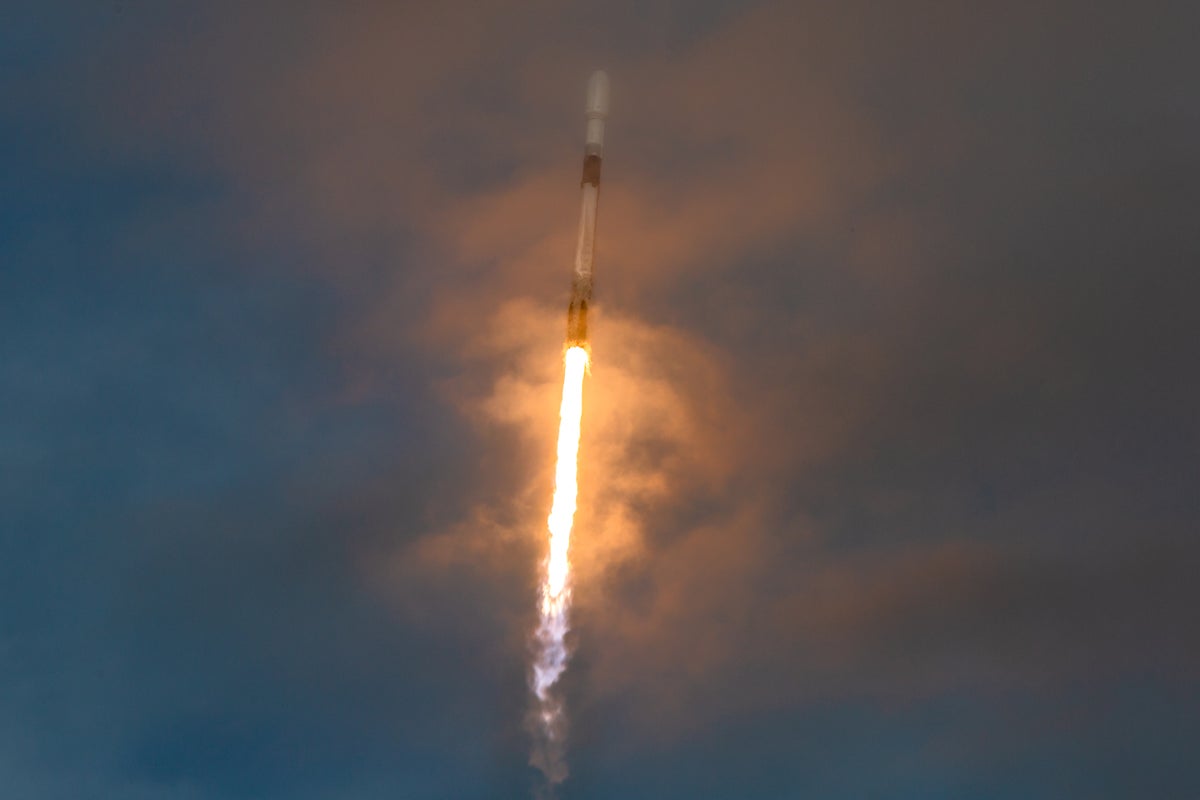
When the SpaceX Crew Dragon craft, named Endeavour, bobbed in the calm waters of the Gulf of Mexico off the coast of Pensacola, Florida, it marked the conclusion of one of the longest continuous orbital deployments for a commercial crew vehicle in spaceflight history. The four-member crew of Mission Crew-8 spent 235 days in microgravity—far surpassing the standard 180-day rotation cadence typical of ISS expeditions. What was originally slated as a six-month scientific residency expanded into an eight-month endurance test, driven by a complex nexus of aerospace hardware anomalies, orbital mechanics, and terrestrial weather disruptions.
The mission's extended timeline was primarily catalyzed by unprecedented operational reshuffling at NASA. In June, Boeing’s CST-100 Starliner arrived at the ISS for its Crew Flight Test (CFT). However, helium leaks and thruster degradation forced mission directors to keep Starliner docked while engineers conducted ground-based diagnostic testing. To preserve ISS docking port architecture and manage risk, NASA ultimately opted to return Starliner uncrewed in September, leaving its intended test crew—Sunita Williams and Butch Wilmore—aboard the station. This cascade required SpaceX’s Crew-9 mission to launch with two empty seats to bring Williams and Wilmore home in early 2025, directly delaying the departure matrix for Crew-8.
Once cleared for departure, Crew-8 faced a secondary hurdle: severe meteorological instability across southeastern United States maritime recovery zones. Unfavorable atmospheric conditions fueled by major weather systems, including Hurricanes Helene and Milton, created unsafe seas across all primary and secondary recovery locations in the Atlantic Ocean and Gulf of Mexico. For over two weeks, mission control held Endeavour docked to the ISS, waiting for sea states to drop below strict safety thresholds. The eventual undocking and atmospheric re-entry executed flawlessly, demonstrating the thermal protection system's resiliency after nearly eight months of atomic oxygen exposure and micro-meteorite impacts in low-Earth orbit.
Upon splashdown, recovery operations deployed fast-response vessels to secure the capsule and extract the crew within 45 minutes. Standard post-landing protocol mandates comprehensive physical assessments inside the medical module of the primary recovery ship. However, out of an abundance of caution, NASA medical directors elected to airlift all four crew members to Ascension Sacred Heart Hospital in Pensacola for secondary diagnostic screening. While NASA declined to identify specific medical anomalies citing patient privacy, three of the spacefarers were discharged within hours and flown to Johnson Space Center in Houston. The remaining astronaut was held overnight for precautionary monitoring before being cleared the following morning, highlighting the physiological stressors associated with prolonged exposure to microgravity and re-adaptation to Earth's 1-g environment.
Financial & Operational Metrics: Crew-8 Mission Breakdown
The economics of human spaceflight have undergone a dramatic structural shift since the retirement of the Space Shuttle fleet in 2011. NASA’s reliance on fixed-price milestone contracts via the Commercial Crew Program has fundamentally redefined capital allocation, risk allocation, and per-seat unit economics across the orbital transportation market. Below is a comparative operational and financial audit of the primary launch systems supporting low-Earth orbit operations.
| Metric / Capital Parameter | SpaceX Crew Dragon (Crew-8) | Boeing CST-100 Starliner | Roscosmos Soyuz (Historical Reference) |
|---|---|---|---|
| Mission Duration | 235 Days | 93 Days (Uncrewed Return) | ~180 Days (Standard) |
| Estimated Cost Per Seat | ~$55 Million to $65 Million | ~$90 Million to $100 Million | ~$86 Million to $90 Million |
| Contract Structure | Fixed-Price Commercial Crew Contract | Fixed-Price Commercial Crew Contract | Direct Government-to-Government Purchase |
| Cumulative Program Overruns | Minimal (Profitable per Launch) | >$1.6 Billion (Absorbed by Boeing) | State-Subsidized |
| Docked Endurance Rating | Certified up to 210 days (Extended to 235+) | Targeted 210 Days (Under Review) | ~200 Days (Fuel Expiration Limits) |
| Primary Enterprise Moat | First-Stage Reusability & High Launch Cadence | Legacy Defense Integrator Engineering | State Monopolized Infrastructure |
Enterprise & Defense Space Market Implications
The successful recovery of Crew-8—contrasted sharp against the operational headwinds facing rival programs—delivers a clear signal to institutional investors, prime defense contractors, and private equity sponsors capitalizing space technology. SpaceX’s execution underscores the competitive advantage of vertically integrated manufacturing and rapid iterative development. By keeping supply chains largely internal, SpaceX has built a deep operational cushion, allowing it to absorb schedule slip page without compromising overall launch manifests or mission profitability.
Conversely, Boeing’s defense and space division continues to experience margin compression under fixed-price government contracts. Unlike legacy cost-plus contracts—where Uncle Sam absorbed technical design revisions and schedule delays—fixed-price agreements force defense primes to bear all cost overruns directly on their balance sheets. With Boeing recording over $1.6 billion in cumulative pre-tax charges related to Starliner development, institutional shareholders are scrutinizing capital allocation strategies across commercial space ventures. This dynamic is prompting institutional capital to pivot toward agile, mid-tier space enterprise providers and venture-backed space tech ecosystems that offer flexible software architectures and lower cost-per-kilogram rates.
Furthermore, the Crew-8 delay illuminates systemic operational vulnerabilities within NASA’s low-Earth orbit logistics model. The agency's dual-provider strategy was designed specifically to prevent sole-source dependency on a single launch provider. However, with Boeing’s Starliner sidelined pending comprehensive design modifications and thruster re-qualification, SpaceX temporarily operates as the sole domestic provider capable of delivering crew and payload to the ISS. This virtual monopoly limits near-term pricing leverage for NASA while placing intense operational demands on SpaceX’s fleet of Falcon 9 rockets and Dragon capsules.
The broader commercial space industry is rapidly calculating the economic implications of the aging ISS, which is slated for controlled de-orbit in 2030. Private sector entities, funded by strategic corporate venture arms and defense capital, are aggressively bidding on NASA’s Commercial LEO Destinations (CLD) program. Companies such as Axiom Space, Vast, and the Starlab consortium (partnering Voyager Space, Airbus, and Mitsubishi) are racing to deploy free-flying commercial space stations. The operational lessons extracted from Crew-8's extended stay—specifically regarding hull degradation, long-term environmental control system endurance, and real-time medical monitoring—will form the core technical baseline for designing these privatized habitats.
Frequently Asked Questions (People Also Ask)
Why was the SpaceX Crew-8 mission extended to nearly eight months?
The Crew-8 mission duration was lengthened from the typical six-month timeline to 235 days due to a combination of orbital scheduling adjustments and severe weather conditions. The initial delay arose when problems with Boeing’s CST-100 Starliner spacecraft required it to return to Earth uncrewed, necessitating modifications to the manifest for the subsequent Crew-9 mission. Following these operational shifts, a series of off-nominal weather events—including intense hurricane activity and high sea states across recovery zones in the Atlantic Ocean and Gulf of Mexico—further postponed safe undocking procedures.
What was the status of the astronauts following their splashdown off Florida?
All four crew members—NASA astronauts Matthew Dominick, Michael Barratt, and Jeanette Epps, along with Roscosmos cosmonaut Alexander Grebenkin—were safely extracted from the capsule by SpaceX recovery teams. Out of an abundance of caution following their long-duration exposure to microgravity, the entire crew was transported to Ascension Sacred Heart Hospital in Pensacola for thorough medical evaluations. Three of the four crew members were promptly cleared and flown to Johnson Space Center, while one NASA astronaut remained under observation overnight as a precautionary measure before being released in good health the following day.
How does Crew-8 affect NASA’s reliance on private space contractors?
The successful execution of Crew-8 reinforces NASA's public-private model under the Commercial Crew Program, proving that private industry can reliably manage complex orbital logistics. However, it also highlights the vulnerability of the program's intended dual-provider model. While SpaceX has demonstrated consistent mission cadence, delays in certifying Boeing's Starliner leave NASA dependent on a single provider for domestic human spaceflight capability in the near term, accelerating institutional efforts to bring additional private launch and habitation systems online.
What are the commercial implications of extended space missions for private stations?
Extended missions like Crew-8 generate vital real-world data regarding human physiology, material fatigue, life-support system durability, and microgravity operational expenditure (OpEx). Commercial space station developers utilize this operational intelligence to design scalable hardware and optimize life-support infrastructure. Furthermore, proving that crew vehicles can stay safely docked for over 230 days provides insurance underwriters and capital markets with the risk-mitigation data necessary to finance next-generation commercial orbital real estate.
Future Outlook: Strategic Capital Flows & LEO Industrialization
Looking ahead, the successful recovery of Crew-8 sets the stage for a critical multi-year transition period in global aerospace operations. Over the next 24 to 36 months, capital markets expect increased private placement activity and potential spin-offs within the commercial space ecosystem. As NASA ramps up capital allocation for the Artemis lunar program, the funding burden for LEO operations will shift increasingly toward private enterprises seeking to commercialize orbital manufacturing, advanced pharmaceuticals research, and space-based edge compute infrastructure.
The immediate operational focus turns to SpaceX’s Crew-9 mission currently docked at the space station, along with the scheduled return of astronauts Sunita Williams and Butch Wilmore in early 2025. Concurrently, Boeing engineers are performing exhaustive root-cause analysis on Starliner’s reaction control system thrusters, with a regulatory flight re-certification path expected to consume significant engineering resources throughout the upcoming fiscal year. NASA’s ability to maintain a seamless operational posture aboard the ISS relies heavily on balancing these commercial partnerships while mitigating supply chain delays across specialized aerospace components.
Ultimately, Crew-8's 235-day odyssey stands as a landmark operational baseline. It proves that commercial systems can withstand extended, unpredictable duration profiles in extreme environments while preserving human capital and mission integrity. As the global space economy pivots from government-led exploration toward high-margin industrialization, the data, infrastructure, and financial models refined during this mission will serve as the foundational bedrock for multi-billion-dollar orbital architectures over the coming decade.