The $3 Billion Gamble: Why Elon Musk is Downplaying Expectations for SpaceX’s Historic Starship Debut
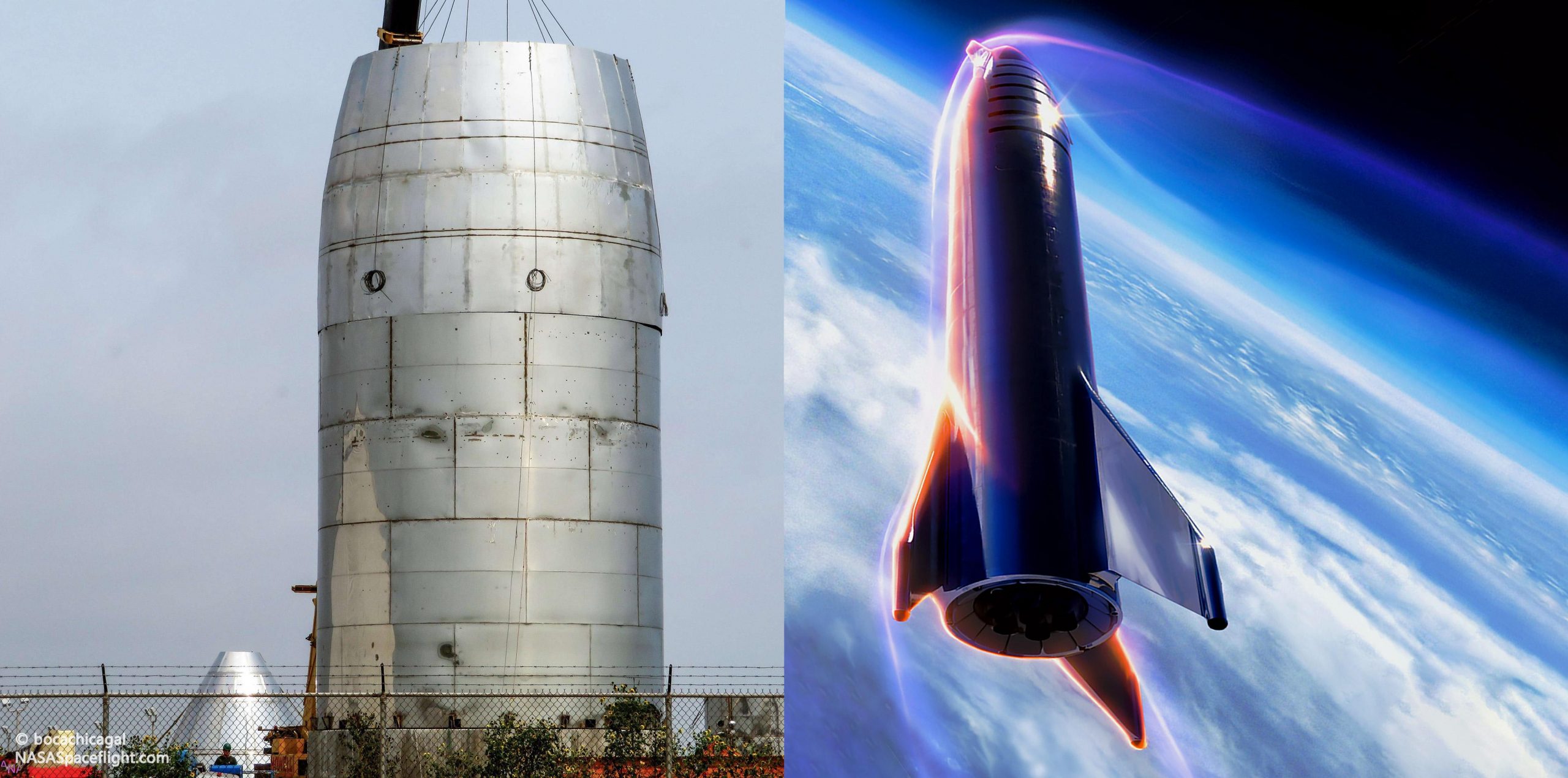
BOCA CHICA, Texas — On the wind-swept coast of South Texas, the most powerful flying machine ever engineered by humanity stands poised on its orbital launchpad. SpaceX’s Starship—a colossal, 394-foot-tall stainless-steel behemoth designed to carry humanity back to the Moon and eventually to Mars—is slated for its maiden fully integrated test flight. Yet, as the aerospace world holds its collective breath, SpaceX Chief Executive Elon Musk is executing a surprising public relations maneuver: aggressively managing expectations downward.
Speaking in a late-night Twitter Spaces audio event on Sunday, April 16, 2023, Musk did not promise a flawless triumph. Instead, he offered a sober, highly pragmatic reality check. "If we get far enough away from the launchpad before something goes wrong, then I think I would consider that to be a success," Musk told listeners, adding with characteristic bluntness: "Just don't blow up the launchpad."
This calculated modesty from one of the world's most notoriously ambitious entrepreneurs highlights the sheer volatility and immense engineering risks associated with the upcoming launch, which is being closely monitored by competitors, capital markets, and NASA alike.
The "Don't Blow Up the Pad" Philosophy
For SpaceX, the stakes of this launch—originally scheduled for a window opening Monday morning, April 17—could not be higher. However, the company’s development philosophy has always prioritized rapid iteration and "productive failures" over slow, risk-averse planning. Unlike traditional aerospace giants that spend decades perfecting a single rocket on paper, SpaceX builds, tests, occasionally destroys, and rapidly redesigns hardware in real-time.
The primary concern for Musk and his engineering team is the survival of the launch infrastructure at "Starbase" in Boca Chica. The orbital launch mount, propellant storage tanks, and massive integration tower took over a year to construct at a cost of hundreds of millions of dollars. An explosion directly on the pad would set the Starship program back by several months, if not a year.
"It takes a long time to build these launch pads," Musk explained, emphasizing that a catastrophic failure mid-flight is far more preferable than a disaster at ground level. If the rocket clears the tower and climbs for a few minutes before experiencing what SpaceX euphemistically calls a "rapid unscheduled disassembly," the telemetry data gathered will still be incredibly valuable for the next vehicle already waiting in the wings.
Unprecedented Scale: Starship by the Numbers
To understand why this test flight is so risky, one must look at the unprecedented scale of the launch vehicle. Starship is composed of two main parts: the Super Heavy booster (the first stage) and the Starship spacecraft (the second stage). Combined, they stand taller than the Saturn V rocket that took Apollo astronauts to the Moon.
The propulsion system is where the engineering complexity reaches staggering proportions. The Super Heavy booster is powered by 33 proprietary Raptor engines burning sub-cooled liquid methane and liquid oxygen. Together, they generate an astonishing 16.7 million pounds of thrust—nearly double the power of NASA’s Space Launch System (SLS) and more than twice that of the Saturn V.
Managing the plumbing, vibrational dynamics, and thermal pressures of 33 engines firing simultaneously is a hurdle no aerospace agency has ever successfully cleared. The closest historical equivalent, the Soviet Union’s N1 moon rocket in the late 1960s and early 1970s, utilized 30 engines in its first stage; all four of its test launches ended in catastrophic failures.
| Rocket System | Developer | Height (Meters) | Liftoff Thrust (lbs) | Payload to LEO (Metric Tons) |
|---|---|---|---|---|
| SpaceX Starship | SpaceX | 120 m | 16.7 Million | 100 - 150 (Fully Reusable) |
| Space Launch System (SLS) | NASA | 98 m | 8.8 Million | 95 (Expendable) |
| Saturn V | NASA / Boeing | 111 m | 7.5 Million | 118 (Expendable) |
What a "Successful" Flight Looks Like
Should Starship survive the initial liftoff, the flight profile for this uncrewed demonstration is highly ambitious. The Super Heavy booster is scheduled to burn for approximately two minutes and forty-nine seconds before separating from the Starship spacecraft. Rather than attempting a soft landing back on land, the booster will attempt a controlled splashdown in the Gulf of Mexico, roughly 20 miles off the Texas coast.
Meanwhile, the Starship spacecraft will ignite its own engines, ascending to near-orbital velocity. It will coast eastward over the Atlantic, the Indian Ocean, and the Pacific before executing a high-velocity re-entry through Earth's atmosphere. If all goes according to plan, Starship will perform a belly-flop maneuver and splash down in the Pacific Ocean, north of Hawaii, roughly 90 minutes after liftoff.
Musk has given this entire sequence a modest probability of success on the first try. "I’m not saying it will get to orbit, but I am saying it’s going to be exciting," Musk remarked. "I think it’s got, I don’t know, a 50% chance of reaching orbit."
Executive Briefing: Why This Launch Matters to Global Markets
- The $3 Billion NASA Contract: NASA has committed nearly $3 billion to SpaceX to develop Starship as the Human Landing System (HLS) for the Artemis III mission, which aims to return American astronauts to the lunar surface by 2025. Any systemic delay in Starship directly threatens NASA's timeline against a surging Chinese lunar program.
- Disrupting Satellite Telecommunications: A fully operational Starship will dramatically lower the cost per kilogram to orbit. It will allow SpaceX to deploy its massive Starlink V2 satellites, which are too heavy for the current Falcon 9 rocket, cementing its dominance over global satellite internet markets.
- Capital Valuation Pressures: Currently valued at approximately $140 billion in private markets, SpaceX's valuation relies heavily on the commercial viability of Starship. A successful orbital demonstration will solidify its monopoly over heavy-lift commercial launches, while a catastrophic launchpad failure could pressure short-term capital raises.
The Geopolitical and Commercial Horizon
For the broader defense and commercial space sectors, Starship represents a paradigm shift. If SpaceX can achieve full and rapid reusability of a rocket this size, the economics of accessing space will drop by an order of magnitude. It turns space exploration from a high-budget, government-funded endeavor into a commercial logistics frontier.
The eyes of the global aerospace market—from Boeing and Lockheed Martin to state-run programs in Beijing and Moscow—remain fixed on Boca Chica. Whether the mission ends in a triumphant orbital trajectory or a spectacular fireball over the Gulf of Mexico, the data harvested from this launch will fundamentally reshape the future of human spaceflight.
Frequently Asked Questions
Q: Why is SpaceX launching Starship from Boca Chica, Texas instead of Cape Canaveral, Florida?
A: SpaceX established "Starbase" in Boca Chica, Texas, as a dedicated private facility to allow for rapid, vertical integration and testing without the scheduling constraints of busy federal launch ranges like Kennedy Space Center. However, SpaceX is also constructing a Starship launchpad in Florida for future operational flights.
Q: Will there be any people on board this first Starship test flight?
A: No. This is a highly experimental, uncrewed demonstration flight. No humans or commercial payloads will be on board. If the rocket system proves its safety and reliability over multiple test flights, SpaceX plans to launch crewed missions, including private tourist flights around the Moon and eventually NASA astronaut missions to the lunar surface.