‘We’re Going to the Moon and Mars’: NASA’s New Chief Sets a 10-Year Timeline for the Red Planet
WASHINGTON — In a sweeping policy declaration that immediately resets the geopolitical and technological ambitions of the United States, the newly installed leadership at the National Aeronautics and Space Administration (NASA) has officially committed the agency to landing human astronauts on Mars within the next decade.
Speaking in an exclusive joint interview published by The New York Times and analyzed by economic and geopolitical strategists globally, NASA’s new chief laid out an unapologetically bold roadmap for deep-space exploration. The strategy bridges the gap between America's immediate return to the lunar surface and a historic, multi-year voyage to the Red Planet by the mid-2030s.
The announcement has sent ripples through the defense, aerospace, and technology sectors, signaling a massive influx of capital, public-private partnerships, and high-stakes engineering challenges that will define the next era of industrial innovation.
The Vision: A Decade-Long Sprint to the Red Planet
According to the agency’s top leadership, the timeline for a crewed Martian landing is locked onto a strict 10-year horizon. This timeline accelerates prior projections and places immense pressure on both traditional aerospace contractors and new-space commercial titans to deliver next-generation propulsion, life support, and habitation systems.
"Are we cheering the rockets? Then we're going to the moon and Mars," the NASA chief stated during the comprehensive briefing. The message was clear: America's cultural and economic vitality is intrinsically linked to its willingness to push the boundaries of exploration. "Do we pay no heed to the miracles of Creation? Then we've lost the way."
This philosophical framing elevates the space program beyond a mere scientific endeavor, positioning it as a vital test of national resolve, technological supremacy, and civilizational optimism at a time of global economic uncertainty.
- Aggressive Timeline: Human footsteps on Mars targeted within a strict 10-year window.
- Commercial Synergy: Heavy reliance on private-sector heavy-lift rocketry and infrastructure development.
- Strategic Imperative: Positioning the U.S. as the undisputed leader in cislunar and interplanetary commerce.
- Philosophical Core: Framing space exploration as a moral and cultural imperative for modern civilization.
Economic and Market Implications: The New Space Economy
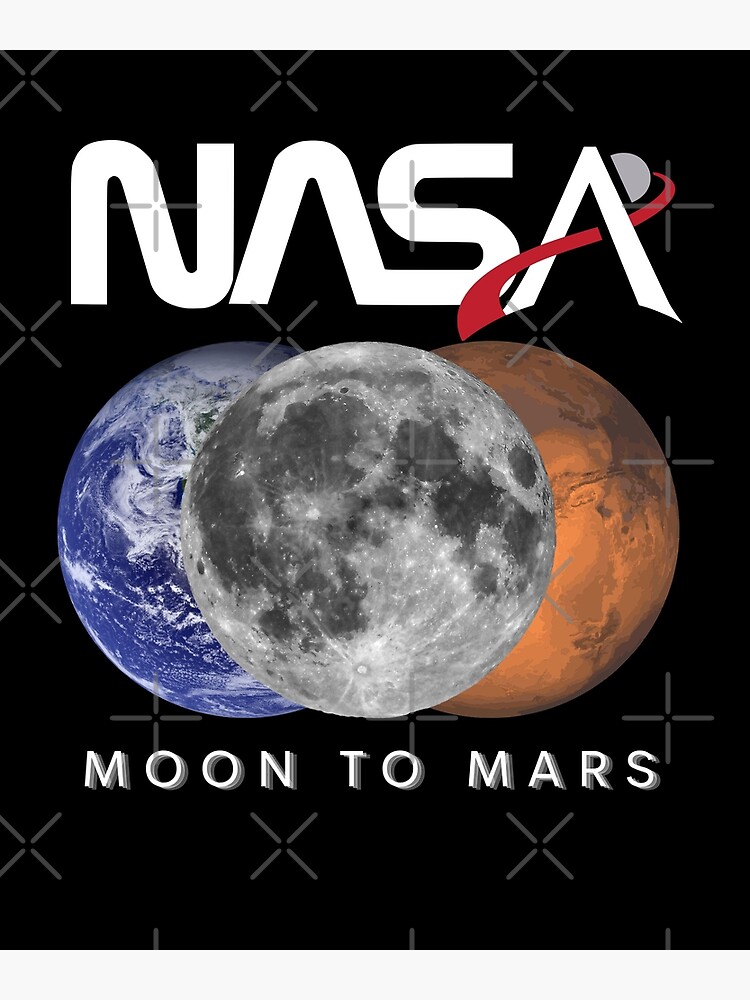
For Wall Street and global financial markets, the official pivot toward a sustained lunar presence and an aggressive Martian campaign represents a generational shift in capital allocation. The intersection of government funding and private venture capital is creating a multi-trillion-dollar space economy.
Analysts note that the technological spin-offs required to sustain human life on Mars—ranging from advanced closed-loop recycling and artificial intelligence to next-generation solar arrays and nuclear thermal propulsion—will yield immediate commercial applications on Earth. Clean energy, agricultural technology in extreme environments, and advanced robotics stand to benefit most from the massive research and development outlays required for the mission.
Furthermore, the race to Mars serves as a powerful catalyst for STEM education and workforce development, securing a high-skilled labor pipeline for the United States over the next several decades.
| Strategic Phase | Primary Objective | Target Window | Key Economic Impact |
|---|---|---|---|
| Artemis Lunar Campaign | Establish permanent human base on the Moon | Ongoing / Late 2020s | Cislunar resource mining, robotics, logistics |
| Deep Space Transit | Test life support & heavy propulsion | Early 2030s | Advanced propulsion, radiation shielding R&D |
| Crewed Mars Landing | First humans walk on the Red Planet | Within 10 Years (Mid-2030s) | Trillion-dollar tech spin-offs, global aerospace boom |
Overcoming Technical and Fiscal Hurdles
Despite the high enthusiasm, critics and fiscal hawks within Washington have raised questions regarding the feasibility and cost of executing a crewed Mars mission amidst broader federal budget pressures. A journey to Mars involves unprecedented logistical hurdles, including the psychological and physical toll of microgravity and cosmic radiation on human astronauts during a nine-month transit each way.
However, proponents argue that the modular approach—leveraging the Moon as a proving ground and fueling station—drastically reduces the overall mass and financial burden required to launch directly from Earth’s deeper gravity well.
By fostering competitive tension and collaboration between NASA and commercial aerospace pioneers, the agency aims to drive down the cost per kilogram to deep space, turning what was once an astronomical expense into a manageable, structured capital investment.
Frequently Asked Questions
What is the official target date for the crewed Mars mission?
NASA's new leadership has established a strict 10-year timeline, pointing toward a human landing on the Red Planet within the mid-2030s, backed by a robust lunar precursor program.
How will the mission be funded?
The initiative relies on a hybrid model combining federal appropriations with commercial space partnerships, leveraging private sector innovation to drastically lower the costs of heavy-lift rocketry and deep-space habitation.