Beyond Flags and Footprints: The Cold Economic and Geopolitical Reality Behind NASA’s ‘New’ Moon Rush
As the Artemis program prepares for its next phase, a fundamental shift in technology, finance, and geopolitics separates it from the Apollo era. Here is what is actually new about humanity's return to the Moon.
WASHINGTON, D.C. — More than half a century after Neil Armstrong took his "one giant leap," humanity stands on the precipice of its return to the lunar surface. Yet, as NASA’s Artemis program dominates headlines, a critical question has emerged among taxpayers, Wall Street investors, and global policymakers: Is this just an expensive, nostalgic rerun of the 1960s Apollo missions, or is something fundamentally different this time?
According to research and analysis from the Planetary Society, the answer goes far beyond upgraded computers and sleeker spacesuits. The Artemis program represents a paradigm shift in how humanity accesses, utilizes, and commercializes outer space. Where Apollo was a high-stakes, short-lived geopolitical sprint, Artemis is designed to be an enduring, economically integrated marathon.
Executive Briefing: What Actually Makes Artemis Different?
- The Destination Pivot: Unlike the flat equatorial plains targeted by Apollo, Artemis is aiming exclusively for the Lunar South Pole—a treacherous, resource-rich terrain holding billions of tons of water ice.
- The Public-Private Financial Model: Rather than owning and operating all hardware, NASA is acting as a "tenant" and anchor customer, leveraging competitive, fixed-price contracts with private titans like SpaceX and Blue Origin.
- Geopolitical Alliances (The Artemis Accords): Artemis is not a unilateral American campaign. It is supported by a coalition of over 40 nations, serving as a strategic counterweight to the joint China-Russia lunar coalition.
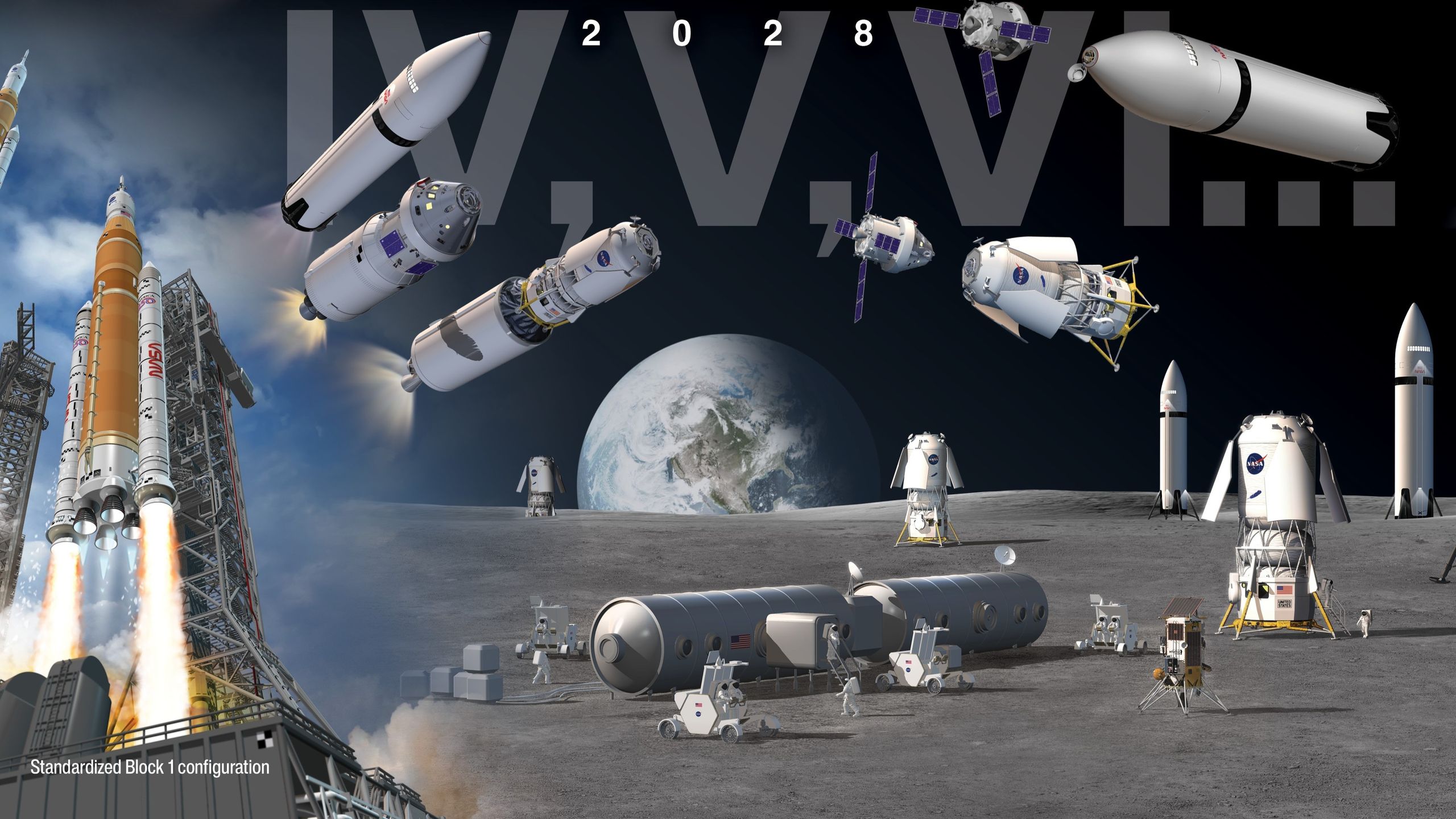
- Sustainable Infrastructure (The Gateway): Instead of direct-to-surface flights, missions will utilize a mini-space station in lunar orbit, acting as a permanent staging ground for both the Moon and eventual voyages to Mars.
1. The South Pole: From Science Fiction to Real Estate Gold Rush
During the Apollo era, landing sites were selected primarily for safety. Smooth, flat equatorial plains offered the highest probability of a successful touchdown. Science was a secondary priority, and long-term habitation was never on the table. Once the flags were planted and the dust settled, Apollo was promptly canceled in 1972 due to soaring costs and waning political interest.
Artemis, however, is a resource grab disguised as exploration. The target is the lunar South Pole, a region characterized by deep, permanently shadowed craters. Deep inside these craters, temperatures hover near absolute zero, preserving vast reservoirs of water ice.
"Water is the oil of the solar system," says Asa Stahl of the Planetary Society. By harvesting this ice, future missions can purify it for drinking water, split it into oxygen for breathing, and liquid hydrogen for rocket fuel. This process, known as in-situ resource utilization (ISRU), eliminates the economically prohibitive requirement of launching heavy water and fuel from Earth's deep gravity well.
2. The Financial Revolution: Wall Street Enters Deep Space
Perhaps the most radical departure from the 20th century is how Artemis is being financed. The Apollo program was a classic "cost-plus" government project. NASA paid aerospace contractors for their development costs plus a guaranteed profit margin, leading to ballooning budgets but absolute government control.
Artemis has inverted this model through fixed-price, milestone-based service contracts. Under the Human Landing System (HLS) program, companies like SpaceX (with its Starship HLS) and Blue Origin (with its Blue Moon lander) must fund a significant portion of their own development costs. NASA only pays upon successful delivery of specific milestones.
| Operational Metric | The Apollo Program (1961–1972) | The Artemis Program (Present) |
|---|---|---|
| Primary Objective | Geopolitical dominance (Cold War sprint) | Sustainable presence and economic integration |
| Primary Landing Zones | Equatorial plains (for flat, safe landings) | Lunar South Pole (for water ice resources) |
| Financial Contract Model | Government-owned, cost-plus contracts | Commercial public-private partnerships (Fixed-Price) |
| International Framework | Unilateral US program | Multilateral coalition (The Artemis Accords) |
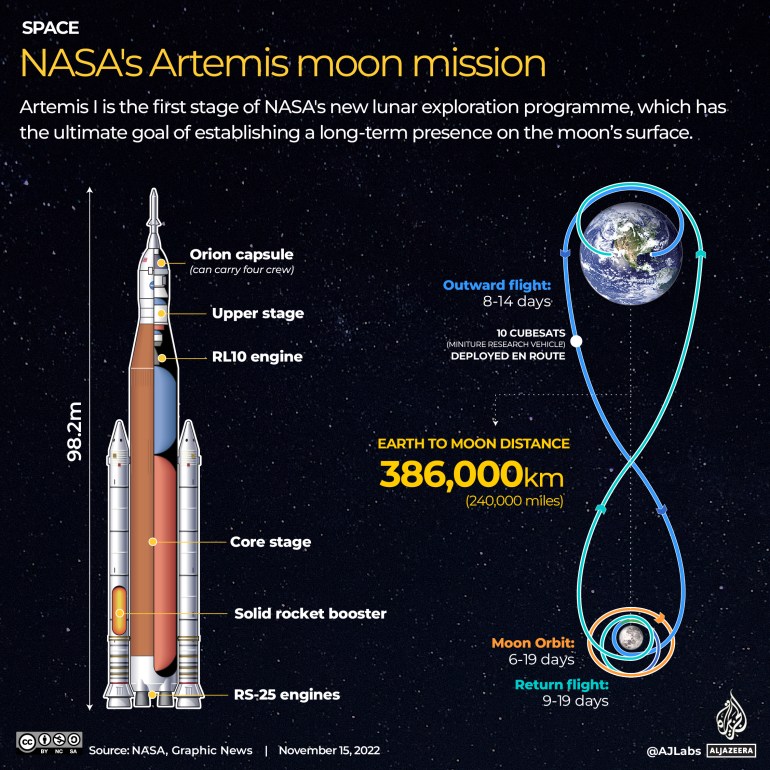
| Deep Space Architecture | Direct Apollo Command/Service Module | SLS, Orion, and the orbiting Gateway station |
This commercialization extends to the Commercial Lunar Payload Services (CLPS) initiative, where private robotic landers carry scientific instruments to the Moon. By fostering a competitive commercial market, NASA is attempting to drive down the cost of deep-space access, turning the Moon into an economically viable destination for private industry.
3. Geopolitics 2.0: The Artemis Accords vs. The Sino-Russian Alliance
The space race of the 20th century was a binary, ideological battle between the United States and the Soviet Union. Today’s landscape is far more complex. Artemis is governed by the Artemis Accords, a set of bilateral agreements led by the U.S. Department of State and NASA to establish "safety zones" and guidelines for resource extraction on the Moon.
This is not merely about international goodwill; it is a calculated diplomatic maneuver. By signing up dozens of allied nations, the U.S. is setting the legal and behavioral standards for the future space economy. This block stands in direct competition with the International Lunar Research Station (ILRS), a rival lunar base project spearheaded by China and Russia.
The Road Ahead: High Risks and Massive Rewards
Despite the strategic brilliance of the Artemis architecture, the program faces intense scrutiny. Delays with SpaceX's Starship development, heat shield anomalies on NASA's Orion capsule, and escalating costs of the Space Launch System (SLS) rocket have pushed back the target dates for crewed landings.
Yet, the momentum remains historic. Unlike Apollo, which was designed to end once its political goal was achieved, Artemis is building an open-source infrastructure for the next century. If successful, it will not just return humans to the Moon—it will permanently expand the boundary of the human economy into the solar system.
Frequently Asked Questions (FAQ)
Why is water ice on the Moon such a big deal for the Artemis missions?
Water ice is crucial because lifting water, oxygen, and fuel from Earth is incredibly expensive due to our planet's strong gravity. By mining and processing lunar water ice into liquid hydrogen and oxygen, the Moon can serve as an interplanetary "gas station." This dramatically reduces the cost of long-duration lunar stays and makes future crewed journeys to Mars technologically and financially feasible.
Is the Artemis program entirely funded by American taxpayers?
While the core infrastructure—such as the Space Launch System (SLS) rocket and the Orion capsule—is funded by NASA's congressional budget, the overall program relies heavily on co-investment. Private companies like SpaceX and Blue Origin are investing billions of their own capital to develop lunar landers, betting on future commercial lunar markets. Furthermore, international partners like the European Space Agency (ESA), Japan (JAXA), and Canada (CSA) are funding critical hardware, such as modules for the Gateway space station, in exchange for flight opportunities for their own astronauts.