Executive Takeaways
- Unprecedented Distribution Concept: Elon Musk’s proposal to allocate SpaceX equity to every minor in the United States introduces complex capital allocation and corporate governance challenges for privately held aerospace conglomerates.
- Valuation Multiples and Capital Structure: Valued north of $200 billion in private secondary markets, executing a broad retail or youth-focused share distribution requires revolutionary adjustments to share structures, capitalization tables, and regulatory compliance.
- Regulatory and Fiduciary Hurdles: Federal securities laws, custodial requirements for minors, and SEC oversight present formidable legal barriers to a direct equity transfer of this magnitude.
- Market Liquidity Implications: Financial analysts are weighing how fractionalized private shares could create secondary trading ecosystems reminiscent of meme-stock dynamics, impacting institutional investor sentiment.
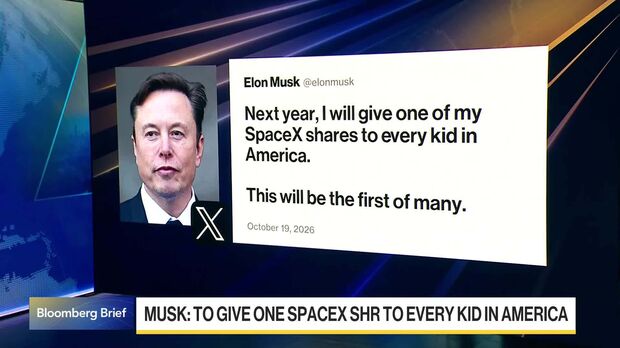
WASHINGTON & NEW YORK — In an announcement that has instantly galvanized global financial markets, set off emergency conference calls among securities lawyers, and dominated trading floors from Wall Street to London, Elon Musk has declared an unprecedented corporate maneuver: granting a SpaceX equity share to "every kid in America."
The disclosure, which rippled across digital feeds and terminal screens on October 19, 2026, fundamentally challenges traditional corporate finance paradigms. Space Exploration Technologies Corp. (SpaceX) remains one of the world's most valuable privately held enterprises, anchoring a duopoly in global launch services via its Falcon rocket fleet while disrupting terrestrial telecommunications through the Starlink satellite constellation. Transitioning any portion of its capitalization table to tens of millions of American minors is not merely a philanthropic gesture; it is an administrative, legal, and financial Rubicon.
For institutional asset managers, venture capitalists, and regulatory compliance officers, the immediate reaction has been a scramble to model the implications. How does a privately held C-corporation distribute fractionalized equity to an estimated 73 million children without violating securities registration mandates? What are the immediate tax liabilities, custodial complexities, and governance bottlenecks? This investigative report unpacks the mechanics, the market reaction, and the profound long-term economic fallout of Musk’s audacious proposal.
The Catalytic Moment: Decoding the Announcement
The declaration arrived via digital channels, quickly picked up by major wire services and financial terminals. While light on immediate administrative blueprints, the conceptual framework mirrors Musk’s historical penchant for bypassing conventional corporate communications to ignite direct public engagement.
SpaceX has long operated under a tightly controlled ownership structure. Dominated by Musk’s commanding voting stake, alongside institutional heavyweights such as Founders Fund, Valor Equity Partners, and Alphabet Inc., the company has resisted the siren song of a traditional initial public offering (IPO). Executives have repeatedly argued that private status shields the enterprise from the myopic quarterly earnings pressures that plague publicly traded aerospace peers.
By suggesting a universal youth equity distribution, Musk has introduced a radical paradox: utilizing a private corporate vehicle to execute a populist, public-wide wealth-sharing initiative. Financial analysts note that while the populist appeal is undeniable, the structural reality involves untangling a web of securities regulations, valuation metrics, and fiduciary duties.
Capital Structure, Valuation Multiples, and Share Mechanics

To understand the sheer magnitude of the proposal, one must examine SpaceX’s current financial architecture. Recent private-market secondary transactions peg the company’s valuation well above $200 billion, driven by surging revenues from Starlink broadband subscriptions and high-cadence Falcon 9 and Falcon Heavy launches for commercial and government payloads.
Distributing a "share" of SpaceX requires parsing what that share actually represents. In private corporations, common stock is often subject to strict transfer restrictions, Right of First Refusal (ROFR) agreements, and complex vesting schedules. Furthermore, given that a single whole share of SpaceX based on recent valuations commands a substantial dollar figure, any program directed at minors would necessitate massive share-splitting or the creation of specialized tracking stock / fractionalized trust units.
| Metric / Parameter | Current SpaceX Status | Proposed Youth Distribution Impact |
|---|---|---|
| Corporate Structure | Privately held Delaware C-Corp | Requires capital restructuring or trust architecture |
| Estimated Target Population | N/A (Institutional & Private) | Approx. 73 Million U.S. Minors (Ages 0–17) |
| Valuation Benchmark | $200B+ (Secondary Market Estimates) | Dilution impact dependent on share class allocation |
| Regulatory Oversight | Private exemptions (Regulation D) | Triggers SEC public reporting & custodial compliance |
As detailed in the matrix above, shifting from an exclusive institutional capitalization table to welcoming tens of millions of retail minor shareholders transforms SpaceX’s regulatory profile overnight. Under U.S. federal securities law, crossing specific shareholder thresholds forces private companies into reporting requirements historically reserved for public entities.
Regulatory Compliance and Custodial Nightmares
Legal scholars and fintech executives have pointed out that gifting financial assets to minors is fraught with logistical hurdles. Minors lack the legal capacity to enter into binding contracts or hold direct brokerage accounts without adult custodianship.
- Uniform Transfers to Minors Act (UTMA): Establishing UTMA or Uniform Gifts to Minors Act accounts for over 70 million children would require an unprecedented administrative partnership with major custodian banks and digital brokerages.
- SEC Shareholder Thresholds: Section 12(g) of the Securities Exchange Act of 1934 typically requires companies with total assets exceeding $10 million and a class of equity security held of record by either 2,000 persons or 500 non-accredited persons to register with the Securities and Exchange Commission (SEC). While special exemptions can be sought, a mass distribution would inevitably trigger intense federal scrutiny.
- Tax Implications: The IRS treats corporate equity transfers as taxable events. Determining the cost basis, managing gift tax exclusions, and handling potential "kiddie tax" liabilities on future dividends or capital gains creates a labyrinthine tax compliance burden for families nationwide.
Industry & Market Implications: Who Wins, Who Loses?
The ripple effects of Musk’s proposal extend far beyond SpaceX’s headquarters in Hawthorne, California. Wall Street equity researchers have begun mapping out the broader economic and competitive fallout.
The Winners
Fintech Infrastructure Providers: Platforms specializing in fractional share custody, digital onboarding, and minor-focused financial literacy applications stand to gain massive enterprise contracts if they are tapped to manage the distribution ledger.
Space Economy Retail Awareness: By anchoring a generation of children to space infrastructure ownership, public enthusiasm for commercial space exploration, asteroid mining, and lunar development will solidify, potentially driving future legislative and capital support for aerospace initiatives.
The Losers & Risk Bearers
Institutional Governance: Venture capital backers who prefer a streamlined cap table may find their influence diluted by the sheer administrative noise of managing millions of retail micro-shareholders.
Compliance Officers: Legal and accounting departments at SpaceX face an unprecedented compliance mountain, diverting human capital away from core engineering, rocket manufacturing, and Starlink network scaling.
Frequently Asked Questions (People Also Ask)
Is Elon Musk legally required to follow through on the SpaceX share announcement?
Corporate statements made via social media or public forums are subject to intense scrutiny by securities regulators, but a casual or conceptual announcement does not immediately constitute a binding corporate action. Implementing such a program requires formal board approval, restructuring of the corporate bylaws, and navigation of SEC regulations.
How would minors actually hold a share of a private company like SpaceX?
Because minors cannot legally own direct equity or manage brokerage accounts independently, any distribution would require custodial frameworks such as Uniform Transfers to Minors Act (UTMA) accounts, specialized digital trusts, or a newly engineered corporate subsidiary vehicle designed to hold fractionalized shares on behalf of participants until legal adulthood.
What happens to SpaceX’s private valuation if millions of shares are given away?
The economic impact depends entirely on whether existing shareholders experience dilution or if Musk allocates a portion of his personal equity stake to fund the initiative. If newly issued shares are created, it could alter valuation multiples; if existing insider shares are transferred, total enterprise value remains technically stable while ownership concentration shifts.
Does this mean SpaceX is finally preparing for an Initial Public Offering (IPO)?
Not necessarily. While distributing equity to millions of retail holders shares characteristics with a public company, SpaceX leadership has historically maintained a strong aversion to public market pressures. However, managing a shareholder base of this scale would inevitably force the company to adopt many of the transparency and reporting standards associated with public corporations.
Future Outlook: Milestones to Watch
As this investigative report goes to press, financial markets are awaiting formal filings with corporate registries and potential clarifications from Elon Musk or SpaceX executives. Key milestones that Wall Street will monitor over the coming quarters include:
- Official SEC or Corporate Filings: Any formal documentation submitted to regulatory bodies regarding equity restructuring or capital authorization.
- Custodial Partnership Announcements: Collaborations between SpaceX and major financial institutions, neo-banks, or transfer agents designed to handle minor account onboarding.
- Board Resolution Updates: Insights from institutional board members regarding how corporate governance and voting rights will be managed under a mass-distribution model.
Ultimately, whether Musk’s declaration materializes as a fully realized economic revolution or serves as a masterclass in market psychology and public engagement, it has permanently altered the discourse surrounding private equity, wealth distribution, and the democratization of the commercial space age.