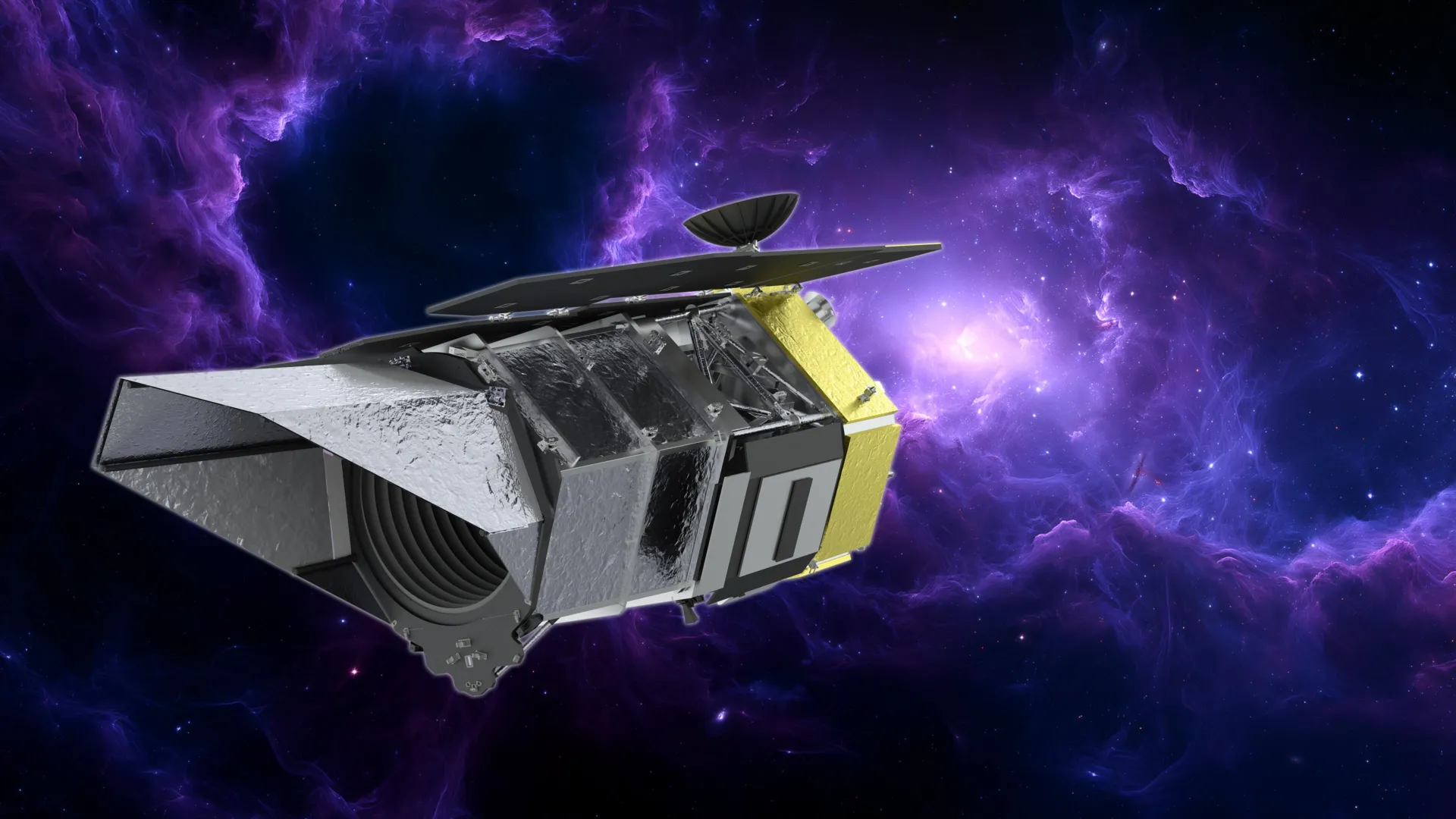
The $4 Billion Cosmic Gamble: NASA Launches Roman Space Telescope to Map the Dark Universe Amid High-Stakes Engineering Race
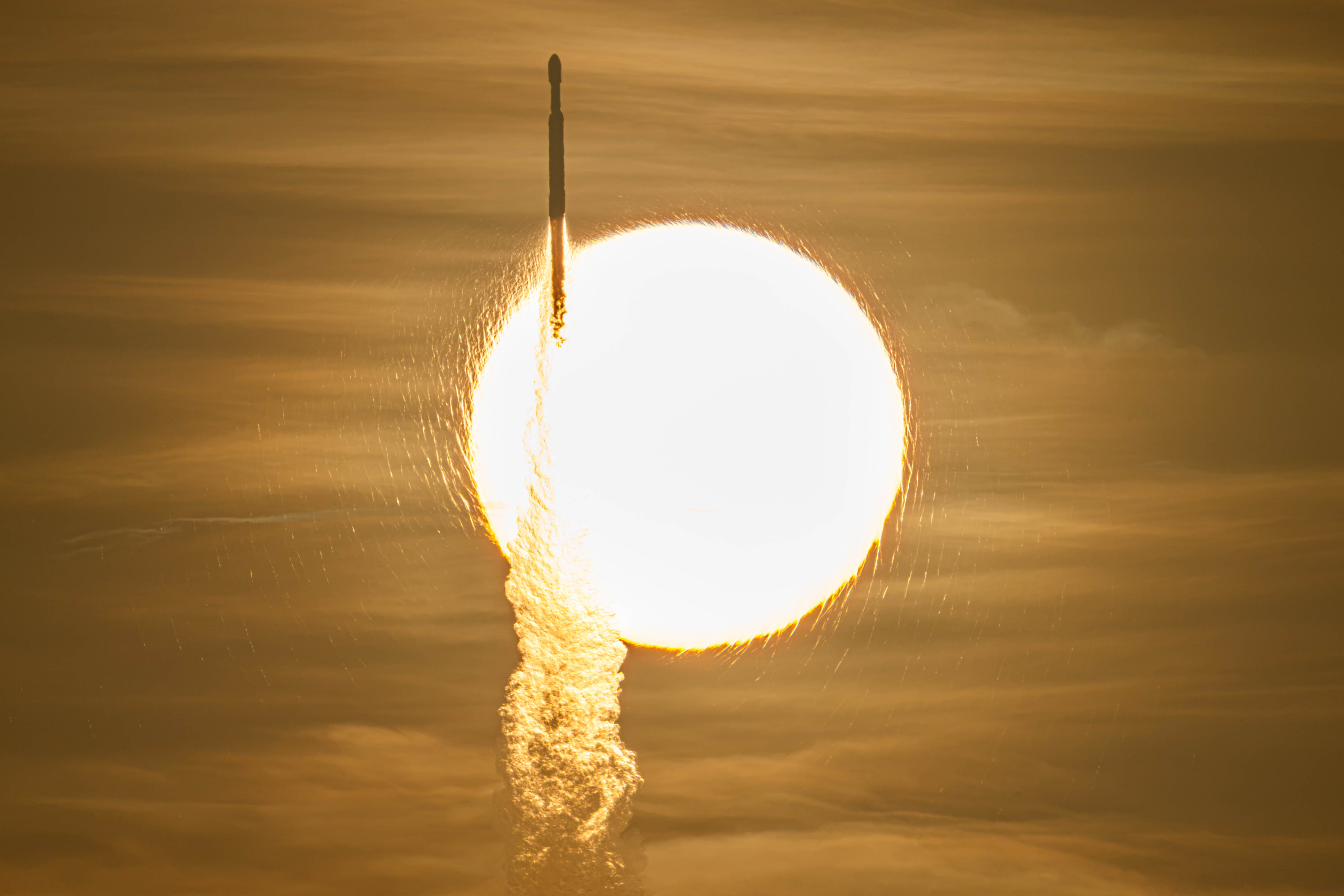
CAPE CANAVERAL, FL — In a monumental bid to solve the cosmos's deepest mysteries, NASA has successfully launched the Nancy Grace Roman Space Telescope. Positioned as the successor to both the Hubble and James Webb telescopes, this next-generation observatory is designed to unlock the secrets of dark energy, dark matter, and faraway worlds. However, the triumph of the launch is already accompanied by intense drama behind the scenes, as elite engineering teams race to resolve a technical anomaly identified during the spacecraft's initial post-launch deployment phase.
The mission, carrying a price tag of roughly $4.1 billion, represents a major leap in astrophysical capabilities. While the James Webb Space Telescope (JWST) acts as a cosmic microscope, peering deep into narrow slivers of space with exquisite detail, the Roman Space Telescope will function as a cosmic macroscope. Featuring a field of view 100 times larger than Hubble’s, Roman is built to capture massive, panoramic sweeps of the infrared sky, mapping billions of galaxies with unprecedented speed.
Inside the Post-Launch Drama: Engineers Investigate Early Anomaly
Even as celebration echoed through NASA’s Goddard Space Flight Center and the halls of its industrial partners, mission controllers quickly pivoted to a high-stakes troubleshooting effort. According to agency sources, engineers are actively investigating a minor telemetry anomaly in one of the telescope’s primary communications arrays that occurred shortly after separating from its launch vehicle.
"Our teams are trained for exactly these moments," a senior NASA systems engineer told reporters under condition of anonymity. "The spacecraft is stable, healthy, and drawing power. We are systematically diagnosing the communication subsystem's behavior before we initiate the crucial mirror deployment and instrument cooling phases. We expect a resolution within days, well before the telescope reaches its final orbital destination."
This tense post-launch period is typical for deep-space hardware, where every gear, latch, and circuit must function flawlessly in the vacuum of space. Investors and scientific stakeholders alike are watching the situation closely, given the massive global supply chain—including prime contractors BAE Systems Space & Mission Systems (formerly Ball Aerospace) and L3Harris Technologies—riding on the mission's ultimate operational success.
Why the Roman Space Telescope is a Game-Changer
The primary scientific objective of the Roman Space Telescope is to decipher the nature of "Dark Energy" and "Dark Matter," which together make up roughly 95% of the universe but remain completely invisible to modern instruments. By observing billions of distant galaxies, Roman will map how the universe has expanded over cosmic time, helping scientists understand whether dark energy is a constant property of space or a dynamic force that could eventually tear the cosmos apart.
Additionally, Roman will deploy a revolutionary Coronagraph Instrument. This technology acts as an internal stellar eclipse, blocking out the blinding light of distant stars so that scientists can directly image and analyze the atmospheres of giant exoplanets orbiting them. This is expected to pave the way for future missions aimed at finding habitable, Earth-like worlds.
Key Mission Profiles and Capabilities:
- Unmatched Field of View: Captures images with the depth and clarity of Hubble, but covers 100 times more sky in a single exposure.
- Dark Energy Mapping: Will measure the distribution of matter and the expansion rate of the universe across billions of light-years.
- Exoplanet Census: Utilizing a technique called gravitational microlensing, Roman is expected to discover thousands of new exoplanets in the inner ring of our Milky Way galaxy.
- Strategic Orbit: Operating at Lagrange Point 2 (L1 or L2), approximately 1 million miles from Earth, ensuring thermal stability and uninterrupted observations.
Comparing the Titans: Roman vs. Hubble vs. Webb
To understand the strategic value of the Roman Space Telescope, one must look at how it complements the existing suite of space-based observatories. It is not a replacement for Webb, but rather its essential scientific partner.
| Feature / Specification | Hubble Space Telescope | James Webb Telescope (JWST) | Nancy Grace Roman Telescope |
|---|---|---|---|
| Primary Mirror Diameter | 2.4 Meters | 6.5 Meters | 2.4 Meters |
| Primary Wavebands | UV, Optical, Near-Infrared | Near-Infrared, Mid-Infrared | Visible, Near-Infrared |
| Field of View | Standard (Baseline) | Narrow / High-Precision | 100x Wider than Hubble |
| Primary Science Focus | General Astronomy & Deep Fields | First Galaxies, Atmospheric Chemistry | Dark Energy, Exoplanets, Galactic Survey |
| Estimated Cost | ~$16 Billion (Lifetime) | ~$10 Billion | ~$4.1 Billion |
The Global Economic and Scientific Impact
From an economic perspective, the Roman Space Telescope is a prime example of the growing "Space Economy." The project has supported thousands of high-tech manufacturing, engineering, and software jobs across the United States and international partner nations, including the European Space Agency (ESA) and the Japanese Aerospace Exploration Agency (JAXA).
"Roman is more than a telescope; it’s an economic driver for advanced optics and detector technologies," says Arindam Mukherjee, a senior aerospace analyst. "The data pipelining alone will require advanced machine learning algorithms to process the petabytes of images sent back to Earth. The commercial spillover into earth imaging, defense systems, and big data management will be felt for decades."
As NASA engineers continue their diagnostic work, the global scientific community remains on edge, eager for the first light images scheduled to be transmitted in the coming months. If successful, Roman will not only rewrite astronomy textbooks but will fundamentally reshape humanity's place in the cosmos.
Frequently Asked Questions
What makes the Roman Space Telescope different from the James Webb Space Telescope?
While the James Webb Space Telescope (JWST) is designed to look incredibly deep at specific, highly targeted areas of the universe, the Roman Space Telescope is built for speed and scale. Roman's massive field of view allows it to map areas of the sky 100 times larger than Hubble or Webb in a fraction of the time, acting as a "wide-angle lens" to Webb's "telephoto lens."
What is the engineering issue currently being investigated?
Shortly after launch, NASA engineers noticed a minor telemetry anomaly in the spacecraft's communication subsystem. While the telescope is safe, stable, and generating solar power, specialists are diagnostic testing the array to ensure perfect communication pathways before proceeding with critical, irreversible instrument deployments.