Executive Takeaways
- Unprecedented Cadence: SpaceX concluded October by executing its historic 700th Falcon 9 launch, cementing the vehicle's status as the most flown orbital-class commercial rocket in history.
- Capital Allocation Shift: The relentless flight rate has radically altered global aerospace valuation multiples, forcing legacy prime contractors to reassess their enterprise ROI and hardware manufacturing strategies.
- Infrastructure Scalability: The Falcon 9 reuse model has unlocked compounding operational efficiencies, driving down cost-per-kilogram metrics to levels previously deemed economically unviable by traditional market analysts.
- Regulatory & Supply Chain Dynamics: Sustaining a multi-launch-per-week cadence requires complex regulatory compliance, resilient supply chain risk mitigation, and advanced telemetry management.
WASHINGTON & HAWTHORNE — In the high-stakes theater of commercial aerospace, few milestones capture the transition from experimental engineering to industrial dominance quite like a rolling tally of operational success. As October drew to a close, SpaceX quietly yet decisively achieved a landmark that once belonged to the realm of speculative science fiction: the 700th successful launch of its workhorse Falcon 9 rocket. For an industry historically defined by exorbitant cost-plus contracts, multi-year developmental delays, and razor-thin risk tolerances, this achievement represents a fundamental paradigm shift in enterprise ROI, orbital infrastructure scalability, and market liquidity within the space economy.
To fully grasp the magnitude of the 700-flight threshold, one must examine the trajectory not merely as a count of ascending carbon-composite fairings and liquid oxygen plumes, but as a masterclass in iterative engineering and operational discipline. While sovereign space programs spent decades perfecting bespoke, single-use launch systems, SpaceX engineered a reusable architecture designed to capture compounding cost advantages. The culmination of this strategy in late October underscores how private capital allocation, paired with aggressive risk mitigation and cloud compute architecture for real-time flight telemetry, can disrupt a multi-billion-dollar incumbent market in under two decades.
The Catalytic Evolution of Falcon 9: From Incipient Risk to Industrial Engine
Test Our Free AI & Tech Utilities Suite
Calculate LLM API token costs, analyze article dwell-time, or simulate tech DCA returns.
When the Falcon 9 first cleared the pad at Cape Canaveral Air Force Station’s Space Launch Complex 40 in June 2010, institutional skeptics questioned the viability of a privately funded medium-lift vehicle entering a market dominated by state-backed aerospace conglomerates. Early flight failures tested investor confidence, requiring rigorous technical pivots and sophisticated risk mitigation strategies. However, the foundational pivot toward vertical landing and booster reuse—famously demonstrated during the historic Orbcomm-2 mission in December 2015—unlocked a structural moat that competitors have struggled to replicate.
Over the subsequent decade, the iteration cycle accelerated exponentially. The introduction of the Block 5 variant in 2018 marked a decisive turning point, engineered explicitly for rapid turnaround, minimal refurbishment, and high-frequency flight readiness. By treating launch hardware less like a delicate antique and more like a commercial airliner, SpaceX transformed its balance sheet. Each successfully recovered booster lowered the marginal cost of manufacturing new first stages, thereby generating surplus capital that was systematically reinvested into next-generation architectures like Starship, as well as the rapid scaling of the Starlink satellite internet constellation.
Financial analysts monitoring aerospace valuation multiples have noted that Falcon 9’s unmatched cadence has effectively monopolized commercial launch demand. Satellite operators, global telecommunications enterprises, and national security payloads increasingly gravitate toward the proven reliability and schedule certainty of the Falcon 9 manifest, leaving legacy providers scrambling to defend their market share against an insurmountable cost advantage.
Verified Data & Metrics Breakdown
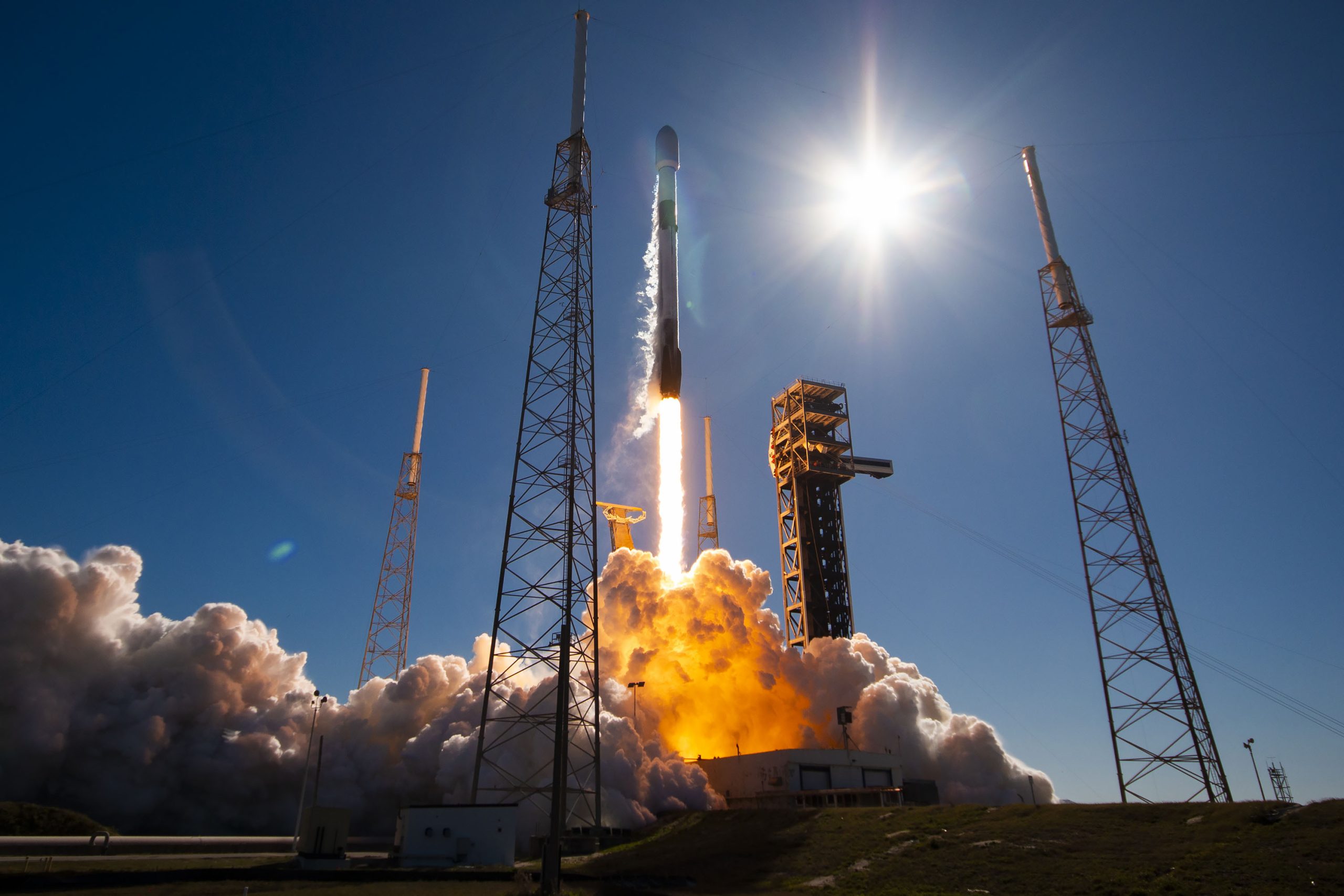
To contextualize the operational velocity of the Falcon 9 program, the following comparative dataset illustrates the evolution, scaling metrics, and performance parameters that define its market leadership:
| Metric / Parameter | Falcon 9 (Block 1 - Era) | Falcon 9 (Block 5 - Current) | Industry Legacy Average |
|---|---|---|---|
| Total Successful Launches (Cumulative) | 1 – 20 (2010–2014) | Approaching 700 (October Milestone) | Varies (Typically 50–150 lifetime) |
| First Stage Recovery Rate | 0% (Expendable) | >95% Success Rate | Near 0% (Exceptional partial recovery tests) |
| Average Booster Flight Reusability | 1 Flight (Single Use) | Up to 20+ Flights per Booster | 1 Flight |
| Estimated Cost per Kilogram to LEO | ~$4,500 – $5,000 | < $2,500 (Optimized scale) | $10,000 – $20,000+ |
| Launch Cadence | 2–6 launches annually | Multiple launches per week | 4–8 launches annually per vehicle family |
Industry & Market Implications: Winners, Losers, and Economic Realities
The crossing of the 700-launch threshold is not merely a technical triumph; it is a profound structural shock to the global macroeconomic landscape of aerospace and defense. As enterprise clients demand faster time-to-orbit for communications, Earth observation, and national security assets, market liquidity has concentrated heavily around infrastructure providers capable of delivering absolute schedule reliability.
Who Wins: Commercial satellite operators and mega-constellation architects reap the direct benefits of compressed deployment timelines. Furthermore, institutional investors holding equity or debt positions in vertically integrated private space enterprises see validation of high-risk capital allocation strategies. Downstream cloud computing and data analytics providers also win, as the influx of high-bandwidth orbital data feeds directly into enterprise cloud architectures.
Who Loses: Traditional aerospace prime contractors and foreign space agencies accustomed to cost-plus contracting models face severe existential pressure. Without a comparable reusable heavy-lift infrastructure, legacy providers struggle to compete on price or cadence, forcing painful corporate restructuring, portfolio divestitures, and hurried attempts to retrofit uncompetitive rocket designs.
From a regulatory compliance standpoint, the high-frequency launch model has forced agencies like the Federal Aviation Administration (FAA) and the Federal Communications Commission (FCC) to evolve their oversight mechanisms. Balancing environmental impact reviews with national security launch manifests requires sophisticated risk mitigation frameworks and expanded airspace management protocols.
Frequently Asked Questions (People Also Ask)
What makes the Falcon 9 rocket uniquely reusable compared to traditional launch vehicles?
Unlike traditional rockets that discard their first stages into the ocean after a single burn, the Falcon 9 incorporates advanced grid fins, a reignitable Merlin engine suite, supersonic retropropulsion, and autonomous landing legs. These systems allow the multi-ton booster to guide itself back through the atmosphere and land propulsively either on a autonomous droneship at sea or a designated pad on land, enabling multi-flight reusability.
How does achieving 700 launches impact SpaceX’s broader business strategy?
Reaching 700 launches provides the reliable revenue engine and operational data required to fund and refine SpaceX's next-generation heavy-lift system, Starship. It also ensures the continuous, rapid deployment and replenishment of the Starlink low-Earth orbit satellite constellation, which serves as the primary revenue catalyst for the company's expanding enterprise and consumer broadband services.
What are the primary financial and economic effects of Falcon 9 on the global launch market?
Falcon 9’s unparalleled flight rate and reusability have dramatically lowered the cost-per-kilogram to orbit, effectively democratizing access to space for commercial startups and sovereign states alike. This disruption has compressed valuation multiples for legacy aerospace manufacturers and forced global defense agencies to overhaul their procurement strategies to prioritize fixed-price, commercial-off-the-shelf launch services.
What regulatory and logistical challenges come with maintaining a multi-launch-per-week cadence?
Sustaining such an intense operational tempo demands rigorous regulatory compliance, complex airspace closures, environmental mitigation reviews, and seamless supply chain logistics. Coordinating pad turnarounds across multiple launch sites—including Kennedy Space Center, Cape Canaveral Space Force Station, and Vandenberg Space Force Base—requires advanced cloud compute architecture for real-time telemetry, structural health monitoring, and asset tracking.
Future Outlook: What Comes Next and Key Milestones to Watch
As the Falcon 9 program enters its post-700 era, the strategic focus within Hawthorne and Starbase shifts toward the delicate balancing act of maintaining operational supremacy while transitioning core payload volume to Starship. Although Falcon 9 will remain the backbone of commercial and institutional access to space for the foreseeable future, its ultimate legacy will be laying the economic and technical foundation for interplanetary infrastructure.
Industry observers and financial stakeholders will be monitoring several critical milestones over the next 24 to 36 months:
- Booster Life Extension Thresholds: Tracking the maximum verified flight limits for individual Block 5 boosters as they push past 20, 25, and potentially 30 flights, testing material fatigue limits.
- Manifest Transition Dynamics: Observing how seamlessly heavy commercial and national security payloads migrate from Falcon 9 to Starship as the latter achieves full orbital reusability and regulatory certification.
- Global Regulatory Adjustments: Monitoring international airspace management reforms designed to accommodate escalating launch cadences from domestic and international spaceports.
- Capital Market Re-evaluations: Evaluating potential secondary market liquidity events or public offerings associated with subsidiary divisions, which could redefine capital allocation paradigms across the broader tech and aerospace sectors.
Ultimately, the 700th Falcon 9 flight serves as a definitive punctuation mark on an era of aerospace transformation. It proves that commercial discipline, engineering iteration, and aggressive infrastructure scaling can permanently alter the economics of humanity's reach into the stars.