Executive Takeaways
- Structural Innovation: Elon Musk is evaluating a novel corporate capital allocation framework that would channel private SpaceX equity grants directly into state-sponsored or policy-backed "Trump Accounts."
- Valuation Metrics: With SpaceX currently commanding a private market valuation eclipsing $200 billion, transferring substantial equity stakes introduces unprecedented regulatory, compliance, and liquidity hurdles.
- Market Liquidity & Governance: The initiative intersects heavily with federal procurement dependencies, corporate governance protocols, and the broader macro-economic landscape of venture-backed aerospace.
- Strategic Inflection: This proposal marks a profound convergence of Silicon Valley wealth-distribution mechanisms and federal economic policy, signaling a radical shift in how ultra-high-net-worth tech leaders interact with sovereign fiscal initiatives.
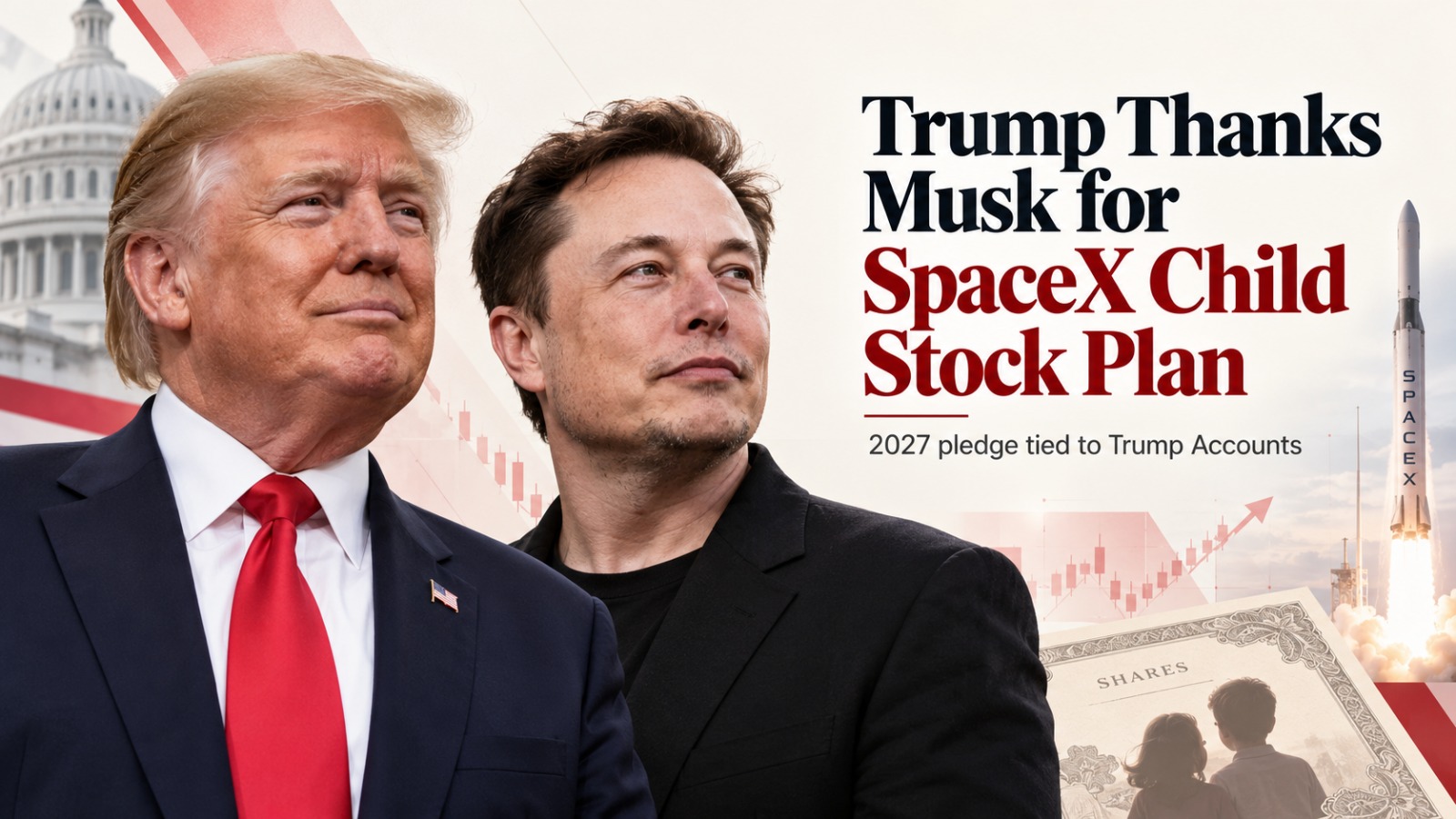
In the upper echelons of global finance and aerospace engineering, capital allocation is rarely just a matter of balance sheets; it is an exercise in geopolitical positioning. Over the past week, confidential discussions and leaked market intelligence have illuminated a breathtakingly ambitious proposal originating from the inner circle of SpaceX founder and CEO Elon Musk. The concept: a massive structural stock giveaway utilizing private equity from Space Exploration Technologies Corp. earmarked for newly conceptualized policy vehicles known colloquially as "Trump Accounts."
As financial institutions, regulatory bodies, and institutional investors dissect the cascading ramifications of this disclosure, the story has rapidly ascended to global prominence. Blending the stratospheric valuation multiples of the world’s most dominant private rocket manufacturer with the shifting winds of American fiscal policy, this development tests the boundaries of corporate philanthropy, securities regulation, and executive influence. To understand the gravity of this move, one must examine the underlying financial architecture, the precise mechanics of the proposed distribution, and the profound implications for market liquidity and regulatory compliance.
The Genesis of the Proposal: Bridging Private Equity and Federal Policy
To contextualize the current trajectory, market analysts must look backward at the unprecedented maturation of SpaceX. Over the past decade, the Hawthorne-headquartered enterprise has successfully transitioned from an experimental launch-service provider into the absolute backbone of global satellite communications via Starlink and critical-path NASA logistics. This operational dominance has translated into staggering enterprise value, driving private secondary share transactions well past historical benchmarks.
Against this backdrop of immense capital accumulation, Elon Musk has increasingly utilized his corporate platforms to signal support for macroeconomic overhauls and populist economic reforms. The introduction of the "Trump Account" concept—a policy mechanism designed to incentivize domestic savings, investment, and wealth creation through targeted asset allocation—provides the ideal structural canvas for Musk’s ambitions. By proposing to seed or supplement these accounts with actual shares of SpaceX, Musk is effectively attempting to bypass traditional fiat intermediaries, granting everyday citizens direct equity exposure to deep-tech infrastructure scalability.
However, transferring private stock in an unlisted entity to retail-facing or state-managed investment vehicles is fraught with structural friction. Unlike publicly traded equities on the New York Stock Exchange or NASDAQ, SpaceX stock is tightly held, subject to rigorous transfer restrictions, right-of-first-refusal clauses, and periodic tender offers designed to manage internal liquidity. Executing a giveaway of this magnitude requires a complete reimagining of corporate bylaws, tax exemptions, and Securities and Exchange Commission (SEC) oversight.
Deconstructing the Mechanics: Valuation, Dilution, and Capital Allocation
From a corporate finance perspective, executing an equity distribution of this scale demands rigorous risk mitigation and meticulous accounting. When an enterprise approaches valuations north of $200 billion, standard equity grants typically take the form of Restricted Stock Units (RSUs) or stock options tied to performance milestones for internal talent retention. Directing these instruments—or underlying Class A common shares—toward external accounts changes the fundamental equation.
- Valuation Multiples: SpaceX trades on private secondary markets at aggressive forward multiples, driven by the explosive top-line revenue growth of the Starlink constellation. Inserting retail-accessible accounts into this cap table alters the valuation narrative.
- Dilution Risk: Existing institutional venture capital backers, sovereign wealth funds, and early-stage investors must weigh the potential dilution effects against the strategic goodwill and political alignment generated by the initiative.
- Tax Implications: Under current U.S. tax code, transferring appreciated private stock to third-party or government-administered accounts triggers immediate capital gains realization events unless specific legislative carve-outs or charitable trust structures are deployed.
Furthermore, the infrastructure scalability required to administer millions of micro-equity holdings in a private company is staggering. Transfer agents, compliance officers, and corporate secretaries would need to implement advanced distributed ledger or specialized registry systems to track fractional ownership without destabilizing the company's primary cap table.
Verified Data & Metrics Breakdown
The following matrix outlines the foundational pillars, financial parameters, and structural components driving the proposed SpaceX stock allocation initiative:
| Metric / Parameter | Current Status / Estimate | Strategic Implication |
|---|---|---|
| SpaceX Private Valuation | $210B - $250B+ | Provides massive underlying asset backing for equity-based initiatives. |
| Target Vehicle ("Trump Accounts") | Proposed Savings/Investment Structure | Requires federal legislative approval and executive branch coordination. |
| Primary Asset Class | Class A Common / Tender Offer Shares | Necessitates exemption from standard SEC lock-up and transfer restrictions. |
| Regulatory Oversight | SEC, FTC, and DOD Intersections | High regulatory scrutiny due to defense contracting and aerospace monopolies. |
Industry & Market Implications: Who Wins and Who Loses
In the arena of high-stakes corporate strategy, capital deployment of this nature creates distinct winners and losers across Wall Street, Washington, and the broader technology sector.
The Winners: Retail-focused advocacy groups and populist policy architects stand to gain immense ideological ground. Should the initiative succeed, it establishes a powerful precedent where private wealth generated by frontier tech monopolies is directly funneled into citizen-held accounts, bridging the widening wealth gap driven by artificial intelligence and space commercialization. Additionally, early institutional investors who secure favorable liquidity terms during the restructuring could benefit from heightened public-market enthusiasm should the transaction pave the way for a future Starlink spin-off.
The Losers: Traditional aerospace legacy contractors—already struggling to compete with SpaceX’s relentless launch cadence and cost-per-kilogram economics—face further marginalization as Musk integrates his enterprise into the very fabric of national fiscal policy. Furthermore, strict regulatory compliance officers and risk mitigation teams within major financial institutions face a logistical nightmare: auditing, clearing, and valuing illiquid private space equity within standardized retail account frameworks.
Frequently Asked Questions (People Also Ask)
What exactly is a "Trump Account" in the context of this proposal?
A "Trump Account" refers to a proposed policy-backed savings and investment vehicle designed to foster asset ownership among American citizens. By integrating private equity assets like SpaceX shares into these accounts, the initiative seeks to grant retail investors direct exposure to high-growth, venture-backed enterprise value normally restricted to institutional funds.
Can private company stock legally be distributed to public savings accounts?
Under current U.S. securities laws, transferring shares of an unlisted, private corporation like SpaceX to retail accounts is severely restricted by SEC regulations governing non-public offerings, investor accreditation standards, and transfer liquidity. Substantial legislative changes, regulatory waivers, or specialized corporate structuring would be required to execute this legally.
How does this proposal impact SpaceX’s existing institutional investors?
Existing venture capital backers, private equity funds, and institutional partners hold strict governance rights, including right-of-first-refusal clauses and anti-dilution protections. Any large-scale equity giveaway would require consensus or waiver agreements from these major stakeholders to prevent internal cap-table disputes.
Will this affect SpaceX’s federal government contracts and defense status?
SpaceX is a vital national security launch provider and defense contractor cooperating closely with the Department of Defense, NASA, and the U.S. Space Force. While political alignment can foster goodwill, deep involvement in partisan fiscal policy proposals also invites intensified congressional oversight and anti-trust scrutiny regarding federal procurement dependencies.
Future Outlook: Key Milestones to Watch
As this investigative report underscores, Elon Musk’s proposed SpaceX stock giveaway into "Trump Accounts" is far more than a fleeting headline—it is a watershed moment at the intersection of private aerospace dominance and American economic statecraft. Translating this ambitious vision into operational reality will require navigating an intricate labyrinth of regulatory hurdles, tax complexities, and corporate governance negotiations.
Industry observers and market participants must monitor several critical inflection points over the coming quarters: potential legislative filings in Washington regarding tax-advantaged equity accounts, official SEC filings concerning private share transfer exemptions, and any formal communications from SpaceX’s board of directors regarding cap-table restructuring. One reality remains absolute: as Musk continues to blur the lines between private enterprise and public policy, the paradigms of corporate finance will never be the same.