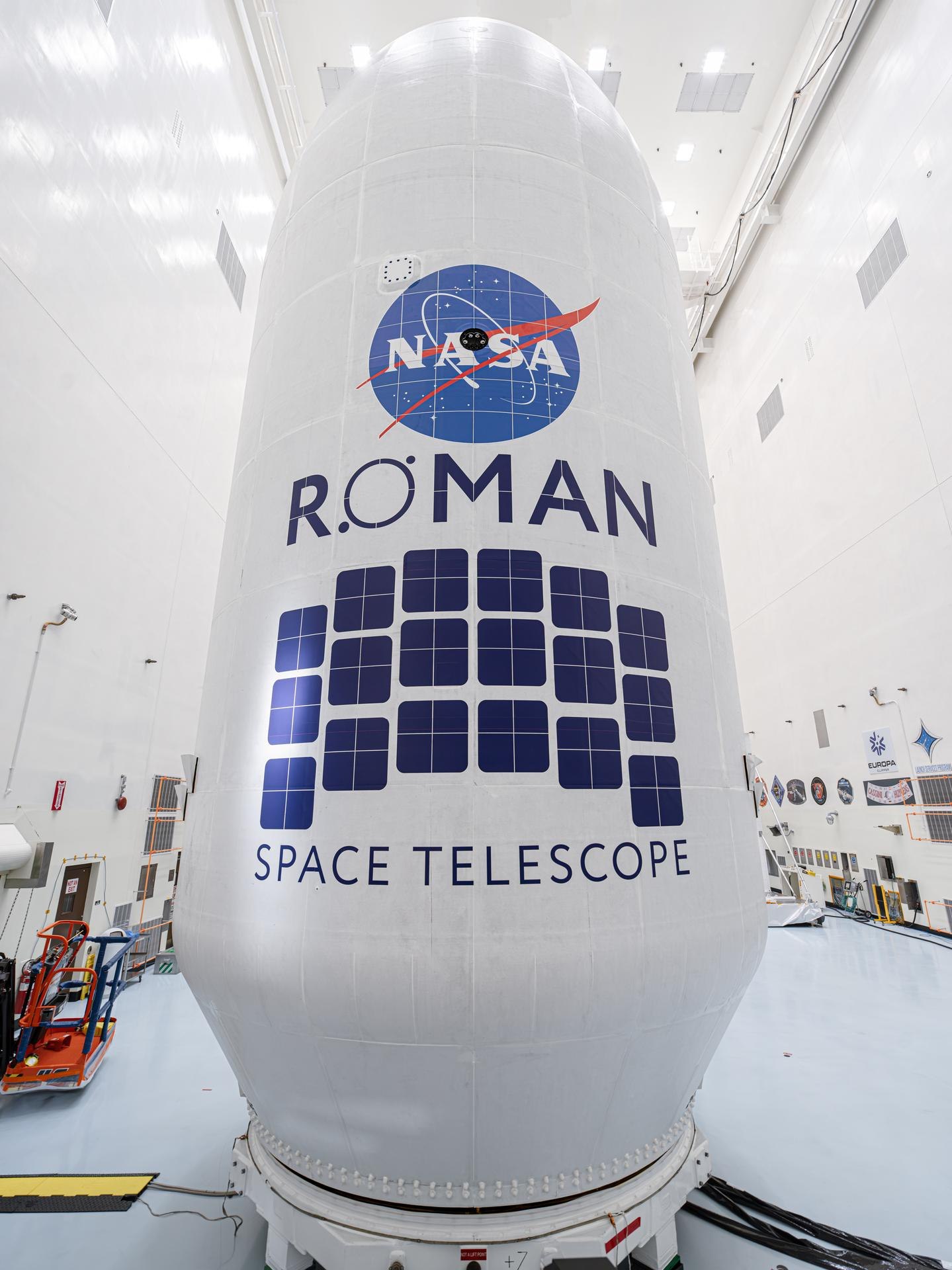
WASHINGTON — Humankind is standing on the precipice of a new astronomical era. Set for liftoff in June 2026, NASA’s forthcoming orbital observatory is poised to fundamentally alter humanity’s understanding of the cosmos. Designed to peer deeper into the dark universe than ever before, the mission promises to solve some of astrophysics’ most enduring mysteries, from the elusive nature of dark energy to the search for habitable worlds beyond our solar system.
For decades, instruments like the Hubble Space Telescope and the James Webb Space Telescope (JWST) have captured our collective imagination with breathtaking imagery and groundbreaking data. Yet, mission architects emphasize that this upcoming launch represents an entirely different class of capability—one defined by unprecedented survey speed and a colossal field of view.
The Nancy Grace Roman Space Telescope: A Panoptic Vision
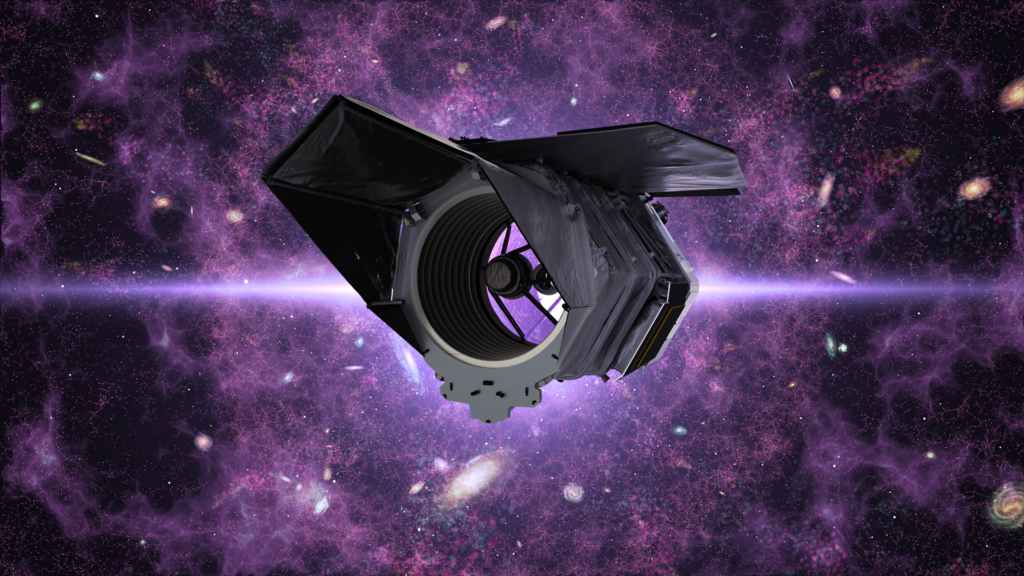
Officially named the Nancy Grace Roman Space Telescope—after NASA’s first chief astronomer, affectionately known as the "Mother of Hubble"—the spacecraft is engineered to survey large swaths of the sky with a clarity previously thought impossible from orbit. While JWST functions much like a high-powered microscopic lens focusing on deep, narrow cosmic targets, the Roman Space Telescope operates as a wide-angle master lens.
According to mission data, Roman’s primary instrument boasts a field of view 100 times greater than that of the Hubble Space Telescope’s infrared instrument. This staggering multiplier means that scientists will be able to map galaxies, track supernovae, and catalog millions of stars in a fraction of the time required by previous generations of hardware.
- Unprecedented Scale: The telescope will image regions of space with the same sharp resolution as Hubble, but covering an area 100 times larger per snapshot.
- Dark Energy Detective: By mapping billions of galaxies across cosmic time, Roman aims to measure the acceleration of the universe and decode dark energy.
- Exoplanet Census: Utilizing advanced gravitational microlensing techniques, the mission is expected to discover thousands of new planets outside our solar system.
Why This Mission Matters to Global Markets and Science

Beyond its profound cultural and scientific implications, the June 2026 launch represents a massive milestone for the aerospace sector and high-tech manufacturing supply chains. Major defense and aerospace contractors, specialized optics manufacturers, and data-analytics firms have spent years collaborating with NASA’s Goddard Space Flight Center to bring the observatory to fruition.
Economic analysts note that investments in next-generation space infrastructure routinely generate high-value technological spin-offs, driving advancements in sensor technology, digital image processing, and artificial intelligence. As private and public space endeavors converge, missions of this scale serve as the economic bedrock for the burgeoning space economy.
| Mission Parameter | Details & Specifications |
|---|---|
| Target Launch Window | June 2026 |
| Primary Mirror Diameter | 2.4 meters (same as Hubble) |
| Field of View | 100x greater than Hubble's infrared view |
| Core Scientific Goals | Dark energy, dark matter, exoplanet discovery, infrared astrophysics |
Tackling the Universe’s Greatest Unknowns
The universe is expanding at an accelerating rate—a phenomenon driven by dark energy, a mysterious pressure that makes up roughly 68 percent of the cosmos. Despite its dominance, physicists know astonishingly little about what dark energy actually is. The Roman Space Telescope is explicitly engineered to test competing theories of gravity and dark energy by observing how cosmic structures have evolved over billions of years.
Simultaneously, the observatory will conduct a massive census of exoplanets. By observing how the light from distant stars bends and brightens when a planet passes in front of them—a phenomenon known as gravitational microlensing—Roman can detect cold, distant planets that orbit far from their parent stars, including rogue planets floating untethered through the galaxy.
The Road to Launch: Final Preparations
As the June 2026 launch window approaches, engineers and technicians are conducting rigorous environmental testing to ensure the spacecraft can withstand the brutal vibrations and thermal extremes of a rocket launch. Every mirror alignment, sensor calibration, and software patch is being scrutinized to guarantee mission success.
With the space community watching closely, NASA’s latest flagship observatory is poised to open a dazzling new chapter in space exploration. When it finally reaches its designated vantage point at the second Lagrange point (L2), roughly one million miles from Earth, it will begin an ambitious journey to rewrite textbooks and redefine our place in the universe.
Frequently Asked Questions
When is the Nancy Grace Roman Space Telescope launching?
NASA is scheduled to launch the telescope in June 2026. Final preparations and rigorous environmental testing are currently underway.
How does Roman differ from the James Webb Space Telescope?
While the James Webb Space Telescope specializes in deep, highly detailed observations of specific, narrow targets, the Roman Space Telescope features a wide-field instrument that can image areas of the sky 100 times larger than Hubble's infrared view, making it ideal for large-scale cosmic surveys.